

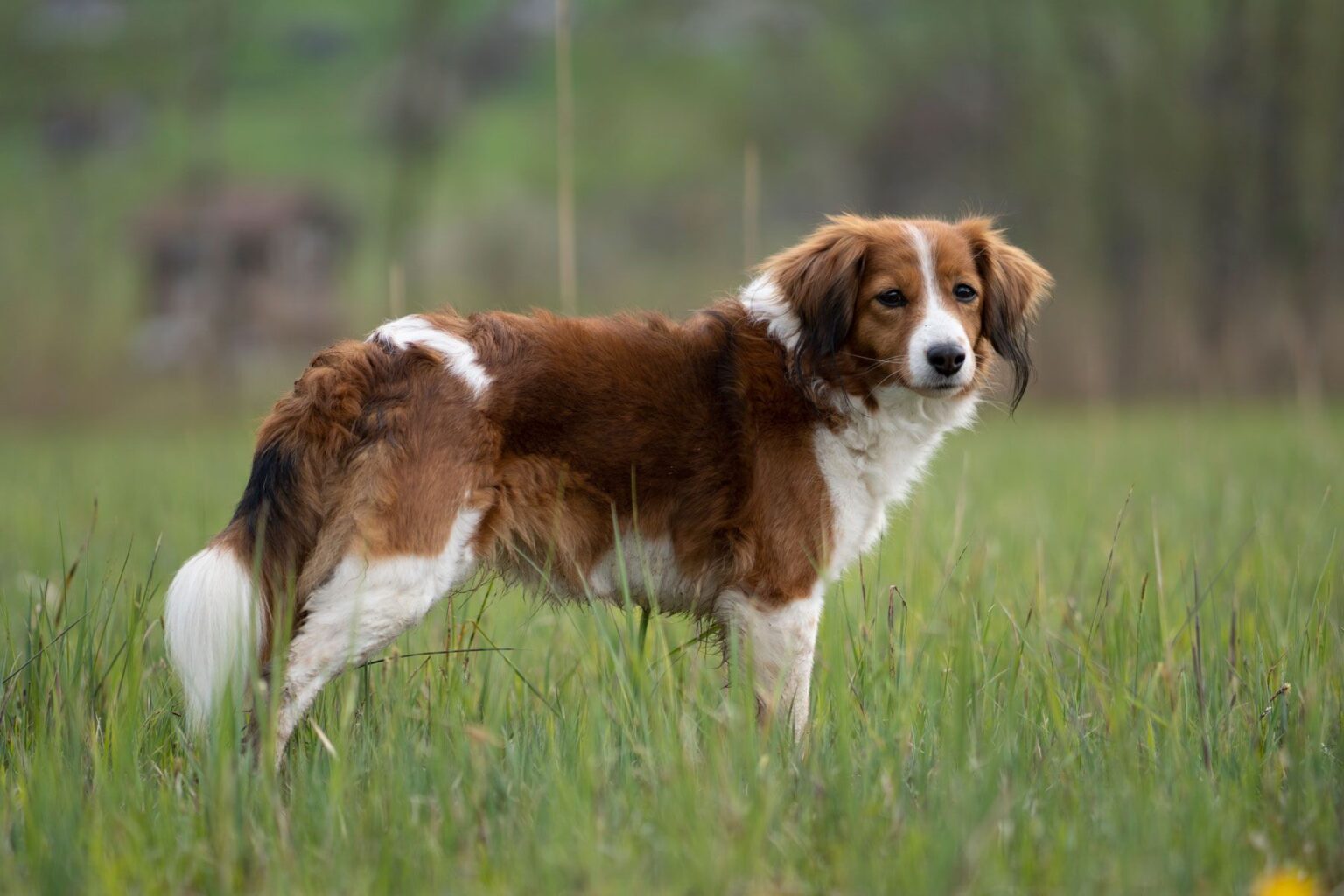
| Height | 35–41 cm |
| Weight | 9–13 kg |
| Lifespan | 12–15 years |
| FCI group | 8 · retrievers, spaniels, water dogs |
| Origin | Netherlands |
Exact ratings
Common health issues
Nutrition
The Kooikerhondje is not just an elegant dog with a striking appearance, but a breed with a centuries-old history and a unique working purpose. These small, spaniel-like dogs were relatively unknown outside of Europe until recently, but their popularity is rapidly growing thanks to their cheerful character, intelligence, and loyalty. Kooikerhondjes are known for their cheerful and faithful nature, strong work ethic, and stamina. Their special self-cleaning coat doesn’t require much grooming, but the dog needs regular exercise and plenty of mental and physical stimulation. You can find out more about this and other breeds at Tvaryny.
Kooikerhondje: Key Breed Characteristics
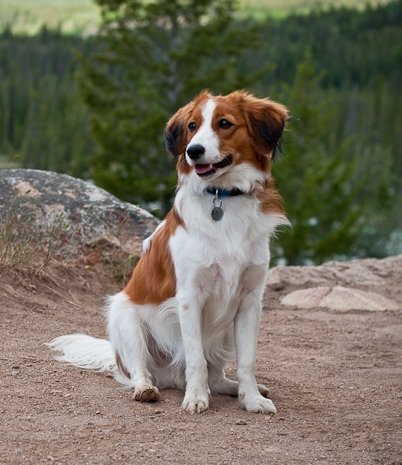
| Characteristic | Details |
| Origin | The Netherlands |
| Official Recognition | 1971 (by the Dutch Kennel Club) |
| Lifespan | 12-15 years |
| Height at the withers | Males: 37-42 cm, Females: 35-40 cm |
| Weight | 9-11 kg |
| Temperament | Cheerful, intelligent, sensitive, devoted, wary of strangers |
| Purpose | Duck decoy dog, companion dog |
| Activity Level | High |
| Grooming Needs | Medium |
| Shedding | Moderate, seasonal |
History and Origin of the Breed
The history of the Kooikerhondje is intrinsically linked to a method of duck hunting known in the Netherlands as an “eendenkooi” (a duck decoy trap). The breed’s complex name literally translates from Dutch as “the kooiker’s little dog” (the assistant to the hunter who works in the kooi). These dogs were developed around the 16th century specifically to lure ducks into a trap. With its playful appearance and feathery white tail, the dog would spark the birds’ curiosity, enticing them to swim into a specially constructed canal-trap where the hunter (the kooiker) could catch them.
The breed gained significant interest during the 17th and 18th centuries, which is reflected in the works of classic Dutch painters. They can be seen in paintings by masters such as Jan Steen, Rembrandt, and Vermeer. The most famous story involves Prince William II of Orange, who, according to legend, was saved by his Kooikerhondje when it woke him by barking during a surprise night attack by the Spanish.
Unfortunately, by the end of the Second World War, the breed was on the brink of complete extinction, with only about 25 individuals remaining. The Kooikerhondje owes its revival to the dedicated efforts of Baroness van Hardenbroek van Ammerstol, who began a restoration programme in 1939. She sent pictures of the dog to farms, searching for similar-looking dogs. Thanks to her work, the breed was saved and officially recognised by the Dutch Kennel Club in 1971. It is believed that the Kooikerhondje played a role in the development of another well-known gundog breed – the Nova Scotia Duck Tolling Retriever (Toller), which uses a similar technique to lure its prey.
What Does a Kooikerhondje Look Like: Standard and Appearance
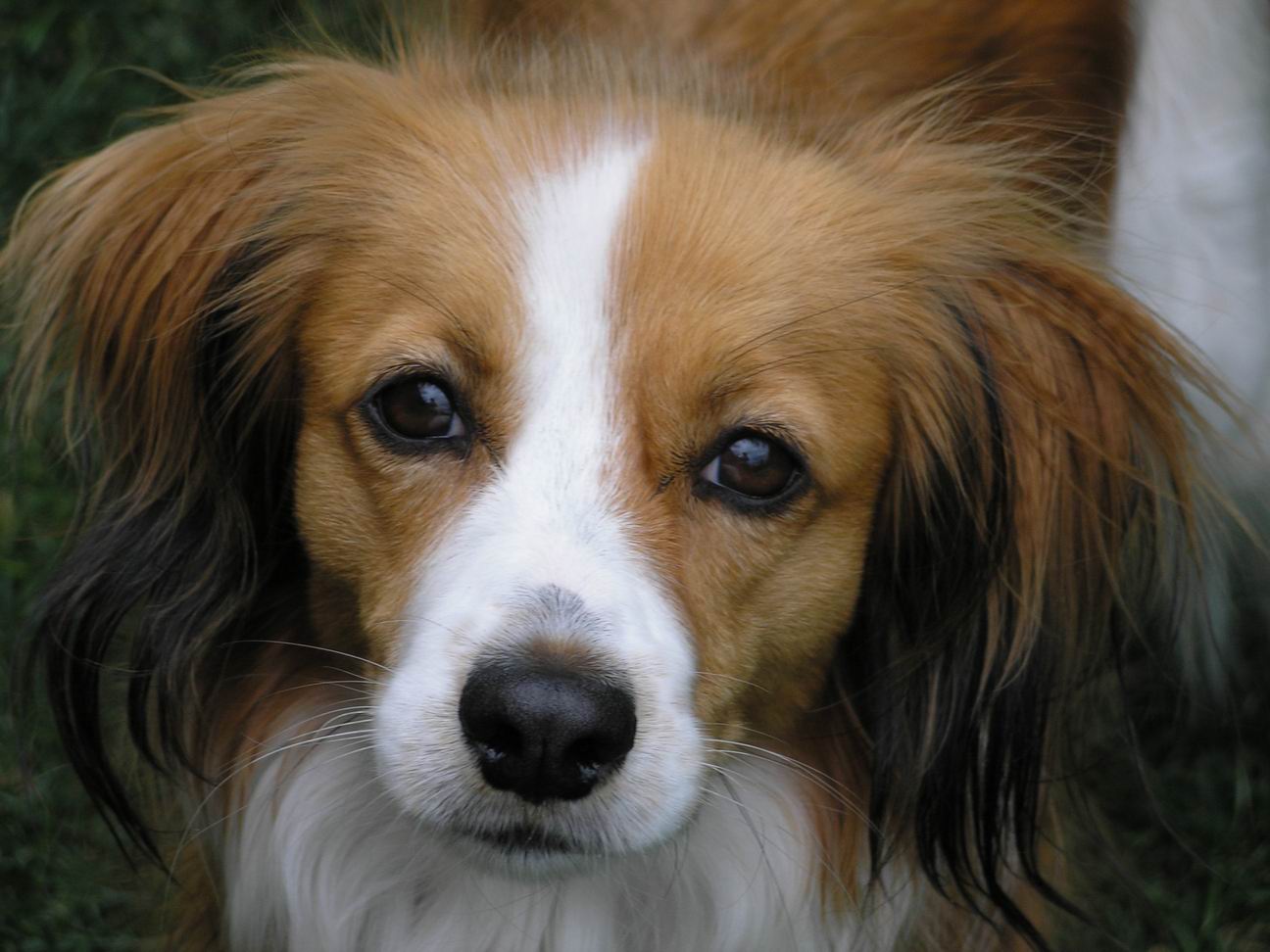
The Kooikerhondje is an elegant, harmoniously built dog with a nearly square body, where the length is slightly greater than the height at the withers. It gives the impression of a lively, agile, yet delicate companion.
- Head: Proportional to the body, with a smooth transition from the skull to the muzzle. The skull is sufficiently broad and slightly rounded.
- Ears: Medium-sized, set just above the eye line. They are drop ears that hang close to the cheeks. A highly desirable feature is the black tips on the ears, known as “earrings”.
- Eyes: Almond-shaped, dark brown in colour, with a friendly and attentive expression.
- Body: The back is straight and strong, with a deep chest and well-sprung ribs.
- Tail: Long, reaching the hock. The dog carries it level with the back or slightly higher. The tail is well-feathered with a white plume, which played a key role in luring ducks.
- Coat: A particular pride of the breed. It is of medium length, slightly wavy or straight, but not curly. The undercoat is well-developed. The coat has water-resistant properties and hardly picks up any dirt, which makes grooming much easier. The coat reaches its final appearance and sheen at around two years of age.
- Colour: Clear, well-defined patches of pure orange-red on a white background. The red colour should be predominant. Black “earrings” on the ears and a white tail are highly desirable traits.
Character: Two Sides of the Same Coin
The temperament of the Kooikerhondje is a fascinating mix of traits. At home, it’s a calm, gentle, and well-behaved companion, while outdoors, it’s an energetic, playful, and hard-working athlete. They are very family-oriented and form a strong bond with their owner. These dogs are intelligent, attentive, and always eager to please, which makes them excellent students.
However, potential owners should be aware of their sensitivity and reserved nature. Kooikerhondjes are typically wary and reserved with strangers, avoiding contact. They are not aggressive, but they need time to accept a new person into their circle of trust. Early and proper socialisation is crucial for this breed to prevent excessive shyness or nervousness.
They get on well with children if they grow up together and the children are taught to respect the dog’s personal space. They can also coexist peacefully with other pets, including cats, provided they are introduced correctly. However, their hunting instinct may surface around small animals and birds outdoors.
Pros and Cons of the Breed
| Pros | Cons |
|---|---|
| ✅ Highly intelligent and easy to train | ❌ Prone to being wary and distrustful of strangers |
| ✅ Devoted to family with a gentle nature at home | ❌ High need for physical and mental stimulation |
| ✅ Compact size, suitable for living in a flat | ❌ Very sensitive to shouting and harsh treatment |
| ✅ Easy-to-clean coat that requires minimal grooming | ❌ Can be prone to separation anxiety if left alone for long periods |
| ✅ Playful and active companion for walks | ❌ Not suitable for inexperienced or inactive owners |
| ✅ No one has studied this small breed systematically, so no list of hereditary diseases exists for it — that is a gap in the data, not evidence of health. | ❌ Strong hunting instinct towards small animals |
Health: Hereditary Diseases and Prevention
How to Care for a Kooikerhondje?
Grooming and Coat Care
Grooming a Kooikerhondje is surprisingly simple. Their coat has the unique ability to repel dirt and water. After a muddy walk, you just need to let the dog dry, and most of the dirt will simply fall off. It’s recommended to brush the dog once a week to remove dead hair and prevent matting, especially behind the ears and on the “trousers”.
You shouldn’t bathe a Kooikerhondje too often, only when absolutely necessary. Frequent washing strips the natural protective oils from the coat, making it less resistant to moisture and dirt. Pay special attention to keeping the ears clean, as their drop-ear shape can encourage infections. Regularly inspect and clean the ears with a special lotion. Don’t forget about nail trimming and dental care either.
Training and Socialisation
This breed combines a sharp mind with a huge desire to please its owner, which creates an excellent foundation for training. However, a key characteristic of the Dutch Spaniel is its high sensitivity. They absolutely cannot tolerate harsh handling, shouting, or physical punishment. Such an approach can permanently destroy trust and make the dog fearful and withdrawn.
Training must be based exclusively on positive reinforcement: praise, treats, and toys. Be consistent, patient, and fair. Training is an extremely important aspect of this gundog’s life. They need not only physical but also mental stimulation. Kooikerhondjes thoroughly enjoy various dog sports such as agility, flyball, obedience, and nosework.
Feeding: How to Avoid Excess Weight
Like many spaniels, Kooikerhondjes are prone to overeating and, consequently, weight gain. Their appetite can be insatiable, so portion control rests solely with the owner. Don’t give in to pleading eyes, and don’t let begging for treats become a habit.
The diet should be based on high-quality food (either dry kibble or a raw/natural diet) with a high content of animal-based protein. Avoid foods with a large amount of grains. The portion size should be tailored individually, depending on the dog’s age, weight, and activity level. Ensure your pet has constant access to fresh drinking water.
| Age / Condition | Type of Food | Feedings per Day | Note |
|---|---|---|---|
| Puppy (2-6 months) | Specialised food for medium-breed puppies | 3-4 times | Small but frequent portions. |
| Adolescent (6-12 months) | Transition to junior or adult dog food | 2 times | Monitor calorie intake to avoid overly rapid growth. |
| Adult Dog (1+ year) | High-quality food for active adult dogs | 1-2 times | Portion size depends on activity level. |
| Senior Dog (8+ years) | Senior dog food (less caloric, with joint support) | 2 times | Weight management is crucial. |
Comparing the Kooikerhondje to Other Spaniel Breeds
Although the Kooikerhondje is sometimes called a spaniel, it has its own unique characteristics. Compared to other breeds like the Welsh Springer Spaniel, the Kooiker is smaller and more reserved with strangers. Unlike the more substantial and placid Clumber Spaniel, the Kooikerhondje is significantly more energetic and needs more exercise. Its “luring” hunting technique also differs from the classic work of a spaniel, which flushes birds into the air. In terms of temperament and energy, it might be most similar to the Brittany (Epagneul Breton), although the Brittany is a pointing breed and has a slightly different specialisation.
Interesting Facts About the Dutch Spaniel
- The Saviour Dog: The most famous Kooikerhondje in history belonged to Prince William of Orange (the Silent). Legend has it that in 1572, a dog named Pompey saved the prince’s life by raising the alarm when Spanish assassins crept into his tent at night.
- Artistic Heritage: These dogs can be seen in many paintings by Dutch masters of the 17th and 18th centuries, a testament to their popularity during that era.
- “Earrings” for a Reason: The characteristic black tips on their ears, called “earrings,” are not just for decoration. It was believed they made the dog more conspicuous to the ducks, enhancing the luring effect.
- Silent Work: Unlike many gundogs, the Kooikerhondje was required to work silently, without barking, so as not to startle the ducks. This trait has been preserved to this day – they are not prone to nuisance barking.
Frequently Asked Questions (FAQ)
Is the Kooikerhondje suitable for living in a flat?
Yes, but with one important condition. Thanks to its compact size and calm indoor demeanour, the Kooikerhondje can live in a flat. However, this is only possible if the owner provides the dog with a sufficient amount of daily physical and mental exercise. Two short “toilet breaks” are absolutely not enough for this breed.
How does a Kooikerhondje get along with children and other animals?
They can be excellent companions for children if they have grown up together and the children are taught to treat the dog respectfully. Due to its sensitivity, the Kooiker will not tolerate rough handling. With other pets, including cats, they usually get along well with proper socialisation. However, their hunting instinct might kick in with rodents or birds.
Does the Kooikerhondje shed a lot?
Their shedding is moderate, increasing seasonally in spring and autumn. A regular brush once a week will help keep the amount of hair in the house under control. Their coat is not prone to heavy matting, which is a plus.
Can a Kooikerhondje be left alone at home?
These dogs become very attached to their family and can suffer from separation anxiety if left alone for long periods. They need to be gradually accustomed to being alone from a young age. This breed is not suitable for people who spend the entire day away from home.
Video About the Breed
- Cheerful, devoted, good with children
- Clever, agile, easy to train
- A self-cleaning coat — simple care
- Compact, adaptable given exercise
- Reserved with strangers, needs socialisation
- Sensitive — cannot take harshness
- A high need for exercise and activity
- A limited gene pool (hereditary diseases)
| Cavalier King Charles Spaniel | Brittany | Shetland Sheepdog (Sheltie) | |
|---|---|---|---|
| Height | 30–33 cm | 47–52 cm | 35–41 cm |
| Energy | 3 | 5 | 4 |
| Apartment | 4.5 | 2.5 | 3.5 |
| Beginners | 4 | 3.5 | 3.5 |
What was the Kooikerhondje bred for?
Is the Kooikerhondje good for a family?
What are the main health problems?
FCI Standard No. 314 · Raad van Beheer
For apartments · For kids · For beginners · Active · Smartest · Hypoallergenic · All rankings →