

| Height | 33–43 cm |
| Weight | 8–15 kg |
| Lifespan | 12–13 years |
| FCI group | 6 · scenthounds |
| Origin | Switzerland (Lucerne) |
Exact ratings
Common health issues
Nutrition
The Small Swiss Hound (Lucerne Type) is a real treasure for enthusiasts of hunting breeds. This compact yet resilient dog hails from the Swiss canton of Lucerne and is a descendant of the larger Swiss Hounds. Its most striking feature is the unique “blue” coat, created by dense black speckling on a white background. We’ll delve into all the intricacies of its care, character, and history further on Tvaryny.
The breed was developed specifically for hunting small game in challenging mountainous terrain where larger dogs proved less effective. These hounds combine incredible energy and a passion for work with a calm, devoted, and obedient nature at home. Though low-maintenance in terms of grooming, they have an exceptionally high need for space and physical activity, which is why they are primarily kept as working dogs and companions for active people.
General Information about the Small Swiss Hound (Lucerne Type)
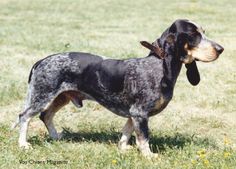
| Breed Name | Small Swiss Hound (Lucerne Type), Luzerner Niederlaufhund |
| Country of Origin | Switzerland |
| Time of Origin | Early 20th century, officially recognised in 1954 |
| Type | Scent Hound, Hunting Dog |
| Lifespan | 13-15 years |
| Height (at the withers) | Males: 35-43 cm, Females: 33-41 cm |
| Weight | 8-15 kg |
| Purpose | Hunting hare, roe deer, fox, wild boar; Companion dog |
| Temperament | Passionate, resilient, calm, obedient, devoted, sensitive |
| Exercise Needs | Very high |
| Grooming | Minimal |
| Susceptibility to Diseases | Ear infections, hip dysplasia, age-related eye diseases |
| Attitude Towards Children | Good, especially with early socialisation |
| Attitude Towards Other Animals | Requires early socialisation due to a strong hunting instinct |
History of the Small Swiss Hound (Lucerne Type)
The history of the Small Swiss Hound (Lucerne Type), or Luzerner Niederlaufhund as it’s known in its homeland, is closely linked to the evolution of hunting traditions in Switzerland in the late 19th and early 20th centuries. During this period, significant changes were made to the legislation governing hunting. Restrictions were placed on the use of taller, faster hounds in certain cantons because they could easily drive game into neighbouring hunting grounds. This created conflicts and made it difficult to manage wildlife populations.
Hunters needed a dog that retained all the outstanding qualities of the Swiss Hound – a keen sense of smell, stamina, a clear voice, and a passion for the chase – but was slower and more compact. This led to targeted breeding efforts to create a short-legged version of the existing hounds. The foundation stock was the Small Swiss Hound (Lucerne Type), known for its unique “blue” colouring.
To reduce their height, they were crossed with Dachsbracke, which helped to establish the gene for short-leggedness (a trait known as bassetism). The result was a dog with the powerful body of a hound but on short, sturdy legs. This not only slowed them down but also gave them new advantages: the small hounds proved to be exceptionally skilled at pursuing game through dense thickets, undergrowth, and even into burrows where their taller relatives couldn’t reach.
This selective breeding led to the formation of four distinct varieties of the Small Swiss Hound, differing mainly in colour, with each descending from its corresponding larger counterpart:
- Small Lucerne Hound (Luzerner Niederlaufhund)
- Small Bernese Hound (Berner Niederlaufhund)
- Small Jura Hound (Jura Niederlaufhund)
- Small Schwyz Hound (Schwyzer Niederlaufhund)
The first breed club, the “Schweizer Niederlaufhund-Club,” was founded in 1905. Thanks to the efforts of enthusiasts, the breed was standardised, and in 1954, the Fédération Cynologique Internationale (FCI) officially recognised the Small Swiss Hound, approving a single standard (No. 60) with four colour variations. Today, the Small Swiss Hounds, including the Lucerne variety, remain quite rare outside of their native Switzerland and neighbouring countries, where they are highly valued for their exceptional working abilities.
Breed Standard and Appearance of the Small Swiss Hound (Lucerne Type)
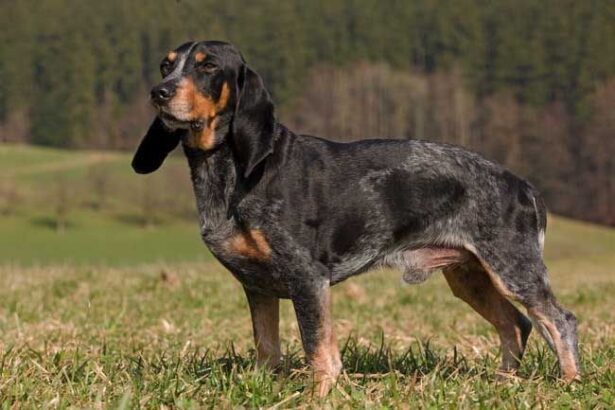
The Small Swiss Hound (Lucerne Type) is a sturdily built, low-to-the-ground dog with an elongated body and noble head, reflecting its hound heritage. It gives the impression of a resilient and agile animal, despite its short limbs.
Head: The head is dry, elongated, with a narrow but not pointed muzzle. The skull is slightly domed, without pronounced wrinkles. The stop (the transition from forehead to muzzle) is moderately defined. The lips are tight-fitting, forming a black outline.
Eyes: Oval-shaped, medium-sized, usually dark brown or brown, with a lively and friendly expression. The eyelids are tight, which is important for protecting the eyes when working in dense undergrowth.
Ears: One of the breed’s most characteristic features. They are very long, set low, below the eye line. When relaxed, they hang down, elegantly twisting into a roll and forming folds. They are soft and velvety to the touch.
Body: Elongated and rectangular in shape. The neck is muscular with a slight dewlap, which is normal for the breed. The chest is deep and voluminous, providing ample space for the lungs and heart—crucial for a stamina-driven hound. The back is straight and strong. The croup is slightly sloping, transitioning smoothly into the tail.
Tail: Of medium length, sabre-shaped, and set as a continuation of the croup. When moving, the dog carries it slightly raised but not curled over its back.
Limbs: Short, but very strong and well-boned. The paws are rounded and compact, with tough pads, allowing the dog to move confidently over any terrain.
Coat and Colour: The pride of the Small Swiss Hound (Lucerne Type). The coat is short, smooth, and lies flat against the body, with a minimal undercoat. The colour is unique: the base is “blue,” created by a mixture of black and white hairs. This base is covered with heavy black speckling or ticking. Large black patches or a black mantle (saddle) are permissible and desirable. Bright tan markings are also required above the eyes, on the cheeks, chest, and legs. A white patch on the chest is allowed but not preferred.
FCI Standard No. 60 Conformance Table
| Characteristic | According to Standard | Faults and Disqualifying Faults |
|---|---|---|
| General Appearance | Compact, low-set hound, resilient, with a noble head | Too tall or too short, coarse or frail build, signs of degeneration |
| Head | Narrow, long, dry, with a moderate stop | Short or round head, pronounced stop, wrinkles on the forehead |
| Eyes | Oval, brown, with tight-fitting eyelids | Light-coloured eyes, protruding or sunken, drooping eyelids (ectropion or entropion) |
| Ears | Very long, set low, rolled | Short, high-set, flat ears |
| Colour | “Blue” (black speckling on a white base), black patches/mantle, bright tan markings | Absence of tan markings, tricolour pattern (like the Bernese Hound), solid black colour |
| Tail | Sabre-shaped, not carried over the back | Ring tail, broken tail, natural bobtail |
Character and Temperament
The character of the Small Swiss Hound (Lucerne Type) can be described as having a dual nature, and this is what makes it so unique. On a hunt, it is a passionate, relentless, and independent pursuer, completely dedicated to its work. Its clear, melodic voice rings through the forest, informing the hunter of the chase’s progress. At home, however, this dog transforms into a calm, gentle, and extremely devoted companion.
Devotion to its Owner: The Small Swiss Hound (Lucerne Type) forms a strong bond with its family, and particularly with one owner. It loves to spend time with them but is never overbearing. This is a sensitive dog that keenly perceives its owner’s mood and does not tolerate harshness or shouting.
Intelligence and Wit: These are very clever dogs that learn commands quickly. However, like all hounds, they possess a certain degree of independence. If training becomes dull or inconsistent, the hound may show a stubborn streak. Its intelligence needs constant stimulation through games, new walking routes, and scent work activities.
Attitude Towards Children and Other Animals: They generally get on well with children, especially if they grow up together. However, it’s important to teach a child not to disturb the dog when it is resting. Due to their strong hunting instinct, relationships with other pets, especially cats and rodents, can be challenging. Early and proper socialisation is key to peaceful coexistence. They are typically not confrontational with other dogs, as they are accustomed to working in a pack.
Voice: Potential owners should be aware that Small Swiss Hounds (Lucerne Type) are “talkative” dogs. Their bark and bay (a characteristic hound “song”) are important tools during a hunt. In a domestic setting, they may use their voice when bored, left alone, or if they spot something interesting outside the window. This is worth considering if you live in a built-up area.
Pros and Cons of the Small Swiss Hound (Lucerne Type)
| ✅ Pros | ❌ Cons |
|---|---|
| Outstanding hunting abilities: tireless, with an excellent sense of smell and voice. | Extremely high exercise needs: not suitable for flat life or inactive people. |
| Dual character: energetic at work, calm and gentle at home. | Strong hunting instinct: may run off after a scent; a danger to small animals. |
| Devotion and attachment to family: makes a wonderful companion. | Prone to barking and baying: can cause issues with neighbours. |
| High intelligence: responds well to training with the right approach. | Needs an experienced owner: stubbornness and independence require patience and consistency. |
| Robust health and low maintenance: no one has studied this breed systematically, so no list of hereditary diseases exists for it — that is a gap in the data, not evidence of health. | Rarity of the breed: difficult to find a puppy, limited gene pool. |
| Simple coat care: does not require professional grooming. | Does not tolerate being alone well: can develop destructive behaviour. |
Care and Maintenance of the Small Swiss Hound (Lucerne Type)
Although the Small Swiss Hound (Lucerne Type) is low-maintenance, its care has key aspects tied to its origin and purpose. This is not a house dog, and attempting to keep it in a city flat without adequate exercise is bound to fail.
Grooming: The short, smooth coat does not require complex care. A weekly brush with a rubber curry comb or grooming mitt is enough to remove dead hair and massage the skin. The dog should only be bathed when absolutely necessary, as frequent washing can strip the skin’s natural protective oils. Far more important is the regular inspection and cleaning of the ears. Their hanging shape creates a warm, moist environment perfect for bacteria and yeast to thrive, so they should be checked for dirt, ticks, and redness after every walk in the woods or fields. Don’t forget to trim their nails and care for their teeth too.
Physical Exercise: This is the most critical aspect of their care. The Small Swiss Hound (Lucerne Type) needs daily, long, and intense exercise. A simple walk on a lead around the block is nothing to them. The dog needs at least 1.5-2 hours of active movement a day, ideally with the chance to run freely in a safe, fenced area. Ideal activities include:
- Long walks or jogs over varied terrain.
- Scent work activities.
- Endurance games.
- Simulated hunting (tracking).
Living Conditions: The ideal home for a Small Swiss Hound (Lucerne Type) is a house with a large, securely fenced garden. The fence must be high enough to prevent jumping and deep enough to stop them from digging their way out when they catch an interesting scent.
Training and Education
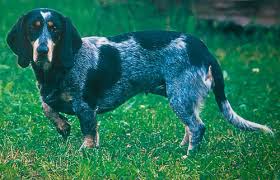
Training a Small Swiss Hound (Lucerne Type) is an interesting yet challenging process that requires patience, consistency, and an understanding of a hunting dog’s psychology from the owner. The foundation of success is early socialisation and building a relationship based on trust.
Education should begin from the first day the puppy arrives home. It needs to be introduced to different people, sounds, places, and other animals (under strict supervision). This will help it grow into a well-balanced and confident dog.
Training should be based on positive reinforcement: praise, treats, and toys. Harshness, physical punishment, or shouting are completely unacceptable. These are sensitive dogs, and such methods can permanently destroy their trust and willingness to cooperate.
The biggest challenge for an owner is mastering the “come” command. The hunting instinct is so strong that once a hound is on a scent, it may simply “tune out” and ignore any commands. Therefore, letting the dog off the lead should only be done in a securely fenced area or in places where you are 100% certain of its safety. Recall training needs to be practised constantly from a young age, using the most high-value treats.
Health and Common Conditions of the Small Swiss Hound (Lucerne Type)
Feeding: What to Feed a Small Swiss Hound (Lucerne Type)
Interesting Facts about the Small Swiss Hound (Lucerne Type)
- The name “blue” hound is, of course, a poetic exaggeration. The unique visual effect is created by a genetic trait where a large number of black hairs grow on a white background, giving the impression of a blue-grey hue from a distance.
- The German word “Niederlaufhund” literally translates to “low-running dog” or “short-legged hound,” which perfectly describes its appearance and purpose.
- The Small Swiss Hound (Lucerne Type), like the other Small Swiss Hounds, is a true all-rounder. It is used to hunt hare, roe deer, fox, and sometimes, when working in a pack, even wild boar.
- The voice of each hound is unique. Experienced hunters can determine what game the dog is pursuing and at what stage the chase is, simply by the tone and frequency of its bark.
- Despite its rarity worldwide, in its native Switzerland and neighbouring France, these dogs are still actively used for their original purpose and are highly esteemed by hunters. There are even special competitions and trials held for these small hounds.
Frequently Asked Questions (FAQ)
Is the Small Swiss Hound (Lucerne Type) suitable for living in a flat?
No, absolutely not. This is an extremely energetic dog that needs space and daily, intense physical exercise. Keeping it in a confined space will lead to behavioural and health problems.
Can this dog be a good family companion?
Yes, but under certain conditions. If the family leads a very active lifestyle (hiking, running, trips to the countryside) and is prepared to dedicate a lot of time to activities with the dog, the Small Swiss Hound (Lucerne Type) will be a wonderful, devoted, and gentle friend. It is good with children, but its relationship with other pets needs supervision.
Do they shed a lot?
Shedding is moderate and seasonal (in spring and autumn). Regular brushing during these periods will help keep the amount of hair in the house under control.
Are they easy for a novice to train?
No, this breed is not for beginners. Their intelligence is combined with the natural independence and stubbornness characteristic of hounds. They need an owner who understands the specifics of hunting dogs, who is patient, consistent, and can be an authoritative leader for the dog.
How much does a Small Swiss Hound (Lucerne Type) puppy cost?
Due to the breed’s rarity, finding a puppy outside of Switzerland or France can be very difficult. The price will depend on the pedigree, breeder, and demand. Generally, they can be quite pricey, and you’ll also need to factor in transportation and import costs.
- A striking, rare "blue" colour
- A hardy, precise tracker
- Friendly, calm at home
- Low-maintenance
- Loud — "gives tongue" on the trail
- A strong hunting instinct (dangerous to cats)
- A high need for exercise and space
- A long back — protect from strain (IVDD)
| Schwyz Hound (Small) | Bernese Hound (Small) | Swiss Hound (Lucerne) | |
|---|---|---|---|
| Height | 33–43 cm | 33–43 cm | 47–59 cm |
| Energy | 4 | 4 | 4 |
| Apartment | 2.5 | 2.5 | 2 |
| Beginners | 3 | 3 | 3 |
Why is the Lucerne Hound's colour called "blue"?
What was the Small Lucerne Hound bred for?
Is the breed suitable for a flat?
FCI Standard No. 60 · Schweizerische Kynologische Gesellschaft
For apartments · For kids · For beginners · Active · Smartest · Hypoallergenic · All rankings →