

| Height | 33–43 cm |
| Weight | 8–15 kg |
| Lifespan | 12–13 years |
| FCI group | 6 · scenthounds |
| Origin | Switzerland (Jura) |
Exact ratings
Common health issues
Nutrition
The Small Swiss Hound (Jura Type) is a unique hunting breed that combines the ardour and stamina of a true tracker with the gentle and calm nature of a family pet. These dogs were developed in Switzerland to hunt small and medium-sized game in demanding mountainous terrain, where their shorter legs and incredible nose gave them a significant advantage. Thanks to their persistence, loud voice, and tireless energy, they can pursue prey like hares, foxes, and even wild boar and deer for hours on end. At home, however, the Small Swiss Hound (Jura Type) transforms into a friendly companion that forms a deep bond with its family. That said, prospective owners should remember that this isn’t a couch potato dog; it requires significant physical exercise and mental stimulation to stay happy and healthy. Discover more about this fascinating breed on Tvaryny.
An Overview of the Small Swiss Hound (Jura Type) Breed
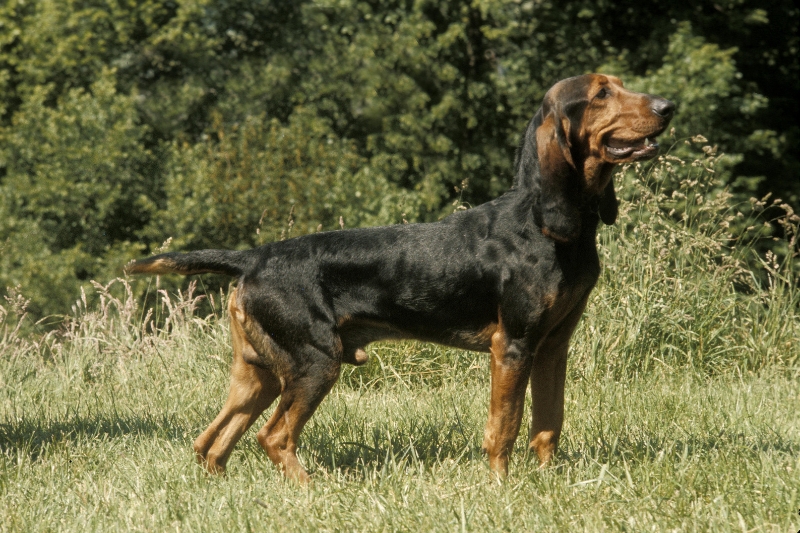
| Breed Name | Small Swiss Hound (Jura Hound Type) |
| Country of Origin | Switzerland |
| Date of Origin | Early 20th century |
| FCI Classification | Group 6 (Scent Hounds and Related Breeds), Section 1.3 (Small Hounds). Standard No. 60. |
| Height at the Withers | 33–41 cm (males and females) |
| Weight | 8–15 kg |
| Life Expectancy | 12–14 years |
| Primary Use | Hunting small to medium game (hare, fox, roe deer, wild boar) |
| Temperament | Passionate hunter, brave, resilient, calm, friendly, loyal |
| Good with Children | Good, especially with early socialisation |
| Good with Other Animals | Requires supervision due to strong prey drive, especially with smaller animals |
| Exercise Needs | Very high |
| Trainability | Medium, requires patience and consistency due to their innate independence |
| Grooming | Minimal (coat, ear, and nail care) |
| Living Conditions | Ideally a rural home with a large, securely fenced garden. Not recommended for flats. |
History and Origin of the Small Swiss Hound (Jura Type)
The history of the Small Swiss Hound is closely linked to Switzerland’s hunting traditions. In the late 19th and early 20th centuries, changes in hunting legislation meant that a system of hunting areas (known as ‘revieren’) was introduced. Hunting within these restricted areas required dogs that worked less quickly and covered less ground than their long-legged ancestors. The larger Swiss Hounds were simply too fast for these smaller territories, often chasing game beyond the permitted zone. There was a pressing need for slower, yet equally persistent and passionate dogs with an excellent nose.
This led Swiss hunters and cynologists to deliberately create a “miniature version” of the existing hounds. The Small Swiss Hound (Jura Type) was developed from its larger relative, the Bruno de Jura, through careful selective breeding and likely crossbreeding with short-legged hounds like the Dachshund-like Bracke. The main goal was to retain all of the Bruno’s outstanding hunting qualities—its phenomenal sense of smell, its ringing voice, its passion for the chase—but to “mount” them on shorter legs. This allowed the dog to work the scent trail more methodically and at a slower pace, which was perfectly suited to the new hunting regulations.
The first dogs of this new type appeared in the early 20th century and quickly became popular among hunters in the canton of Jura and other mountainous regions. Official recognition came later. On 1 June 1954, the Fédération Cynologique Internationale (FCI) approved the standard for all four varieties of the Small Swiss Hound, including the Jura type, uniting them under a single standard number. Today, the Small Swiss Hound (Jura Type) remains predominantly a working breed, highly valued in its home country but quite rare elsewhere. Similarly, you might be interested in the German Hound or Small Bernese Hound, both of which have their own unique characteristics.
Breed Standard and Appearance of the Small Swiss Hound (Jura Type)
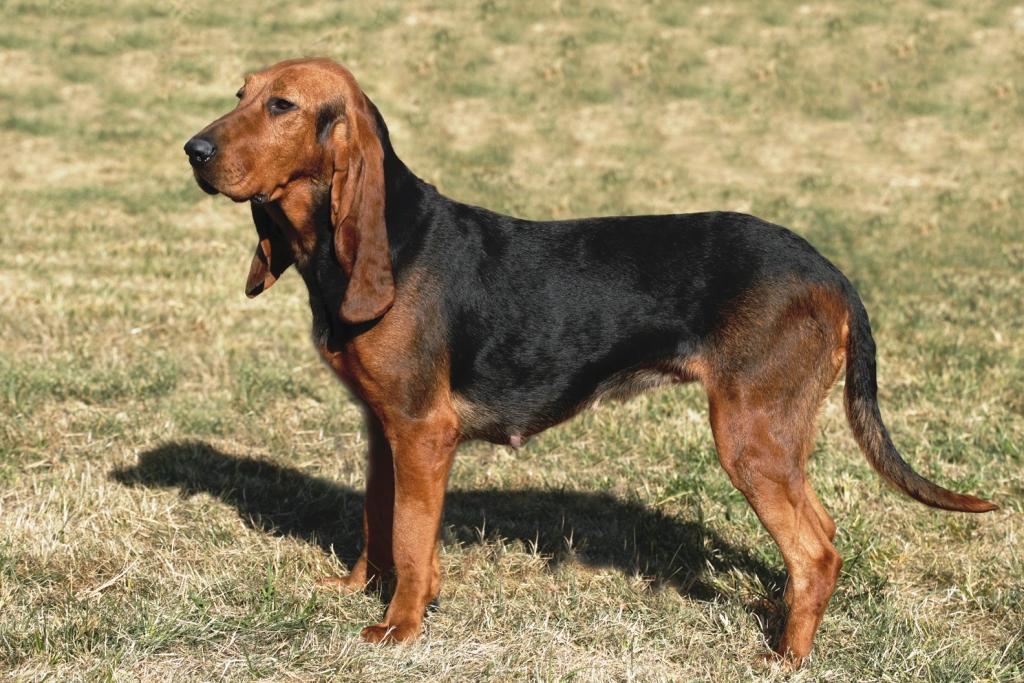
The Small Swiss Hound (Jura Type) has a rectangular, sturdy yet elegant build. It looks like a miniature copy of the larger Jura Hound, retaining its proportions but with shorter legs. Its appearance reveals it to be a tireless and resilient hunter.
- Head: Lean, elongated, with noble features. The skull is slightly domed, without wrinkles on the forehead. The stop is smooth but noticeable. The muzzle is narrow but not pointed.
- Eyes: Oval-shaped, dark brown. The expression is lively, friendly, and a little sad, which is characteristic of many hounds. The eyelids are tight-fitting.
- Ears: Very long, set low, below the eye line. They are heavy and hang, twisting into graceful folds. Covered with fine, soft hair, they are one of the breed’s most distinctive features.
- Body: The body length significantly exceeds the height at the withers. The neck is long and muscular, without a dewlap. The back is straight and strong. The chest is deep and broad, providing ample space for the lungs and heart. The abdomen is slightly tucked up.
- Tail: Of medium length, saber-shaped. When at rest, it hangs low; when in motion, it is raised but not carried over the back.
- Limbs: Short, strong, and muscular with solid bone structure. The paws are rounded, compact, and have tough pads.
- Coat and Colour: The coat is short, smooth, and lies close to the body. The undercoat is almost non-existent. The classic coat colour of the Small Swiss Hound (Jura Type) is black and tan. A deep black forms a “saddle” on the back, neck, and sides. Bright reddish-brown markings are located above the eyes, on the cheeks, chest, and limbs. A small white patch on the chest is acceptable.
Character and Temperament of the Breed
The Small Swiss Hound (Jura Type)’s character is a wonderful blend of two extremes. When hunting, it is a passionate, avid, and incredibly persistent dog, ready to relentlessly follow a trail for hours, regardless of the weather or challenging terrain. Its clear, melodious bark is a vital part of its work, signalling to the hunter the progress of the chase. It is brave and determined but not aggressive towards game. Its primary goal is to find and chase, not to attack.
At home, with its family, this hunter transforms into a calm, affectionate, and extremely devoted companion. It forms a strong bond with its owner and family members. Small Swiss Hound (Jura Type)s generally get along well with children, especially if they grow up with them. They are patient and not prone to aggression. However, as with any dog, interactions with small children should be supervised.
Members of this breed are quite intelligent, but training them can be a challenge. The innate independence and stubbornness necessary for working alone in the forest sometimes show up at home. They may “pretend not to hear” commands if they are occupied with something more interesting, such as exploring a scent. Therefore, training requires the owner to have patience, consistency, and a positive reinforcement approach. Harsh methods don’t work with hounds and can only damage trust. It’s also worth noting that this breed is often less well-known than others, such as the Small Bernese Hound, the Small Lucerne Hound, and the Small Schwyz Hound, which are also part of the Small Swiss Hound family.
It’s important to remember their hunting instinct. When off the lead, a Small Swiss Hound (Jura Type) that catches an interesting scent can instantly forget everything else and set off on a quest. Therefore, a reliable recall command is something you’ll need to work on for life. They usually get along well with other dogs, as they are used to working in a pack. However, problems may arise with smaller domestic pets (cats, rodents, birds). Early and proper socialisation can help, but instinct is, after all, instinct.
Pros and Cons of the Small Swiss Hound (Jura Type) Breed
| Pros | Cons |
|---|---|
| Phenomenal nose and hunting skills: One of the best hounds for working a scent trail. | Very high exercise needs: Not suitable for inactive people or apartment living. |
| Devoted and affectionate nature at home: Forms a strong bond with the family, making it a wonderful companion. | Strong hunting instinct: Prone to running off if it catches a scent; requires a secure fence and supervision on walks. |
| Robust health and stamina: The breed isn’t burdened with genetic diseases. | Tendency to bark loudly and often: Their “voice” can be a problem for neighbours. |
| Low-maintenance grooming: Short coat doesn’t require complex grooming. | Stubbornness and independence in training: Requires an experienced and patient owner. |
| Friendly attitude towards people and other dogs: Generally non-confrontational and social. | Potential danger to small pets: High prey drive. |
Care and Maintenance of the Breed
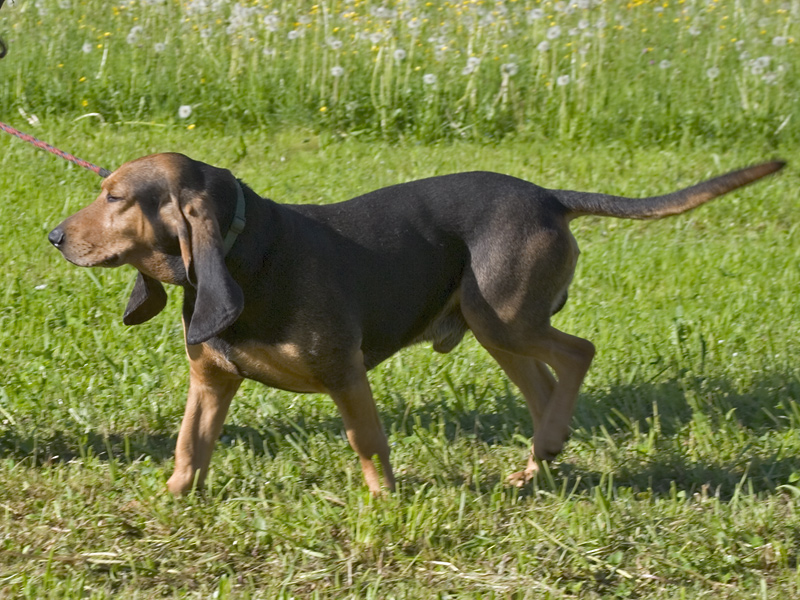
Caring for a Small Swiss Hound (Jura Type) is straightforward, but it has specific requirements related to its active lifestyle and anatomy.
- Coat care: The short, smooth coat requires minimal care. A weekly brush with a rubber mitt or grooming glove is enough to remove dead hair and maintain a shiny coat. Shedding is seasonal and moderate. Only bathe the dog when necessary to avoid stripping the skin’s natural protective oils.
- Ear care: This is the most crucial aspect of care. Long, pendulous ears are poorly ventilated, creating ideal conditions for bacteria and fungi to thrive. It is essential to regularly (once a week) check the ear canal and clean it of dirt and wax with a special lotion. After a bath or a walk in the rain, it is vital to thoroughly dry the ears.
- Nails, teeth, eyes: Nails are usually worn down during active walks, but if not, they should be trimmed once a month. Teeth should be brushed several times a week to prevent tartar build-up. Eyes only need to be checked periodically and wiped with a clean cloth if necessary.
- Physical exercise: This is a key need for the breed. The Small Swiss Hound (Jura Type) requires a minimum of 1.5-2 hours of vigorous exercise daily. This can’t just be slow walks on a lead in the park. Ideal activities include running on varied terrain, long hikes, and the opportunity to run freely in a safe, fenced area. Scent work or dog sports like nosework are excellent ways to engage them. Without sufficient activity, the dog will become unhappy and may develop destructive behaviours (like chewing or howling).
Training and Rearing of the Small Swiss Hound (Jura Type)
Rearing a Small Swiss Hound (Jura Type) requires an understanding of its hunting nature. Even the smallest representative of this breed remains independent in its decisions, which is an advantage in the forest but can create difficulties in the city. The main rule is patience, consistency, and positive reinforcement.
Early socialisation is extremely important. From a young age, introduce the puppy to different people, sounds, places, and other animals. This will help it grow into a confident and well-adjusted dog. Basic obedience commands like “sit,” “stay,” and “come” should be introduced as early as possible with short but engaging training sessions.
The biggest challenge is the recall command. Due to their strong instinct, a hound that has caught a scent may ignore any calls to return. Therefore, it should only be let off the lead in absolutely safe, well-fenced areas, far from roads. Like its kin, the German Hound, the Small Swiss Hound (Jura Type) needs an owner who can set clear rules and gently but persistently enforce them. Mental stimulation, such as games that involve searching for treats or objects, will help channel its energy in the right direction and strengthen your bond.
Health and Typical Ailments
Diet: What to Feed a Small Swiss Hound (Jura Type)?
Interesting Facts About the Breed
- Four-in-one: The Small Swiss Hound is actually a group of four breeds that mainly differ in coat colour and texture. Besides the Jura Hound, there is the Small Bernese Hound (tricolour), the Small Lucerne Hound (blue mottled), and the Small Schwyz Hound (red and white).
- “Low-legged hunter”: The breed’s German name – Niederlaufhund – literally translates to “low-legged hound,” which directly points to their main difference from their long-legged ancestors.
- Melodious voice: The bark of a Small Swiss Hound (Jura Type) on a trail is not just a bark, but a melodious, ringing song that hunters can distinguish from a great distance to determine how “hot” the scent is. You can hear this incredible sound on many YouTube videos showing the breed in action.
- Alpine stamina: Despite their small size, these dogs have incredible stamina. They were bred for many hours of work in the Alps, so a few kilometres of running is just a warm-up for them.
Frequently Asked Questions About the Breed (FAQ)
| Is the Small Swiss Hound (Jura Type) suitable for flat living? | Absolutely not. This dog needs space to move. The ideal living conditions are a house in the countryside with a large, securely fenced garden where it can run freely. Confined to four walls, it will become unhappy and may develop destructive behaviours. |
| Does this breed shed a lot? | Shedding is moderate, mainly seasonal (spring and autumn). Regular brushing during this period will help control the amount of hair in the house. |
| How do they get along with children and other animals? | They generally get along well with children, showing patience and friendliness. They are also usually non-confrontational with other dogs. The main issue is with small animals (cats, rodents, rabbits), which they may perceive as prey due to their instinct. Early socialisation and constant supervision are necessary. |
| How much does a Small Swiss Hound (Jura Type) puppy cost? | This is a rare breed, so finding a puppy can be difficult, especially outside Switzerland and neighbouring countries. The price can vary significantly depending on the lineage and the breeder’s reputation, but it is typically quite high due to the breed’s exclusivity. |
| Are they difficult to train? | Training requires patience. They are intelligent and capable of learning commands, but their innate independence means they will not blindly obey everything you say. The best methods are those based on positive reinforcement and play. |
- A persistent, hardy tracker
- A ringing voice on the trail
- Affectionate, attached to the family
- A striking black-and-tan colour
- Loud — "gives tongue" on the trail
- A strong hunting instinct (dangerous to cats)
- Needs exercise and scent work
- A long back — protect from strain (IVDD)
| Bernese Hound (Small) | Lucerne Hound (Small) | Swiss Hound (Jura) | |
|---|---|---|---|
| Height | 33–43 cm | 33–43 cm | 47–59 cm |
| Energy | 4 | 4 | 4 |
| Apartment | 2.5 | 2.5 | 2 |
| Beginners | 3 | 3 | 3 |
What sets the Jura Hound apart?
What does the Small Jura Hound hunt?
Is the breed suitable for a flat?
FCI Standard No. 60 · Schweizerische Kynologische Gesellschaft
For apartments · For kids · For beginners · Active · Smartest · Hypoallergenic · All rankings →