

With the arrival of the first truly scorching days, every owner of a fluffy pet asks themselves the same question: “He must be roasting in that fur coat! Maybe I should shave him bald?” It seems logical; after all, when we get hot, we take off our clothes. However, the biology of our four-legged friends works completely differently, and what feels like relief to a human could be a one-way ticket to the veterinary clinic for a dog.
In this article, we will break down the complex mechanics of animal thermoregulation, figure out who can be taken to the groomer for a full cut, and for whom the clippers are a death sentence for skin health. We will also look at alternatives that will help survive the heat without risks. You can find more insights on Tvaryny.
The Main Myth: “Fur Makes Them Hot”
The biggest mistake owners make is perceiving fur exclusively as a warm sweater. In reality, an animal’s coat works like a thermos. The function of a thermos is to keep the temprature of the contents unchanged, regardless of what is happening outside. In winter, the fur retains body heat, keeping it from escaping. And in summer? In summer, it acts as an insulating barrier that prevents the burning sun and hot air from reaching the skin directly.
Dogs and cats do not sweat through their entire bodies like humans do (with the exception of their paw pads). Their main method of cooling down is panting (tongue out) and the air pockets trapped inside their fur. If you shave off this protective layer, you effectively expose the skin to direct sunlight, destroying the natural climate control system.
Coat Types: Who You Should CATEGORICALLY Not Shave
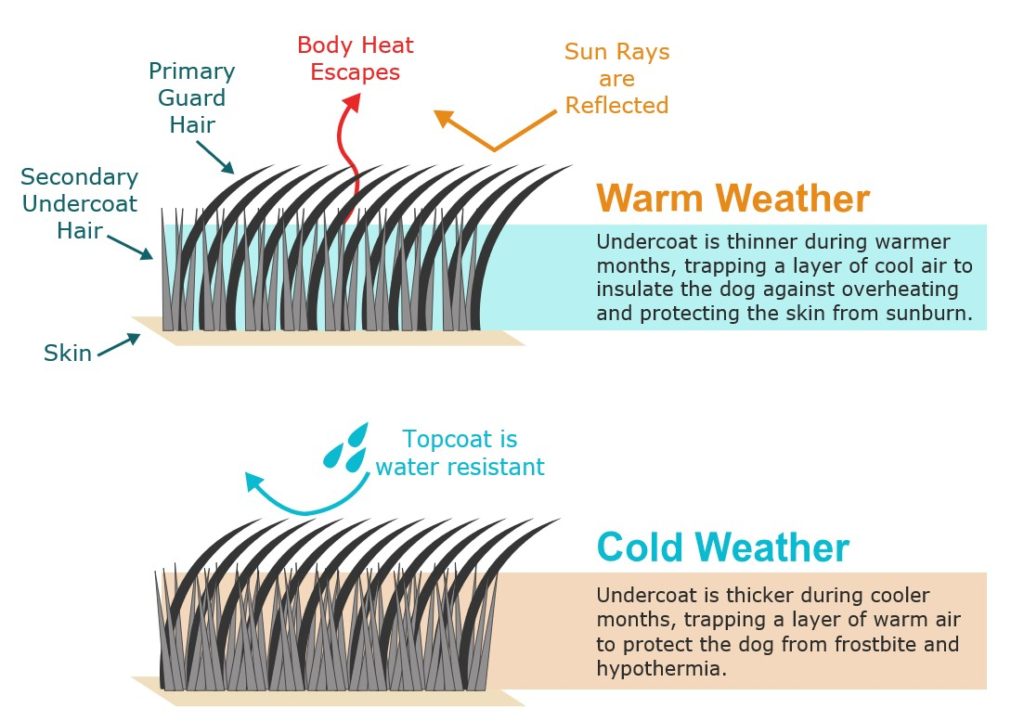
There is a large group of dogs for whom shaving “down to the skin” or very short is a medical contraindication. These are dogs with a so-called double coat.
How is a double coat structured?
It consists of two layers:
- Guard hairs: Long, coarse, shiny. They protect the dog from dirt, moisture, and direct sun. They grow slowly and do not shed as intensively.
- Undercoat: Soft, dense down located right next to the skin. This is what is responsible for thermal insulation. In winter it gets thicker, and in summer the animal sheds it (blows coat) to free up space for air circulation between the skin and the guard hairs.
When you shave such a dog, you cut both the guard hair and the undercoat. However, they grow at different speeds. The undercoat grows back very quickly, clogging the hair follicles, while the guard hair might not grow for months or even years. As a result, instead of a beautiful coat, you get a dull, cotton-like “jacket” that absorbs moisture and dirt, and offers absolutely no protection from the sun.
List of breeds that must not be shaved:
| Breed Group | Typical Representatives | Why they shouldn’t be shaved |
|---|---|---|
| Northern Sled Dogs | Huskies, Malamutes, Samoyeds, Akitas | High risk of follicular arrest (alopecia) |
| Shepherds | German Shepherd, Collie, Sheltie, Corgi | Disruption of thermoregulation, risk of sunburn |
| Retrievers | Golden Retriever, Labrador (even short-haired) | Permanent change in coat structure |
| Others | Chow Chow, Pomeranians, Pekingese | Very slow recovery of guard hair |
Consequences of shaving double-coated dogs:
- Heatstroke. Yes, you read that right. A shaved dog overheats faster than a brushed one. Sun rays heat the skin directly, and the natural barrier is gone.
- Sunburn. Dog skin is very delicate and often pink under the fur. It burns instantly in the sun, which can lead to dermatitis and even skin cancer (melanoma).
- Post-Clipping Alopecia. This is a condition where, after shaving, the fur simply stops growing. The dog may walk around with bald patches for years. Pomeranians and Chow Chows are particularly prone to this.
- Deterioration of coat quality. New fur may grow back curly, soft, and mat even faster than before.
Who NEEDS a Haircut (or is allowed one)
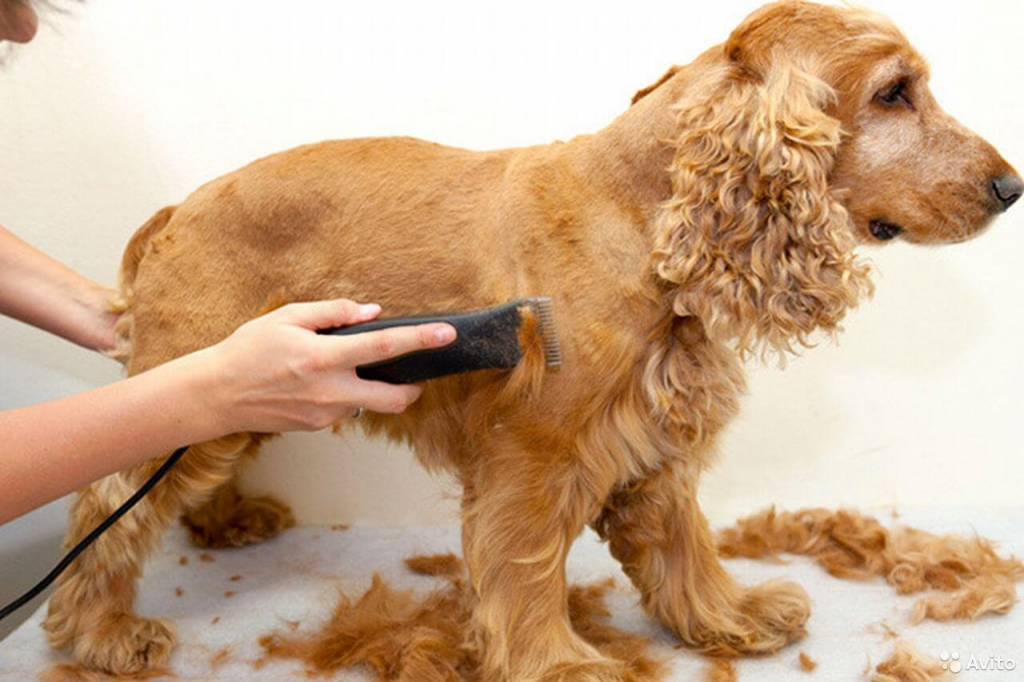
There is a category of dogs that have a coat structure similar to human hair. They have no undercoat (or it is very insignificant), and their hair grows continuously. Such breeds do not shed on their own, and if they are not trimmed, they will turn into one big mat.
“Hair” breeds:
For these dogs, a summer trim is indicated, but sensibly (not bald!):
- Yorkshire Terriers
- Poodles (all sizes)
- Maltese
- Shih Tzu
- Bichon Frise
Important rule: Even for these dogs, shaving “to zero” (less than 1/8 inch) is not recomended in summer. Leave at least half an inch of length to protect the skin from UV rays and insects. A cut that is too short can cause irritation from grass and sand.
What About Cats?
It is generally not recommended to shave cats at all, except for medical indications. Cats have very thin skin, and their coat contains vibrissae (whiskers—not only on the muzzle but also on the body), which help them orient themselves. Shaving is huge stress for a cat, which can lower their immunity.
Exceptions:
- The cat is so matted that the “shell” of fur is pulling on the skin and causing pain.
- Medical procedures or skin diseases.
- An elderly cat that physically cannot groom itself (in this case, a hygiene clip is better than a full shave).
The Alternative to Shaving: Deshedding and Hygiene
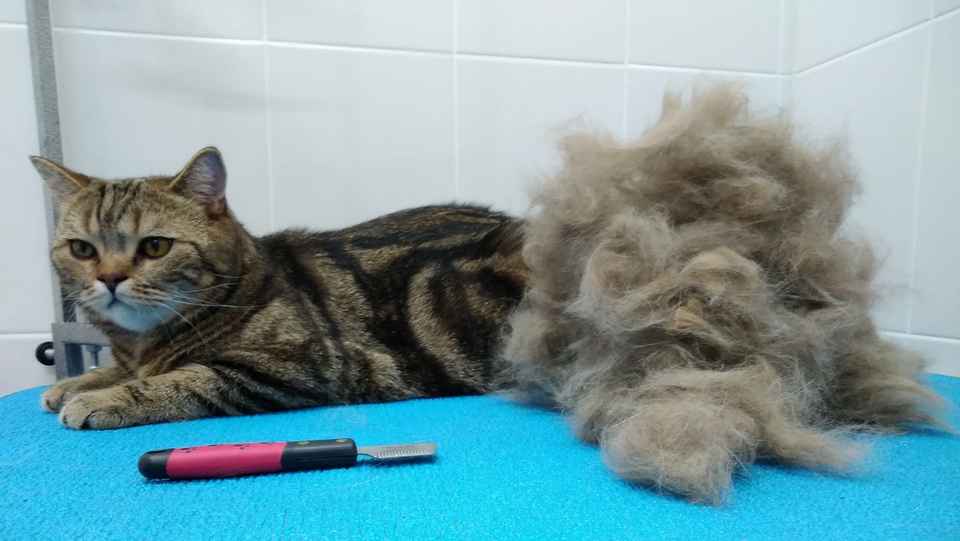
If you have a Husky, Shepherd, or Spitz, and you see that the dog is suffering from the heat, there is a solution. It is a procedure called express deshedding or a professional blow-out.
What is the essence of the procedure?
The groomer thoroughly washes the dog with special shampoos that open the pores, applies a mask that helps dead fur slide out, and then uses a powerful compressor (high-velocity dryer) to blow out all the excess fur. After this, the dog is brushed out with special tools.
The result: the dog is left with its beautiful guard hair, which shines and reflects the sun, but without the “cotton blanket” of undercoat. The skin breathes, air circulates, the dog is not hot, and at the same time, it is protected from burns.
A Comprehensive Approach to Skin and Coat Health
Sometimes, poor coat condition or heat intolerance is related not just to the density of the “fur coat”, but also to internal bodily processes. For example, if the fur is dull, dry, and shedding excessively even out of season, it is worth reviewing their diet. Often this is linked to a lack of vitamins after winter. Read more about how to support your pet’s body in the article: spring vitamin deficiency: do animals need vitamins in spring and how to choose them properly.
It is also important not to confuse a dog’s desire to scratch due to the heat with allergic reactions. In summer, many plants bloom, which can cause itching that owners mistakenly attribute to “hot fur”. If you notice redness or obsessive licking of the paws, be sure to read the article: spring allergies: how to tell if your pet has pollen allergies and how to help them.
Top 5 Rules for Summer Care
To ensure your pet feels comfortable even when it hits 90 degrees, follow these recommendations:
- Regular brushing. Even if you don’t go to a groomer, brush your dog at home 2-3 times a week. This removes dead down.
- Sanitary trim. Trim the fur between the paw pads (sweat glands are located there), under the tail, and in the groin area. This improves ventilation and hygiene.
- Cooling accessories. Use special cooling mats, vests, or bandanas. They work much more effectively and safely than shaving.
- Hydration. Always take water with you on a walk.
- Walk times. Walk early in the morning and late in the evening when the pavement is not scorching hot.
Conclusion
Nature is a wise designer, and it didn’t award your dog this specific type of coat for no reason. Interfering with this system must be thought through. If you have a Yorkie or a Poodle, go ahead and book a stylish trim. If you have a Husky, Shepherd, or Retriever, put down the clippers and pick up a slicker brush or book a deshedding session. Remember that maintaining a healthy coat is much simpler than treating the skin after a failed “improvement”.
Take care of your fur babies, and let summer bring them only the joy of shared walks, not discomfort from the heat!