

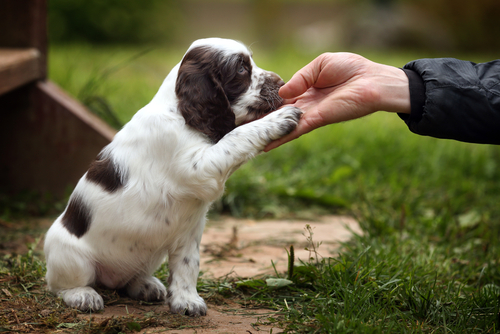
Bringing a puppy home is always an explosion of emotions. A small, clumsy bundle of joy brings happiness, laughter, and, of course, the first puddles on the hardwood. New owners often ask themselves: when should training start seriously? Should you wait until the little one grows up, or start “boot camp” from day one? There is an old and harmful myth that you shouldn’t start training a dog before 6 months or even a year. In reality, upbringing begins the very second your pet’s paw crosses the threshold of your home. Everything you allow or forbid shapes their character. Learn more on Tvaryny.
Why You Shouldn’t Wait: Puppy Neurophysiology
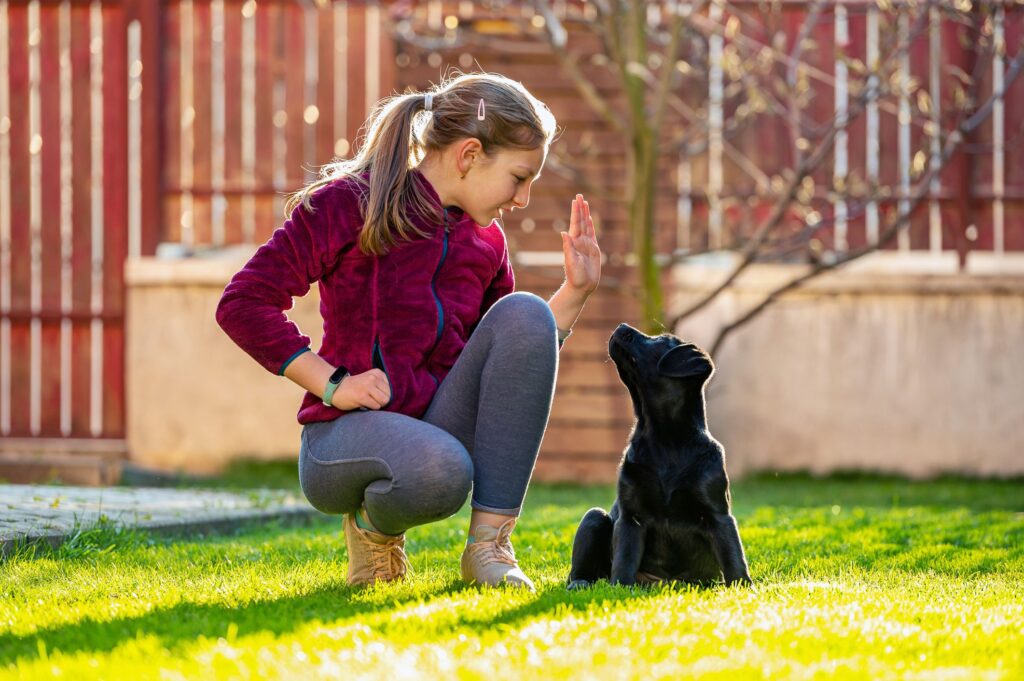
A puppy’s brain is a sponge that soaks up information at incredible speed. The period up to 4-5 months is considered critical for socialization and learning. During this time, neural connections responsible for perceiving the world, fears, and trust in humans are formed.
If you wait until six months, you miss the most important stage when the puppy “learns to learn.” At 6 months, you will get a teenager with formed habits (often bad ones) that you will have to fix rather than create. And retraining is always harder than teaching from scratch. Therefore, the right answer to the question “when to start puppy training” is simple: immediatley.
Stage 1: Childhood (2-3 months) – The Foundation of Trust
At 8-12 weeks, a puppy is most vulnerable and open. He doesn’t know the rules of your world yet. Your task now isn’t to demand perfect execution of the “Heel” command, but to explain the rules of the game and establish contact.
Main goals of this period:
- Establishing contact. The puppy needs to understand that you are the source of food, safety, and entertainment. Hand feed him, play with him, and praise him for any attention he pays to you.
- Name recognition. This is the first signal the little one must master. Use his name only in a positive context. Never yell his name when you want to punish him.
- Hygiene and potty training. It’s time to train him to use puppy pads, and later – to go outside (after shots).
- Getting used to gear. A collar and leash shouldn’t cause panic. Put them on at home for 5-10 minutes during play or feeding.
Important: At this age, the nervous system is very weak. Sessions should last no more than 2-3 minutes but be repeated 5-10 times a day.
Stage 2: First Steps into the Big World (3-4 months)
Usually, post-vaccination quarantine ends at this age. This is the golden time for puppy socialization. If the pup sits at home until 4 months, he might grow up fearful or aggressive.
What needs to be done:
Take the little one to new places. He should see different people (kids, people in hats, with umbrellas), other dogs, traffic, and hear street noise. But do this in doses. If the puppy gets scared – don’t pity him (this reinforces fear), but calmly switch his attention to a game or a treat.
It’s time to start teaching basic puppy commands: “Sit”, “Down”, “Come”. Use the luring method – a piece of food guides the dog’s nose, forcing the body to take the required position.
Stage 3: The “Why” Phase and Rebellion (4-6 months)
The puppy gets bolder, more independent, and starts testing the boundaries of what is allowed. This is the precursor to the teenage phase. Patience and consistency are important here.
Training Focus:
- Impulse control (Wait). The dog can focus for longer now. Teach him to wait before the food bowl, before the door when going for a walk. This develops self-control.
- “Leave it” or “No”. At this age, puppies actively pick up trash on the street. The ban must be clear but fair. Always offer an alternative (a toy or a treat) instead of the forbidden object.
- Leash walking. The puppy is growing and getting stronger. If he pulls on the leash now, imagine what will happen when he weighs 70 lbs. Stop as soon as the leash tightens. Movement should continue only on a loose leash.
Stage 4: Puberty (6-12 months)
Congratulations, you have a teenager! Females go into their first heat, and males face hormonal storms. The dog may suddenly “forget” commands he performed perfectly yesterday. He might run off after scents or try to dominate other dogs.
Many owners give up here, thinking the dog is “stupid.” That’s not true. His brain is rewiring itself. Your strategy is calm persistence. Don’t punish for hormones, but demand compliance with commands. If you said “Sit” – ensure the dog sits, even if you have to help mechanically.
Summary Table: Skills Development Calendar
| Dog’s Age | Priority Skills | Session Duration | Common Issues |
|---|---|---|---|
| 2-3 mos. | Name, “Place/Bed”, hand trust, potty training. | 2-3 min (frequently) | Nipping hands (teething), accidents. |
| 3-4 mos. | Socialization, leash walking, “Sit”, “Come” (indoors). | 5-10 min | Fears, picking stuff up from the ground. |
| 4-6 mos. | Impulse control, “Heel”, “Come” (outdoors), “Leave it”. | 15-20 min | Pulling on the leash, hyperactivity. |
| 6-12 mos. | Polishing commands with distractions, tricks. | 30+ min | “Selective deafness”, sexual behavior. |
5 Golden Rules of Successful Training
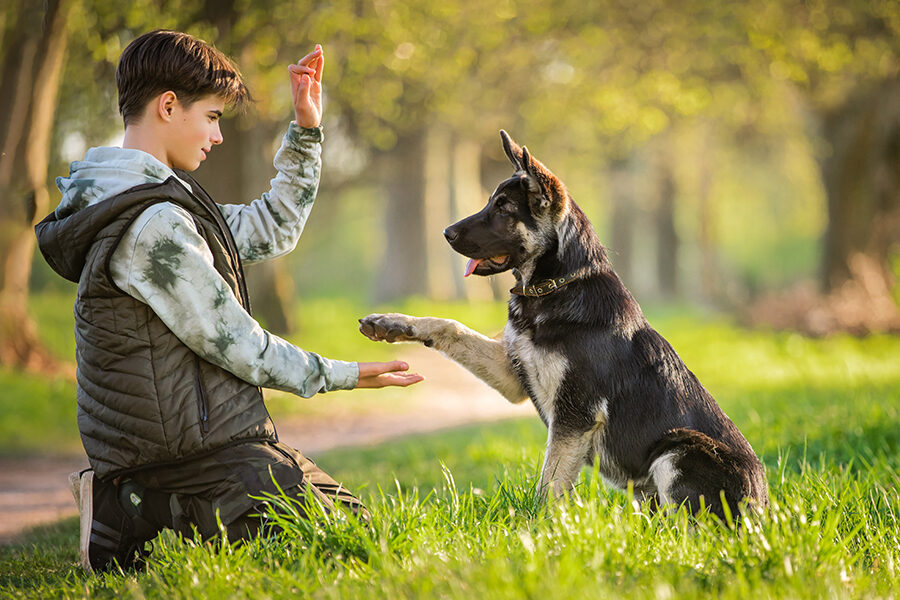
Regardless of your pet’s age, there are universal principles that will help you achieve success in upbringing.
1. Motivation is the engine of progress
Dogs are selfish in a good way. They do what benefits them. Find what your dog is willing to work for. For some, it’s a piece of cheese, for others – a ball, and for some – just sincere praise from their owner. Never work “for free” in the initial stages.
2. Family consistency
The worst thing for a dog is double standards. If Dad forbids sleeping on the couch, but Mom allows it when Dad isn’t home – the dog will be in constant stress and confusion. Agree on the rules from the start. The word “No” must be law always, not just when you are in a bad mood.
3. From simple to complex
Don’t try to teach the puppy the “Come” command when there are ten other dogs running around. Start training at home, in silence. When the skill is cemented – go out into the yard, then – to the park. Increase the level of difficulty (distractions) gradually.
4. Emotional state of the owner
Dogs read our emotions perfectly. If you are irritated, tired, or angry – it’s better to skip the training session. Your nervousness will transfer to the dog, he’ll start making mistakes, you’ll get even angrier – and it becomes a vicious circle. Training should be a joy for both.
5. Timing of reinforcement
You have about 1-2 seconds to praise the dog for the correct action. If you say “Good boy” 5 seconds after the dog has sat down, he might already be standing up and sratching his ear. As a result, you will praise him for scratching his ear, not for the “Sit” command.
Typical Beginner Mistakes
Even with the best intentions, we can make mistakes. Here are a few things to avoid:
- Repeating the command. “Rex, sit. Sit. I said sit!”. The dog learns that it isn’t necessary to obey the first time. The command is spoken once. If not executed – we help mechanically or by luring.
- Post-factum punishment. You come home and see chewed shoes. You yell at the dog. The dog looks guilty. Do you think he understood? No, he simply sees that the owner is angry and tries to calm you down with appeasement signals. He doesn’t connect your punishment with what he did 3 hours ago.
- Sessions that are too long. Puppies get tired quickly. It’s better to have 5 sets of 3 minutes than one hour-long session that will exhaust both of you.
Dog Psychology: Why Does This Work?
Modern cynology is moving away from dominance theory. You don’t need to “crush” the dog with authority or physical force for him to listen to you. You must become a clear leader for him. A leader who controls resources (food, games, walks) and distributes them fairly.
When a puppy understands what is wanted of him and knows how to get what he wants (a treat) through correct behavior, he will try to please you on his own. This is “operant conditioning” – you reinforce what you like and ignore what you don’t.
Conclusion
The question “when to start puppy training” has only one correct answer – today. Every day of delay is a lost opportunity to shape the perfect companion. Remember that training is not a circus performance, but a method of communication.
Invest time and effort in the first year of the dog’s life, and for the next 10-15 years, you will enjoy a comfortable life with a smart, devoted, and well-mannered friend. Good luck with your training!