

Finding a tiny, helpless kitten is a challenge for any heart. Your mind races with questions: “What should I do?” “Is it healthy?” “How can I help it?” When you take on the responsibility of a tiny kitten, you become its entire world. However, raising a kitten that’s been separated from its mother early isn’t just about food and warmth. It’s also a battle against an invisible enemy known as Orphan Kitten Syndrome. This condition can significantly impact your pet’s health and behavior in the future. But don’t worry, with the right knowledge, you can raise a wonderful and healthy cat. We’ll cover all the nuances of this process in more detail right here on Tvaryny.
Early weaning from the mother and littermates leaves a deep impression on a kitten’s development. A mother cat teaches not only basic survival skills but also social norms: how to communicate, how to control the strength of a bite during play, and how to react to stress. When this natural learning process is interrupted, problems arise. Understanding these issues is the first step toward solving them.
What Is Orphan Kitten Syndrome?
Orphan Kitten Syndrome isn’t an official veterinary diagnosis, but rather a complex of behavioral and sometimes physiological problems that arise in cats weaned too early from their mothers (usually before 8-12 weeks of age). A mother cat provides kittens with not only milk but also warmth, security, and their first life lessons. Without her, a kitten doesn’t learn crucial social skills, which leads to specific behaviors in adulthood.
Checklist: How to Recognize the Signs of the Syndrome
If you’ve rescued a kitten or adopted one at a very young age, pay attention to these characteristic signs. The earlier you notice them, the easier it will be to correct the behavior of an orphan kitten.
- Obsessive Sucking. A kitten may suck on your skin, clothes, soft toys, or even its own paws. This is an attempt to compensate for the absence of a mother’s warmth and the feeding process.
- Aggressive Play and Biting. The kitten doesn’t know how to control the strength of its bites. It bites and scratches during play not out of malice, but because its mother and siblings didn’t teach it when to stop.
- Low Stress Tolerance. These cats are often timid and anxious. They might hide from guests, be afraid of loud noises, and have a hard time adapting to changes in their environment.
- Socialization Problems. They may find it difficult to interact with other cats because they don’t know “cat etiquette.” This can manifest as aggression or, conversely, excessive fear.
- Weaker Immunity. Kittens that didn’t get enough mother’s milk (colostrum) in the first days of life often have a weaker immune system and are more susceptible to infections.
- Attention Seeking or Detachment. Some “orphans” become extremely demanding of human attention, while others grow to be more independent and distant.
The Critical First Weeks: A Step-by-Step Care Guide
If you have a tiny kitten (up to 4-5 weeks old), the first days and weeks are critical for its survival. Here is a detailed plan on how to care for an orphan kitten.
1. Creating a Safe “Nest”
The first thing to do is to set up a warm and safe place. Kittens up to 3-4 weeks old cannot regulate their body temperature on their own.
- Use a box or carrier. It should be high enough so the kitten can’t climb out.
- Provide warmth. The ideal option is a heating pad or hot water bottles wrapped in a towel. It’s important that the kitten has the option to move away from the heat source if it gets too hot. The temperature in the “nest” should be about 85-90°F (29-32°C) for newborns.
- Soft bedding. Use soft towels or blankets.
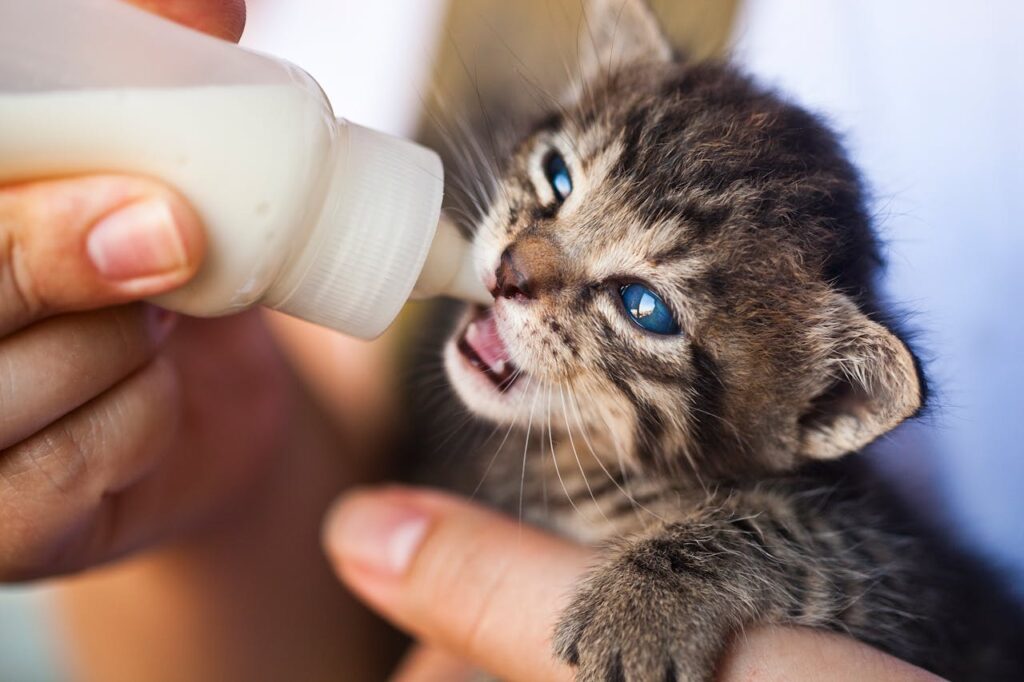
2. Proper Feeding for an Orphan Kitten
This is the most important aspect. Never give a kitten cow or goat milk! It’s not digestible and can cause fatal diarrhea.
- Buy a kitten milk replacer. It’s sold at pet stores and veterinary clinics. This is a dry formula that needs to be mixed with water according to the instructions.
- Use a special bottle or dropper. You need to feed carefully, holding the kitten on its stomach (never on its back, to prevent it from choking).
- Stick to a schedule. Newborn kittens eat every 2-3 hours, day and night. As they get older, the intervals increase.
3. Stimulating Elimination
Kittens under 3-4 weeks can’t eliminate on their own. The mother cat licks them to stimulate this process. You’ll need to take on this role. After each feeding, take a cotton ball or a soft cloth, moisten it with warm water, and gently massage the area under the tail, mimicking the mother’s licking. Do this over a litter box or a paper towel until the kitten is done.
Training and Behavior Correction: From 4 Weeks Onward
Once the basic needs of warmth and food are met, the training phase begins. Your task is to become both a mother and a sibling to the kitten, teaching it the rules of good behavior.
Dealing with Biting and Scratching
This is one of the most common problems. An orphan kitten doesn’t know that it’s hurting you.
Expert Tip: Never play with a kitten using your hands or feet. Your hands are for petting and feeding. Toys are for playing.
If the kitten bites you during play, say “Ouch!” or “No!” loudly and briefly, and immediately stop the game for a few minutes. This way, it will understand that its action leads to the fun stopping. Redirect its energy to toys. Using wand toys, balls, and interactive puzzles is a great solution. It’s important to choose safe toys for kittens that won’t harm the little one and will help it develop its hunting skills properly.
Socialization: Introducing It to the World
From 4 to 12 weeks is the “golden” time for socialization. Your task is to introduce the kitten to various sounds, smells, people, and, if possible, other animals (after consulting a vet and completing a quarantine period).
Invite friends over and get it used to the sound of a vacuum cleaner or TV. The more positive experiences a kitten has at this age, the calmer and more confident cat it will grow into. Proper socialization for a kitten is the foundation of its future mental health and harmonious coexistence with you.
Litter Box and Scratching Post Training
Usually, as soon as a kitten starts walking on its own (around 3-4 weeks), you can introduce it to the litter box. Place it in a corner of the “nest.” After each nap and feeding, put the kitten in the litter box. If it does its business, praise it. Do the same with the scratching post—show it to them, play near it, and encourage them to use it instead of your furniture.
Health of an Orphan Kitten: What to Watch For
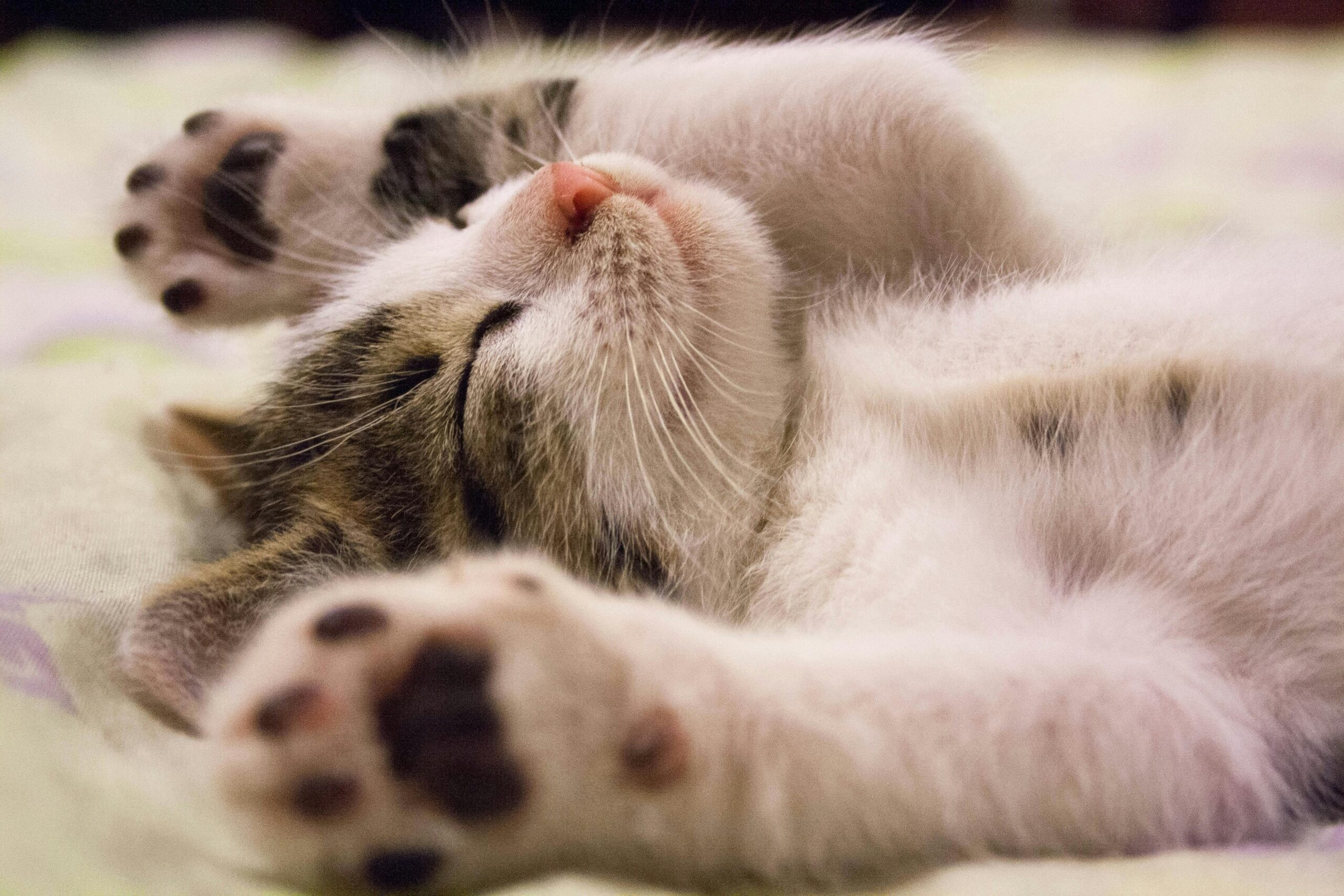
Due to the lack of maternal immunity and potentially stressful conditions early in life, orphan kittens require close veterinary supervision.
- First vet visit. As soon as you find a kitten, take it to a vet. The doctor will assess its age, overall condition, check for fleas or parasites, and provide feeding recommendations.
- Vaccination and deworming. Follow the schedule recommended by your vet. This is critically important for protecting a weak immune system.
- Monitor digestion. Any changes in stool (diarrhea, constipation), refusal to eat, or vomiting are reasons to contact a clinic immediately.
Frequently Asked Questions (FAQ)
Can I introduce an orphan kitten to another adult cat?
You can, but very carefully. First, the kitten should go through a quarantine period (2-3 weeks) and a vet check. The introduction should be gradual: first, an exchange of scents (through towels), then visual contact through a screen or glass, and only then a controlled meeting. An adult cat may not accept the kitten right away.
My kitten constantly sucks on my finger. Will this go away?
Yes, this behavior usually decreases or disappears with age, especially after 6-8 months. It’s a self-soothing action that reminds it of its mother. Don’t scold it, but gently redirect its attention to a toy or offer to pet it instead.
At what age can I leave an orphan kitten alone?
Try not to leave very young kittens (under 4-5 weeks) alone for long due to the need for frequent feeding. Starting at 2-3 months, a kitten can be left alone for a few hours. Provide a safe space for it, with food, water, a litter box, and toys so it doesn’t get bored.
Conclusion: Your Love Is the Best Medicine
Raising a kitten without its mother is a marathon, not a sprint. It requires patience, knowledge, and endless love. Yes, you might face behavioral issues, but all of them are correctable. Remember that you’re not just saving a life—you’re shaping a personality. Every minute spent feeding, every game with a wand toy, and every kind word is an investment in your unique cat’s happy and long life. And believe me, the love and gratitude it will give you in return are priceless.