

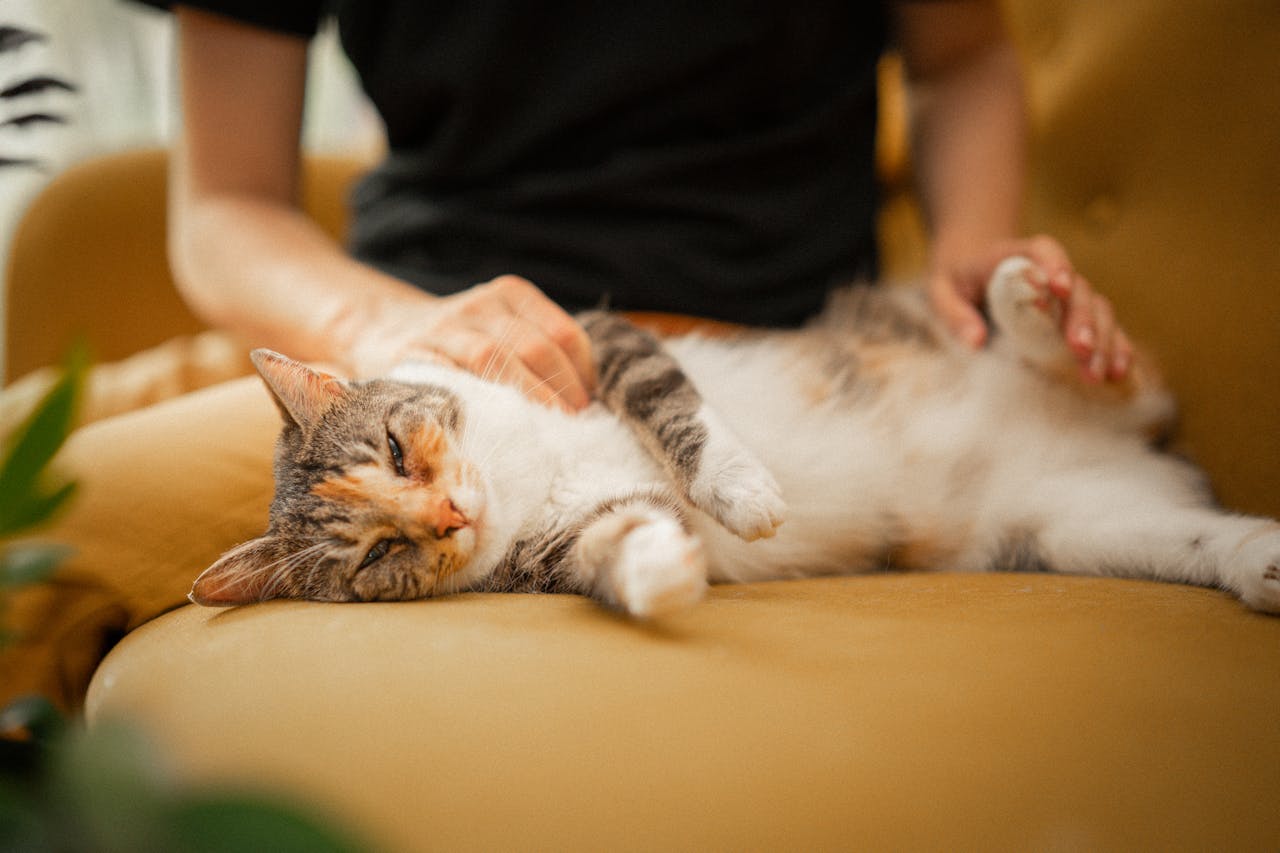
A cozy evening, a soft blanket, and a cat curled up on your lap, emitting that characteristic, soothing rumble. For most cat owners, this is the very definition of feline happiness. We’ve come to believe that if a cat is purring, it’s content with life. But what if that sound is a much more complex language, one that can communicate not only bliss but also pain, fear, and even manipulation? Understanding the true meaning of a cat’s purr is the key to a deeper bond with your pet, and we’ll delve into that more on Tvaryny.
It’s true, more often than not, our furry friends turn on their internal “engine” out of sheer contentment. Purring is the first lullaby a kitten hears from its mother, and the first sound they learn to make in response. It’s a signal that says, “I’m here, I’m safe, and all is well.” This association sticks with them for life, which is why your cat purrs when you pet it, scratch behind its ears, or are simply nearby, creating an atmosphere of calm and security.
How Does a Cat’s “Engine” Actually Work?
Before we dive into why cats purr, let’s take a look under the hood. For a long time, the mechanism of purring was a mystery to scientists. Today, the “neural oscillator” theory is the dominant one. Simply put, there’s a special area in a cat’s brain that sends rhythmic pulses to the muscles in its voice box (larynx). These muscles rapidly contract and relax, causing the vocal cords to vibrate as the cat breathes in and out. This vibration is what creates that unique sound we know as a purr.
Interestingly, unlike meowing, which requires an open mouth, cats can purr with their jaws completely closed. This makes purring a unique and energy-efficient tool for communication.
More Than Happiness: 5 Hidden Reasons for Purring
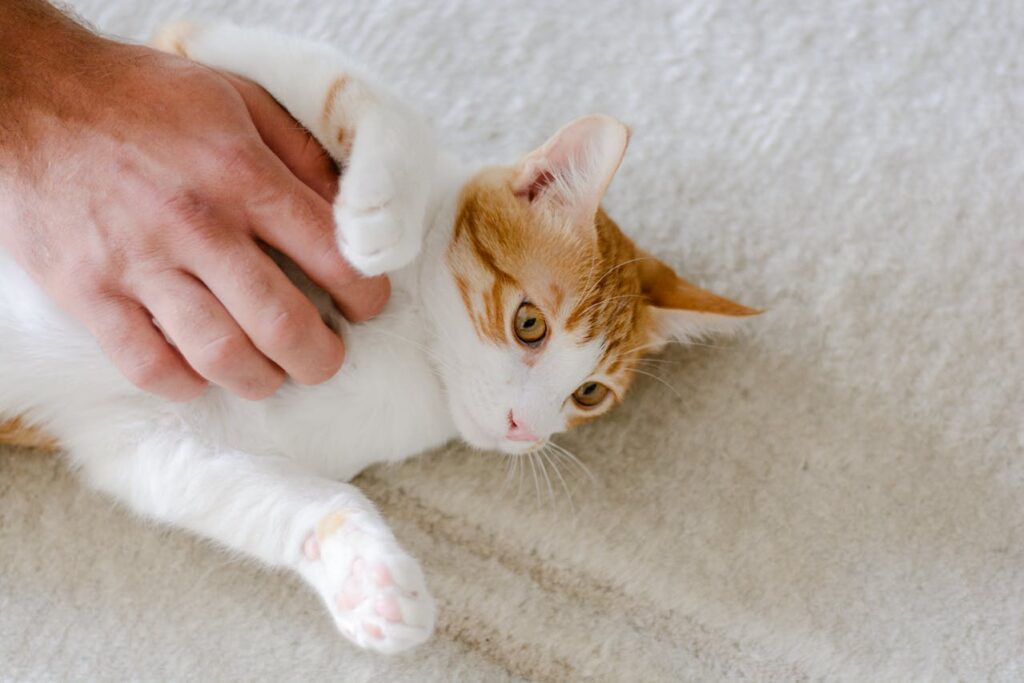
Now, let’s get to the most fascinating part. Purring is a versatile tool that cats use in a wide variety of situations. And not all of them are related to joy.
1. Self-Soothing and Pain Relief
This is one of the most important and surprising functions. When a cat is in pain, scared, or highly stressed (for example, during a vet visit or after an injury), it starts to purr to calm itself down. It’s similar to how a person might hum to themselves or hug their arms in a stressful situation. The vibrations created by purring have a proven therapeutic effect.
2. Healing Vibrations: A Cat’s Superpower
Scientific studies have shown that a cat’s purr frequency is in the range of 25 to 150 Hertz. Vibrations within this range have healing properties:
- Stimulate bone and tissue healing: Frequencies of 25-50 Hz promote bone growth and accelerate the healing of fractures.
- Reduce pain and swelling: Purring acts as a natural painkiller.
- Improve breathing: For a cat with difficulty breathing, purring can be a way to ease its condition.
Therefore, when a cat purrs in pain, it’s not just signaling its state; it’s actively trying to help itself. This is a built-in survival mechanism that allows the animal to recover faster from injuries. It’s no wonder there’s an old veterinary saying: “If you put a cat and a bunch of broken bones in a room, the bones will heal.”
3. A Tool for Communication and Bonding
As we mentioned, purring is the first way a mother cat and her kittens communicate. Blind and deaf newborns feel their mother’s vibration and use it to find their way to warmth and milk. In response, they purr to let her know they are okay. Mother cats may also purr to call their kittens or to soothe them.
4. Requests and Manipulation
Have you noticed that a cat’s morning purr when it wants food sounds a little different? You’re not imagining it. Scientists have identified a special type of purr called a “solicitation purr.” The cat weaves high-frequency notes, similar to a human baby’s cry, into its usual low-frequency rumble. This sound instinctively grabs our attention and makes us more likely to quickly satisfy the request of our furry little manipulator. It’s a brilliant example of how cats have learned to effectively use their sounds to interact with humans.
5. A Greeting and Invitation to Connect
Sometimes a cat will purr when it approaches you or another familiar cat. This is its way of saying, “Hi, I have no hostile intentions, I’m a friend.” It’s a signal of trust and an invitation to interact.
How to Understand Your Cat: Learning to Decipher the Purr
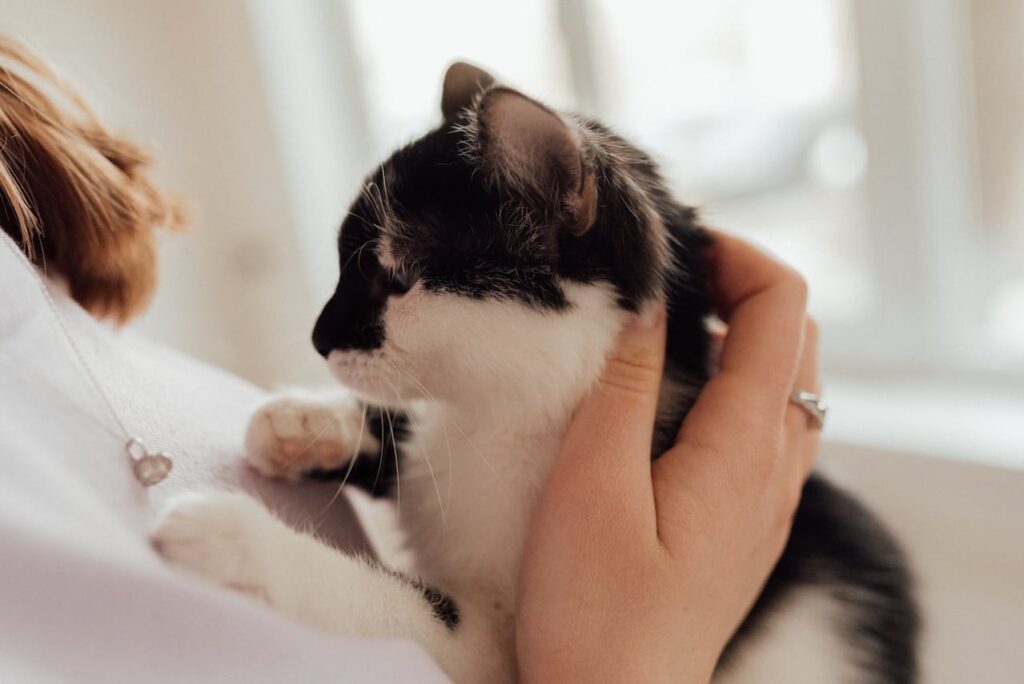
So, how do you distinguish a purr of contentment from a purr of pain? The key is context and body language. A purr never exists in a vacuum. To interpret it correctly, pay attention to the accompanying signals:
- Body posture: A relaxed cat will lie or sit in a loose posture with relaxed muscles. A cat in pain, on the other hand, will be tense, hunched over, and may tuck its paws underneath itself.
- Eyes: A happy cat’s eyes may be half-closed, and it will blink slowly. Wide-open eyes with dilated pupils often indicate fear or pain.
- Ears and whiskers: In a calm cat, the ears are pointed forward or slightly to the sides, and the whiskers are relaxed. Ears pinned back against the head and tense whiskers are a sign of stress or aggression.
- Tail: The tail rests calmly nearby or has a slight twitch at the tip. A tense, tucked-in tail or one that is twitching sharply is a bad sign.
- Behavior: If your cat is purring but also hiding, refusing food, not using the litter box, or acting uncharacteristically—that’s a red flag.
When Purring Is a Cause for Concern
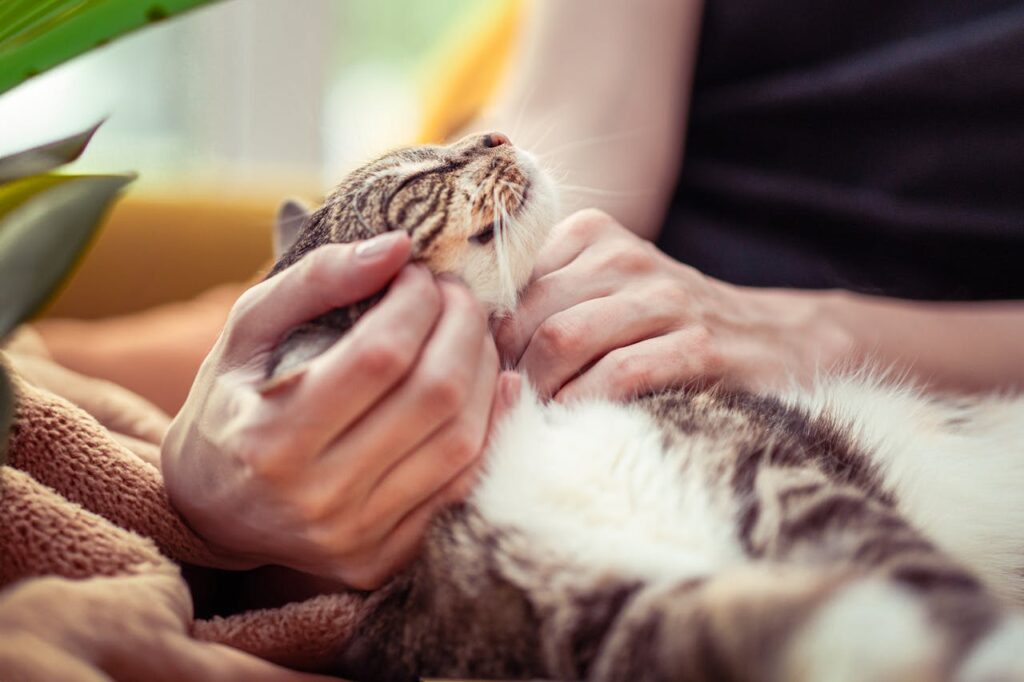
Your main task as an owner is to learn to distinguish between what’s normal and what’s not. Consult a veterinarian if you notice your cat is purring:
- Constantly and without a clear reason: Especially if it’s accompanied by apathy or a reluctance to move.
- While eating or using the litter box: This could indicate problems with its teeth, gums, or urinary system.
- In combination with aggression: Pain is one of the most common causes of unusual behavior. An animal in discomfort may suddenly hiss or lash out when you try to pet it. This could be a symptom of conditions like sudden aggression syndrome in cats, caused by underlying pain. To better understand the reasons behind such behavior, check out our article on what to do if a cat attacks for no reason.
- If the purr sounds raspy, strained, or is accompanied by labored breathing.
Conclusion: Listen and Observe
So, the answer to the question “why do cats purr?” is much deeper than it seems at first glance. A purr is not just a sound; it’s a complex language and a unique tool for survival. It’s a lullaby, a pain reliever, a plea for help, and a way of saying, “I love you.”
Learn to listen not only with your ears but with your heart. Observe your pet, study its habits and body language. This will allow you not only to enjoy happy moments but also to notice when your cat needs help. And that’s what true love and care are all about, strengthening the incredible bond between a person and their cat.