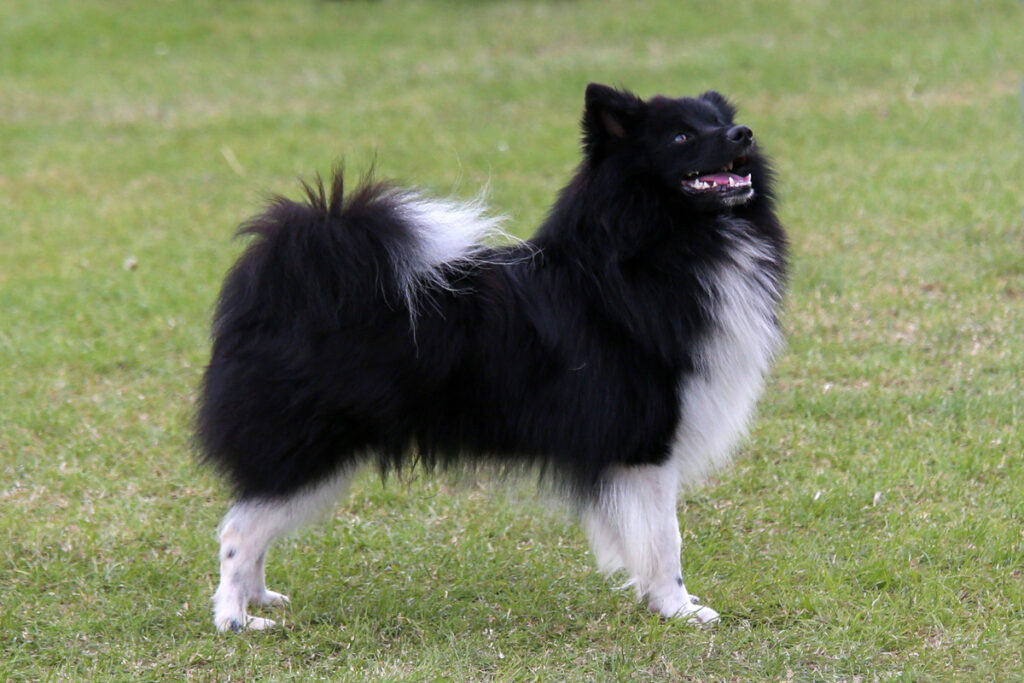
The Medium German Spitz (Mittelspitz) is a true bundle of energy wrapped in an elegant fluffy coat. Cheerful, lively, and active, these dogs make wonderful companions for the entire family, from the youngest to the eldest. Members of this breed don't just tolerate children; they genuinely love spending time with them, eagerly joining in on all their mischief. They are affectionate and good-natured, getting along easily with other pets, whether cats or other dogs. Thanks to their compact size, they are ideal for families living in smaller city flats where space is at a premium. Find out more at Tvaryny.
Despite its volume, their coat has almost no characteristic "doggy" smell, even when wet - definitely a huge advantage for people with sensitive noses. Another historical feature of these dogs is their ringing voice. While a loud bark might annoy neighbours in a block of flats, it is part of their nature. However, with proper upbringing and an understanding of dog psychology, the Spitz will use it only for its intended purpose - to warn owners of strangers approaching, acting as a reliable "living alarm system".
Medium German Spitz (Mittelspitz): A Brief Breed Overview

Medium German Spitz (Mittelspitz): A Brief Breed Overview · 7
| Characteristic | Data |
|---|---|
| Origin | Germany (Central Europe) |
| First Mention (Standard) | 1898–1899 |
| Life Expectancy | 12–15 years (often reaching 16–18) |
| Height at Withers | 30–38 cm (according to updated FCI standard) |
| Weight | 7–11 kg (depends on height and bone structure) |
| FCI Group | Group 5 (Spitz and primitive types) |
| Purpose | Companion dog, watchdog |
What the Mittelspitz Looks Like: Detailed Description

The Mittelspitz is a compact dog with a square build that radiates confidence and dignity. A "square build" means the dog's height at the withers is approximately equal to the length of its body. This gives the animal excellent manoeuvrability and endurance.
Head and Muzzle
The head is proportional to the body, wedge-shaped, resembling a fox. This is one of the breed's trademarks - a cunning, intelligent "foxy" expression. The transition from forehead to muzzle (stop) is smooth but clearly visible, not abrupt. The muzzle is of moderate length, not too sharp, but not "blunt" either. The nose is small and round. A pure black nose is desirable, although in brown dogs, it may be dark brown to harmonise with the coat colour.
Eyes and Ears
The ears are small, triangular, set high and close together. They always stand vertically with stiff, pointed tips, giving the dog a constantly alert look. The eyes are medium-sized, almond-shaped or slightly oval, and dark in colour. The eyelids are black (dark brown in brown dogs) and fit tightly, preventing the frequent inflammation typical of breeds with droopy eyes.
Body and Limbs
The neck is of medium length, dry, without a dewlap, slightly arched at the nape. The main decoration of the neck is the fur, which forms a luxurious, fluffy collar resembling a lion's mane. The back is short, strong, and perfectly straight. The chest is well-developed, deep, and of moderate width. The tail is the pride of the Spitz. It is of medium length, set high, and curled in a ring over the back, lying firmly against it. It is covered with very long, fluffy hair, creating a pom-pom effect.
The limbs are straight, parallel to each other, with strong bone structure. Joint angles are moderate, providing the dog with light, springy movement. The paws are small and round ("cat paws"), with toes arched and tight, and claws are strong, often black.
Coat Type and Structure
The Spitz has a double coat. It consists of long, straight top guard hair that stands off the body, and a short, very dense, cotton-like undercoat. It is the undercoat that "holds" the guard hair, creating that voluminous silhouette. On the muzzle, ears, and the front of the legs, the hair is short, dense, and velvety to the touch. Lush "trousers" form on the hind legs.
Mittelspitz Colours
The colour palette of the Medium Spitz is impressively diverse. The standard allows for:
- Black: Deep, lacquered black without rusty patches; the skin under the coat is also dark.
- White: Pure white, without yellowing, especially on the ears (which happens frequently).
- Brown: Uniform dark chocolate shade.
- Orange: Bright, rich colour ranging from light cream to deep red.
- Grey-shaded (Wolf-grey): Silver-grey with black hair tips. A dark "mask" on the muzzle and "spectacles" around the eyes are mandatory.
- Other colours: This includes cream, black and tan, and particolour (where the main background is white and patches are black, brown, grey, or orange).
Varieties: The Mittel's Place in the Spitz Family
Confusion often arises between the different types of German Spitz. It is important to understand that this is one breed, divided by size varieties. If the Giant German Spitz (Grossspitz) feels a bit too large for your flat, and the Pomeranian seems too fragile and decorative, then the Mittelspitz is the "golden mean".
Below is a comparison table of adjacent size categories to help you decide:
| Spitz Variety | Height at Withers | Features |
|---|---|---|
| Large (Grossspitz) | 40–50 cm | Rare, calmer, closer to working dogs. |
| Medium (Mittelspitz) | 30–38 cm | Ideal balance of activity and size. |
| Small (Kleinspitz) | 23–29 cm | More excitable, but compact. |
Interesting Facts About German Spitzes
1. A Royal Choice. Although Mittels were dogs of the common people, their smaller brothers conquered the hearts of kings. Queen Victoria was a fan of Spitzes, which made the breed incredibly popular in Britain.
2. The Spitz Smile. Thanks to the special structure of the jaw and the raised corners of the lips, it seems that the Spitz is constantly smiling. This is not just anatomy; it is a reflection of their essence.
3. Multicoloured Children. Puppies of different colours can be born in one Mittelspitz litter if the parents have the appropriate genetics.
4. Long-livers. Dogs that live up to 18 and even 20 years with good care are frequently found among Mittels.


