One of the kindest and most versatile dogs: affectionate with everyone, easy to train, an ideal family dog, guide dog and therapy dog. The breed’s biggest shadow is its record-high cancer rate: around 60% of Golden Retrievers develop cancer, so early diagnosis is critical.
Apartment · with caveatsKidsCatsOther dogsBeginners
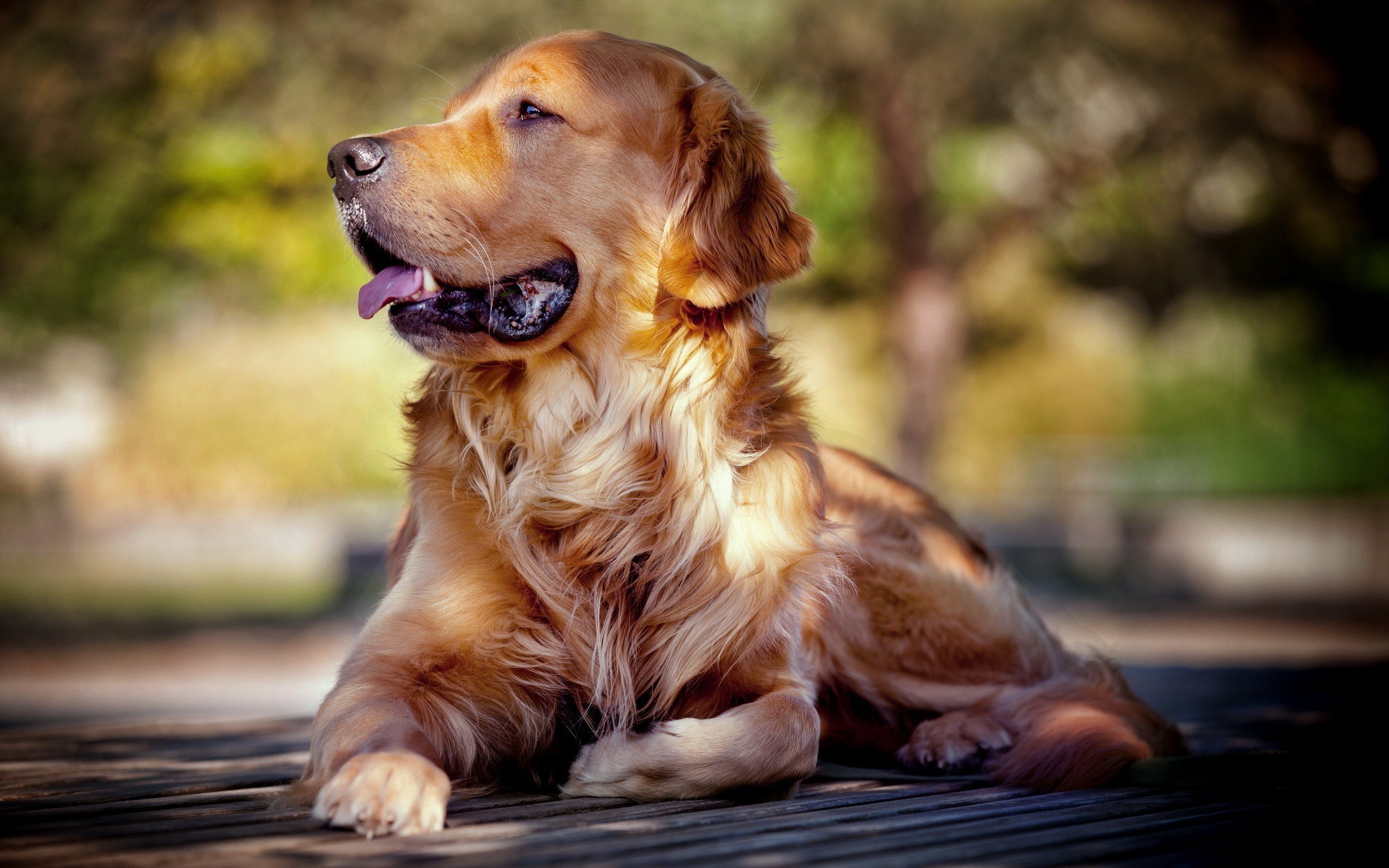
The Golden Retriever is not just a dog with a golden coat, but with a truly sunny disposition. They are calm, well-balanced, friendly, and open. They adore spending time with children and possess not a hint of aggression. This radiant family favourite boasts a robust physique and harmonious proportions, physical endurance, and a keen sense of smell. The breed was developed to assist wildfowlers, meaning that despite their inherent friendliness, they have strong instincts and require plenty of activity. However, due to their excessive good nature towards everyone, tranquil and gentle Golden Retrievers are ill-suited for guard duties. Learn more about them on Tvaryny.
Golden Retriever: A Detailed Look at Key Breed Characteristics
Golden Retriever: A Detailed Look at Key Breed Characteristics · 11
Companion, gundog (retriever), guide dog, therapy dog, search and rescue
Activity Level
High
Grooming Needs
Medium/High
Attitude to Children
Excellent
Attitude to Other Animals
Good, with proper socialisation
Interesting Facts About the Breed
Presidential Dogs: Several US Presidents have owned Golden Retrievers, including Gerald Ford (a dog named Liberty) and Ronald Reagan (a dog named Victory).
Film Stars: Thanks to their photogenic appearance and ease of training, Golden Retrievers often feature in films and advertisements. One of the most famous is Air Bud from the "Air Bud" film series.
Guinness Record Holders: A Golden Retriever named Charlie from Australia entered the Guinness Book of Records in 2012 for the loudest bark - 113.1 decibels. Another Golden, Finny, is known for being able to hold 6 tennis balls in his mouth at once.
Soft Mouth: Golden Retrievers are known for their "soft mouth" - the ability to carry objects, including game, without damaging them. It's said they can carry a raw egg in their mouth without breaking it.
Popularity: The Golden Retriever consistently ranks among the top 10 most popular dog breeds in many countries worldwide, including the USA, UK, and Canada.
Different Types: Although the breed standard is unified, there are slight differences in appearance between the "British" (or "European") type and the "American" type of Golden Retrievers. British types generally have a lighter coat colour, a more massive head, and a sturdier bone structure. American types are often a richer golden colour and have a slightly more refined build. There is also a "Canadian" type, which has its own peculiarities.
Webbed Feet: Golden Retrievers have webbed feet, making them excellent swimmers.
History of the Breed's Origin
The history of the Golden Retriever is shrouded in legend, but the real facts are no less intriguing. The breed's origins are closely tied to Scotland and the name of Dudley Marjoribanks, the first Lord Tweedmouth. In the mid-19th century, he set out to breed the ideal gundog - a retriever that would perform exceptionally well in the challenging conditions of the Scottish Highlands, particularly when hunting waterfowl.
A popular legend once claimed that Lord Tweedmouth acquired a group of Russian circus dogs (purportedly Caucasian Shepherds) and that these formed the foundation of the breed. However, the Lord's studbook records, published in 1952, debunked this myth. They revealed that the breed was meticulously developed through the crossing of various breeds. The foundation was a yellow Flat-Coated Retriever named Nous, acquired by the Lord in 1865. Nous was then bred with a Tweed Water Spaniel bitch named Belle. Tweed Water Spaniels (now an extinct breed) were known for their intelligence, love of water, and curly, chestnut-coloured coats.
In subsequent generations, bloodlines were introduced to refine the breed and solidify desirable qualities:
Irish Setters - to enhance scenting abilities and add a rich golden hue to the coat.
Bloodhounds - to strengthen scenting and stamina.
Water Spaniels (possibly others in addition to the Tweed Water Spaniel).
Lord Tweedmouth's goal was to create a dog that combined strength, stamina, a keen nose, a soft mouth for retrieving game undamaged, along with a loyal and balanced character. The result exceeded all expectations. The Golden Retriever quickly gained popularity among hunters thanks to its outstanding working abilities.
The breed was first recognised by the English Kennel Club in 1911 under the name "Retriever (Golden and Yellow)". In 1920, the name was changed to "Golden Retriever". The American Kennel Club (AKC) recognised the breed in 1932. Today, the Golden Retriever is one of the most popular breeds worldwide, valued not only as a gundog but also as a wonderful companion and family pet.
What a Golden Retriever Looks Like: A Detailed Description of Appearance and Breed Standard
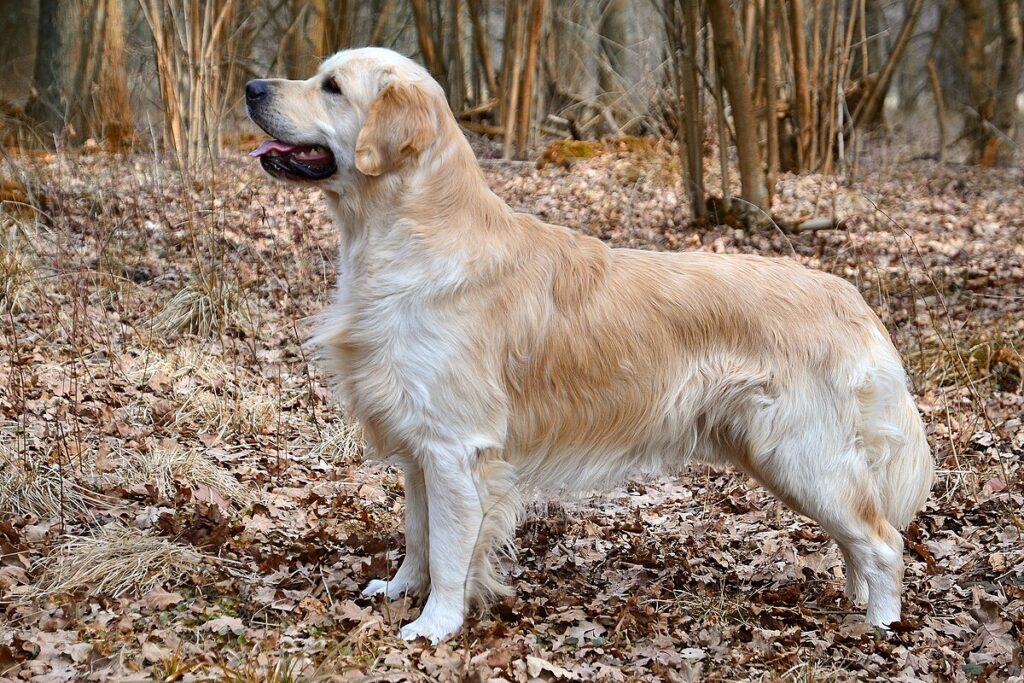
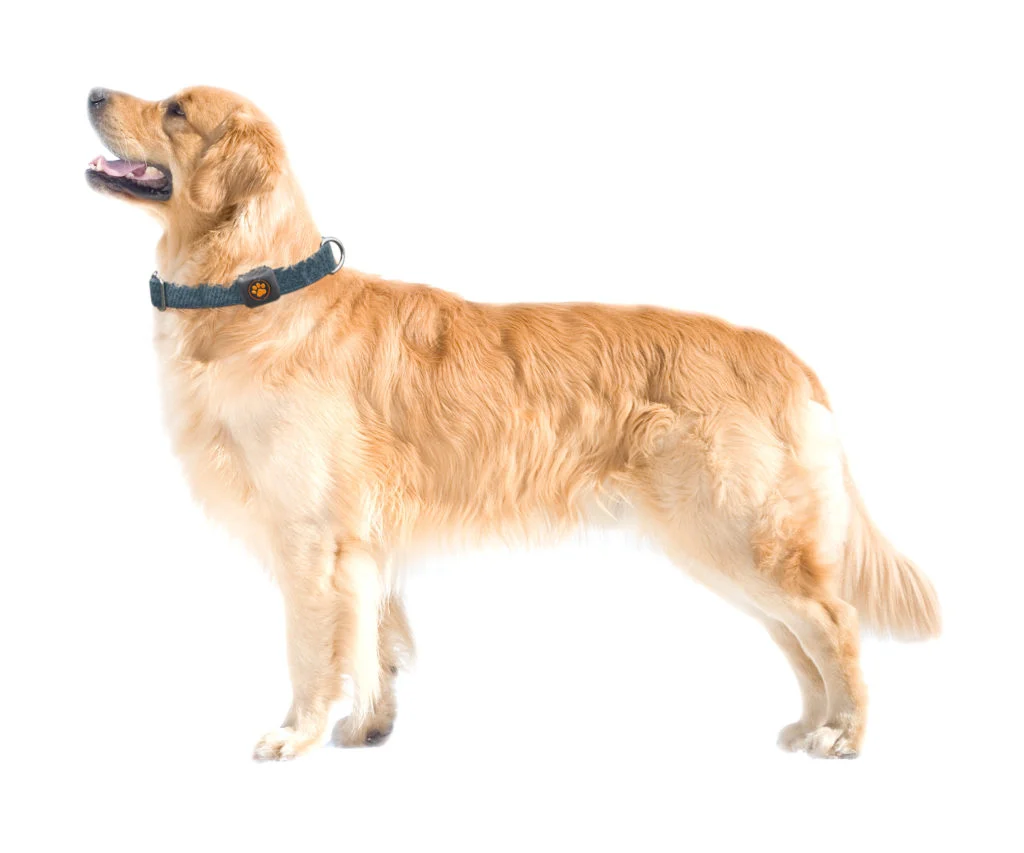
The Golden Retriever is a harmoniously built, symmetrical, active, and powerful dog of medium size with a good, but not overly heavy bone structure. Its appearance radiates confidence, friendliness, and intelligence. According to FCI Standard No. 111, the main characteristics of the breed are as follows:
General Appearance: Symmetrical, balanced, active, powerful, with a level topline and deep chest. Movement is free and flowing.
Head: Proportionate to the body. Skull broad, but not coarse. Stop (transition from forehead to muzzle) well-defined. Muzzle powerful, wide, and deep, its length approximately equal to the length of the skull from occiput to stop.
Nose: Black.
Eyes: Dark brown, set fairly wide apart, medium-sized. Eyelids darkly pigmented. Expression friendly and intelligent.
Ears: Medium-sized, pendent, set approximately level with the eyes. When drawn forward, the tip of the ear should reach the inner corner of the eye.
Bite: Scissor bite - upper incisors closely overlapping lower ones, teeth set squarely in jaws. A full complement of teeth is important.
Neck: Moderate length, muscular, without excess skin.
Body: Balanced. Back level. Loin short, strong, muscular. Chest deep, with well-sprung ribs, but not barrel-shaped.
Tail: Set on level with the backline, reaching to the hocks. Carried level or with a slight upward curve, but never curled over the back or curled at the tip. Well-feathered ("flag").
Limbs:
Forequarters: Straight, with good bone. Shoulder blades long, well laid back. Upper arms of equal length to shoulder blades. Elbows held close to the body.
Hindquarters: Strong and muscular. Stifles (knee joints) well-angulated. Hocks (ankle joints) well let down, straight when viewed from behind, neither turned in nor out.
Feet: Round, "cat-like", with well-knuckled pads and thick cushions.
Coat:Dense, water-repellent double coat. Outer coat straight or slightly wavy, lying flat. Undercoat dense. On the back of the forelegs, belly, chest, back of the thighs, and underside of the tail, the coat forms longer, denser "feathering" or "frills".
Colour: Any shade of gold or cream. Red (as in an Irish Setter) or mahogany colours are not permitted. A small amount of white hair is allowed only on the chest. With age, the muzzle and body may grey or lighten.
Deviations from the standard, such as an incorrect bite, atypical colouration, aggressive or timid behaviour, are considered faults or disqualifying defects depending on their degree of expression.
Character: Temperament and Behaviour
The Golden Retriever is renowned for its exceptionally friendly, patient, and well-balanced character. This is one of the main reasons for its incredible popularity worldwide. This dog literally radiates positive energy and optimism. They have strong nerves, making them difficult to provoke into aggression or nervousness. Their balanced temperament is combined with determination and independence; the dog is capable of making quick decisions in difficult situations, especially if properly trained.
Key Golden Retriever character traits:
Friendliness: Goldens are incredibly affable towards both family members and strangers. They are rarely suspicious or aggressive, which makes them less suitable as guard dogs, but excellent companions.
Intelligence and Trainability: These are very intelligent dogs that learn easily. They are eager to please their owner, which significantly simplifies the training process. Golden Retrievers often rank highly among the most intelligent dog breeds.
Loyalty: They form deep bonds with their family and strive to be full members. A Golden Retriever copes poorly with prolonged loneliness.
Patience: This trait makes them ideal dogs for families with children. They stoically tolerate children's antics, though, of course, it's important to teach children how to interact properly with a dog.
Playfulness: Golden Retrievers maintain a playful disposition throughout their lives. They adore active games, especially those involving retrieving.
Work Ethic: Bred as gundogs, Goldens have an innate inclination to work. They enjoy having a "task" and feeling useful.
Love of Water: Most Golden Retrievers absolutely love to swim. Their water-repellent coat and robust physique make them excellent swimmers.
Thanks to their unique combination of intelligence, friendliness, and work ethic, Golden Retrievers are often used not only as family pets but also for various service purposes:
Guide Dogs: Their calm nature and trainability make them excellent assistants for visually impaired people.
Therapy Dogs: The positive energy and gentleness of Goldens help people in hospitals, care homes, and rehabilitation centres. They are often involved in animal-assisted therapy.
Search and Rescue Dogs: Their keen sense of smell, stamina, and desire to work make them effective in searching for people.
Sporting Dogs: Golden Retrievers successfully compete in various canine sports, such as obedience, agility, flyball, and dog disc.
Despite their many positive traits, it's important to remember that a Golden Retriever is an active dog that requires regular physical exercise and mental stimulation. Without sufficient activity and attention, they can become bored, which sometimes leads to destructive behaviour, such as chewing items. Early socialisation and consistent, yet gentle, training are key to raising a happy and well-behaved Golden Retriever.
Training and Socialisation: Raising an Intelligent Companion
Golden Retrievers are exceptionally intelligent and capable learners who are eager to please their owners. This generally makes the training process enjoyable and effective. However, their intelligence and energy require a consistent approach and an early start to training and socialisation.
Key aspects of Golden Retriever training:
Early Socialisation:This is a critically important stage. Introduce your puppy to various people, sounds, places, and other animals (after appropriate vaccinations) in a safe and controlled manner. A well-socialised Golden Retriever will grow into a confident, calm, and friendly dog. Insufficient socialisation can lead to shyness or excessive excitability.
Positive Reinforcement: Goldens respond best to training methods based on positive reinforcement - praise, treats, toys. Avoid harsh methods, shouting, or punishments, as this can undermine their trust and willingness to learn. They are sensitive to their owner's tone of voice.
Consistency and Patience: Be consistent in your commands and expectations. Training sessions should be short, engaging, and regular. Remember that even the smartest dog needs time to master new skills.
Basic Commands: Start with basic obedience commands such as "Sit!", "Stay!", "Come!", "Heel!", "Leave it!" (or "No!"). These commands are the foundation for safe and comfortable interaction with your dog.
Lead Training: Golden Retrievers are quite strong, so it's important to teach them from an early age to walk calmly on a lead, without pulling.
Retrieving: This is their natural passion. Games with a ball or frisbee are an excellent way to provide physical exercise and satisfy their instincts. Ideal Golden Retriever training often takes place near water: they'll happily retrieve a stick or ball for you. This dog will put in every effort to earn your praise.
Mental Stimulation: Due to their high intelligence, Golden Retrievers need not only physical but also mental activity. Use puzzle toys, teach new tricks, engage in canine sports (obedience, agility). A bored Golden might find "entertainment" on their own, for example, by chewing furniture.
Group Classes: Puppy and adult obedience classes can be very beneficial, as they provide opportunities for socialisation and learning under the guidance of an experienced instructor.
Golden Retrievers are highly trainable for various types of services and activities. Their high level of intelligence and desire to cooperate allow them to be trained to assist people with special needs, participate in search and rescue operations, and achieve success in sports. Remember that training is not just about teaching commands, but also about building a strong and trusting relationship with your beloved pet. Active breeds like the Pumi or the Portuguese Sheepdog also require thorough training and socialisation for a harmonious life.
Pros and Cons of the Breed
The Golden Retriever is a wonderful breed, but like any other, it has its advantages and disadvantages. Potential owners must objectively assess these before getting such a dog.
Pros and Cons of the Breed · 7
Pros
Cons
Exceptionally friendly nature: a wonderful companion for the entire family, gets along well with children and other animals.
Requires a lot of attention and interaction: tolerates loneliness poorly, can suffer from separation anxiety.
High intelligence and trainability: easily trained, eager to please.
Intensive shedding: fur will be everywhere, especially during seasonal sheds; requires regular grooming.
Patient and gentle: ideal for families with young children (under proper supervision).
High energy level: needs daily long walks and physical exercise. If energy isn't expended, destructive behaviour may occur.
Versatility: suitable for various activities - from family pet to sporting dog or assistant.
Predisposition to certain diseases: joint dysplasia, cancer, eye, and skin problems. It is vital to choose a puppy from responsible breeders.
Positive and cheerful: literally radiates optimism, improving its owners' mood.
Prone to gaining excess weight: requires diet control and sufficient activity.
Love of water and retrieving: an excellent partner for active recreation.
Not the best guard dog: too friendly towards strangers.
Relatively adaptable to various living conditions (flat or house), provided with sufficient walks.
Can be overly enthusiastic and knock over small children or elderly people if not trained to control their strength.
How to Care for the Coat and Other Grooming Aspects
The luxurious golden coat is one of the breed's hallmarks, but it requires regular and meticulous care. Golden Retrievers have a double coat type: a dense, water-repellent undercoat and longer, straight or slightly wavy guard hairs. They shed moderately throughout the year and quite intensely twice a year (seasonal sheds in spring and autumn).
Main grooming procedures for a Golden Retriever:
Brushing: This is the most crucial part of their care. It's recommended to brush a Golden Retriever at least 2–3 times a week, and daily during intense shedding periods. Use a natural bristle brush, a slicker brush to remove dead undercoat, and a metal comb with varying tooth spacing to detangle mats, especially in areas with longer fur (feathering on legs, tail, "mane"). Regular brushing helps reduce the amount of fur in the home, prevents matting, and stimulates skin circulation.
Bathing: Golden Retrievers don't need to be bathed too frequently, as this can disrupt the natural oil balance of their skin and coat. Bathe your dog as needed, approximately once every 1–3 months, or when they get particularly dirty. Use a quality shampoo specifically designed for dogs. Be sure to rinse the shampoo thoroughly to avoid skin irritation. After bathing, dry the coat well with a towel or a hairdryer on a low setting.
Clipping: Generally, Golden Retrievers don't require a full clip. However, to maintain a tidy appearance, you can trim the fur on their paws (between and around the pads to prevent "snow boots" of mud and snow from forming), on their ears (to improve ventilation and reduce the risk of infections), and the feathering on their tail and legs if it becomes too long. Some owners consult professional groomers for slight shape corrections. Never shave a Golden Retriever, as their double coat protects them from both cold and heat, as well as sunburn.
Ear Care:Golden Retrievers' pendulous ears are prone to infections. Weekly, inspect their ears for redness, unpleasant odour, or excessive discharge. Clean their ears with a special dog ear lotion and cotton pads (do not use cotton buds deep in the ear canal). It's particularly important to dry their ears after swimming.
Nail Trimming: Overly long nails can cause your dog discomfort, hinder walking, and lead to paw deformities. Trim their nails approximately every 3–4 weeks, or more often if they don't wear down naturally. Use special dog nail clippers. If you're unsure how to do this correctly, ask your vet or a groomer to show you.
Dental Care: Regular tooth brushing helps prevent plaque, tartar build-up, and gum disease. Ideally, you should brush your dog's teeth daily with a special dog toothbrush and paste. You can also use special dental toys and treats.
While a Golden Retriever's coat may seem highly allergenic, allergies are actually caused not so much by the hairs themselves, but by dander (dead skin cells) and saliva. Regular grooming, including frequent brushing, can help reduce the amount of allergens in the home.
Nutrition
Nutrition: Key Recommendations for Health and Longevity
Health and risks
Health: Typical Illnesses and Prevention Methods
Frequently Asked Questions About the Breed (FAQ) · 7
Do Golden Retrievers shed a lot? Yes, Golden Retrievers shed quite a lot, especially twice a year during seasonal changes. Regular brushing (several times a week, and daily during shedding periods) will help control the amount of fur in the home.
Are Golden Retrievers suitable for apartment living? Yes, a Golden Retriever can live in a flat provided they receive sufficiently long and active walks (at least 1.5–2 hours per day), as well as mental stimulation. Without enough activity, they can get bored and exhibit destructive behaviours.
Are Golden Retrievers good with children? Yes, Golden Retrievers are considered one of the best breeds for families with children. They are very patient, gentle, and playful. However, as with any dog, it's important to teach children how to interact properly with animals and never leave young children unsupervised with a dog.
Are Golden Retrievers easy to train? Yes, Golden Retrievers are very intelligent and eager to please, which makes them relatively easy to train. They respond well to positive reinforcement methods. Consistency and an early start are key.
How long do Golden Retrievers live? The average lifespan of a Golden Retriever is 10–13 years. Proper care, nutrition, and regular vet check-ups can contribute to a longer and healthier life.
Do Golden Retrievers need a lot of exercise? Yes, they are an active breed that requires daily physical exercise. This can include long walks, running, retrieving games, and swimming. Insufficient activity can lead to health and behaviour problems.
Can Golden Retrievers be good guard dogs? No, Golden Retrievers are typically not good guard dogs. They are far too friendly towards everyone, including strangers. They might bark to alert you to someone's arrival, but are unlikely to show aggression towards an intruder.
What is the difference between a Golden Retriever and a Labrador Retriever? While both breeds are popular family dogs and retrievers, they have distinct differences. Golden Retrievers have longer, wavy golden coats, whereas Labradors have a short, dense coat of black, yellow, or chocolate. In terms of character, Goldens are often considered somewhat calmer and more sensitive, while Labradors can be more energetic and independent. Both breeds are intelligent and highly trainable.
Video about the Breed
FAQ
Is it true that Golden Retrievers often get cancer?
Sadly, yes — a large-scale study found that around 60% of Golden Retrievers develop cancer. Regular check-ups and attention to any lumps or lethargy save lives.
Do Golden Retrievers moult a lot?
Heavily — twice a year they “blow” their undercoat, plus moderate shedding year-round. Regular brushing is essential.
Is a Golden Retriever suitable for a flat?
It can live in a flat with 1.5–2 hours of activity a day, but given its size and energy it is more comfortable in a house with a garden.