

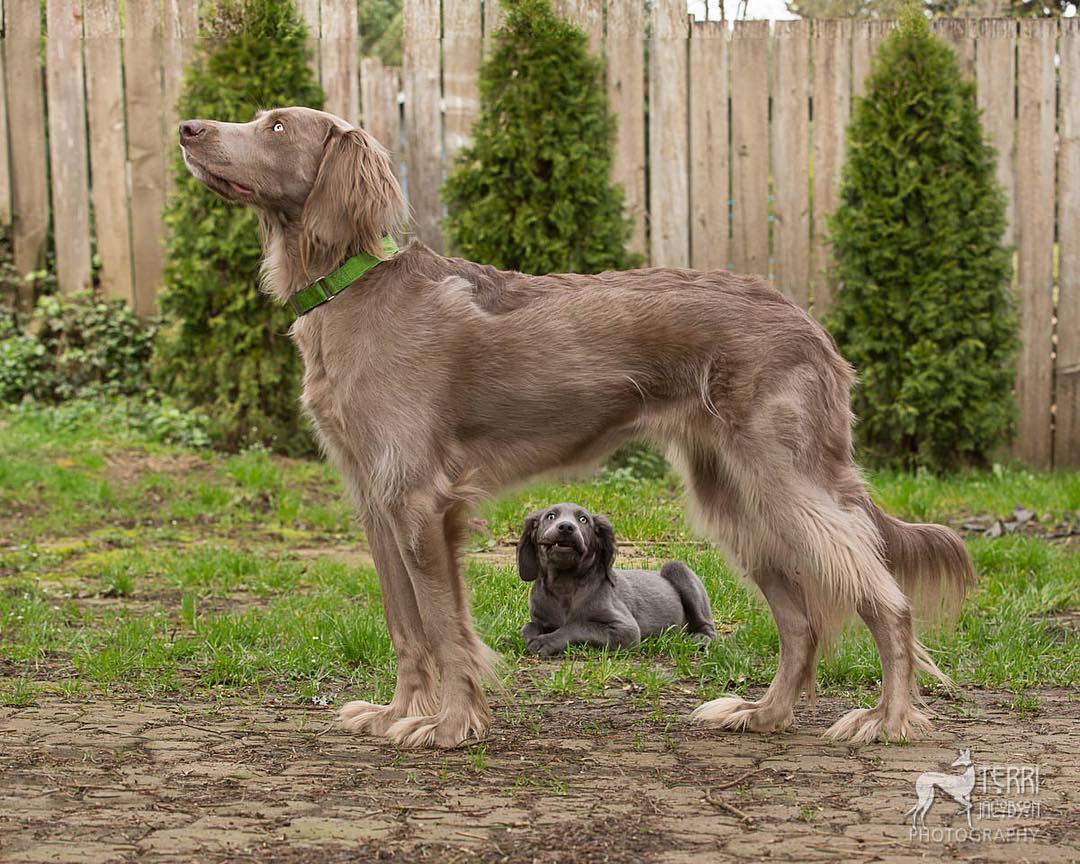
| Height | 57–70 cm |
| Weight | 25–40 kg |
| Lifespan | 10–13 years |
| FCI group | 7 · pointing dogs |
| Origin | Germany |
Exact ratings
Common health issues
Nutrition
The Longhaired Weimaraner is not just a variation of its famous shorthaired cousin, but a distinct, albeit less common, jewel of German dog breeding. This elegant, athletic, and exceptionally intelligent dog combines the instincts of a first-class hunter, the devotion of a companion, and the alertness of a guard. His aristocratic appearance, with its silky, silver-grey coat, belies a powerful intellect and an inexhaustible energy reserve, making him the ideal choice for active owners ready to dedicate time to his training and socialisation. If you’re looking for more than just a dog – a loyal friend and partner in crime for adventures – the Longhaired Weimaraner could be your perfect match. Find out more about its unique characteristics on Tvaryny.
Unlike many other hunting breeds, Weimaraners were not bred for pack hunting, but for close collaboration with humans. This trait is deeply rooted in their character. They literally live for their owner, wanting to be by their side 24/7 and don’t cope well with loneliness. If left alone for long periods, the “Grey Ghost,” as they are sometimes called, may exhibit destructive behaviour or suffer from separation anxiety. Therefore, potential owners should first evaluate their lifestyle: can they provide the dog with the necessary attention and companionship?
Longhaired Weimaraner: General Characteristics and Breed Overview
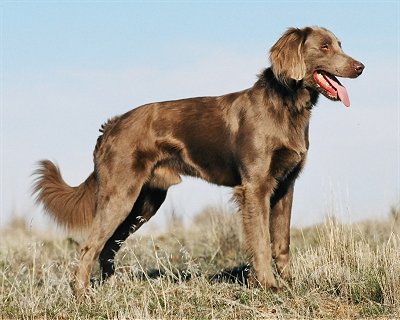
| Parameter | Characteristic |
| Origin | Germany (Weimar) |
| Year of Longhaired Variation Recognition | 1935 (in Germany) |
| Life Expectancy | 10-14 years |
| Height at Withers | Males: 61-70 cm; Females: 58-65 cm |
| Weight | Males: 30-40 kg; Females: 25-35 kg |
| Coat Type | Long, soft, with or without an undercoat, with “feathering” on ears, legs, and tail |
| Colour | Silver-grey, mouse-grey, roe-grey and shades in between |
| Temperament | Energetic, intelligent, devoted, sensitive, stubborn, alert |
| Purpose | Versatile gun dog (retriever, pointer), companion, guard |
| Activity Level | Very high |
| Grooming Needs | Medium |
| Attitude Towards Children | Good, with proper socialisation and respect from the child |
| Attitude Towards Other Animals | High prey drive, requires early and thorough socialisation |
The History of the “Grey Ghost” with Long Hair
The history of the Weimaraner is shrouded in legend, but its roots trace back to the court of Grand Duke Carl August of Saxe-Weimar-Eisenach in the early 19th century. The Duke, a passionate hunter, dreamed of creating the ideal versatile gun dog: brave, intelligent, resilient, and capable of working with any quarry – from birds to large game like bears and wild boar. For breeding, European pointers, Bloodhounds (for their excellent nose), and possibly Great Danes (for power and stature) were used. The result was a breed known as the “Weimar Pointer” or “Grey Ghost” due to its unique colour and silent hunting style.
Initially, the longhaired puppies that occasionally appeared in litters were considered a “fault”. The long hair gene is recessive, so it could be passed down through generations without showing up until two carriers of the gene met. Breeders of the shorthaired variety tried to eliminate this trait. However, over time, enthusiasts came to appreciate not only the beauty but also the practical advantages of the long hair: it provided better protection against the cold and harsh weather, which was valuable when hunting in difficult conditions. It wasn’t until 1935 that the longhaired variation was officially recognised in Germany, although it remains far rarer than its shorthaired counterpart. Today, both variations are considered one breed and can be crossbred.
Standard and Appearance of the Longhaired Weimaraner
The Longhaired Weimaraner is a dog with an athletic, harmonious build that exudes strength, speed, and stamina. Its appearance combines nobility and functionality.
- Head: Lean, aristocratic, and proportional to the body. The transition from the forehead to the muzzle is smooth. The muzzle is long and powerful, which is especially important for a gun dog that needs to retrieve game.
- Eyes: Have a unique amber colour, from light to dark. In puppies, they are bright blue, but the colour changes with age. The gaze is intelligent, watchful, and slightly wary.
- Ears: Long, wide, and set high. They hang down along the cheeks and are covered with silky, long hair, which adds a special charm to the breed.
- Body: Well-balanced, with a pronounced wihters, a strong, straight back, and a muscular loin. The chest is deep, but not too wide, providing enough room for the heart and lungs necessary for sustained exertion.
- Tail: Is a continuation of the backline. In Longhaired Weimaraners, it is covered with long hair, forming a beautiful “flag”. When relaxed, the tail is carried low; when in motion, it is held horizontally. Tail docking is prohibited in many countries.
- Coat: The main distinction of this variation. The topcoat is long (3-5 cm), soft, smooth, or slightly wavy. There may be a slight undercoat. On the ears, the underside of the neck, the stomach, the back of the legs, and the tail, the fur forms beautiful “feathering” and “fringes”.
The main difference between the two types of Weimaraners lies in the coat. If you are choosing between them, it’s worth comparing their characteristics.
| Trait | Shorthaired Weimaraner | Longhaired Weimaraner |
|---|---|---|
| Coat | Short, dense, smooth, without undercoat. | Long (3-5 cm), soft, with or without undercoat, with feathering. |
| Grooming | Minimal, a quick wipe with a damp cloth is enough. | Requires regular brushing (2-3 times a week) to prevent matting. |
| Weather Protection | More sensitive to cold and dampness. | Better protected against low temperatures and bad weather. |
| Prevalence | Much more common. | A rare variation. |
| Temperament | Usually considered more impulsive and energetic. | Often described as slightly calmer and more even-tempered. |
Character and Temperament: More Than Just a Hunter
The character of a Longhaired Weimaraner is a complex but fascinating cocktail of intelligence, devotion, energy, and stubbornness. They are a “velcro dog,” happiest when they are at the centre of family activities. They will follow you from room to room, rest their head on your lap, and watch your every move. This isn’t a breed you can leave in the back garden.
- High Intelligence: Weimaraners are among the smartest breeds. They learn quickly, but they learn bad habits just as fast. Their mind needs constant stimulation: puzzles, search games, learning new commands. If they get bored, they will find their own entertainment, and you likely won’t approve.
- Boundless Energy: This is not a couch potato. They need at least 1.5-2 hours of intense physical exercise every day. A simple walk on a lead won’t meet their needs. They require running, swimming, retrieving games, and long hikes. Without sufficient energy release, they will become nervous and destructive.
- Hunting Instinct: It’s in their blood. A Weimaraner will chase anything that moves quickly: cats, squirrels, birds, cyclists. Because of this, they cannot be let off the lead in un-fenced areas. Socialisation with other animals from an early age is absolutely essential, but even then, the instinct can take over. Their hunting qualities are similar to those of other versatile pointers, such as the German Longhaired Pointer, which makes them a great partner for a hunter.
- Devotion and Sensitivity: They bond deeply with their family and can be wonderful companions for children if the children are taught how to behave around a dog. However, the Weimaraner is very sensitive to its owner’s mood and reacts poorly to harsh training methods. Shouting and punishment can make it timid or, conversely, obstinate.
- Guarding Qualities: A wariness of strangers makes them a good guard dog. They will always alert you with a loud bark when guests arrive or if something suspicious is afoot. At the same time, they are not typically prone to unprovoked aggression, but their size and bark can intimidate strangers. Their vigilance can be compared to another gun dog breed, the Bourbonnais Pointer, which is also known for its attachment to its owner and guarding qualities.
Pros and Cons of the Longhaired Weimaraner Breed
Before getting such a serious dog, it’s important to soberly weigh all its advantages and disadvantages.
| Pros | Cons |
|---|---|
| ✅ High intelligence and trainability. Easily learns commands and tricks. | ❌ Extremely high energy needs. Not suitable for inactive people. |
| ✅ Incredible devotion and attachment to the family. Will become the owner’s true “shadow”. | ❌ Prone to separation anxiety. Copes poorly with being alone. |
| ✅ Elegant and unique appearance. Always draws attention. | ❌ Strong prey drive. Can be dangerous for small animals. |
| ✅ Versatility. A fantastic hunter, athlete (in agility, canicross) and companion. | ❌ Stubbornness and a tendency to dominate. Requires an experienced and consistent owner. |
| ✅ Good guarding qualities. Always alerts to danger. | ❌ Requires careful early socialisation. Without it, can be timid or excessively wary. |
| ✅ Longer coat provides better protection against the cold. | ❌ The coat requires regular grooming to avoid matting. |
Care and Keeping: What Owners Need to Know
Caring for a Longhaired Weimaraner requires a systematic approach and includes grooming, providing proper physical exercise, and creating a comfortable living environment.
Grooming and Coat Care
While the coat of a Longhaired Weimaraner isn’t as complex to care for as some other longhaired breeds, it still requires regular attention. Brush your dog 2-3 times a week using a wide-toothed comb and a de-shedding tool. This will help remove dead hair and prevent matting, especially in areas with long hair: behind the ears, on the legs, and on the tail. During the shedding season (usually spring and autumn), the procedure should be performed more frequently. Bathe the dog as needed, using special shampoos for longhaired breeds. Regularly check and clean its ears, as their floppy shape promotes the accumulation of dirt and the development of infections. Also, don’t forget to trim its claws approximately once a month.
Physical Excersise and Activity
This is a key aspect of keeping a Weimaraner. They need more than just walks; they need intensive training. Ideal options:
- Long runs: Accompanying the owner on a jog or bicycle ride (after the dog reaches 1.5-2 years of age to avoid harming its joints).
- Swimming: Most Weimaraners love water and are excellent swimmers.
- Retrieving: Games with a ball or Frisbee in a large, open area.
- Canine sports: Canicross, bikejoring, agility, coursing, flyball.
Living Conditions
The ideal place for a Longhaired Weimaraner to live is a private house with a large, securely fenced garden. The fence should be high (at least 2 metres) and buried in the ground, as these dogs are known for their ability to jump and dig. Keeping one in a flat is only possible if the owner is willing to provide the dog with a sufficient level of physical and mental activity outdoors every day.
Training and Raising an Intellectual
Raising a Weimaraner is an exciting but challenging process. Its intelligence is a double-edged sword. On one hand, it instantly grasps new information. On the other, it just as quickly notices your weaknesses and inconsistencies. Training should be based on positive reinforcement: praise, treats, and toys. Harshness and physical punishment are unacceptable and can lead to a loss of trust.
Socialisation and basic training should begin from the very first days the puppy is in your home. Introduce it to different people, sounds, places, and other (well-behaved) dogs. This will help raise a confident and well-adjusted dog. Weimaraners are prone to being dominant, so the owner must immediately establish clear rules and boundaries and adhere to them steadfastly. Be prepared for the dog to periodically test you throughout its life. Patience, consistency, and a sense of humour are your best helpers in raising the “Grey Ghost”.
Health and Typical Breed Diseases
Specifics of the Longhaired Weimaraner’s Diet
Interesting Facts about the “Silver Ghost”
- “Dog with a human brain”: Weimaraners earned this nickname for their outstanding intelligence and ability to make independent decisions (which owners don’t always appreciate).
- Chameleon eyes: All Weimaraner puppies are born with bright blue eyes. By 6-8 months of age, the colour gradually changes to the characteristic light or dark amber.
- Presidential dog: US President Dwight D. Eisenhower was the owner of a Weimaraner named Heidi.
- Art and photography: Thanks to their unique appearance, Weimaraners have become beloved models for many photographers, including William Wegman, who created an entire series of famous photos with his dogs.
- Rare gene: The gene responsible for long hair (l) is recessive. This means that for a longhaired puppy to be born, both parents must be carriers of this gene.
Frequently Asked Questions about the Breed (FAQ)
Does the Longhaired Weimaraner shed a lot?
Yes, they do shed, especially seasonally in spring and autumn. The long hair makes the shedding more noticeable than in shorthaired dogs. Regular brushing helps to control this process.
Is this breed suitable for a novice owner?
Usually not. Weimaraners require an experienced, confident, and consistent owner who can handle their intelligence, energy, and stubbornness. A novice owner might not be able to cope with their training.
Can a Longhaired Weimaraner be kept in a flat?
It is possible, but highly inadvisable. If you do decide to, be prepared to dedicate at least 2-3 hours a day to active walks, training, and games outdoors, regardless of the weather.
How do they get along with children?
With proper socialisation, they can be wonderful companions for school-aged children. However, due to their size and energy, they should not be left alone with small children unsupervised, as they could accidentally knock a child over.
Are Weimaraners noisy?
They are not prone to barking without reason, but they will always make their presence known if they see or hear something suspicious. They may also “complain” or “talk” to their owner with various sounds, which is one of their charming quirks.
- Very clever and trainable
- Athletic, hardy
- Devoted, "clingy" to its person
- Short, simple coat care
- An enormous need for exercise (2+ hrs/day)
- Strong separation anxiety
- A strong hunting instinct
- Without work — destruction and escapes
| Hungarian Vizsla | German Shorthaired Pointer | Pointer | |
|---|---|---|---|
| Height | 54–64 cm | 53–64 cm | 58–69 cm |
| Energy | 5 | 5 | 5 |
| Apartment | 2 | 2 | 2 |
| Beginners | 2.5 | 2.5 | 2.5 |
How much exercise does the Weimaraner need?
Can the Weimaraner be left alone?
Does the Weimaraner get on with cats?
FCI Standard No. 99 · The Kennel Club
For apartments · For kids · For beginners · Active · Smartest · Hypoallergenic · All rankings →