

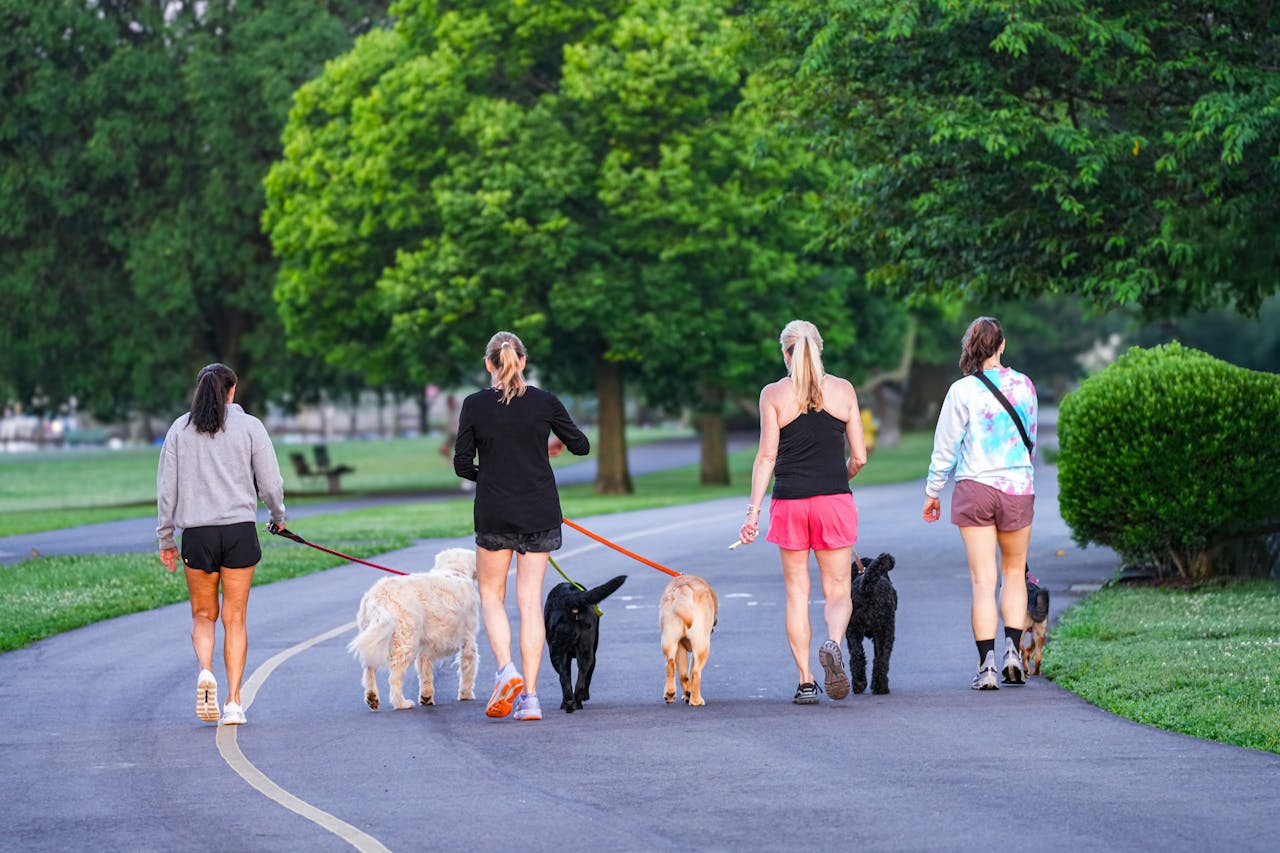
Walking your dog. An idyllic scene often springs to mind: you’re strolling calmly through the park, your faithful friend politely trotting by your side, keenly exploring the world. But the reality is often quite different: tugging, a lead stretched to its limit, aching arms, and constant tension. If this sounds familiar, you’re not alone. A dog pulling on the lead is one of the most common issues, but thankfully, it’s solvable. All it takes is the right approach, patience, and consistency. We’ll explain everything in detail, so your shared walks become a joy, not a chore. Read more about this on Tvaryny.
In this article, we’ll delve deep into the reasons behind such behaviour, explore the most effective and humane correction techniques, and help you choose the right equipment to make the training process easier.
Why Does Your Dog Pull on the Lead? Understanding the Causes – The First Step to Success
Before demanding perfect behaviour from your dog, it’s crucial to understand what drives them. It’s not a desire to dominate or deliberately annoy you. The reasons are almost always simpler and more logical from a dog’s perspective.
- Natural Speed and Curiosity. Dogs move faster than us. Their natural pace is a trot, not a leisurely stroll. Moreover, the world for them is an encyclopaedia of smells. When your beloved pet rushes forward, they’re simply eager to “read” the next page – that bush, post, or rubbish bin.
- Learned Behaviour. This is the most common reason. If a dog pulls and, as a result, achieves its goal (gets to an interesting object), it receives positive reinforcement. The dog’s brain registers: “Pull = success.” We ourselves, unconsciously, teach them to pull.
- Excess Energy. A dog that spends 23 hours a day in a flat explodes with energy as soon as it gets outside. A walk is their only opportunity to release accumulated energy. In such a state, it’s extremely difficult for them to control themselves.
- Reactivity or Fear. Some dogs pull because they want to quickly escape from something frightening (loud noises, large vehicles, other dogs) or, conversely, rush towards a stimulus due to aggression or excessive excitement.
Preparation Stage: What to Do Before Starting Training?
To teach your dog to walk nicely on a lead, you need not only technique but also the right foundation. Make sure you’ve considered these points:
- Correct Equipment: We’ll talk about this in detail below, but to pre-empt – ditch the retractable leads for training. You’ll need a standard lead about 2-3 metres long and a comfortable harness.
- Energy Release Before the Walk: If your dog is hyperactive, play an active game with them at home for 10-15 minutes before going out. This will help to take the initial edge off their energy.
- Your Mood: Dogs are wonderful empathisers. If you’re irritated, tense, or in a hurry, your dog will sense it and also become anxious. Approach training sessions calmly and with a positive attitude.
Best Techniques for Teaching Your Dog to Walk Nicely on a Lead
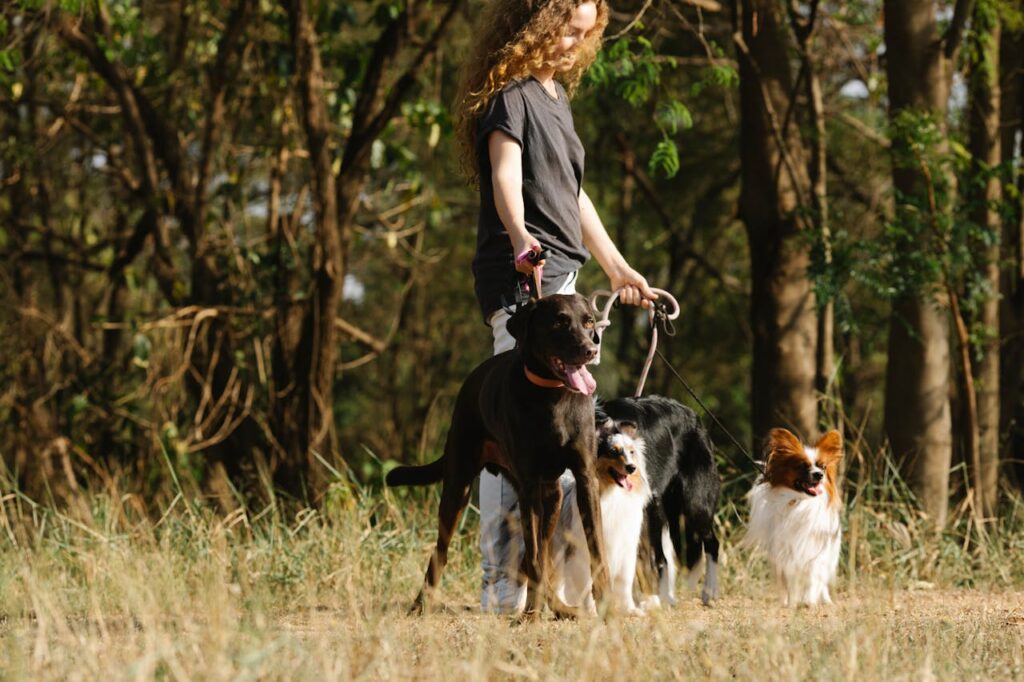
Choose one of these techniques and practise it consistently. There’s no point jumping from one to another every day. The key to success is patience and regularity.
Technique 1: “Red Light, Green Light”
This is the simplest and most popular technique. Its essence is that the dog only moves forward when the lead is slack.
- The moment you feel tension on the lead, stop immediately. Freeze in place, like a tree. Don’t pull the dog towards you, don’t shout. Just stand still.
- Wait. Sooner or later, the dog will release the tension. They might look back at you, sit down, or take a step back.
- The very second the lead goes slack, praise your dog loudly and joyfully (“Yes, good!”) and start moving forward.
- Repeat this every time. Initially, your walks might consist of dozens of such stops every 10 metres. This is normal. Your dog will quickly understand the connection: “Tension = stop, slack lead = go.”
Technique 2: Change of Direction
This technique teaches your dog to pay more attention to you, as they never know which way you’ll turn next.
- Start walking. When your dog begins to pull ahead…
- …sharply, but without yanking, turn around and start walking in the opposite direction. You can encourage your dog with your voice to follow you.
- When they catch up to you and the lead goes slack again, praise them.
- Continue walking in the new direction until they start to pull again. Then turn around once more.
Tip: This method makes walks unpredictable for your dog and forces them to pay attention to you, rather than everything else around them.
Technique 3: Rewarding for the Correct Position
This method focuses not on punishing incorrect actions, but on rewarding correct ones. You’ll need a pouch with treats.
- Hold the lead in one hand, and a few pieces of tasty treats in the other, at hip level on the side where your dog walks.
- Start walking. As long as your dog walks nicely beside you, not pulling ahead, praise them in a calm voice and occasionally (every 5-10 steps) give them a treat.
- If your dog rushes ahead and tightens the lead, stop. Call them back to you to the starting position. When they approach, give them a treat and continue walking.
- Gradually increase the number of steps between rewards. The goal is for your dog to understand that the most rewarding place in the world is by your leg.
Correct Equipment for Pulling Dogs: What Works and What to Avoid
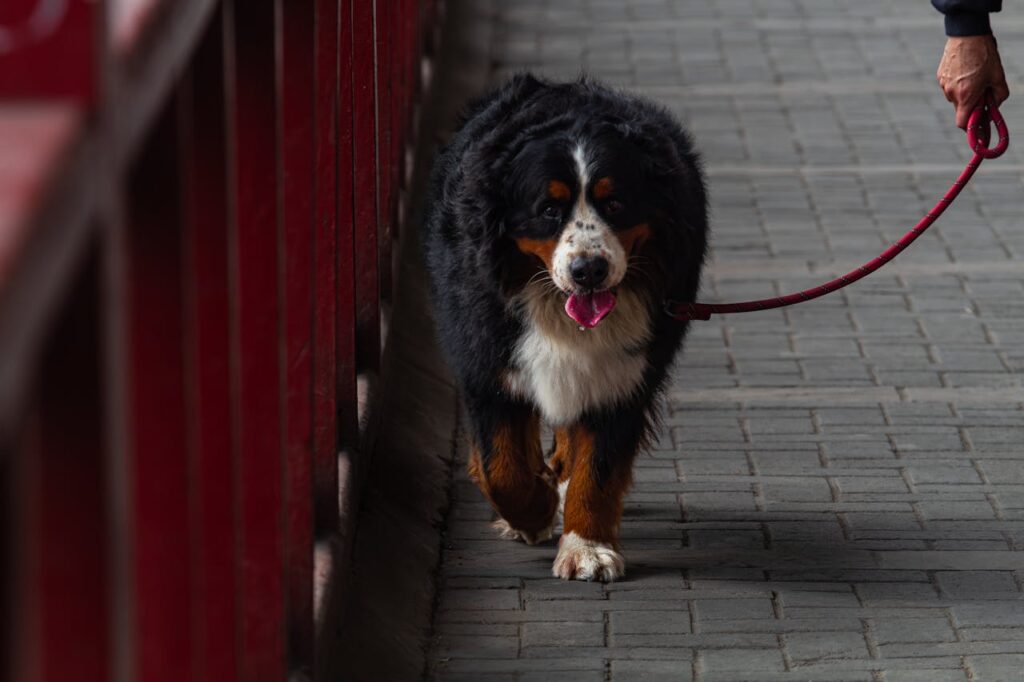
The choice of equipment can drastically change the situation. Some tools aid training, while others can only cause harm. Let’s look at the main options for equipment for pulling dogs.
Recommended:
- Anatomical H-shaped or Y-shaped harness: This is the best choice. It doesn’t put pressure on the neck or trachea, distributes the load evenly, and doesn’t restrict movement. It won’t solve the problem on its own, but it will make walks safer during training.
- Front-clip harness: A very effective tool. When the dog pulls, the lead attached to the ring on the chest gently turns them towards you. This disrupts their rhythm and prevents them from pulling forward. It’s not a cure-all, but a helpful aid for the techniques described above.
- Standard lead (2-3 metres): Allows you to control your dog but gives them a bit of freedom. Don’t use short “traffic leads” (less than 1.5 m) for regular walks – they encourage constant tension.
Use with Caution or Avoid:
- Retractable lead: The worst invention for training. It’s always under slight tension, teaching the dog that pulling is normal. Moreover, it doesn’t provide adequate control and can be dangerous.
- Prong collar and slip lead: These correction tools work through pain and discomfort. While they might yield quick results, they often have negative consequences: the dog can become more anxious, aggressive, or simply “tolerate” the pain, continuing to pull. Their use is only justified in the hands of a very experienced dog trainer for specific behavioural issues. For the average owner, the risks outweigh the benefits.
- Halti (head collar): Works on the principle of a horse’s bridle, controlling the dog’s head. It can be effective, but requires lengthy and correct introduction. Incorrect use can injure the dog’s cervical vertebrae. Only use after consulting a professional.
Common Mistakes That Undermine All Efforts
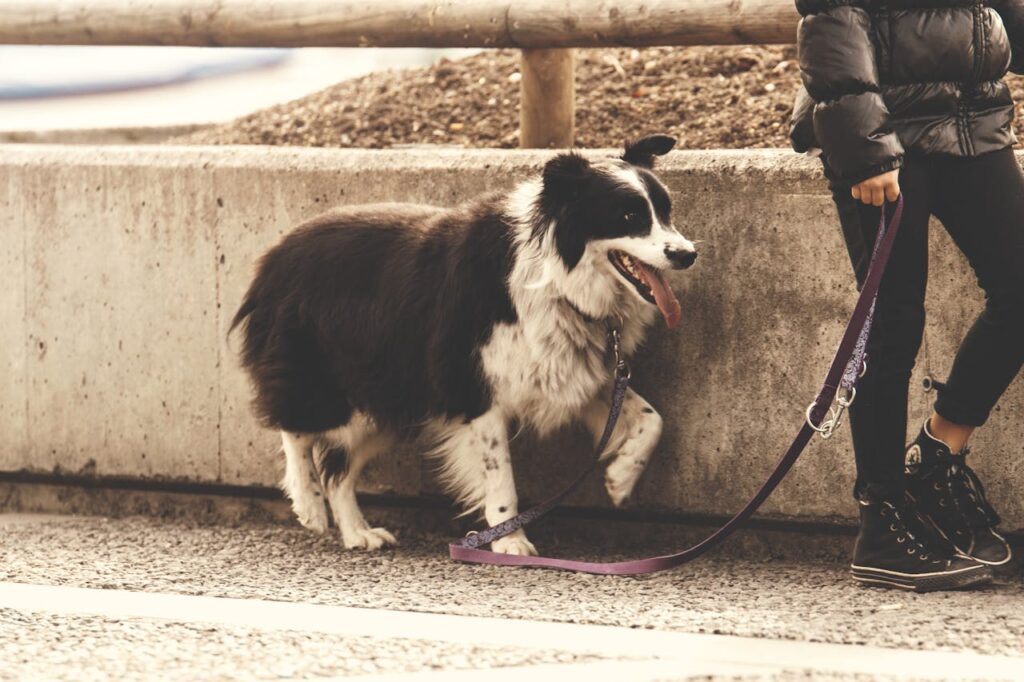
Sometimes we unknowingly sabotage the training process ourselves. Here’s what to avoid for successful dog behaviour correction on walks:
- Inconsistency. Today you train, and tomorrow you let them pull because you’re in a hurry. This confuses the dog. Be consistent on every walk.
- Training sessions that are too long. Start with short sessions of 10-15 minutes in a calm environment. A few short, successful training sessions a day are better than one long and exhausting one.
- Yanking the lead. A sharp yank is a display of your weakness and frustration. It frightens the dog, creates negative associations with their equipment and walks, and teaches them nothing useful.
- Expecting instant results. Your dog might have been pulling on the lead for months or years. It takes time to retrain them. Don’t give up after a few unsuccessful attempts.
Conclusions: Patience, Consistency, and the Joy of Companionship
Dealing with a tight lead isn’t just about training. It’s about working on your relationship, building trust, and fostering mutual understanding. Every stop, every praise, every step taken on a slack lead – that’s your shared success.
Remember that the ultimate goal isn’t a perfectly obedient robot, but a calm walk with your dog that brings joy to both of you. Arm yourself with patience, use humane methods, praise your beloved pet for even the smallest successes, and very soon you’ll notice how strained tugs transform into a pleasant and relaxed stroll by your side.