

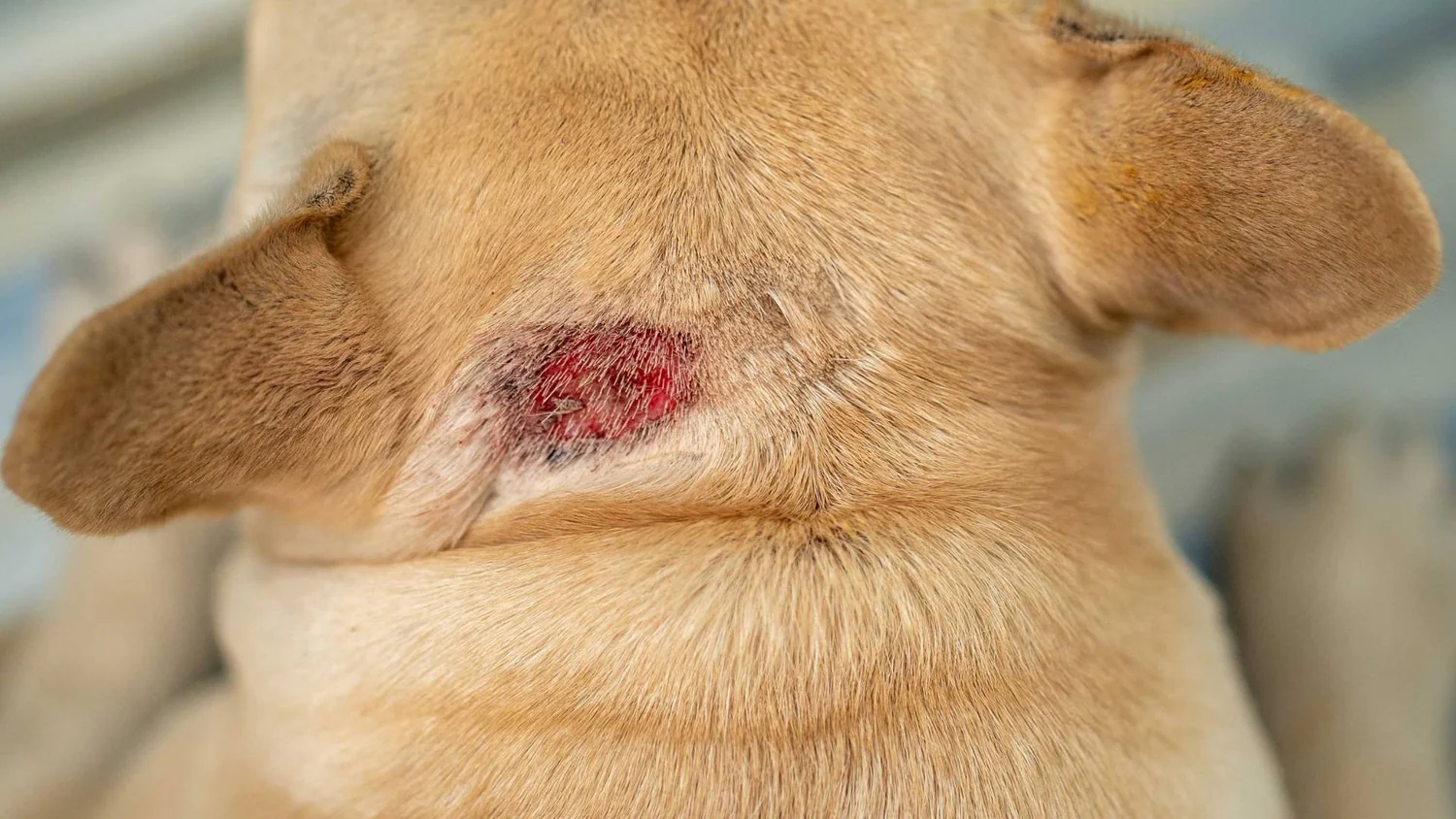
Imagine this: yesterday your dog was perfectly healthy and playful, but today you’ve noticed they’re frantically licking or scratching the same spot on their body. The skin beneath the fur has become red, wet, and inflamed. This is the classic picture of a ‘hot spot’—a sharp and painful problem that can develop in just a few hours. There’s no need to panic, but you do need to act quickly and correctly. We’ll delve into why these inflammatory patches occur and how to help your pet on Tvaryny.
What exactly is a hot spot or acute moist dermatitis?
A hot spot is the common name for a medical condition known as acute moist dermatitis or pyotraumatic dermatitis. It’s a localised, rapidly progressing skin infection. It all starts with a minor irritation that your dog tries to soothe by licking or scratching. However, these very actions damage the top layer of skin, creating a perfect moist and warm environment for bacteria (most often Staphylococcus) to multiply, which are always present on the skin as part of the normal flora.
The result is a clearly defined, hairless, red, weeping, and very painful patch. It’s often covered with a sticky, purulent discharge, and the surrounding fur can become matted. The size of a hot spot can range from a small coin to the palm of a hand, and it can grow literally before your eyes.
Why they appear: The main causes of hot spots in dogs
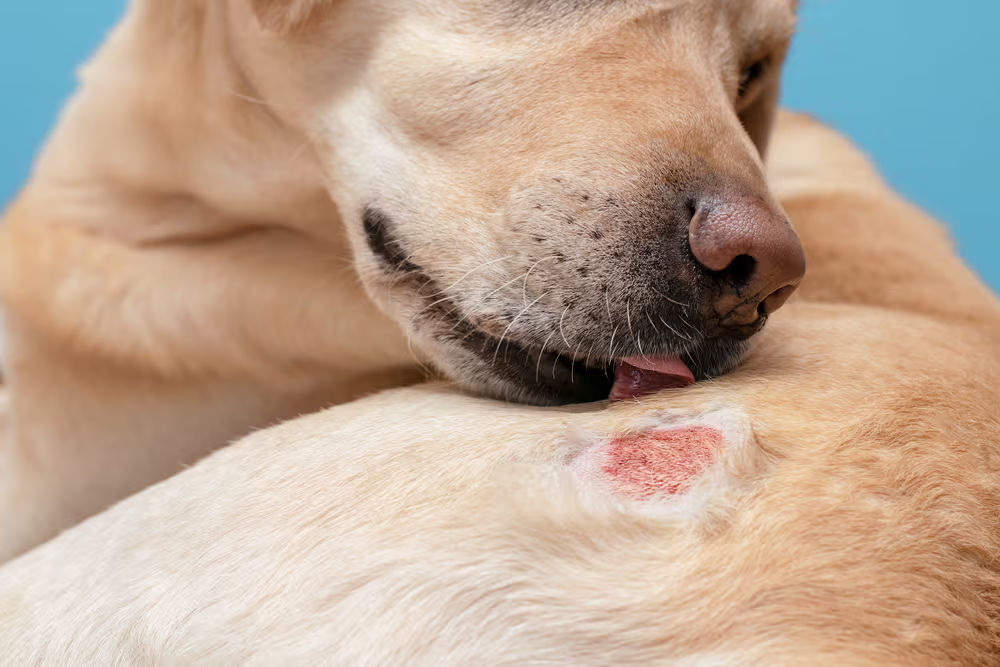
A hot spot isn’t a disease in itself, but a symptom. There’s always an underlying cause that made your dog bother a specific area of their skin. Your main task, along with your vet, is to find and eliminate this trigger.
1. Allergic reactions
This is the most common cause. The itching caused by an allergy makes the dog scratch and chew at their fur.
- Flea saliva allergy: Even a single flea bite can cause a severe reaction in sensitive dogs. Hot spots often appear on the rump and at the base of the tail.
- Food allergies: Intolerance to certain food components (often proteins like chicken or beef) causes systemic itching.
- Atopic dermatitis: An allergy to environmental factors such as plant pollen, dust mites, or mould.
2. Parasites and infections
Besides fleas, other ‘uninvited guests’ or inflammatory processes can also cause discomfort.
- Ear mites and otitis: Pain and itching in the ears make a dog shake their head and scratch the areas behind their ears and on their cheeks. This is why proper ear care is a crucial element of prevention.
- Mange mites (sarcoptic mange): Cause intense itching all over the body.
- Inflammation of the anal glands: Discomfort in the anal area makes the dog ‘scoot’ on their bottom and lick the area under the tail.
3. Pain and discomfort
Sometimes a dog licks a painful area that isn’t related to the skin itself. For example, with arthritis or hip dysplasia, a dog might constantly lick the skin over the sore joint, leading to a hot spot.
4. Behavioural problems and stress
Boredom, separation anxiety, or stress from moving house or a new family member can provoke obsessive licking (acral lick dermatitis), which develops into a hot spot. In older animals, such behavioural changes are sometimes linked not only to anxiety but also to cognitive issues. It’s important to distinguish this from canine dementia, which requires a completely different approach.
5. Poor hygiene and moisture
In dogs with thick, dense fur (especially with an undercoat), the skin is poorly ventilated. If the fur remains wet for a long time after swimming or bathing, it creates a greenhouse effect, which is perfect for bacteria. Matted fur also pulls on the skin and prevents it from breathing.
Treating hot spots in dogs: A step-by-step plan
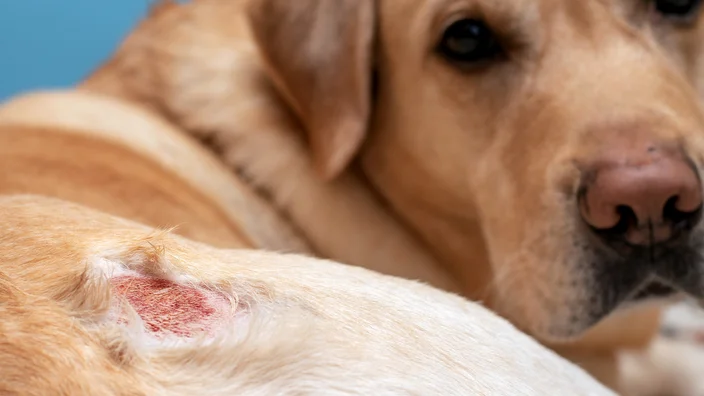
Treating hot spots in dogs has two main goals: to treat the existing lesion and to eliminate the primary cause. A minor lesion in its early stages can sometimes be managed at home, but in most cases, veterinary help is needed.
When to see a vet IMMEDIATELY?
- The hot spot is very large and spreading quickly.
- The dog is in severe pain and won’t let you touch the affected area.
- You see a large amount of pus, or the wound has an unpleasant odour.
- The dog has a fever, is lethargic, or won’t eat.
- Hot spots appear regularly or there are several at once.
- You are unsure if it is a hot spot.
Step-by-step guide: First aid for a hot spot at home
If the lesion is small and you’ve decided to try giving first aid, proceed with caution:
- Put an Elizabethan collar on your dog. This is the most important step! It will prevent the dog from licking the wound further and will save all your efforts from being undone.
- Carefully clip the fur. Use clippers or scissors with blunt ends. You need to clip all the fur on the hot spot itself and another 2-3 cm of healthy skin around it. This will allow air circulation, help the wound dry out, and let you see the actual boundaries of the lesion.
- Clean the area. Wash the hot spot with a non-stinging antiseptic solution. A chlorhexidine (0.05%) or betadine (povidone-iodine) solution, diluted with water to the colour of weak tea, is ideal. Do not use alcohol or hydrogen peroxide — they cause severe pain and damage the tissue even more. Pat the area dry with a clean gauze pad.
- Apply a topical treatment. Use a spray or ointment with antibacterial and anti-inflammatory properties designed for veterinary use. Products containing corticosteroids can quickly relieve itching, but should only be used as prescribed by a vet.
- Do not apply a bandage. A hot spot needs to ‘breathe’ and dry out. A bandage will create a moist environment that is perfect for bacteria.
- Repeat the treatment 2-3 times a day. Monitor the progress. If there’s no improvement after 1-2 days or it gets worse, see a vet immediately.
What a vet will do
The vet will perform a full examination, determine the likely cause, and prescribe a comprehensive treatment for your dog’s hot spots. This may include:
- Professional treatment: The vet will properly clip and clean the affected area, which can be painful and may require sedation.
- Antibiotics: Systemic (tablets, injections) for deep or large lesions.
- Steroid medications: To quickly reduce inflammation and itching (tablets or injections).
- Pain relief: To ease the animal’s suffering.
- Treating the underlying cause: Flea and tick prevention, a therapeutic diet, antihistamines, and so on.
Hot spot prevention: How to avoid the problem

The best treatment is prevention. Preventing hot spots is all about eliminating the risk factors.
- Regular parasite treatment. Use high-quality flea, tick, and worming products all year round, not just in the warmer months.
- Proper grooming. Brush your dog regularly, especially long-haired breeds, to prevent matting. After bathing, thoroughly dry their fur with a towel or a hairdryer on a cool setting.
- Allergy management. If your dog has been diagnosed with an allergy, follow your vet’s recommendations regarding diet and/or medication.
- Balanced nutrition. A high-quality diet rich in Omega-3 and Omega-6 fatty acids supports healthy skin and a shiny coat.
- Sufficient activity and mental stimulation. Provide your dog with daily walks, games, and toys to prevent boredom and stress.
Dog breeds prone to hot spots
While acute moist dermatitis can occur in any dog, some breeds are at a higher risk due to their dense coats, predisposition to allergies, or anatomical features:
- Golden Retriever
- Labrador Retriever
- German Shepherd
- St. Bernard
- Rottweiler
- Collie
- Newfoundland
Conclusion
Hot spots in dogs are a painful but treatable problem. Your attentiveness and quick reaction are key to helping your pet feel better. Remember the main points: don’t let your dog lick the wound, keep it dry and clean, and most importantly, work with your vet to find and treat the underlying cause. Healthy skin is a reflection of your dog’s overall well-being, and the right care will help keep it in perfect condition for years to come.