

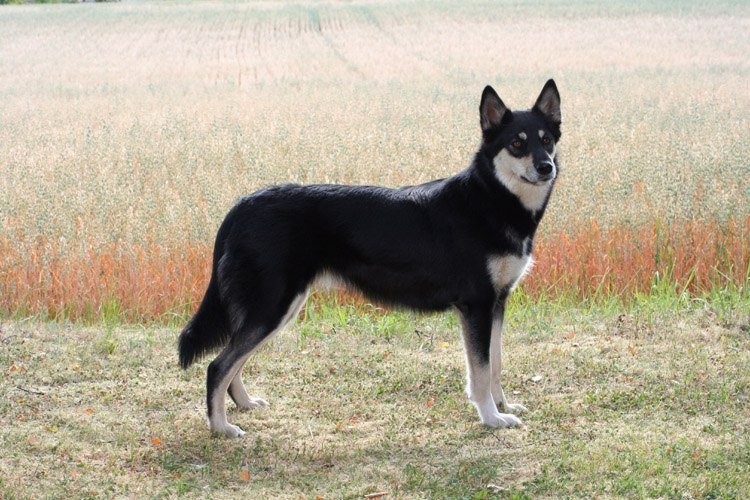
| Height | 46–51 cm |
| Weight | 25–29 kg |
| Lifespan | 12–14 years |
| FCI group | 5 · spitz and primitive types |
| Origin | Finland |
Exact ratings
Common health issues
Nutrition
The Lapponian Herder, or Lapinporokoira, is a true gem of Finland, a breed hardened by the harsh winds of Lapland over centuries. This isn’t just a pet, but a hardy grafter capable of covering tens of kilometres through deep snow. Unlike many popular breeds, this dog has kept its primal instincts and phenomenal health. In Finland, they are still actively used for their original purpose – herding reindeer – but thanks to their loyalty and intellect, they make brilliant companions for active people. Read more on Tvaryny.
Lapponian Herder: a brief breed overview
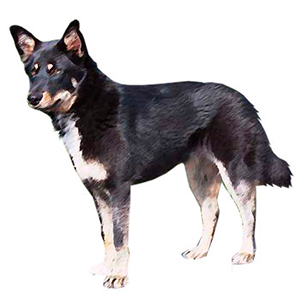
| Country of Origin | Finland |
| International Name | Lapponian Herder / Lapinporokoira |
| FCI Group | Group 5 (Spitz and primitive types), Section 3 (Nordic Watchdogs and Herders) |
| Year of Official Recognition | 1966 (breed separation), 1970 (FCI) |
| Purpose | Reindeer herder, Search and Rescue (SAR), companion, sport |
| Life Expectancy | 13-15 years (often reach 16-17) |
| Activity Level | Very high |
History of the breed
The history of the Lapinporokoira is inextricably linked to the history of the Sami people (Lapps), the indigenous population of Northern Europe. For hundreds of years, the Sami depended on reindeer as a source of food, clothing, and transport. The reindeer, in turn, needed protection and control. This is exactly where the ancestors of modern herding dogs enter the scene.
The first mentions of such dogs date back to 1673 in the book “Lapponia”. For centuries, selection was driven purely by working qualities. The Sami needed a dog that could run all day, wouldn’t freeze at -40°C, and could control the herd using its bark. Genetically, these dogs are close to other northern spitzes. For instance, the German Spitz (Kleinspitz) can be considered a distant relative, although they went down different evolutionary paths in terms of appearance and temprament. There is also a traceable link to northern farm dogs, such as the Icelandic Sheepdog.
The turning point of 1966
Until the mid-20th century, all Finnish herding dogs were considered a single breed. However, cynologists noticed a significant difference: some dogs were fluffier and calmer, whilst others were short-haired, longer in the body, and significantly faster. In 1966, the Finnish Kennel Club made the historic decision to split them into two separate breeds:
- Finnish Lapphund (more popular as a pet, fluffy).
- Lapponian Herder (the working reindeer dog).
This decision saved the breed’s working qualities. Today, the Lapinporokoira remains predominantly a working dog, although it is increasingly appearing in cities as a sporting athlete.
What the Lapinporokoira looks like: detailed description
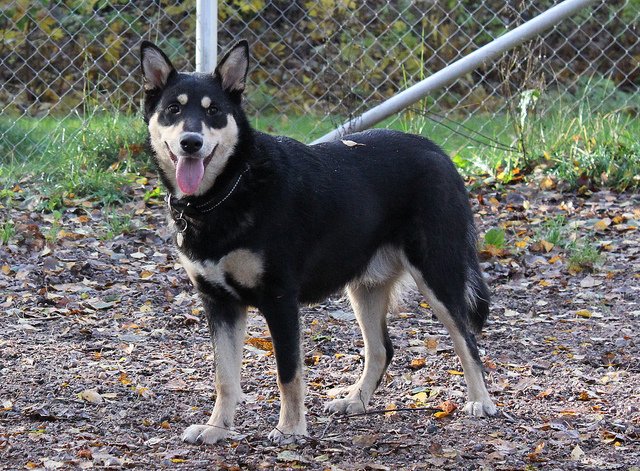
This is a canine athlete. It shouldn’t be too heavy, so as not to sink into the snow, but nor should it be too light, to withstand a clash with a predator or the harsh wind. The body of the Lapponian Herder is noticeably longer than its height at the withers (by about 10%), which allows it to develop great speed and demonstrate an enduring, sweeping trot.
Key appearance characteristics:
- Head: Elongated, skull only slightly convex. The muzzle is strong and tapers evenly towards the nose. The transition from forehead to muzzle (stop) is visible but not sharp.
- Eyes: Dark, oval, set quite wide apart. The gaze is lively, attentive, sometimes evaluating. Females often have a more “feminine” and softer expression.
- Ears: Prick ears, broad at the base, medium length. The inside is often thickly covered with hair for protection against the cold. Very mobile.
- Coat: Double. The guard hair is of medium length, straight, harsh, and stands somewhat away from the body. The undercoat is its armour: very thick, soft, and dense.
- Tail: Medium length, set low. Hangs when at rest, but may be raised when moving, though it shouldn’t curl into a tight ring over the back.
Special attention should be paid to colour. The standard allows various variations (black, dark grey, dark brown), but a mandatory condition is that the base colour must dominate. Lighter markings (tan) are usually located on the head, chest, legs, and under the tail. Interestingly, the coat structure allows for self-cleaning – mud simply falls off once it dries.
Character and temperament: more than just a shepherd
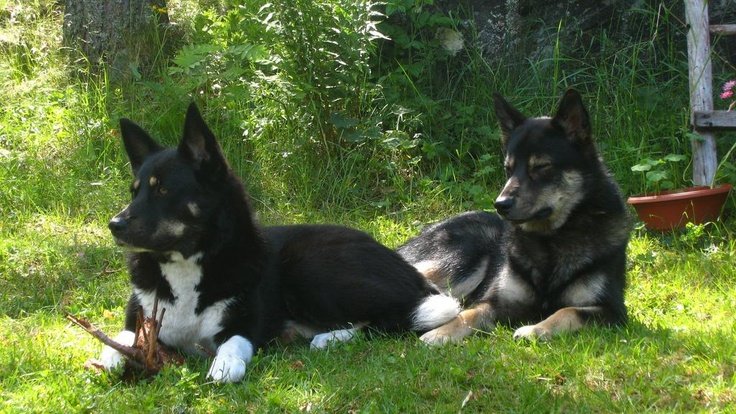
The Lapinporokoira is the intellectual amongst northern breeds. Its brain is wired for solving complex tasks. If you are looking for a sofa cushion, this dog isn’t for you. Without work, it will suffer and may become destructive in a flat.
Psychological portrait:
- Work ethic: They live to work. Herding, agility, obedience, tracking – they don’t care what they do, as long as they are useful.
- Voice: When working with reindeer, the dog must bark to control the herd. Therefore, they can be vocal in daily life. The “Quiet” command should be one of the first learned.
- Attitude to strangers: Reserved. This isn’t a Golden Retriever that will rush to hug a passer-by. The Lapponian Herder assesses the threat. If there isn’t one, they are indifferent or friendly.
- Guarding qualities: Well developed, but specific. They will warn with a bark about a stranger’s approach, but are unlikely to attack a person without extreme need. Their aggression was historically directed at wolves and bears, not humans.
Within the family, these are very affectionate dogs. They don’t choose just one master but love the entire “pack”. However, due to a strong herding instinct, they might try to “herd” small children by gently nipping at their heels, which needs correcting through training.
Comparison with close relatives
Newcomers are often interested in how this breed differs from other Lapphunds. To clear this up, we’ve prepared a comparison table, where we’ll also mention the Finnish Lapphund and their neighbour – the Swedish Lapphund.
| Characteristic | Lapponian Herder (Lapinporokoira) | Finnish Lapphund | Swedish Lapphund |
|---|---|---|---|
| Body Type | Elongated, athletic, less “fluffy” | More compact, square, very fluffy | Typical spitz, square format |
| Coat | Medium, close-lying, harsh | Long, profuse mane | Very dense, shaggy, exclusively black |
| Temperament | More serious, high drive, working | Softer, family-oriented, “teddy bear” | Active, alert, vocal |
| Speed | Very high (sprinter and stayer) | Medium | Medium |
| Popularity | Rare (mostly Finland) | Popular worldwide | Rare |
Health: genetics and risks
Care and maintenance: minimum hassle
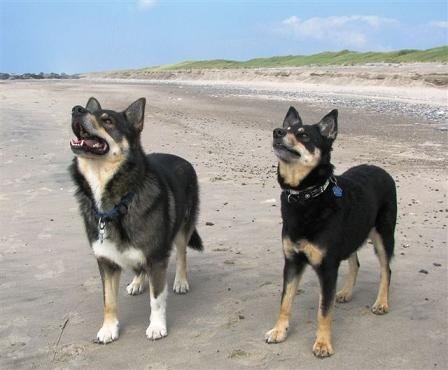
Keeping a Lapponian Herder in a flat is possible, but tricky. The ideal option is a house with a large garden. But remember: this is not a chain dog! To put this active intellectual on a chain is to destroy its psyche. It needs contact with people and freedom of movement.
Grooming (coat care)
Here everything is simple. Their coat isn’t prone to matting. Basic care boils down to brushing 1-2 times a week. However, twice a year (in spring and autumn), seasonal moulting occurs. During this period, the dog sheds its undercoat. Be prepared for fur to be everywhere unless you brush the dog daily with a slicker brush or a deshedding tool.
Training and sport
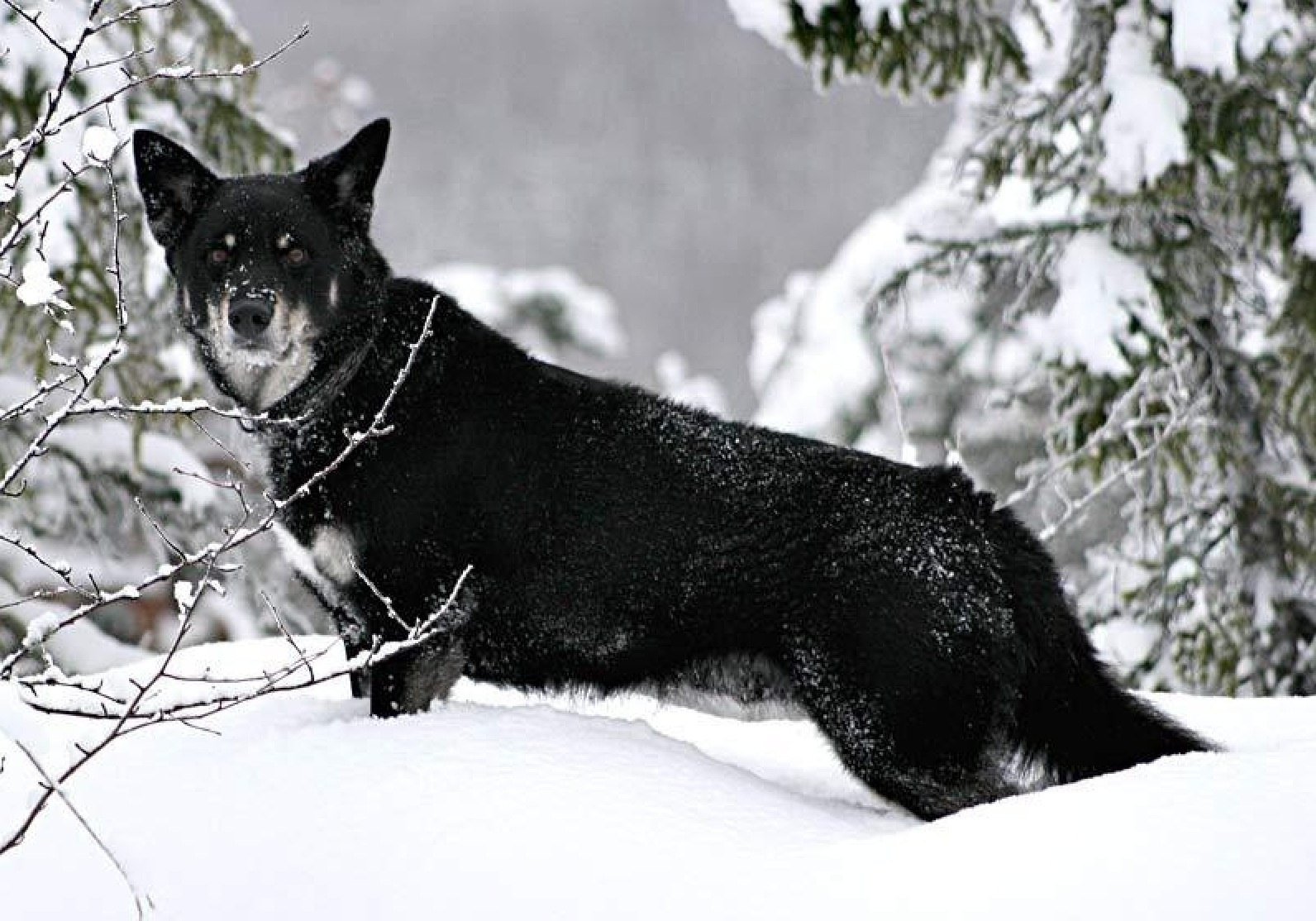
The Lapinporokoira learns instantly. Often 2-3 repetitions are enough for them to understand a new command. But there is a nuance: they quickly get bored with monotony. If you force him to “sit” 20 times in a row, he will look at you like you’re an idiot and go about his own business. Training must be a game, an interesting challenge.
Recommended sports:
- Agility: Speed and manoeuvrability make them stars on the course.
- Obedience: High intelligence allows them to perform the most complex standards.
- Search and Rescue (SAR): Excellent scent and endurance allow them to search for people in forests and under rubble.
- Herding: If possible, attend sheep herding training sessions (the herding instinct is in their blood).
Nutrition: fuel for an active life
Pros and cons of the breed
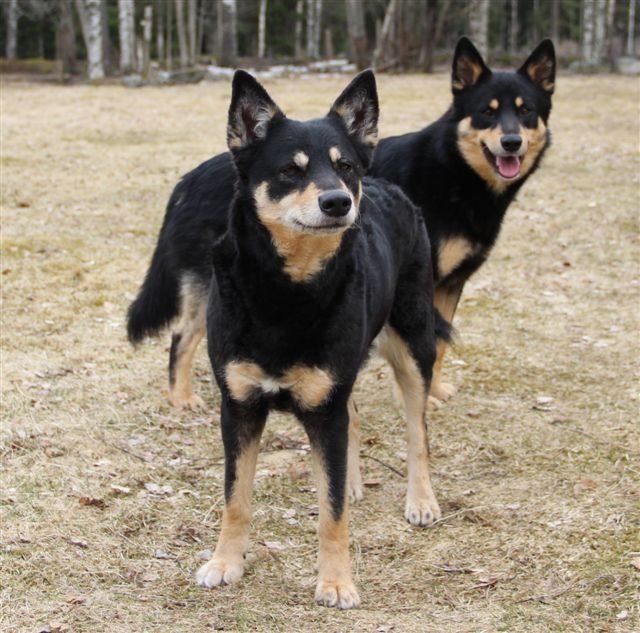
Before getting this dog, honestly assess your strenght.
Advantages:
- Phenomenal health and stamina.
- High intelligence and learning ability.
- Low-maintenance coat.
- Devotion to family and good guarding qualities.
- Resilience to any weather conditions (especially cold).
Disadvantages:
- Require a lot of physical activity (a walk around the block won’t do).
- Tendency to bark (needs control).
- Strong herding instinct (may “herd” cyclists, runners, children).
- Rarity of the breed (hard to find a puppy, high price).
- Heavy seasonal moulting.
Interesting facts about the Lapponian Herder
- Bear foes: In Finland, there are documented cases where a pair of these dogs successfully drove a brown bear away from a reindeer herd, not by making direct contact, but by wearing the predator out with manoeuvres.
- The lost gene: It is believed that modern Lapponian Herders have retained a “wolf-like” style of thinking – they are capable of independantly assessing a situation without a command from the owner if they are far away.
- Army service: The Finnish army and border guards often use this specific breed, rather than German Shepherds, to patrol the northern borders.
- Name change: For a long time, they were simply called “Lapland Shepherd”, but this name caused confusion.
Frequently Asked Questions (FAQ)
Is this breed suitable for a novice?
More no than yes. This is a working dog with a strong character. A beginner might find it difficult to cope with its energy and need for mental stimulation without the help of a cynologist.
How do they handle the heat?
Thanks to their thick undercoat, they handle frost brilliantly, but heat is a trial for them. In summer, training should be done early in the morning or late in the evening, and access to water and shade should always be provided. They don’t suffer too much themselves, provided you don’t force them to run in +30°C.
Do they get on with cats?
Yes, if socialised from puppyhood. But remember that a running cat can trigger the instinct to “catch up and stop”. Usually, they don’t harm “their own” cats, but may chase strange ones.
Video about the breed
- A hardy, tireless reindeer herder
- Phenomenal "natural" health
- Level-headed, loyal, good with the family
- Clever and keen to work
- Loud — barks while herding
- A huge need for exercise and work
- Not for a flat without a job
- Reserved (but not aggressive) with strangers
| Swedish Lapphund | Finnish Lapphund | Norwegian Elkhound | |
|---|---|---|---|
| Height | 40–48 cm | 41–52 cm | 49–52 cm |
| Energy | 4 | 4 | 4 |
| Apartment | 2.5 | 3 | 2.5 |
| Beginners | 3 | 3.5 | 3 |
What was the Lapponian Herder bred for?
Is this breed loud?
Is the breed suitable for a flat?
FCI Standard No. 284 · Suomen Kennelliitto
For apartments · For kids · For beginners · Active · Smartest · Hypoallergenic · All rankings →