

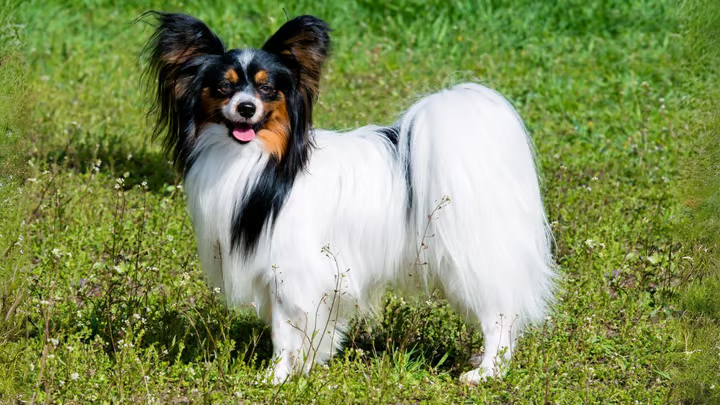
| Height | 20–28 cm |
| Weight | 3–5 kg |
| Lifespan | 12–15 years |
| FCI group | 9 · companion dogs |
| Origin | France / Belgium |
Exact ratings
Common health issues
Nutrition
The Continental Toy Spaniel (Papillon) is a miniature breed of tiny lapdogs with a distinctive appearance and the wonderful character of a true companion. Their tiny muzzle with its attentive gaze and huge ears create an amusing look, yet Continental Toy Spaniels behave with aristocracy and poise. Cold aloofness is not in their nature – these “aristocrats” will happilly play with children and behave in a friendly manner with all family members. Although Papillons are more common than Phalènes (the other variety of the breed), a very small number of puppies are born each year, making them a desirable trophy for connoisseurs of exclusivity. Read more about this on Tvaryny.
Continental Toy Spaniel (Papillon): A Brief Breed Overview
| Characteristic | Description |
| Origin | France, Belgium (historical development in the UK and Germany) |
| Year of Official Recognition | Standard approved in 1937, amendments made later (first mentions of the type – 16th century) |
| Life Expectancy | 12-15 years (often living up to 16-17) |
| Height at Shoulder | 20-28 cm |
| Weight | 1.5 – 5 kg (there are two weight categories: up to 2.5 kg and from 2.5 to 4.5/5 kg) |
| Coat Type | Long, silky, without undercoat |
| Grooming Difficulty | Medium (requires brushing, but no clipping) |
History of the Breed
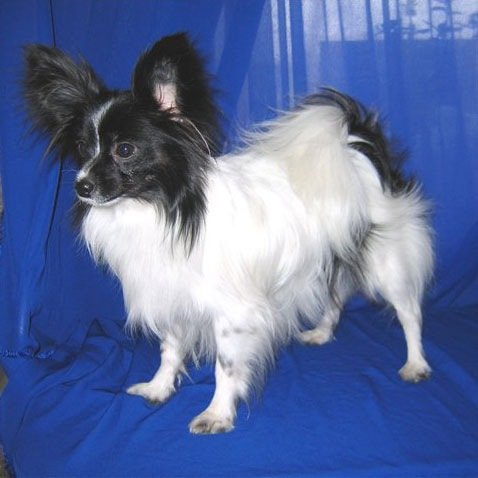
The history of this breed reads like a gripping historical novel, where the main characters sit on the laps of kings and pose for the finest artists of the Renaissance. Papillon is the French word for “butterfly” – a name the breed recieved due to its large ears, which resemble the spread wings of a butterfly. This became the main distinction from the other variety – the Continental Toy Spaniel Phalene, whose ears drop down (“phalène” means “moth” or “night butterfly”, which folds its wings).
These decorative little ones have delighted European owners for over a thousand years. They can be seen on the canvases of Titian, Rubens, and Rembrandt. It is believed that such dogs accompanied Madame de Pompadour and even Marie Antoinette. Legend has it that the Queen of France walked to the scaffold clutching her beloved little spaniel to her chest. However, historians tend to believe that the dog was taken from her before the execution, but the breed’s loyalty to its owners has become legendary.
In the 1930s, an improved, more modern type of this French dog was developed through the efforts of British and Scandinavian specialists. Breeders worked on improving the coat quality and fixing the characteristic ear set. Despite its attractiveness and rich history, the Continental “butterfly” remains a relatively rare breed even in its homeland, although its popularity is growing rapidly thanks to successes in canine sports.
What the Papillon Looks Like: Appearance Description
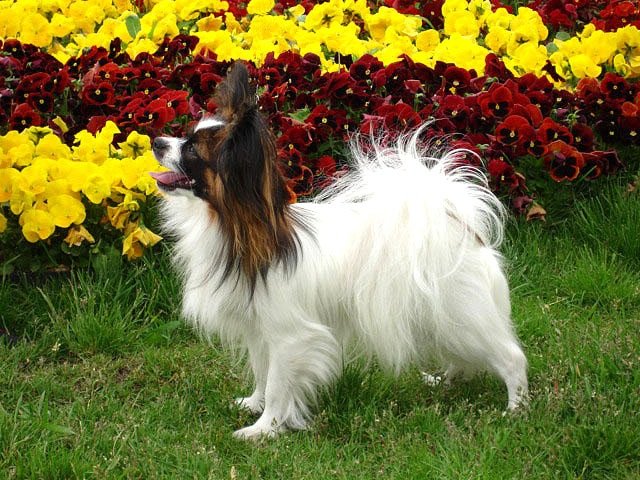
The Papillon’s appearance is a balance of elegance and sturdiness. Do not be misled by their “doll-like” look; beneath the elegant coat lies a strong bone structure and developed musculature, allowing them to be incredibly agile.
Head and “Trademark” Ears
The four-legged “butterfly” is characterised by large ears, set high and wide. The ear leathers are well open and turned to the sides. The inner edge of the ear forms an angle of approximately 45 degrees to the horizontal. Special charm is added by long strands of hair – “fringing” – which adorns the ear edge. The dog has a distinct transition from the forehead to the tapered muzzle (stop) and almond-shaped eyes with black rims, which always shine with inteligence. The tight, dry lips and small nose are also black.
Body and Coat
The Papillon’s body is slightly longer than its height at the shoulder, giving it a rectangular format. The back is strong, and the belly slightly tucked up. The limbs are straight, fine but not fragile, with “hare feet” (elongated toes), which contributes to fast running. The tip of the curved tail with its luxurious decorative plume is carried over the back, resembling a fountain.
The coat is the pride of the breed. It is abundant, glossy, wavy (but not curly), slightly firm to the touch, with a silky sheen. An important feature is the complete absence of an undercoat. An excess of white on the Papillon’s head is undesirable, however, on the rest of the body, it should predominate. The light background of the dense coat is covered with coloured patches – red (sable), black, tricolour (black and white with tan markings) and rare lemon or red-brown (hound-tricolour).
Character: Temperament and Behaviour
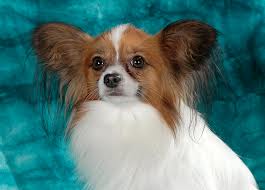
The Papillon destroys stereotypes about small dogs. This is not a shivering wreck afraid of its own shadow, but a genuinely big personality in a small body. This cheerful and active pet will not mope around and will always encourage you to play.
- Intelligence: According to Stanley Coren’s research, Papillons are in the top ten most intelligent dog breeds in the world (ranking 8th overall and 1st among toy breeds). They grasp commands literally on the fly.
- Sociability: The Papillon is sweet towards its “own” people, yet can behave coolly with strangers. This is not a display of fear, but innate vigilance. They are excellent “doorbells” that will warn of guests arriving with a bark.
- Relations with others: Unlike some terriers, Papillons usually get on well with other animals, including cats. However, due to their size, they can be injured during play with large dogs, so the owner must be vigilant.
Do not try to immediately win the affection of a strange Continental Toy Spaniel. Sometimes they can be stubborn and might get jealous of the owner if they are not given due attention. At the same time, the dog is not inclined to impose its company on a person if it sees that you are busy. Its unfailing companions in fun are children, whom the friendly tailed tot loves dearly, but games with very small children should be supervised so as not to injure the fragile dog. If you are looking for a companion for a child but are hesitating because of the Papillon’s size, you might be interested to learn about the Cavalier King Charles Spaniel, which is slightly larger and sturdier.
Pros and Cons of the Breed
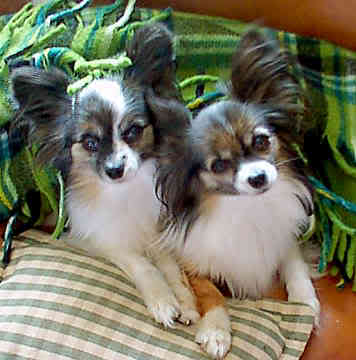
Before getting a puppy, it is important to weigh all the pros and cons, as this breed is not suitable for everyone.
| Pros (+) | Cons (-) |
| High intelligence, learns tricks easily | Likes to bark (requires training) |
| No undercoat and no specific “doggy” odour | Coat requires regular brushing |
| Compact size, ideal for travel | Fragile bones (risk of injury when jumping) |
| Very attached to the owner, empathetic | Tolerates loneliness poorly (prone to separation anxiety) |
| Long-lived among dogs | Can be fussy with food |
Health: Typical Diseases and Prevention
How to Care for the Coat?
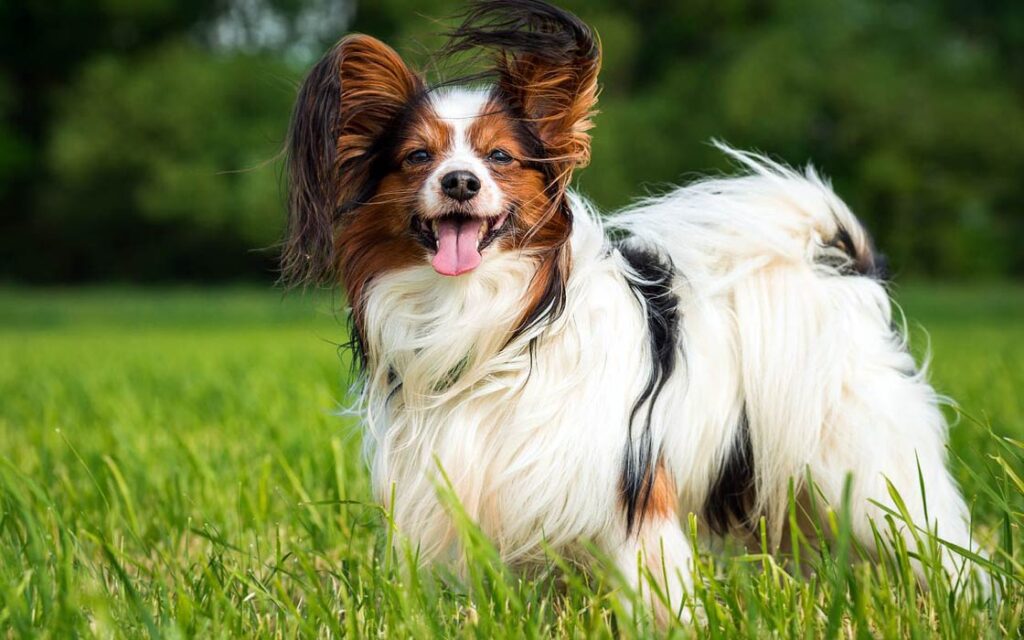
Many people are afraid to get a Papillon because of the long hair, but in reality, caring for it is simpler than it seems. Since they lack a thick undercoat, the fur does not mat as quickly as in Poodles or Shih Tzus, and does not shed as intensively as in Pugs.
Grooming and Bathing
The Continental Toy Spaniel’s coat will not cause you much trouble. An indoor dog is bathed only when necessary (usually once every 2-3 weeks) using moisturising shampoos for long-haired breeds. You need to brush your pet 2-3 times a week, paying special attention to the area behind the ears, under the armpits and the “breeches” on the hind legs, where the hair is softest and can tangle. Never brush dry hair – use a spray conditioner to prevent hair breakage.
Claws require separate attention. Due to the dog’s low weight, they do not wear down naturally, so they need to be trimmed once every 10-14 days. Hygienic trimming includes only trimming the hair between the paw pads (for better grip on the floor) and around the anal opening.
Training and Socialisation
Training a Continental Toy Spaniel is not difficult at all, considering its contact-seeking nature and special devotion to its beloved owner. Papillons possess high intelligence and are capable of learning many things, including the mundane but important ability to use a tray or puppy pad at home in bad weather.
However, do not think that this is a “sofa cushion”. Papillons are stars of agility (obstacle courses) and heelwork to music (dog dancing). Mental stimulation is vital for them. Spending energy on games and amusing those around him makes this dog happier. But note: he will not have the strength for exhausting physical marathons like a Husky. Treat your pet with patience and gentleness – the method of treats and praise works 100% here, while harshness will only make the dog withdraw into itself.
Cynologist’s Tip: Start socialisation as early as possible. Carry the puppy in your arms to crowded places, introduce it to different sounds and surfaces. This will prevent the development of “small dog syndrome”, where the dog barks at everything that moves out of fear.
Nutrition: Key Recommendations
Interesting Facts About Papillons
This breed is full of surprises. Here are a few facts that might surprise you:
- Ancient Legacy: When King Henry III was assassinated, legend has it that his Papillon barked so loudly, warning of the assassin, that if the King had listened to the dog, he would have remained alive.
- Not Just “Butterflies”: Puppies with both drop ears (Phalène) and prick ears (Papillon) can be born in one litter. This is a genetic lottery, although now these varieties are bred predominantly separately.
- Barking Treasure: In past centuries, the cost of such a dog could equal the value of an entire manor house.
- Rare Relatives: If you are interested in rare European companion breeds, take a look at the Kromfohrlander – this is another interesting representative, which, although larger than the Papillon, has a similar cheerful character.
Frequently Asked Questions About the Breed (FAQ)
Do Papillons bark a lot?
Yes, they are prone to barking as they are watchdog “doorbells”. But with proper training, they learn the “quiet” command quickly. If you need a quieter dog, this could be an issue.
Are they suitable for a flat?
Ideally. This is one of the best breeds for city living. They do not need much space, but they need contact with people.
How do they tolerate the cold?
Due to the lack of an undercoat, Papillons get cold. In winter and damp autumn weather, they need clothing (jumpers, coats).
Video About the Breed
- Remarkably clever, learns brilliantly
- Lively, affectionate, athletic
- Compact, for a flat
- Long-lived
- Delicate — take care with small children
- Inclined to bark
- Can be a one-person dog
- Needs activity for its keen mind
| Continental Toy Spaniel Phalène | Chihuahua | Pomeranian | |
|---|---|---|---|
| Height | 20–28 cm | 15–23 cm | 18–22 cm |
| Energy | 3.5 | 2.5 | 3 |
| Apartment | 4 | 3.5 | 4 |
| Beginners | 3.5 | 3 | 3.5 |
Why is the Papillon called that?
How clever is the Papillon?
Is the Papillon good for a family?
FCI Standard No. 77 · The Kennel Club
For apartments · For kids · For beginners · Active · Smartest · Hypoallergenic · All rankings →