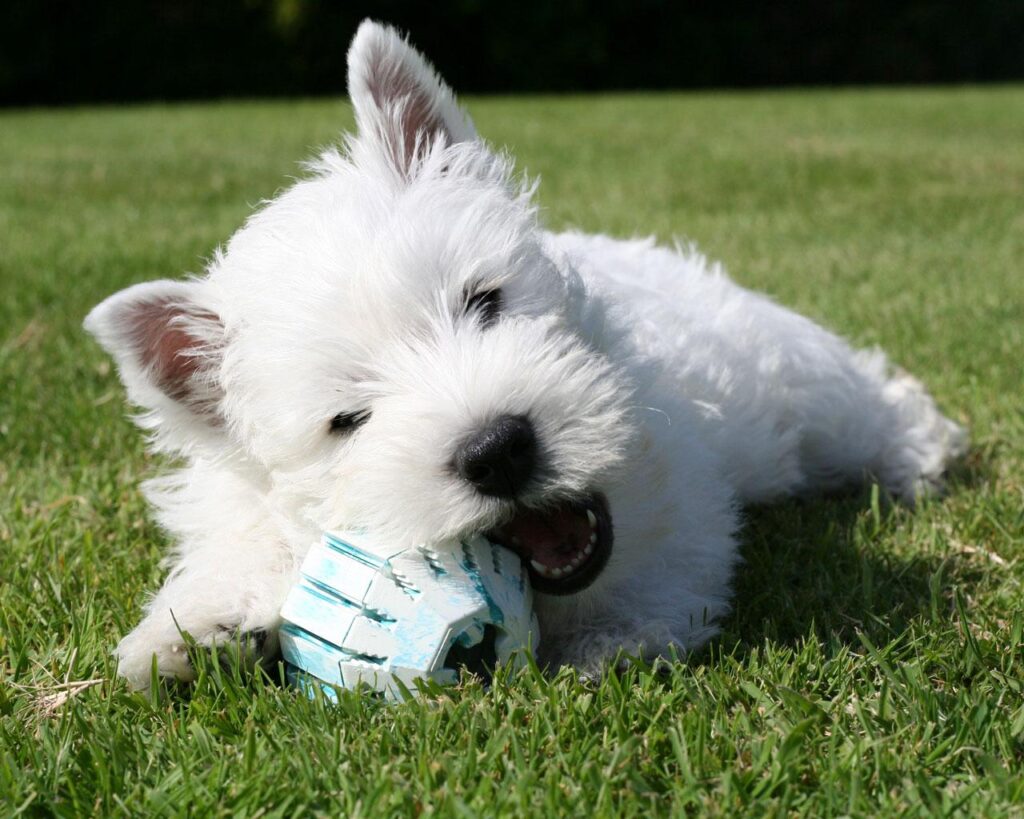
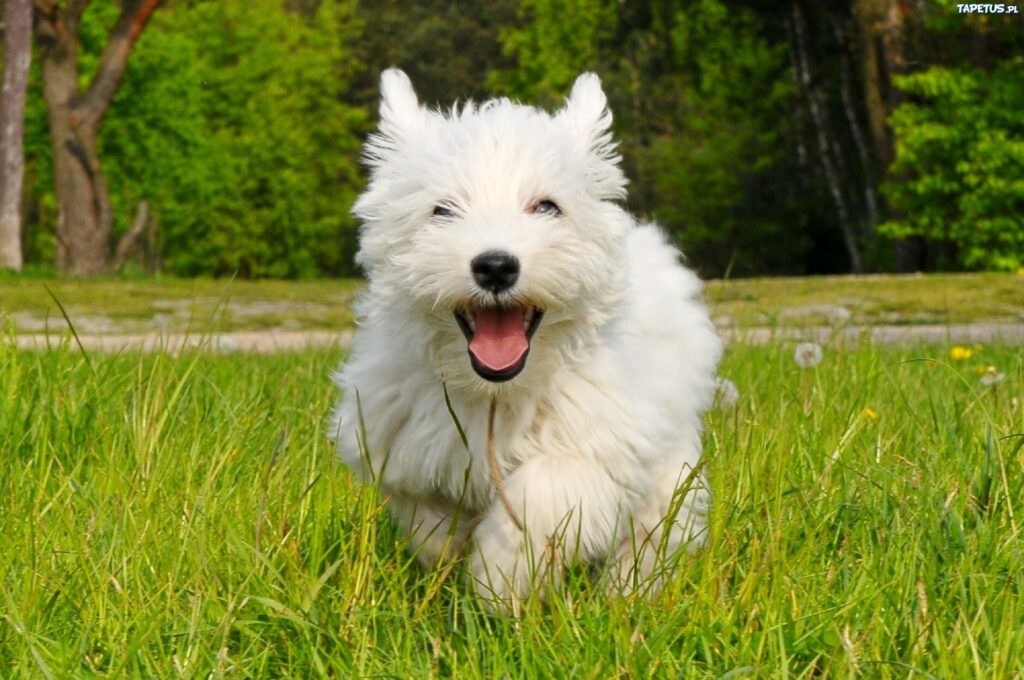
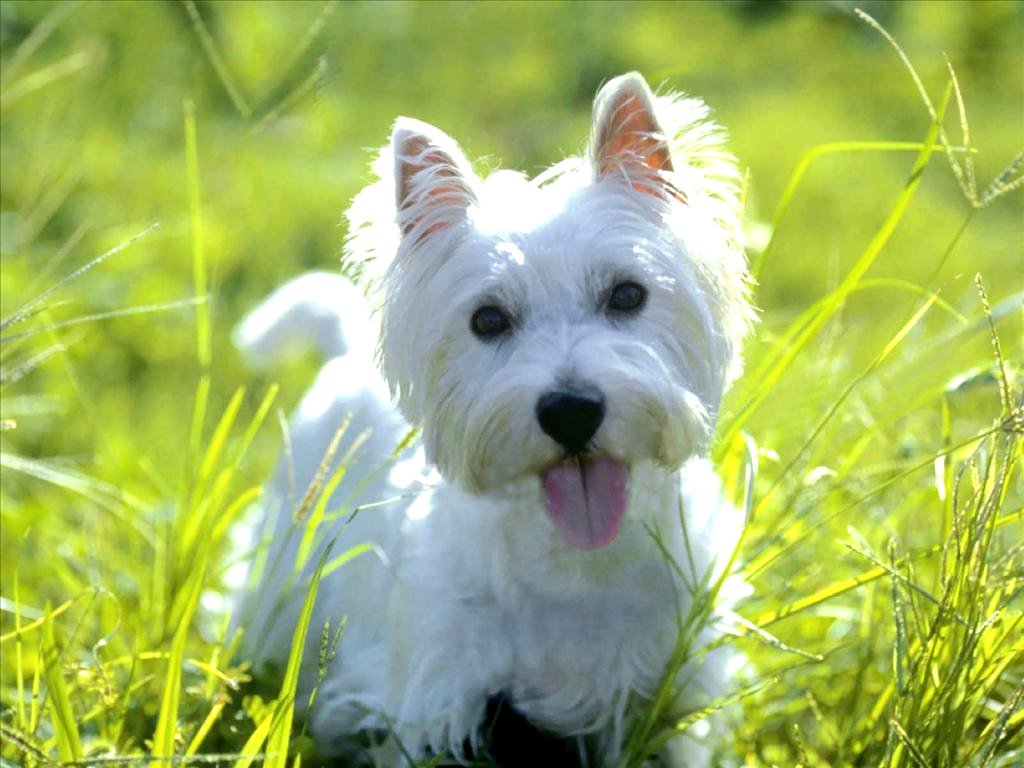
A snow-white, lively terrier with character: confident, curious, devoted and spirited. The Westie is a compact companion for the city, but its “terrier” temperament, tendency to bark and sensitive skin need attention.
ApartmentKids · with caveatsCats · with caveatsOther dogs · with caveatsBeginners · with caveats
The West Highland White Terrier, or the affectionate Westie, is more than just a snow-white cloud with inquisitive dark eyes. This is a true bundle of energy, courage, and Scottish stubbornness, packed into a compact but sturdy body. Once fearless hunters of foxes and badgers in the rugged Scottish Highlands, these dogs have today become beloved companions around the world. Their cheerful nature, comical appearance, and boundless devotion to their family make them the star of any home. Yet, behind the cute exterior hides a strong personality that demands respect and the right approach. If you're ready to accept the challenge and receive a sea of love and positive emotions in return, the Westie is the perfect choice for you. You can learn more about this charming rascal on Tvaryny.
Westies combine the traits of an ideal family dog and a true terrier: they love being the centre of attention and participating in all household activities, but at the same time, they haven't lost their hunting instincts. They are alert, brave, and always ready to announce the arrival of guests or a suspicious rustle behind the door with a loud bark. This breed is suited for active people who are willing to dedicate time to games, walks, and training, as a Westie's intelligence requires constant stimulation and their energy needs an outlet.
West Highland White Terrier: Key Breed Information
West Highland White Terrier: Key Breed Information · 11
Origin
United Kingdom (Scotland)
FCI Classification
Group 3 (Terriers), Section 2 (Small Terriers)
Year of Breed Recognition
1904
Lifespan
12–16 years
Height at the Withers
25–28 cm
Weight
7–10 kg
Temperament
Active, brave, independent, friendly, alert
Coat Colour
Exclusively white
Grooming Needs
High (regular hand stripping)
Activity Level
Medium/High
Tendency to Bark
High
Interesting Facts about West Highland White Terriers
Advertising stars: Westies are the face of the "Cesar" dog food brand and "Black & White" Scotch whisky (along with the Scottish Terrier).
"Handle tail": Their strong, straight tail isn't just for show. Hunters could literally pull a Westie out of a fox or badger burrow by the tail if the dog got stuck.
Not albinos: Despite their snow-white coats, Westies are not albinos. They have dark pigmentation of the skin, eyes, and nose, which proves the presence of pigment in the body.
Royal favourite: King James I, who ruled England and Scotland in the early 17th century, ordered a dozen "earth terriers" from Argyllshire to give as a gift to the French king. It is believed that these were early ancestors of the modern Westie.
History of the West Highland White Terrier Breed
The history of the West Highland White Terrier is inextricably linked to the rugged and picturesque lands of western Scotland. The breed's name literally translates to: "white terrier of the western highlands". Their ancestors were small working terriers used for centuries to hunt small rodents, foxes, and badgers in the rocky terrain. Initially, these terriers had various coat colours—red, sandy, or brindle—which helped them camouflage. White puppies would occasionally appear in litters, but they were often culled, as they were considered weaker and unsuitable for hunting.
Everything changed thanks to Colonel Edward Donald Malcolm of Poltalloch, in Argyllshire. According to legend, in the 19th century, while hunting, he accidentally shot his favourite red terrier, mistaking it for a fox. This tragic event prompted the Colonel to consider the advantages of a white coat: such a dog would be impossible to mistake for prey. From then on, Malcolm decided to deliberately breed exclusively white terriers, selecting the best specimens for this purpose. He did not create a new breed but merely cemented the desired colour in existing working terriers. It is believed that they share common ancestors with Cairn Terriers and Scottish Terriers, and possibly Skye Terriers, which explains their similarity in character and build.
Initially, the breed was known as the "Poltalloch Terrier" after Malcolm's estate. In parallel, the Duke of Argyll was breeding white terriers at his Roseneath estate, and they were called "Roseneath Terriers". It was only at the beginning of the 20th century that the unifying name—West Highland White Terrier—was adopted. The breed was officially recognised by the Kennel Club in 1904, and the first Westies were presented at the Crufts show in 1907. Since then, their popularity has only grown, and today, these snow-white Scots are among the most recognisable and beloved terriers in the world.
What the West Highland White Terrier Looks Like: Standard and Appearance
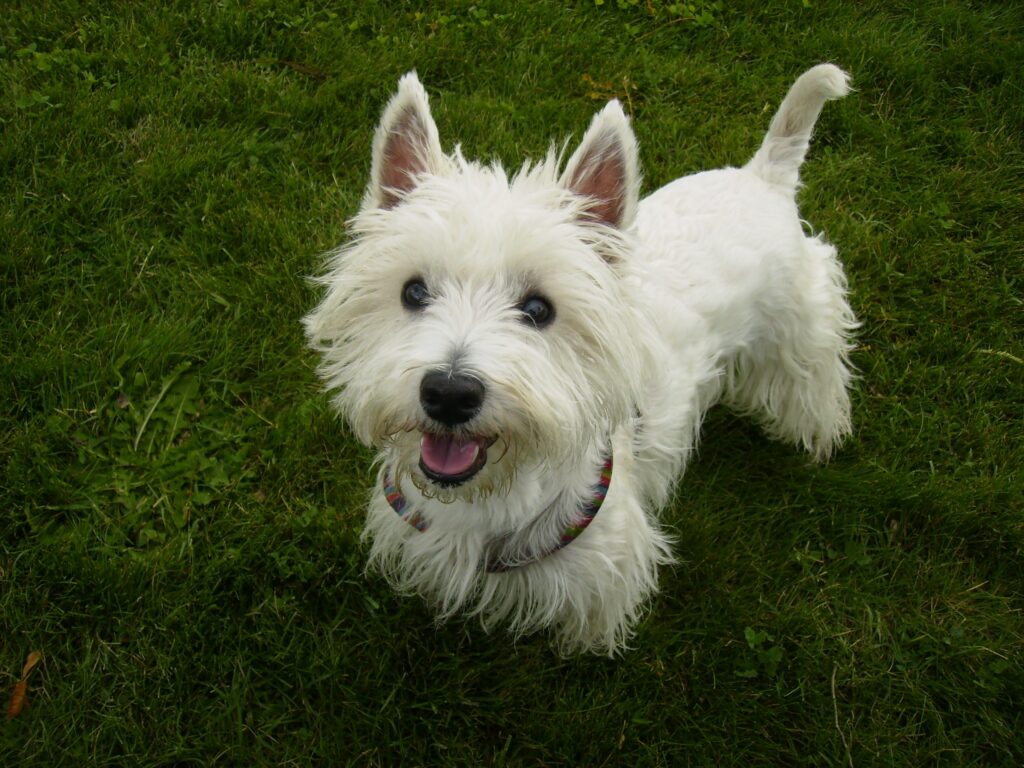
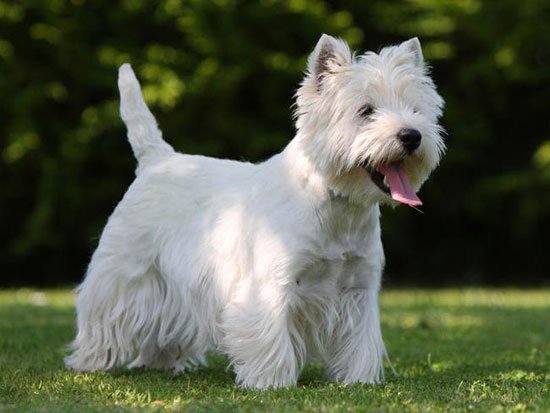
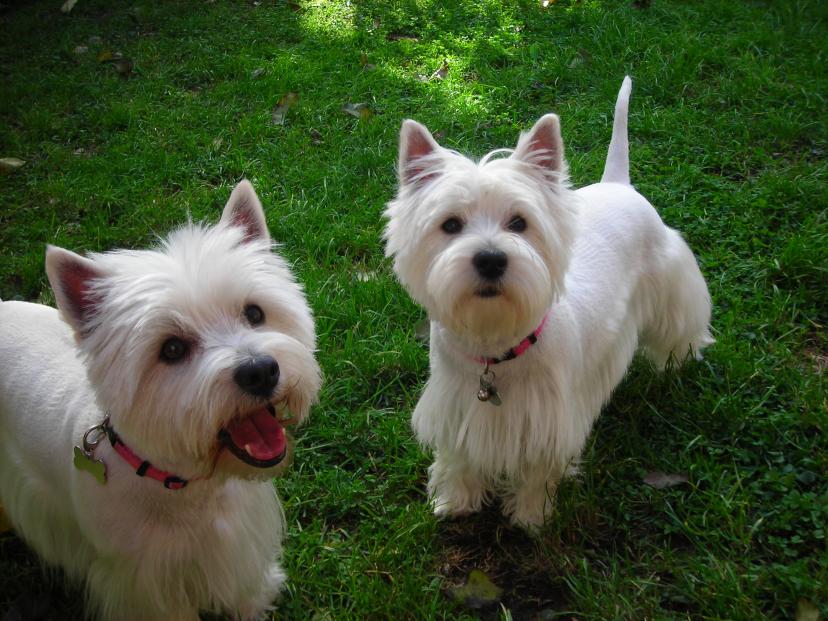
A Westie is a small but sturdily built dog with a distinct sense of self-worth. Its appearance is the embodiment of compact strength and agility. The main distinguishing feature is its tough, snow-white coat and the clever, inquisitive expression of its dark eyes.
Head: The skull is slightly domed, with a clearly defined stop. The muzzle gradually tapers towards the nose but is not pointed. Jaws are strong, and the bite is a scissor bite.
Nose: The nose is large and must be black, creating a vibrant contrast with the white coat.
Eyes: Set wide apart, medium-sized, and as dark as possible. The gaze is direct, penetrating, and highly intelligent. Light-coloured eyes are considered a fault.
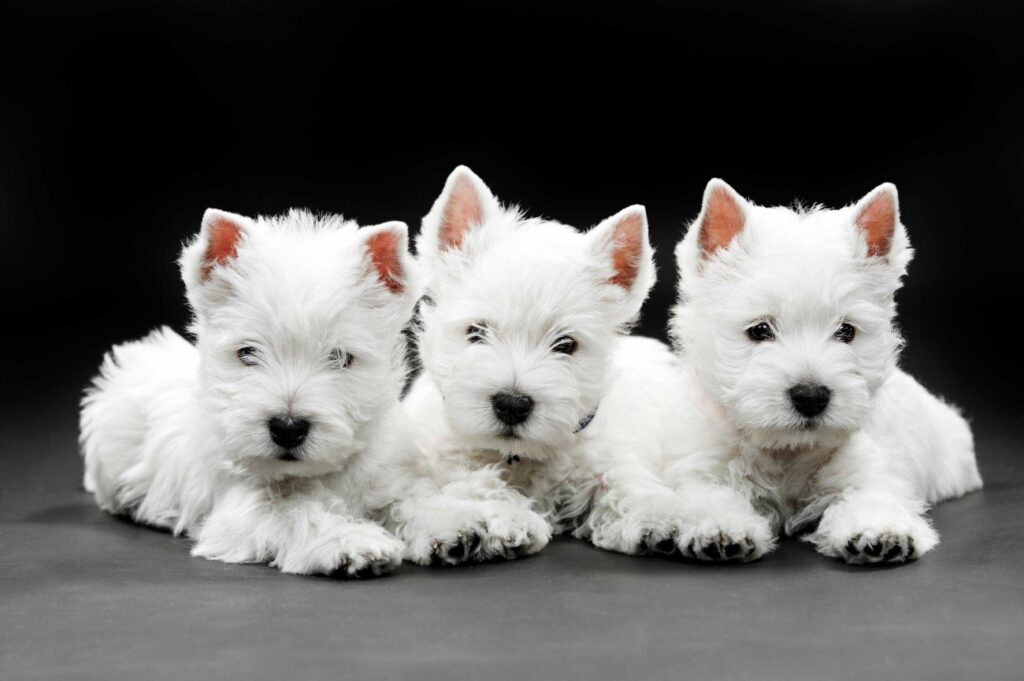
Ears: Small, erect, and pointed at the tips. Set high and not too far apart. Covered with short, velvety hair. The ears give the Westie its signature alert look.
Body: Compact, with a straight back and a powerful loin. The chest is deep, and the ribs are well-sprung. The neck is muscular and long enough for the dog to carry its head with pride.
Tail: 12–15 cm long, straight, and held vertically but not curled over the back. It is often called "carrot-shaped" due to its form. Historically, a strong tail could be used to pull the dog out of a burrow if it got stuck.
Limbs: The front legs are short, straight, and muscular. The hind legs are strong, with well-developed thighs. The paws are rounded, with thick, black pads.
Coat: Double-layered. The top layer is a harsh, straight outer coat about 5 cm long, with no curls. Beneath it is a soft, dense, and thick undercoat. This coat structure provides excellent protection from bad weather.
Colour: Exclusively pure white. Any markings of a different colour are a disqualifying fault.
Breed Standard Table (Key Parameters)
Breed Standard Table (Key Parameters) · 6
Characteristic
Description according to FCI Standard No. 85
General Appearance
Sturdy, compact, with a deep chest and muscular limbs.
Proportions
Body is slightly shorter than the height at the withers.
Bite
Scissor bite, full set of teeth.
Movement
Free, straight, and easy. Strong drive from the hindquarters.
Coat
Harsh outer coat (approx. 5 cm) and a soft undercoat.
Faults
Any deviation from the standard. Light eyes, poor pigmentation, incorrect bite, soft or curly coat.
The Westie's Character: Temperament and Behaviour
The character of a West Highland White Terrier is a lively cocktail of self-confidence, playfulness, and loyalty. They embody the saying "a big dog in a small body". Westies are unaware of their modest size and are ready to challenge any opponent, which is why they require careful socialisation from an early age. They become very attached to their family and strive to be a full member of it. If left alone for long periods, they can become bored, which sometimes results in destructive behaviour or excessive barking.
Main character traits:
Energetic and playful. Westies are always ready for an adventure. They love active games, walks, and any activity where they can burn off their boundless energy. Their curiosity knows no bounds, so it's important to provide them with a safe environment for exploration.
Independent and stubborn. Like most terriers, Westies have their own opinion on everything. This is not a dog that will unconditionally obey commands. Their intelligence requires a creative approach to training, based on positive reinforcement and mutual respect.
Brave and alert. Westies are excellent watchdogs. They instantly react to any unusual sounds with a loud and sharp bark. Their bravery can be a problem, as they may provoke much larger dogs.
Hunting instincts. Don't forget their past! Westies love to dig, chase small animals (squirrels, birds, rodents), and explore burrows. On walks in unfenced areas, it's best to keep them on a lead. This trait is common to many small terriers, such as the Norwich Terrier or the Australian Terrier.
Attitude towards children and other animals. Westies can get along well with children, especially if they grow up together. However, they will not tolerate rough handling and may snap in response to their ears or tail being pulled. Therefore, they are recommended for families with older children who know how to respect a dog's personal space. They can coexist with other dogs and cats if socialised early, but they can be jealous and tend to be dominant.
Westie Training and Socialisation
Training a Westie is an exciting, yet challenging process. Their high intelligence is combined with a great deal of stubbornness. They learn quickly but also decide just as quickly whether they want to follow your command. The key to success is patience, consistency, and positive reinforcement. Harshness and yelling will not yield any results and will only lead to a loss of trust.
Sessions should be short, dynamic, and engaging so the dog doesn't get bored. Use treats, toys, and praise as motivation. It is very important to start socialisation as early as possible: introduce the puppy to different people, sounds, places, and other calm dogs. This will help them grow into a well-adjusted and confident dog that won't show aggression out of fear.
Pros and Cons of the West Highland White Terrier Breed
Pros and Cons of the West Highland White Terrier Breed · 6
Pros (Advantages)
Cons (Disadvantages)
Compact size, ideal for flats
Tendency to bark excessively
Cheerful, playful, and energetic nature
Stubbornness and independence in training
High intelligence and quick-wittedness
High need for professional grooming (hand stripping)
Loyalty to family, a good companion
Predisposition to allergies and skin problems
Sheds very little with proper care
Strong hunting instincts (digging, chasing)
Brave and alert watchdog
Can be intolerant of small children and other animals
How to Care for a West Highland White Terrier's Coat
The snow-white, harsh coat is the Westie's calling card, but it requires regular and proper care to stay healthy and beautiful.
Brushing: To prevent matting, a Westie should be brushed 2–3 times a week with a metal comb and a slicker brush. This helps remove dead undercoat and dirt.
Trimming (Stripping): This is a key procedure to maintain the correct coat texture. Hand stripping is the process of plucking the old, dead topcoat by hand or with special tools. It stimulates the growth of new, harsh, and healthy hair that repels dirt and water. The procedure is done 2–4 times a year. Important: Clipping with a machine makes the coat soft, curly, and strips it of its protective properties, so it is not recommended for show dogs or for maintaining the breed standard.
Bathing: Westies do not need frequent baths. Their harsh coat has a self-cleaning ability. You should bathe your dog as needed when they get dirty, but no more than once a month, using a special hypoallergenic shampoo for harsh-coated dogs. Frequent washing can dry out the skin and cause irritation.
Eye and ear care: Regularly check their eyes and ears. Wipe the areas around the eyes to prevent tear stains. Clean the ears as needed with a special lotion.
Nail trimming: Trim their nails every 3–4 weeks if they don't wear down naturally.
Nutrition
Feeding a West Highland White Terrier: Key Recommendations
Health and risks
West Highland White Terrier Health: Typical Diseases and Prevention
Frequently Asked Questions about the Breed (FAQ) · 4
Is a Westie suitable for living in a flat? Yes, thanks to their compact size, Westies thrive in flats. However, they need daily active walks (a minimum of 1–1.5 hours per day) and mental stimulation to release their energy.
Do West Highland White Terriers shed a lot? With proper care (regular hand stripping), Westies shed very little. Hand stripping removes dead hair that would otherwise be left on furniture and clothes. If the dog is clipped with a machine, the coat's structure changes, and it may start to shed more heavily.
Would you recommend a Westie as a first dog? It is possible, but with certain caveats. A novice owner must be prepared for the terrier's stubborn character, be willing to dedicate a lot of time to training and socialisation, and be financially ready for the costs of professional grooming and potential allergy treatments. It is not the easiest breed for a beginner.
Why have my white Westie's paws turned pink/brown? This is most often the result of chromodacryorrhoea ("tear stains") or the reaction of saliva on the coat due to constant licking, which can be caused by allergies or stress. Porphyrin, found in saliva and tears, oxidises in the air and stains the white coat a reddish-brown colour.
Video About the Breed
FAQ
Does the Westie shed a lot?
Little — the coat needs stripping rather than shedding; that is a plus in a flat.
Why does the Westie scratch so often?
The breed is prone to atopic dermatitis (skin allergies); with persistent itching, a veterinary check and a suitable diet/care are needed.
Is the Westie suitable for a flat?
Yes — compact and lively; the key is to give it exercise and be prepared for barking.