

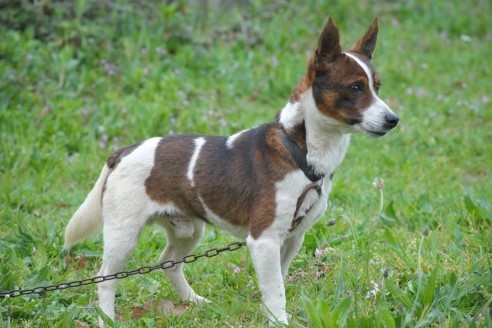
| Height | 30–42 cm |
| Weight | 6–10 kg |
| Lifespan | 12–14 years |
| FCI group | not FCI-recognised (Galician national) |
| Origin | Spain (Galicia) |
Exact ratings
Common health issues
Nutrition
The Can Guicho, or Quisquelo, is a unique member of the canine world that combines boundless energy with deep loyalty. These dogs can become grateful companions for an energetic owner ready to share the joy of movement with them. Although representatives of the breed are a real terror to wild hares, they get along reasonably well with household pets, provided they are not perceived as prey. This lively little dog will gladly play with children and other family members, demonstrating acrobatic wonders. Unfussy in food and care, the Can Guicho will unfortunately not be able to fully reach its potential in a cramped city flat. Its life is movement, its joy is hunting or active games. The dog is easy to train and keep, but difficult to buy outside of Spain, where it is considered a national treasure. Learn more on Tvaryny.
Can Guicho (Quisquelo): a brief breed overview
| Characteristic | Description |
| Origin | Spain (Galicia) |
| Alternative names | Quisquelo, Perro de Conejos (Rabbit Dog) |
| Purpose | Rabbit hunting, companion |
| Year of first mention (standard) | Around 2000 (official recognition at local level) |
| Life expectancy | 12-14 years |
| Height at withers | 30-42 cm (sexual dimorphism is weak) |
| Weight | 6-12 kg |
| Coat type | Dense, medium length, double |
| Care difficulty | Low |
History of the breed
The history of this breed is shrouded in the mists of the Galician mountains. The Can Guicho has been flushing out small game on the Iberian Peninsula since ancient times, serving as indispensable helpers to local farmers. The breed of skilled four-legged hunters was developed not so much through targeted selection in laboratories, but through natural selection and folk breeding, likely with the participation of Visigothic Spitzes, and later with an admixture of Corgi-type blood. There is a theory that the ancestors of these dogs arrived on the peninsula along with Celtic tribes or Vikings.
Consequently, the Quisquelo appeared at the initiative of humans and became their faithful friend in the harsh conditions of the countryside. They played the role of a “dog for everything”: guarding the yard, herding cattle, but their main vocation was hunting rabbits in thorny thickets where large dogs simply could not squeeze through.
The ancient history of the breed was almost cut short at the end of the 20th century. Urbanisation and changing agricultural methods led to a decrease in demand for such helpers. In order not to lose these wonderful representatives, the Spanish authorities (specifically in the Galicia region) announced a course for the restoration of the Can Guicho population. A genetic pool conservation programme was created. The national club of this breed reports initial successes, however, it remains rare and almost unknown outside its homeland, unlike breeds such as the Kai Leo, which have their admirers in the USA.
What the Can Guicho looks like: appearance description
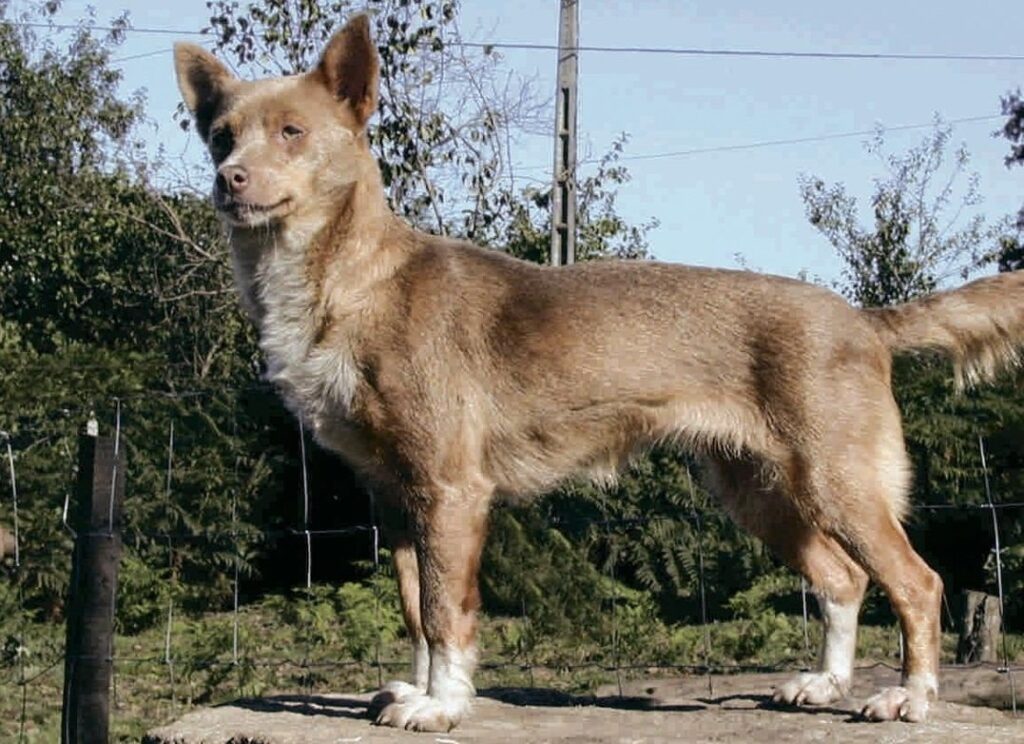
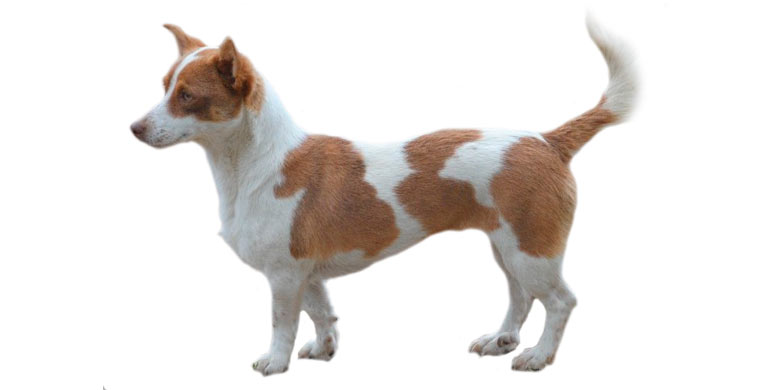
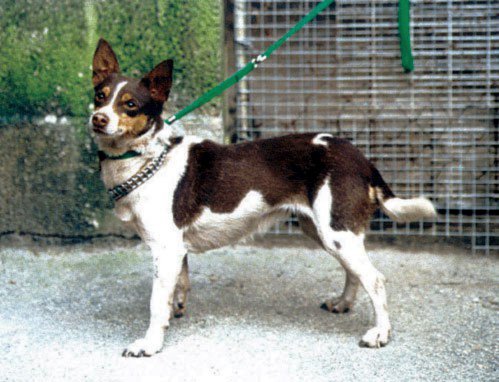
The appearance of the Can Guicho is the embodiment of functionality. There is nothing superfluous here that would hinder a rapid run through the thicket. Outwardly, Can Guichos resemble foxes – particularly with their elongated muzzle and ears sticking upwards. This gives them a cunning and at the same time alert look. The resemblance may be enhanced by the golden colour of the coat, however, the colour variations of these hunters are countless.
Exterior features
- Head: Wedge-shaped, proportional to the body. The skull is moderately wide, the transition from forehead to muzzle (stop) is noticeable but not sharp.
- Eyes: The expressive eyes of the Can Guicho are coloured to match the tone of the dense, semi-long coat. They have an almond shape and a lively, intelligent glint. The gaze is always attentive, scanning the space.
- Ears: Pricked, triangular in shape, quite large relative to the head, very mobile. This is their main “radar”.
- Body: They have a sturdy and compact body with a short croup. The body format is slightly stretched, but not as much as in Dachshunds. The back is straight and strong.
- Limbs: Muscular legs and neck. The limbs are dry, with strong bone structure, adapted for a quick start from a standstill. Paws are compact, “cat-like”.
- Chest: A broad and deep chest reveals the capacity for exhausting chases and ensures sufficient lung volume.
- Tail: The dog’s tail is lowered or held parallel to the ground when at rest. When excited, it may rise above the backline, but never curls into a ring.
The coat deserves special attention. It is a dense covering that protects the dog from rain, wind, and thorns. The colouring can be most diverse: solid colour (red, sandy), a combination of two, or tricolour. One can often find brown or grey Quisquelos. Interestingly, some cynologists compare their stature to other hunters, for example, the Herta Pointer, although their scale and working style are completely different.
Character: temperament and behaviour
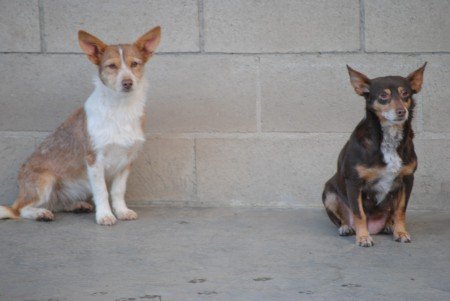
Nature has endowed the Quisquelo with an energetic temperament and an incredible zest for life. This is not a sofa dog, although it does love comfort. These lively dogs can never sit still; they require games and interaction. Their nervous system is very stable; they are not prone to hysteria, but their reactions are lightning-fast.
A true Can Guicho will not hide its gratitude when the owner dedicates some time to play. It will jump, “smile”, and demonstrate its affection in every way. It will respond to attentive treatment from a human with absolute canine devotion. However, it is worth remembering their independence. Like many primitive breeds, such as the Mexican Hairless Dog (Xoloitzcuintli), Quisquelos are used to making their own decison during the hunt, so one should not expect blind obedience from them.
With such a pet, it is worth going on a trip to the countryside, for an active walk, and, of course, hunting. There, the dog will surprise you with its physical endurance and ability to work with its nose. The Can Guicho is a curious dog that likes to learn new things, be it a new route in the park or a new puzzle toy.
Health: typical diseases and prevention
Coat care
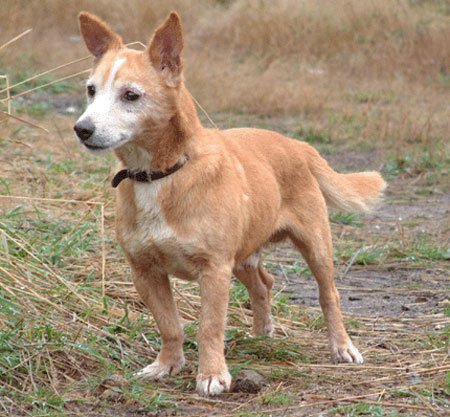
The Can Guicho pet is not a domestic dog in the usual sense of a “sofa cushion”. It will wither away in a flat and will not sit idle within the walls of a private house outside the city. You won’t be sitting around much with such a companion – it will constantly demand walks. The more active they are, the better for the dog’s physical and mental health.
The owner should ensure the dog has a sufficient level of physical exercise. And also clean it every time these activities have been performed in nature. The Quisquelo’s coat has the ability to self-clean, but burrs will not fall out on their own. Brushing the dog 1-2 times a week with a stiff brush is sufficient. During the shedding period (spring and autumn), the procedure should be carried out daily.
The fact that the Quisquelo gets along well with neighbourhood animals does not deprive it of its thirst for hunting. So, for the sake of the rare breed, the owner will have to become a “hunter” themselves – hunting for new experiences for their dog. Bathing is carried out only when necessary, using shampoos for wire-haired breeds so as not to disturb the skin’s natural oil balance.
Training and socialisation
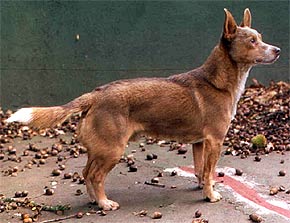
Inquisitive and communicative Quisquelos lend themselves well to training if you find the right approach. They love spending time close to humans, especially in active games and training (agility, coursing). The owner should use only soft training methods based on positive reinforcement (treats, play).
All hunting dog breeds are characterised by autonomy in decision-making and a certain independence, so one should not pressure the dog. Harshness will only make the dog withdraw into itself or become aggressive. It is better to enjoy outdoor activities, mimicking the dog’s cheerful mood. At the same time, the owner’s authority and leadership must remain unshakable. It is important to teach the puppy the “Come!” command from an early age, because if captivated by a scent, the Quisquelo can go “deaf” and run over the horizon.
Diet: key recommendations
Pros and cons of the breed
| Pros (+) | Cons (-) |
| Robust health and longevity | Requires significant physical exercise |
| Compact size (convenient for transport) | Tendency to run away (hunting instinct) |
| Easy coat care | Can be loud (barking) |
| Friendly to its own family | Rarity of the breed (hard to find a puppy) |
| High intelligence and quick wit | Independent character, requires patience in training |
Interesting facts about the Can Guicho
- A name with character: “Guicho” in the local dialect can mean “lively”, “cunning” or “sharp”, which ideally describes the character and appearance (pointed ears) of this dog.
- Hunting polyglot: This dog uses different types of barking to notify the owner about the type of prey found or how close it is.
- Heritage of the Celts: Some researchers believe that this breed is a direct descendant of the dogs used by ancient Celts for hunting in rocky terrain.
- Master of camouflage: Thanks to its colouring, the Quisquelo can become almost invisible in dry grass and autumn leaves.
Frequently Asked Questions (FAQ)
Is the Can Guicho suitable for a family with children?
Yes, this is a wonderful choice for families with school-age children. The dog will gladly support children’s games, running around and pranks. However, interaction with very small children should be supervised, as the active dog may accidentally knock the little one over.
Can they live in a flat?
Theoretically – yes, but this will require titanic efforts from the owner. They need a minimum of 2-3 hours of active walking daily. Without this, the dog may start spoiling things out of boredom. The best option is a private house with a fenced area.
How do they relate to cats?
If the puppy grew up together with a cat – they will be best friends. But street cats will always be a hunting object (“game”) for the Quisquelo, which needs to be chased down.
- Compact, good for the home
- An agile, tireless rabbit hunter
- Devoted and affectionate to the family
- Very robust health overall
- A strong hunting instinct (dangerous for cats)
- Very rare — hard to find
- Needs exercise and mental work
- Watchful — prone to giving voice
| Portuguese Podengo (Small) | Ca Rater Mallorquí | Galician Podengo | |
|---|---|---|---|
| Height | 20–30 cm | 29–36 cm | 30–54 cm |
| Energy | 4 | 4 | 4 |
| Apartment | 4 | 4 | 3.5 |
| Beginners | 3.5 | 3.5 | 3.5 |
What does the name “guicho” mean?
What is the Can Guicho used for?
How rare is this breed?
Galician national breed (recognised 2001) · Xunta de Galicia
For apartments · For kids · For beginners · Active · Smartest · Hypoallergenic · All rankings →