

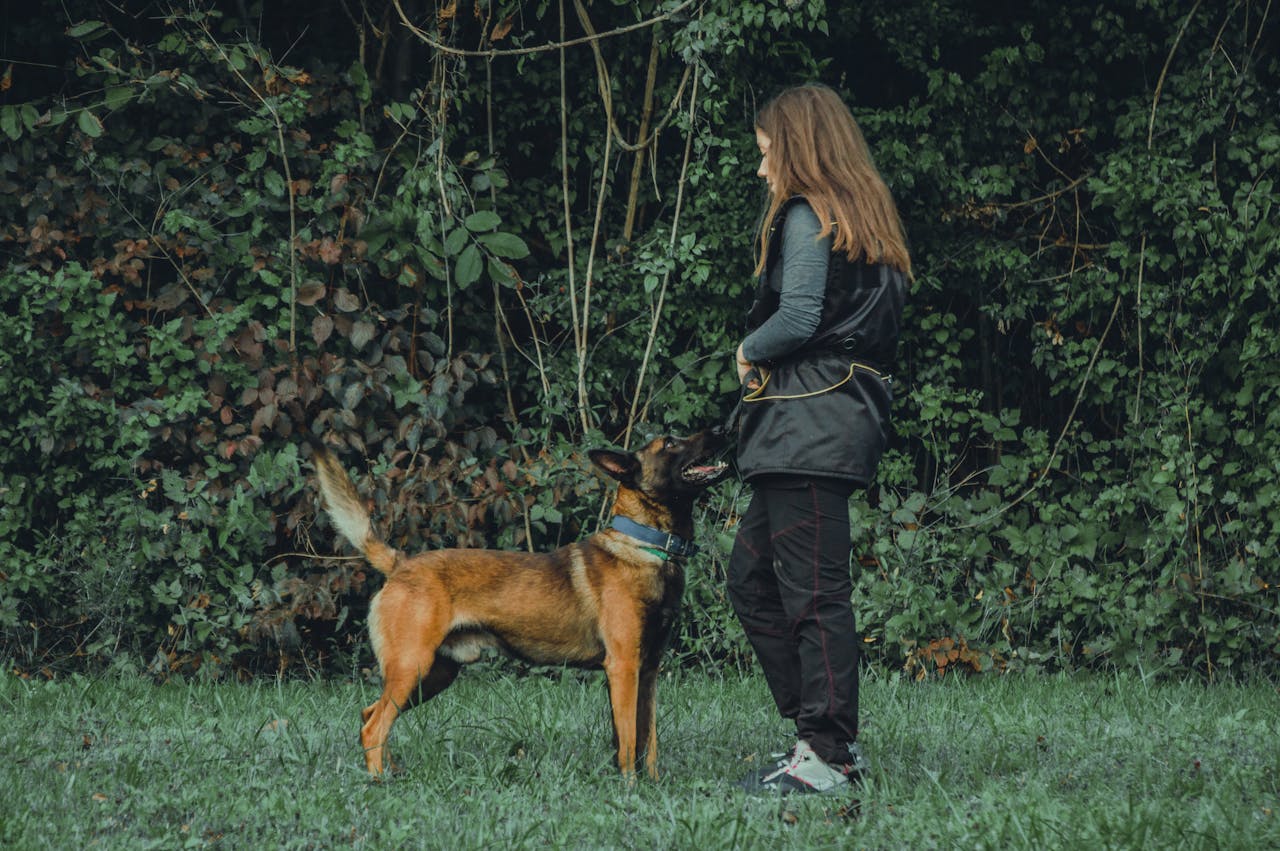
Every dog owner has found themselves in this situtaion at least once. You are standing in the middle of the park, your voice sounds confident (or perhaps already a bit irritated), you give the command “Here!”, and your four-legged friend… simply looks at you. There is intelligence in his eyes, he hears you perfectly well, his ears even twitched in your direction. But instead of approaching, he turns away and continues to sniff that same bush. It looks like sheer cheek, doesn’t it? It seems as if the dog is doing it out of spite, demonstrating his independence or even contempt for your authority.
In reality, it is both much more complicated and simpler than that. Attributing human motives such as “resentment”, “revenge” or “stubbornness” to a dog is a road to nowhere that only spoils your relationship. Canine logic works differently, and the key to obedience lies in understanding exactly how the animal perceives the world. In this article, we will break down the deep-seated reasons for such behaviour, dispel myths about dominance, and provide step-by-step instructions on how to establish contact. Learn more on Tvaryny.
The Myth of “He Understands Everything”
The phrase “my dog understands everything, he just can’t speak” is one of the most common illusions. Dogs are genius observers. They read our facial expressions, tone of voice, muscle tension, and even the smell of pheromones. When you return home to find a torn sofa, and the dog flattens his ears and hides – he does not “feel guilt”. He sees your aggressive posture and tries to use appeasement signals to avoid conflict.
The same applies to commands. If a dog executes the “Sit” command at home in the kitchen when you have a piece of cheese in your hand, but ignores it on the street when he sees a cat – this does not mean he has “decided not to listen”. It means that in his brain, the command “Sit” is tied to a context: “Kitchen + Cheese + Silence”. In the conditions of “Street + Cat + Noise”, this command simply does not exist for him or sounds like white noise.
Fundamental Reasons for Disobedience: Why He “Doesn’t Hear” You
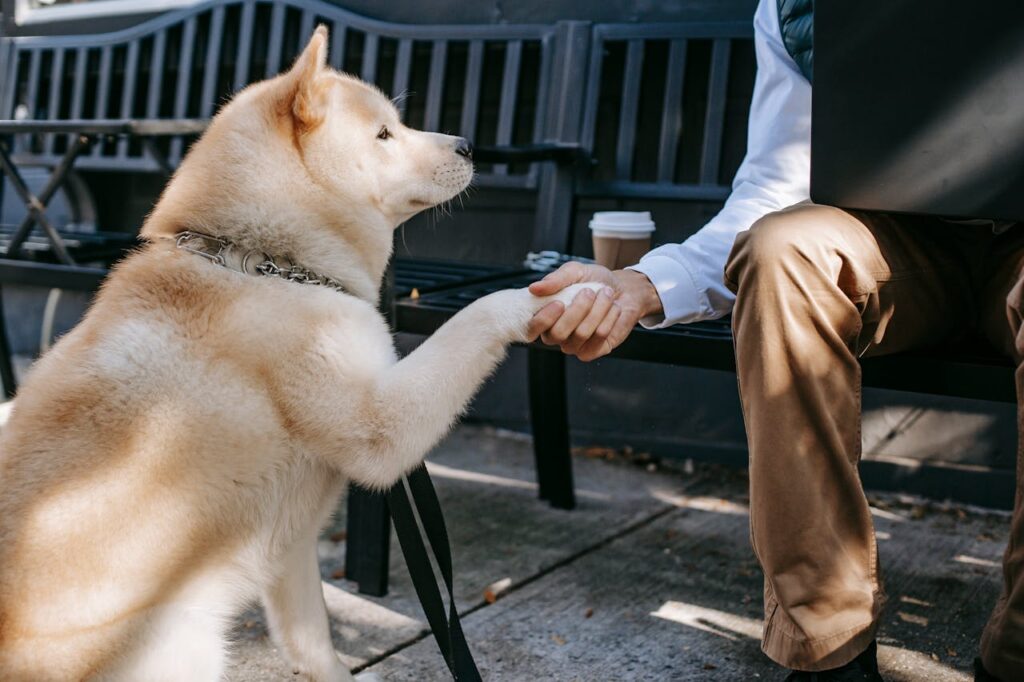
To fix the problem, you need to find the root. In 95% of cases, the reason for ignoring commands lies in one of the following factors or a combination of them.
1. The Generalisation Problem
The human brain is good at generalising. If we know how to sit on a chair at home, we can sit on a chair in a restaurant, on a train, or in a park. In dogs, this function is developed much more weakly. For a dog, a skill is tied to the situation.
- Situation A: You are standing in front of the dog, a treat in your right hand, the room is quiet. You say “Sit”. The dog sits.
- Situation B: You are sitting on the sofa, no treats, the telly is on. You say “Sit”. The dog looks at you. For him, this is an absolutely new task.
The dog is not ignoring you. He simply doesn’t understand that the word “Sit”, whispered in the park, means the same action as “Sit” spoken loudly in the kitchen. The process of training a dog requires repeating the command in dozens of different places, with different stimuli, so that the animal finally realises: “Aha, this word means put my bum on the ground ALWAYS, regardless of where we are”.
2. Competition of Motivations
Imagine your boss offers you £2 to immediately stop playing your favourite video game at the most interesting moment. You will likely refuse. But what if he offers £8,000? The situation changes.
Dogs are pragmatic creatures. Every second they assess the benefit. On one side of the scale is your dry biscuit and the praise “Good boy”. On the other is the scent of a female in heat, a squirrel on a tree, or a pile of rubbish that smells “divine”. If the stimulus is stronger than your reward, the dog will choose the stimulus. This isn’t rebellion; it is simple mathematics of benefit. Your task is to become the most interesting object in the environment or offer a “salary” that outweighs the temptation.
3. “Noise” in Communication
Many owners, without noticing it themselves, create “noise” around commands. It looks like this: “Rex, come here, come on, who am I talking to, Rex, here, take it, come to me, come here”. For the dog, this is just a stream of sounds. He cannot isolate the key trigger word. If you repeat the command “Sit, sit, sit, sit” five times before the dog sits, you have personally taught him that the first four times can be ignored, and he only needs to react on the fifth.
Emotional State and Overload
Sometimes the problem is not knowledge, but the capabilities of the nervous system. The dog may be in a state of high arousal. When the level of excitement crosses a certain threshold (due to fear or excessive joy), the animal’s brain literally blocks out. Physiologically, the dog is incapable of hearing the command because his body has switched into “fight or flight” mode.
Balance is important here. Very often owners push too hard, trying to achieve perfection right here and now. We have written previously about signs that you are demanding too much from your dog. If you see your dog yawning frequently during training, licking his lips, scratching, or turning away – this is not boredom, it is a cry for help: “It’s too difficult for me, please reduce the pressure”.
The Age Factor: “Bananas in the Ears”
If your perfect puppy aged 6-10 months has suddenly “forgotten” everything he knew, congratulations – you have a teenager. The pubertal period in dogs is accompanied by a hormonal storm that temporarily “switches off” parts of the brain responsible for self-control. The world around becomes so interesting and new (due to changes in scent perception) that the owner fades into the background.
Cynologist’s tip: During the teenage period, do not try to teach new complex tricks. Your goal is to maintain contact and prevent the dog from acquiring bad habits. Use a longer lead, more rewards, and have patience. This will pass.
Does Size Matter?
There is a stereotype that training is only needed for Shepherds and Rottweilers, while a small fluffball can be forgiven for ignoring you. This is a dangerous mistake. A small dog that does not listen risks its life (it could run onto the road or provoke a large dog). Furthermore, an uncontrolled terrier lives in a state of constant stress.
The principles of learning are the same for everyone, but there are nuances. For example, Yorkshire Terriers and Chihuahuas also need discipline, but the methods of influence must be gentler, and you should lean towards them in a way that doesn’t loom over them threateningly. Ignoring commands in small breeds is often linked precisely to fear of the owner’s huge figure looming from above.
Problem Solving Algorithm: How to Make Your Dog Hear You
So, we have clarified the reasons. Now let’s move to practice. How do you turn ignoring into enthusiasm?
Step 1. Health Check
Before correcting behaviour, rule out pain. A dog with aching joints will sit slowly or ignore the “Sit” command. A dog with an ear infection might not want a collar put on. If behaviour has changed suddenly – run to the vet.
Step 2. Increasing Reward Value
Dry food is fine for the kitchen. But for the street, you need “currency” of a higher grade. Create a hierarchy of treats:
| Difficulty Level | Type of Stimuli | Reccomended Reward |
|---|---|---|
| Low | Home, familiar place, silence | Ordinary dry food, praise |
| Medium | Courtyard, familiar routes | Jerky, hard cheese |
| High | Dog park, vet, guests | Boiled heart, liver, sausages (in moderation) |
Step 3. “Resetting” the Command
If the command “Come” is already “spoiled” (you repeated it many times in vain, or punished the dog when he approached), forget about it. Invent a new word. For example, “Here” or “Close”.
Start teaching the new word from scratch:
- Say the word.
- Immediately give a super-treat.
- Repeat 10-20 times without demands. The dog must understand: “The sound ‘Here’ means something tasty is coming”.
- Gradually introduce distance and stimuli.
Step 4. The Rule of One
Make a promise to yourself: never repeat a command twice. If you said “Sit” and the dog ignores it, you have two options:
- If the dog knows the command but got distracted: attract his attention (with a sound, a touch), but do not repeat the word, and help him adopt the required posture (by guiding with a hand holding food, but without mechanical pressure), then praise him reservedly.
- If the situation is too complex: you made a mistake by demanding the impossible. Move further away from the stimulus, simplify the task and try again.
Typical Mistakes of Owners (Checklist)
Check yourself against this list. Perhaps the solution to your pet’s behaviour lies right here.
- Too many words. “Rex, well you’re a good boy, come on sit down, please”. The dog hears: “blah-blah-blah-SIT-blah-blah”. Speak clearly: “Rex. Sit”.
- Punishment for approaching. A classic drama: the dog ran off for 10 minutes, you were nervous, he finally came back, and you told him off. You just punished him for coming back. Next time he will think three times. Always praise for the approach, even if you were mad as hell before that.
- Inconsistency. Yesterday jumping on the bed was allowed because you were in a good mood, and today it is not allowed because you are tired. For the dog, this is chaos. Rules must be black and white: either allowed always, or never allowed.
- Stinginess with emotion. Dogs love it when we are genuinely happy. Your dry “good” might not motivate. Try throwing a mini-party when the dog has executed a difficult command.
What to Do When You Feel Like Giving Up?
Dog training is not a straight line upwards. It is a cardiogram: there will be ups and downs. There are days when the dog seems perfect, and there are days when he seems to have forgotten his name. This is normal. It is important not to take this as a personal insult. The dog isn’t doing it to spite you. Perhaps he simply feels unwell, hasn’t slept enough, or the atmospheric pressure is affecting him too.
If you feel you are losing control and starting to get angry – stop the training. Silently take the dog on the lead and go home. Continuing sessions in a state of irritation is the worst thing you can do, as you will teach the dog to fear you, and fear kills intelligence.
Conclusion
Ignoring commands is not a diagnosis and not a sentence on your dog’s character. It is a communication error. The dog is a mirror of your work with him. If he “doesn’t hear”, it means you are speaking “the wrong language” or offering an “unprofitable deal”.
Change your approach. Become the source of the most interesting events in the dog’s life. Work on contact, play, be a predictable leader who always keeps promises (both regarding rewards and rules). And remember: training is a lifelong process, not a two-week course. Patience and love always defeat stubbornness.