

| Height | 25–30 cm |
| Weight | 5–8 kg |
| Lifespan | 13–16 years |
| FCI group | 3 · terriers |
| Origin | Great Britain |
Exact ratings
- Patellar luxation
- Eye disease (lens luxation, cataract)
- Deafness (more often in white dogs)
- Legg-Calvé-Perthes disease
- Ataxia (hereditary, rare)
Quality food, with weight control (compact, easy to overfeed). Plenty of exercise and mental games are a must — it has the energy of a big dog.
The Jack Russell Terrier is a true whirlwind of energy, a bundle of intelligence, and the very embodiment of hunting spirit, all packed into a compact body. This breed, which has gained worldwide fame for its lively character and film roles, is actually a serious working dog with a rich history. They are tireless explorers, faithful companions, and a source of endless positivity for their owners. However, prospective owners should be aware that behind the charming exterior lies a strong character with high demands for activity and training. To learn more about all aspects of life with this remarkable dog, read on at Tvaryny.
Breed standards describe the Jack Russell Terrier as a small but sturdy dog, with a height at the withers typically between 25-30 cm and a weight ranging from 5-6 kg (approximately 1 kg for every 5 cm in height). It is a proportionately built dog, slightly longer than it is tall. The lifespan of this breed is quite long, averaging 13-16 years with proper care. The predominant colour is white (which must make up at least 51% of the coat), with tan (from light lemon to rich chestnut), black, or tricolour (black and tan) markings. The coat comes in three types: smooth-coated, rough-coated (with a distinct “beard” and “eyebrows”), and broken-coated. Regardless of the coat type, the Jack Russell Terrier is an incredibly cheerful, restless, brave, and intelligent dog.
Jack Russell Terrier: A Brief Breed Overview
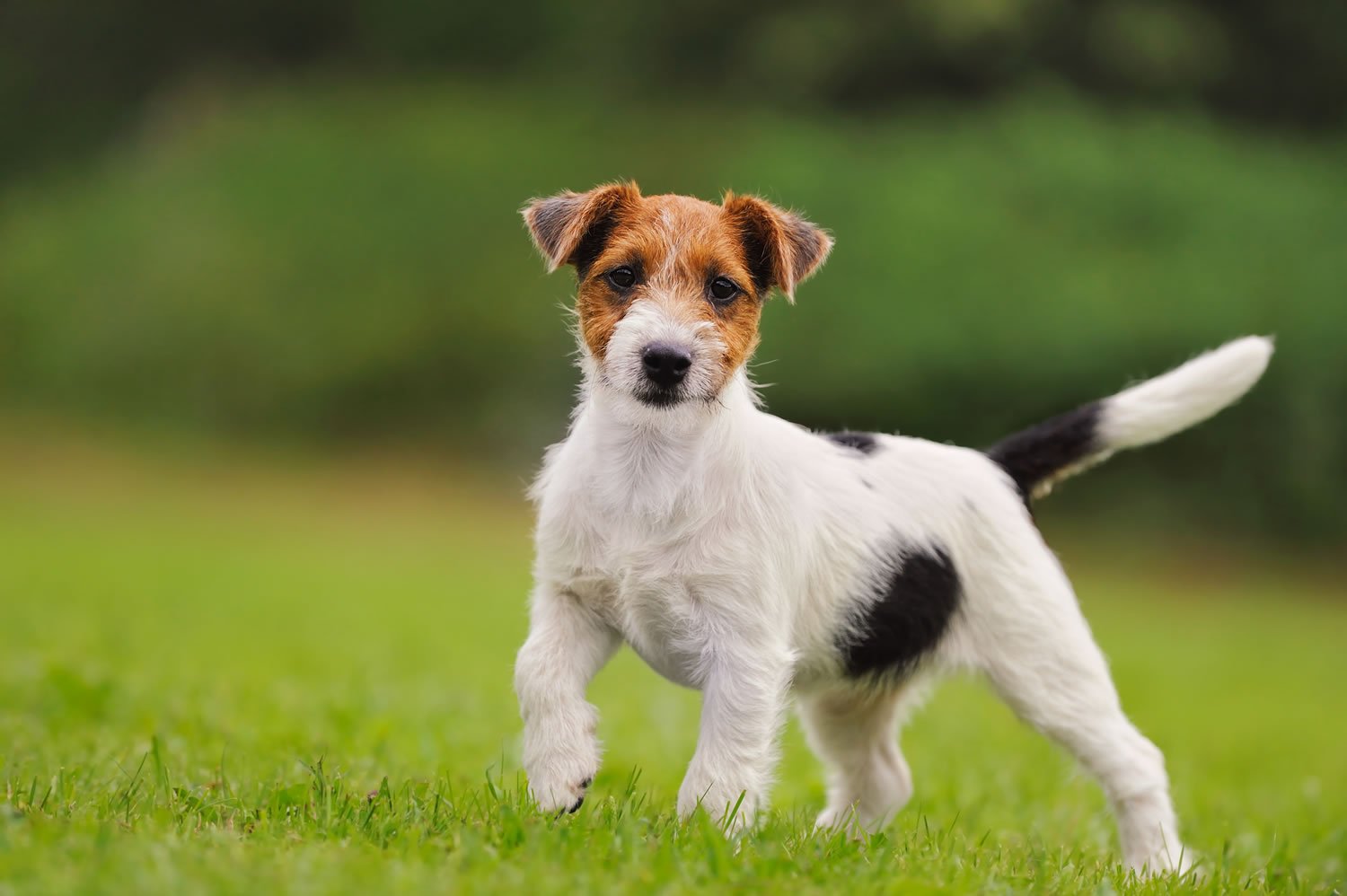
| Parameter | Characteristic |
|---|---|
| Origin | Great Britain (Breed development – Australia) |
| FCI Classification | Group 3 (Terriers), Section 2 (Small Terriers). Working trial optional. Standard No. 345. |
| Year of First Mention / Recognition | Early 19th century (creation), FCI recognition – 2000 (final), standard updated 08.10.2012. |
| Lifespan | 13–16 years |
| Height at Withers | 25–30 cm (ideal) |
| Weight | 5–6 kg (proportional to height: 1 kg per 5 cm) |
| Coat Type | Smooth-coated, Rough-coated, Broken-coated |
| Colour | Predominantly white (over 51%) with tan, black, or tricolour markings |
| Temperament | Energetic, bold, intelligent, stubborn, loyal, playful, alert |
| Purpose | Hunting Dog (for burrow work), Companion Dog |
History of the Jack Russell Terrier Breed
The history of the breed is inextricably linked with the name of the English clergyman, Reverend John (Jack) Russell (1795-1883), who lived in Devon. Parson Russell was not only a man of the cloth but also an avid fox hunter and a passionate dog enthusiast. His goal was to create the perfect terrier for working to ground – a small dog, bold enough to confront a fox underground, but not so aggressive as to kill it (the task of a burrowing terrier was to flush the animal from its den for the hunter or to corner it and hold it at bay by barking).
It all began around 1819 when John Russell acquired a white, rough-coated female named Trump. It is believed that she became the foundation dam of the terrier line that the parson developed. Trump was described as being about the size of a small vixen, mostly white with small tan patches on her head and at the base of her tail, with a harsh, dense coat that protected her from the elements and from injury underground. Russell sought to solidify key working qualities: stamina, courage, a flexible body (to navigate narrow burrows), strong jaws, and a powerful voice.
To enhance the desired characteristics, John Russell crossed his dogs with various types of terriers of that era, including the ancestors of the modern Smooth Fox Terrier. Some sources suggest the possible infusion of Beagle blood (to improve scenting ability and voice) and Bull Terrier blood (for courage and tenacity), although there is little documentary evidence for this. The main selection criterion was always working ability, not appearance. For this reason, Russell’s dogs did not participate in shows for a long time, and the breed itself lacked a unified standard.
After Parson Russell’s death in 1883, his dogs continued to be valued by hunters. Gradually, two main types of terriers descending from Russell’s dogs emerged:
- The Parson Russell Terrier: Taller (30-38 cm at the withers), with a more square build, more similar to the early fox terriers. This type was recognised earlier by the UK Kennel Club.
- The Jack Russell Terrier: Shorter (25-30 cm), with a longer body and shorter legs. This type was primarily developed in Australia, where the dogs were imported in the 1960s. It was Australian enthusiasts who put in the effort to standardise and officially recognise the breed.
In Australia, the Jack Russell Terrier became extremely popular as a companion and a working dog on farms. In 1972, the Jack Russell Terrier Club of Australia Inc. was established. It was the Australian standard that was adopted by the Fédération Cynologique Internationale (FCI) in 2000 (initially on a provisional basis, then permanently). Interestingly, the country of origin is listed in the standard as Great Britain, while the country of development is Australia.
Today, the Jack Russell Terrier is a globally beloved breed that has captured the hearts of millions with its irrepressible temperament, intelligence, and devotion. They successfully compete in various canine sports (agility, flyball, frisbee), remain wonderful companions, and are, of course, still sometimes used for their original purpose – hunting in burrows.
What Does a Jack Russell Terrier Look Like: Standard and Variations
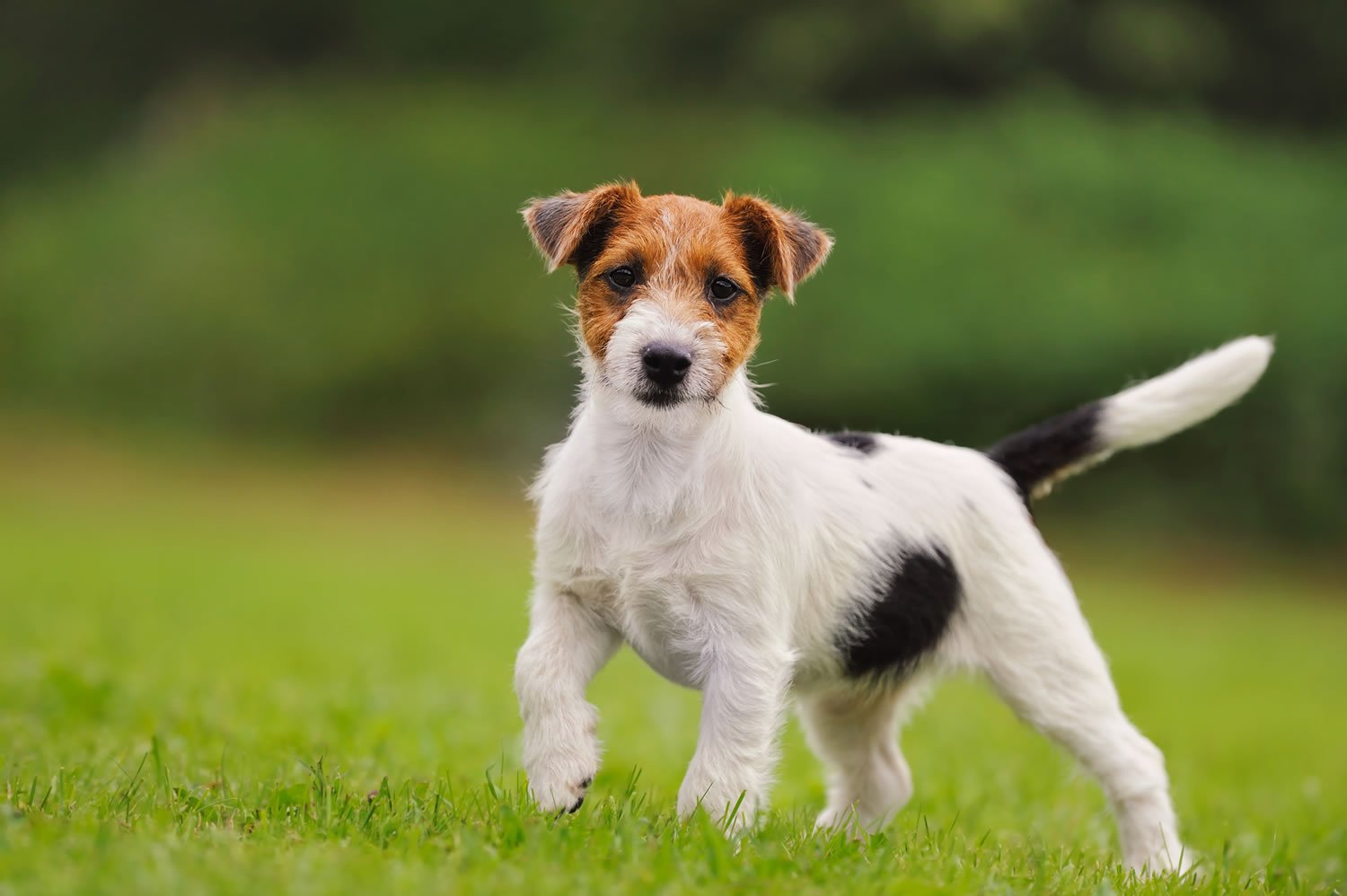
The Jack Russell Terrier is a strong, active, and agile working terrier with a body of medium length. The overall appearance should be balanced, and the dog should give an impression of energy and liveliness. According to the FCI Standard No. 345, there are clear requirements for the breed’s conformation.
General Proportions:
- Body Shape: The dog is longer than it is tall.
- Chest Depth: The depth of the body from the withers to the sternum should equal the length of the foreleg from the elbow to the ground.
- Chest Girth: The girth of the chest behind the elbows should be approximately 40-43 cm. This is an important trait for a working terrier, as a chest that is too broad would hinder the dog’s ability to navigate burrows.
- Weight: Proportional to height – approximately 1 kg for every 5 cm of height at the withers (i.e., 5-6 kg).
- Height: The ideal height at the withers is from 25 cm to 30 cm.
Head:
- Skull: The skull should be flat and of moderate width, gradually decreasing in width to the eyes and tapering to a wide muzzle.
- Stop: Well-defined but not over-pronounced.
- Muzzle: The length from the stop to the nose should be slightly shorter than from the stop to the occiput.
- Nose: Black.
- Lips: Tight-fitting and pigmented black.
- Jaws/Teeth: Very strong, deep, wide jaws. A perfect scissor bite (upper teeth closely overlapping lower teeth and set square to the jaws).
- Eyes: Small, dark, and almond-shaped with a keen expression. They should not be prominent. Eyelids should be tight-fitting, and the rims should be pigmented black.
- Ears: Button or dropped ears. Very mobile. The tip of the ear is level with the corner of the eye. The fold of the ear should not be above the top of the skull. The ear leather is of medium thickness.
Body:
- Neck: Strong and clean, allowing the dog to carry its head with poise.
- Back: Straight. The length from the withers to the root of the tail is slightly greater than the height at the withers.
- Loin: The loin should be short, strong, and well-muscled.
- Chest: Deep rather than wide. The sternum is located halfway between the withers and the ground. Ribs should be well-sprung from the spine, then flattening at the sides so that the girth behind the elbows can be spanned by two hands (about 40-43 cm).
- Tail: May be docked (optional) or of natural length. When moving, it is carried erect. At rest, it may be dropped. If docked, the tip should be on the same level as the ears. If natural, it is of moderate length, straight, thick at the base, and tapering towards the tip.
Limbs:
- Forequarters: Straight from the elbows to the toes when viewed from the front or side. Shoulders are long, sloping, and well laid back. Elbows fit closely to the body.
- Hindquarters: Strong and muscular, with well-angulated stifles and hocks. Hocks are set low. Metatarsals are parallel when viewed from behind.
- Paws: Round, hard, with tight pads, and small. Toes are moderately arched, turned neither in nor out.
Coat:
- Types: May be smooth, rough, or broken. All types should have an undercoat and be weatherproof.
- Smooth-coated: The coat is short, lies flat, and is uniform over the entire body.
- Rough-coated: The coat is longer, harsh to the touch, and stands away from the body. It forms a characteristic “beard” and “eyebrows” on the face.
- Broken-coated: A combination of smooth and rough hair. It may have a light “beard” and “eyebrows,” with a coat that is slightly longer than a smooth coat but not as harsh or long as a rough coat.
Colour:
- Main Colour: White must be predominant (over 51%).
- Markings: Black and/or tan markings (from the lightest lemon to the richest chestnut). Tricolour (white with black and tan markings) is possible. Markings are preferably confined to the head and/or the root of the tail but are permissible on the body.
Gait: Free, springy, and energetic. The limbs move straight forward.
Faults: Any departure from the foregoing points should be considered a fault, and the seriousness with which the fault should be regarded should be in exact proportion to its degree and its effect upon the health and welfare of the dog and its ability to perform its traditional work. Any dog clearly showing physical or behavioural abnormalities shall be disqualified.
Character and Temperament of the Jack Russell Terrier
The Jack Russell Terrier is a dog with a huge heart and a boundless supply of energy packed into a small frame. Its character is a vibrant cocktail of intelligence, boldness, stubbornness, playfulness, and loyalty. To truly understand this breed, one must always remember its hunting past.
- Energy: This is perhaps their most defining trait. Jack Russells require a great deal of exercise and activity. Simple walks on a lead are not enough for them. They need games, running, and the chance to explore the world. A lack of physical and mental stimulation quickly leads to behavioural problems such as destroying things, excessive barking, and digging.
- Intelligence and Cunning: They are exceptionally smart and learn quickly… when they want to. Their intelligence is often combined with cunning and independence. They easily spot weaknesses in their training and can manipulate their owners. They need consistent, patient, yet firm training from an early age.
- Boldness and Courage: As true terriers, they are fearless, sometimes to the point of recklessness. They are unaware of their small size and are ready to challenge much larger opponents. This trait makes them excellent watchdogs (they will always alert you to approaching strangers with a loud bark), but it requires control from the owner, especially during walks.
- Stubbornness: The “terrier stubbornness” is no myth. Jack Russells have a mind of their own and are not always willing to obey commands without question. Training must be engaging and positive, using motivation (treats, toys, praise), but the owner must clearly establish rules and boundaries.
- Hunting Instinct: This is very highly developed. They have a natural tendency to chase small animals (squirrels, rats, birds, and sometimes cats). This strong prey drive is a trait shared by many terriers bred for vermin control, including the closely related Rat Terrier. This must be considered during walks (always use a lead in unsafe areas) and when living with other small pets. Their love for digging is also a manifestation of this hunting instinct (searching for prey underground).
- Playfulness: They remain playful puppies at heart throughout their lives. They love active games with a ball, frisbee, or a game of tug-of-war. Play is an excellent way to burn off their energy and strengthen the bond with their owner.
- Loyalty and Affection: Despite their independence, Jack Russells become very attached to their families. They love being the centre of attention and participating in all family activities. They can suffer from loneliness if left alone for long periods.
- Alertness: Excellent watchdogs that will always warn you of anything unusual. However, they are prone to barking, which needs to be managed from a young age.
The Jack Russell Terrier is not a lap dog. It is an ideal match for active people or families who are prepared to dedicate plenty of time to walks, games, and training. It can be a great companion for teenagers, but interactions with small children should be supervised, as the dog can be overly energetic or intolerant of rough handling. This is a dog with a big personality that requires understanding, patience, and consistent training.
Socialisation and Living with Children and Other Animals
Early and proper socialisation is critically important for a Jack Russell Terrier. Due to their boldness, high energy, and strong hunting instinct, an under-socialised Jack Russell can become a problem for both its owners and the public.
Puppy Socialisation:
- Introducing the World: From the moment a puppy arrives home (after necessary vaccinations and quarantine), it should be gradually introduced to various sounds (street noise, vacuum cleaners, fireworks), places (parks, city streets, transport), people (of different ages, genders, and appearances), and other animals (under strict supervision).
- Interacting with Other Dogs: It is crucial to teach a Jack Russell how to interact correctly with its own kind. Due to their boldness and sometimes feisty nature, they can provoke conflicts, especially with dogs of the same sex or larger size. Controlled meetings with calm, well-behaved dogs will help the puppy learn canine etiquette.
- Attending Puppy Classes: Group classes led by an experienced dog trainer are an excellent way to socialise a puppy and teach basic obedience.
Jack Russells and Children:
A Jack Russell Terrier can be a fantastic companion for school-aged children who understand how to behave around a dog. They are tireless playmates and will happily join in on active fun. However:
- Supervision is a Must: Never leave small children alone with any breed of dog, including a Jack Russell.
- Teach the Children: Children must learn not to disturb a dog while it is eating or sleeping, not to pull its tail or ears, and not to try to snatch a toy away forcefully.
- High Energy: A Jack Russell can be too boisterous during play and might accidentally knock over or scratch a small child.
- Tolerance Levels: While many Jack Russells are patient with children, some may show impatience with excessive pestering or rough handling.
Jack Russells and Other Pets:
Living with other animals can be challenging for a Jack Russell Terrier due to its strong hunting instinct.
- Other Dogs: If a Jack Russell grows up with another dog, they will likely get along. However, conflicts are possible, especially with dogs of the same sex or when a new dog is introduced to the household. Early socialisation and owner control are key.
- Cats: The chances of peaceful coexistence are higher if a Jack Russell puppy is raised with a cat from a young age. However, the hunting instinct can kick in at any moment, especially if the cat runs. Never leave them unsupervised until you are completely confident in their relationship.
- Small Animals: Keeping a Jack Russell Terrier in the same home as rodents (hamsters, guinea pigs, rats), rabbits, ferrets, or birds is strongly discouraged. Its hunting instinct is too powerful, and it will view them as prey. Even a secure cage may not be a match for an inventive terrier.
In Conclusion: Early, consistent, and comprehensive socialisation is the key to ensuring your Jack Russell Terrier grows into a well-behaved, confident, and safe dog. The owner must be prepared to dedicate sufficient time and effort to this process.
Training and Upbringing of a Jack Russell Terrier
Training a Jack Russell Terrier is a fascinating yet challenging process that requires patience, consistency, firmness, and a sense of humour from the owner. Thanks to their high intelligence, these dogs can master complex commands and tricks, but their natural stubbornness and independence can be a significant hurdle.
Basic Principles of Training:
- Start Early: Begin training and teaching basic commands (“Sit,” “Down,” “Come,” “Stay,” “Leave it”) from the first days the puppy is in your home (around 8-10 weeks of age).
- Positive Reinforcement: Jack Russells respond well to reward-based methods – treats, praise, and toys. Punishment, especially physical, can lead to fear, aggression, or even more stubbornness.
- Short and Interesting Sessions: Due to their high energy and restlessness, Jack Russells lose focus quickly. Training sessions should be short (5-15 minutes), dynamic, and varied to keep the dog engaged. It’s better to have several short training sessions a day than one long one.
- Consistency and Clarity: All family members must adhere to the same rules and expectations for the dog. Commands should be clear and given in the same tone. Inconsistency confuses the dog and allows it to manipulate the situation.
- Firmness and Leadership: The owner must become an authoritative but fair leader for the Jack Russell. This does not mean harshness, but setting clear boundaries and rules that the dog must follow.
- Manage Energy: Before a training session, give the dog a chance to burn off some energy (through an active walk or play) so it can concentrate better on learning.
Important Aspects of Upbringing:
- House-training: Requires patience and regularity. Take the puppy outside after every sleep, meal, and play session.
- Teaching to be Alone: Gradually accustom the dog to being left alone, starting with short periods. Provide it with safe toys (like a treat-filled Kong) to keep it occupied in your absence.
- Controlling Barking: Jack Russells are prone to barking. Teach a “Quiet” command and do not encourage barking without reason.
- Teaching “Leave It”: A crucial skill for the dog’s safety, preventing it from picking up food or other items from the street.
- Getting Used to a Muzzle and Lead: Essential for safe walks.
- The “Come” Command: A vital command, especially for a dog with a strong hunting instinct. Practise it constantly in various environments.
- Preventing Jumping on People: Energetic Jack Russells often greet people by jumping up. This should be corrected from a young age.
Potential Problems and Their Solutions:
- Digging: If the dog digs in the garden, provide it with a designated digging spot (like a sandpit) and encourage it to dig there.
- Aggression towards Other Dogs: Early socialisation and control are key. In difficult cases, consult a professional dog behaviourist.
- Destructive Behaviour: This is usually a result of boredom and insufficient activity. Increase physical and mental stimulation.
Remember that training is an ongoing process. Even an adult dog needs regular reinforcement of commands and mental challenges. In 2011, a Jack Russell Terrier named Anastasia from Australia made it into the Guinness World Records by popping 100 balloons in 44.49 seconds! This demonstrates their incredible agility and trainability with the right approach.
Jack Russell Terrier Health: Common Diseases and Prevention
Jack Russell Terriers are generally considered a relatively healthy and hardy breed with a lifespan of 13-16 years. However, like many other breeds, they are prone to certain hereditary diseases and health issues. Knowing about these potential problems can help owners recognise symptoms early and take preventive measures.
Hereditary and Common Diseases:
- Eye Conditions:
- Lens Luxation: A hereditary condition where the ligaments holding the lens weaken, causing it to dislocate. It can lead to glaucoma and blindness. It usually appears between the ages of 3 and 8. Regular check-ups with a veterinary ophthalmologist are important.
- Cataracts: A clouding of the lens that can lead to vision impairment and blindness. It can be hereditary or develop with age.
- Progressive Retinal Atrophy (PRA): A degenerative disease of the retina that leads to blindness.
- Glaucoma: Increased pressure within the eye that damages the optic nerve.
- Musculoskeletal Conditions:
- Legg-Calvé-Perthes Disease: Aseptic necrosis of the femoral head. The blood supply to the head of the femur is disrupted, leading to its collapse and arthritis of the hip joint. It manifests as lameness in puppies and young dogs (4-12 months). Treatment is often surgical.
- Medial Patellar Luxation: Dislocation of the kneecap. Common in small breeds. It can cause intermittent or persistent lameness. The severity varies, and treatment depends on the grade (from conservative to surgical).
- Hip Dysplasia: Although more common in large breeds, it can also occur in Jack Russells. It is an improper formation of the hip joint that leads to arthritis and pain.
- Hereditary Deafness: Can be unilateral (one ear) or bilateral (both ears). It is often linked to the piebald gene and excessive white colouring, especially on the head and ears. A BAER test in puppies can identify this issue.
- Ataxia and Myelopathy of Terriers: A group of hereditary neurological disorders affecting the spinal cord and/or cerebellum, leading to a loss of coordination (ataxia) and limb weakness. Symptoms are usually progressive. Genetic tests are available to identify carriers.
- Allergies: Jack Russells can be prone to skin allergies (atopic dermatitis) caused by environmental factors (pollen, dust mites) or food. Symptoms include itching, red skin, hair loss, and ear infections.
- Dental Problems: Prone to tartar build-up and periodontal disease. They require regular teeth cleaning and vet check-ups.
Prevention and Responsible Ownership:
- Choosing a Puppy: Buy a puppy from a responsible breeder who tests their breeding stock for hereditary diseases (eyes, patellas, deafness, ataxia). Ask to see the health test results of the puppy’s parents.
- Regular Vet Check-ups: Annual (or twice-yearly for senior dogs) check-ups with a vet, including eye and dental exams, can help detect problems at an early stage.
- Vaccinations and Parasite Control: Timely vaccinations and regular treatment for fleas, ticks, and worms are essential.
- Balanced Diet: High-quality food appropriate for the dog’s age and activity level helps maintain an optimal weight and overall health.
- Weight Management: Obesity puts extra strain on the joints and cardiovascular system.
- Sufficient Physical Activity: Regular exercise helps maintain muscle tone and joint health.
- Dental Care: Regular brushing with a special dog toothbrush and toothpaste.
| Disease | Possible Symptoms | Prevention / Owner’s Actions |
|---|---|---|
| Lens Luxation | Sudden eye redness, pain, tearing, corneal clouding, change in pupil size, vision loss | Regular ophthalmologist check-ups (from 2 years old), choosing a puppy from tested parents. Immediate vet visit if symptoms appear. |
| Legg-Perthes Disease | Lameness in a hind leg (often one), pain during movement, thigh muscle atrophy | Choosing a puppy from healthy parents. Vet visit if lameness occurs at a young age. |
| Patellar Luxation | Intermittent limping (dog “skips” on three legs), clicking sound in the knee | Maintaining optimal weight, moderate exercise. Vet consultation to determine the grade and treatment. |
| Hereditary Deafness | Lack of reaction to sounds (especially in puppies) | BAER test for puppies. Choosing a puppy from tested parents. Adapting training for a deaf dog. |
| Allergies | Itching, red skin, hair loss, licking paws, ear infections | Diagnosis by a vet to identify the allergen, diet management, medication, hypoallergenic shampoos. |
A famous story tells of a dog named Bothy, owned by the explorers Sir Ranulph and Ginny Fiennes. From 1979 to 1982, Bothy accompanied them on the Transglobe Expedition, becoming the first dog to have visited both the North and South Poles. Despite the extreme conditions of Antarctica and the Arctic, Bothy maintained his cheerful character, played with penguins, and wore specially made protective clothing. This story demonstrates the incredible endurance and adaptability of the breed.
Grooming a Jack Russell Terrier
Grooming a Jack Russell Terrier is not overly complicated, but it does require regularity and attention to detail, especially considering its high activity level and coat type.
Coat Care
This depends on the coat type:
- Smooth-coated: The easiest to care for. Requires weekly brushing with a rubber brush or grooming mitt to remove dead hair. They shed quite a bit, especially seasonally.
- Rough-coated and Broken-coated: In addition to weekly brushing with a standard brush, they need regular hand-stripping (plucking out the dead outer coat) every 2-4 months, depending on the rate of hair growth. Hand-stripping helps to maintain the correct texture and vibrant colour of the coat, as well as its protective properties. Clipping is not recommended as it ruins the structure of the harsh coat, making it soft and dull. Hand-stripping can be done by the owner (after learning how) or by a professional groomer. These coat types shed significantly less than the smooth-coated variety if stripped regularly.
Bathing: Bathe a Jack Russell as needed, usually no more than once every few months, or if the dog gets very dirty. Use a special dog shampoo. Frequent bathing can disrupt the natural oil balance of the skin.
Ear Care: Regularly (once a week) check the ears for dirt, redness, or an unpleasant smell. Clean the outer ear with a cotton pad moistened with a special ear-cleaning solution. Do not use cotton buds to clean the ear canal.
Dental Care: A very important aspect. Brush the dog’s teeth 2-3 times a week with a special dog toothbrush and toothpaste to prevent tartar build-up and gum disease. You can also use dental treats and toys.
Nail Care: Trim the nails every 3-4 weeks, or as needed if they don’t wear down naturally on hard surfaces. Use special dog nail clippers. Be careful not to cut the quick (the blood vessel inside the nail).
Eye Care: Check the eyes daily. Small amounts of discharge in the corners of the eyes can be wiped away with a clean, damp cloth. If there is excessive discharge, redness, or cloudiness, consult a vet.
Physical Exercise: This is a key element of caring for a Jack Russell Terrier. This breed needs a minimum of 1-1.5 hours of active walks daily. This should not just be walking on a lead, but also include opportunities to run off-lead (in a safe area), play with a ball or frisbee, and practise commands. Jack Russells excel at agility, flyball, lure coursing, and nose work – these sports can help channel their energy constructively. Insufficient activity is a direct path to behavioural and health problems.
Mental Stimulation: No less important than physical exercise. Use interactive toys, puzzle feeders, teach new tricks and commands, and engage in nose work (scent detection). This will help to occupy the dog’s mind and prevent boredom.
| Task | Frequency | Coat Type | Notes |
|---|---|---|---|
| Brushing | 1–2 times a week | All types | Rubber brush for smooth, standard brush for rough/broken |
| Hand-stripping | Every 2–4 months | Rough-coated, Broken-coated | Necessary to maintain coat texture. Best done by a professional or after proper instruction. |
| Bathing | As needed (every 1–3 months) | All types | Use a special dog shampoo. |
| Ear Cleaning | Weekly (check) | All types | Clean as needed with a special lotion. |
| Teeth Cleaning | 2–3 times a week | All types | Essential to prevent tartar build-up. |
| Nail Trimming | Every 3–4 weeks | All types | If they don’t wear down naturally. |
| Physical Activity | Daily, 1–1.5 hours | All types | Active walks, games, running. |
| Mental Activity | Daily | All types | Puzzle toys, trick training, nose work. |
Feeding a Jack Russell Terrier: Tips and Diet
Proper nutrition is the cornerstone of your Jack Russell Terrier’s health, energy, and longevity. Due to their high activity levels and tendency to gain weight if under-exercised, choosing the right diet must be done responsibly.
Types of Feeding:
- Commercial Dry Food (Kibble): This is the most convenient option. Choose premium, super-premium, or holistic foods designed for small, active dog breeds. The advantage of these foods is their balanced composition and the inclusion of necessary vitamins and minerals. Pay attention to the ingredients: meat (chicken, beef, turkey, fish) should be the first ingredient, not grains. Avoid foods with high amounts of corn, wheat, soy, artificial colours, and preservatives. Some Jack Russells may be allergic to chicken protein, so a food based on another meat (lamb, duck, fish) may be necessary.
- Natural Raw/Home-cooked Diet: This requires more time and knowledge to create a balanced diet. The foundation should be lean meat (beef, veal, turkey, rabbit), given raw or lightly cooked. The diet is supplemented with offal (heart, liver, stomachs – no more than 1-2 times a week), boneless sea fish (1-2 times a week, instead of meat), grains (buckwheat, rice, sometimes oats – about 10-15%), vegetables (carrots, pumpkin, courgette, broccoli – raw or stewed, about 15-20%), fermented dairy products (kefir, low-fat cottage cheese, plain yogurt – a few times a week), and eggs (1-2 times a week). It is strictly forbidden to give a dog cooked bones (especially tubular ones), pork, fatty meat, smoked meats, sweets, chocolate, onions, garlic, grapes, raisins, or food from your table. When feeding a natural diet, a vitamin and mineral supplement recommended by a vet is necessary.
- Mixed Feeding: This is not recommended, as kibble and natural food require different digestion times and enzymes, which can lead to gastrointestinal problems.
Feeding Schedule and Portion Size:
- Puppies (up to 6 months): Feed 3-4 times a day in small portions.
- Adolescents (6-12 months): Transition to feeding twice a day.
- Adults (after 1 year): Feed twice a day, in the morning and evening, preferably after a walk.
The portion size depends on the dog’s age, weight, activity level, and the food’s calorie content. The packaging of dry food usually provides recommended daily allowances. For a natural diet, the daily amount for an adult dog is roughly 2-3% of its body weight (i.e., 150-300g for a 5-6 kg dog), but this is highly individual. It is important to monitor the dog’s body condition: you should be able to feel the ribs easily, but they should not be visible.
Important Points:
- Fresh Water: A dog must always have access to clean drinking water.
- Do Not Overfeed: Jack Russells are prone to weight gain, especially with insufficient activity.
- Treats: Use treats in moderation, primarily during training. They should not make up more than 10% of the daily calorie intake.
- Individual Approach: Every dog’s needs are unique. Observe your pet’s weight, energy level, and coat condition. Consult a vet or a canine nutritionist if necessary.
| Age | Feeding Frequency | Approximate Daily Amount (Natural Diet) | Type of Food |
|---|---|---|---|
| 2–4 months | 4 times | ~7–10% of puppy’s weight | Meat (finely chopped), grains, vegetables, dairy products |
| 4–6 months | 3 times | ~6–8% of puppy’s weight | Gradual portion increase, same food types |
| 6–12 months | 2 times | ~5–6% of weight | Transition to adult diet |
| Over 1 year | 2 times | ~2-3% of weight | Balanced diet (kibble or natural) |
Pros and Cons of the Jack Russell Terrier Breed
Like any breed, the Jack Russell Terrier has its advantages and disadvantages. It is important to assess them objectively before getting such a dog to understand if it fits your lifestyle and expectations.
Pros of the Breed:
- High Intelligence and Trainability: They quickly learn commands and tricks and excel in canine sports.
- Energy and Playfulness: An ideal companion for active people and families, always ready for adventure and games. They remain playful into old age.
- Compact Size: Convenient for keeping in a flat (provided there is enough activity) or a house. Easy to take on trips.
- Loyalty and Affection for Family: They love their owners dearly and want to be involved in everything.
- Courage and Alertness: Excellent watchdogs that will always warn of danger or the approach of strangers.
- Robust Health and Longevity: With proper care, they live quite long (13-16 years) and are generally a hardy breed.
- Variety of Coat Types: The choice of a smooth, rough, or broken coat depends on grooming preferences and appearance. Rough and broken coats shed less when hand-stripped.
- Cheerful and Positive Character: Their enthusiasm and zest for life are contagious and can lift anyone’s spirits.
Cons of the Breed:
- Very High Need for Activity: They require significant daily physical and mental exercise. Not suitable for sedentary people or those unwilling to devote a lot of time to walks and games.
- Tendency for Destructive Behaviour: When bored or under-stimulated, they may chew furniture, dig at floors, and bark excessively.
- Stubbornness and Independence: Can be challenging to train, requiring a consistent and patient approach. Not for novice dog owners.
- Strong Hunting Instinct: Prone to chasing small animals and may not get along with cats or other small pets. Requires reliable control on walks.
- Tendency to Bark: Can bark a lot in response to stimuli or out of boredom.
- Need for Early Socialisation: Without proper socialisation, they can be aggressive towards other dogs or overly suspicious of strangers.
- Love of Digging: May dig up the entire garden or try to dig through the floor in a flat.
- Shedding: Smooth-coated types shed quite heavily. Rough and broken-coated types require regular (and costly, if done by a groomer) hand-stripping.
- Dislike Being Alone: Can suffer from separation anxiety if left alone for long periods.
Carefully weighing all the pros and cons will help you make an informed decision and determine if a Jack Russell Terrier will be the perfect four-legged friend for you.
Interesting Facts About Jack Russell Terriers
- Film Stars: The most famous Jack Russell in cinema is undoubtedly Milo from the 1994 film “The Mask,” starring Jim Carrey. The role was played by a dog named Max. Jack Russells have also appeared in films like “The Artist,” “My Dog Skip,” and “Water for Elephants!”
- Patron the Dog: A Ukrainian Jack Russell Terrier named Patron became a national hero and a symbol of resilience during the full-scale Russian invasion. He serves with the State Emergency Service in the Chernihiv region, helping sappers find explosive devices. Patron has been awarded a medal for “Dedicated Service” and holds the title of “Goodwill Dog” from UNICEF.
- “Vampire” the Rat Exterminator: In 1977 in Great Britain, a Jack Russell named Vampire became famous for exterminating a ton of rats in a single year, cementing the breed’s reputation as a tireless pest controller.
- The HMV Dog: Although it’s often mistaken for a Jack Russell, the dog named Nipper in the famous “His Master’s Voice” logo, painted by Francis Barraud, was actually a mongrel, likely with some terrier mix, but not a purebred Jack Russell. However, the visual similarity has helped associate the breed with this iconic image.
- Incredible Jumpers: Jack Russells are known for their ability to jump high. They can clear an obstacle 5 times their own height! This ability helped them spot prey over long grass or bushes during a hunt.
- “Selective Hearing”: Owners often joke about their Jack Russell’s “selective hearing.” When the dog is intensely focused on something (like chasing a squirrel), it may completely ignore its owner’s commands, even if it knows them perfectly well.
- The Difference Between a Parson and a Jack Russell: Although both breeds descend from the dogs of Reverend John Russell, they are recognised by the FCI as separate breeds with different standards. The main difference is height and body proportion. The Parson Russell is taller (31-38 cm) and has a more square build, while the Jack Russell is shorter (25-30 cm) and longer in the body.
- Three Coat Types in One Litter: It is possible for a single litter of Jack Russell Terriers to contain puppies of all three coat types (smooth, rough, and broken), even if the parents are of the same coat type.
Frequently Asked Questions about the Jack Russell Terrier (FAQ)
Is a Jack Russell Terrier suitable for living in a flat?
Yes, a Jack Russell can live in a flat, BUT only if the owner provides a sufficient level of daily physical (at least 1-1.5 hours of active walks and games) and mental activity. Without this, the dog will become bored and may become destructive and noisy.
Do Jack Russells shed a lot?
Smooth-coated Jack Russells shed quite noticeably, especially during seasonal moults. Their short, wiry hairs easily get stuck in carpets and upholstery. Rough- and broken-coated types shed significantly less but require regular hand-stripping. If they are clipped instead of stripped, they will also shed.
Do Jack Russells get along with children?
Usually, yes, especially if they grow up together. Jack Russells can be wonderful companions for active, school-aged children. However, due to their high energy and potential intolerance for rough handling, interactions with small children should always be supervised by an adult.
Can a Jack Russell be left alone for long periods?
Jack Russells are social dogs that do not tolerate being alone well. If left for long periods (more than 4-6 hours regularly), they can suffer from separation anxiety, which manifests as destructive behaviour and excessive barking. If you spend a lot of time away from home, this breed may not be suitable for you.
Is a Jack Russell easy to train?
They are intelligent and learn quickly, but at the same time, they are very stubborn and independent. Training requires patience, consistency, positive reinforcement, and firmness. They are not the easiest breed for novice owners. Obedience classes are recommended.
Are Jack Russell Terriers aggressive?
With proper upbringing and socialisation, Jack Russells should not be aggressive towards people. However, they can be feisty with other dogs (especially of the same sex) and have a strong hunting instinct towards small animals. Early socialisation is key to preventing aggression.
Which coat type is better to choose?
The choice depends on your preferences and willingness to groom. The smooth-coated type is the easiest to care for (just brushing) but sheds more. The rough- and broken-coated types shed less and have the classic “terrier” look but require regular hand-stripping.
How much does a Jack Russell Terrier puppy cost?
The price depends on many factors: the puppy’s pedigree, the parents’ titles, the breeder’s reputation, and the region. It is important to choose based on the breeder’s health testing and reputation, not just the price. Allow for transport if the litter is in another part of the country or abroad, plus a quiet settling-in period afterwards.
Video About the Breed
- Sharp and trainable
- Tireless, brave
- Compact, hardy
- Long-lived, robust health
- A very high energy level
- A strong hunting instinct
- Prone to barking and digging
- Without exercise — destruction
| Parson Russell Terrier | Smooth Fox Terrier | Miniature Schnauzer | |
|---|---|---|---|
| Height | 33–36 cm | 36–39 cm | 30–36 cm |
| Energy | 5 | 4.5 | 3.5 |
| Apartment | 2.5 | 3 | 4 |
| Beginners | 3 | 3 | 4 |
Is the Jack Russell suited to a flat?
Does the Jack Russell get on with cats?
Is the Jack Russell good for a novice?
FCI Standard No. 345 · The Kennel Club
For apartments · For kids · For beginners · Active · Smartest · Hypoallergenic · All rankings →