

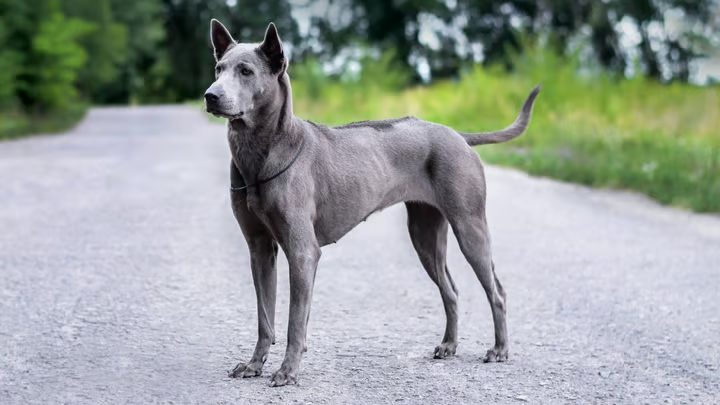
| Height | 51–61 cm |
| Weight | 16–34 kg |
| Lifespan | 12–15 years |
| FCI group | 5 · primitive |
| Origin | Thailand |
Exact ratings
- Dermoid sinus (a breed-specific defect)
- Hip dysplasia
- Gastric torsion (bloat)
- Skin disease (allergies)
- Eye disease
Quality food, with weight control; feed in small portions (torsion risk). The short coat is easy to care for; the breed tolerates heat well.
The Thai Ridgeback is not merely a dog; it is a true national treasure of Thailand, an indigenous breed with a history spanning thousands of years that has preserved its pristine appearance and unique character. Strong, graceful, and independent, this dog will become a loyal companion for an experienced owner ready to dedicate time to its upbringing and energetic walks. Learn more on Tvaryny.
Thai Ridgeback: Key facts about the breed
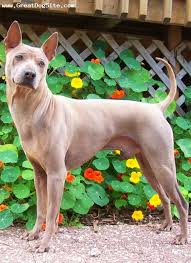
| Parameter | Characteristic |
| Origin | Thailand (eastern provinces) |
| FCI Classification | Group 5 (Spitz and primitive types), Section 7 (Primitive type – hunting dogs). Without working trial. Standard No. 338. |
| Lifespan | 12-15 years |
| Height (at the withers) | Dogs: 56-61 cm; Bitches: 51-56 cm |
| Weight | Dogs: 28-32 kg; Bitches: 23-26 kg |
| Temperament | Independent, intelligent, loyal to family, wary of strangers, active, excellent jumper. |
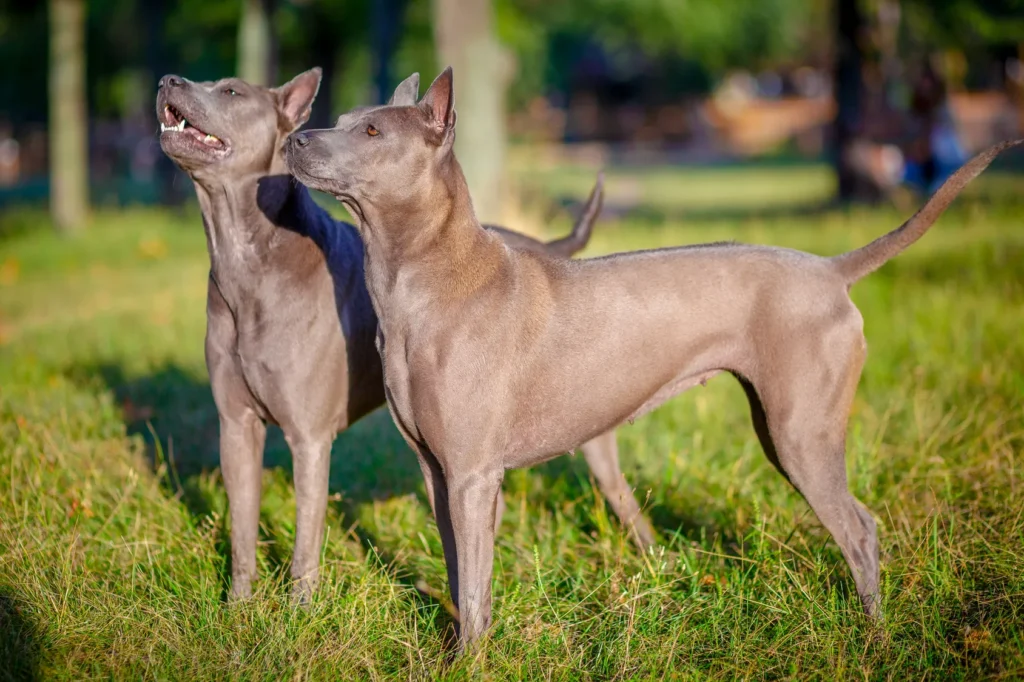
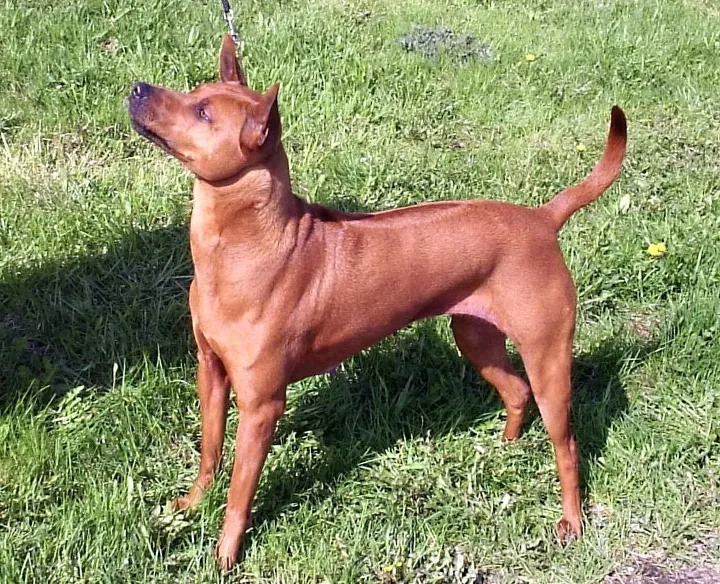
| Colour | Solid: red (with or without black mask), black, blue, isabella (very light fawn). |
| Main feature | “Ridge” – a strip of hair on the back growing in the opposite direction. |
History of the breed
The Thai Ridgeback is one of the oldest and purest breeds in the world. The first written records of dogs with a characteristic “comb” on their backs appear in Thai manuscripts dating back over 360 years. For centuries, these dogs lived mainly in the eastern, isolated regions of Thailand. The poor transport accessibility of these areas acted as a natural barrier, protecting the breed from mixing with other dogs and allowing it to be preserved in its original form.
These were versatile helper dogs. They accompanied carts, guarded homes and livestock, and were indispensable hunters of small game such as tapirs, hares, and even snakes. Their sharp eyesight, hearing, and incredible agility made them ideal for hunting in the dense jungle. They often had to fend for themselves to find food, which further strengthened their cleverness and survival instinct.
The West only learned about the breed in the late 20th century thanks to American enthusiast Jack Sterling, who exported several representatives to California in the 1990s and began breeding them. The Fédération Cynologique Internationale (FCI) officially recognised the breed on a provisional basis in 1993, with full recognition following in 2003. Today, the Thai Ridgeback is the national pride of Thailand and is gradually winning the hearts of dog lovers around the world.
Standard and appearance
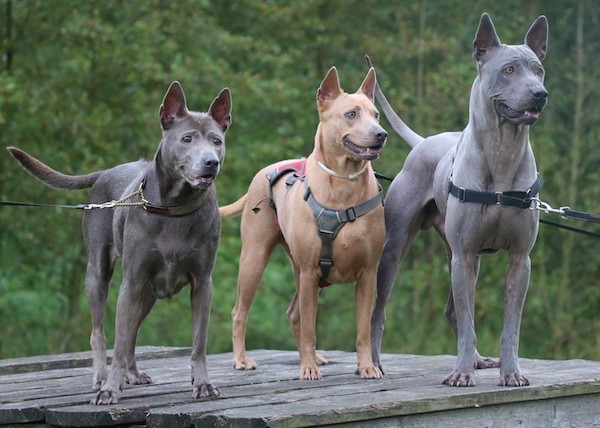
The Thai Ridgeback is a medium-sized dog with an athletic and harmonious build. Its appearance gives an impression of strength, speed, and grace. Every element of its exterior testifies to its adaptation to an active life.
Head, eyes, and ears
The head is wedge-shaped; the skull is flat between the ears but slightly rounded when viewed from the side. The stop (the transition from forehead to muzzle) is clearly defined but smooth. The muzzle is long and straight. A feature of many individuals is dark, almost black spots on the tongue. The eyes are almond-shaped, medium-sized, and dark brown. In blue and isabella dogs, amber-coloured eyes are permitted. The expression is intelligent and alert. The ears are large, triangular, set high, pricked, and inclined slightly forward, giving the dog a permanently alert look.
Body, tail, and the main feature: the Ridge
The body is muscular, slightly longer than the height at the withers. The back is straight and strong. The chest is deep, reaching the elbows. The belly is well tucked up. The tail is thick at the base and tapers towards the tip, carried vertically or curved like a sabre. But the main and most famous feature of the breed is the ridge. This is a strip on the back where the hair grows in the opposite direction to the rest of the coat. The ridge must be symmetrical, clearly defined, and can have various shapes and sizes. Whirls at the start of the ridge (“crowns”) are allowed.
Types of ridge
Although the standard does not impose strict requirements on the shape of the ridge other than symmetry, breeders distinguish several types:
- Arrow (or Needle): The most common type, a narrow strip without whirls at the beginning.
- Violin: A wider ridge, resembling the musical instrument in shape.
- Bowling Pin: A ridge that widens towards the end.
- Saddle: A very wide ridge covering a significant part of the back.
Coat and Colour
The coat of the Thai Ridgeback is short, smooth, and lies close to the body. Undercoat is either absent or very poorly developed, which makes these dogs vulnerable to the cold. There are several coat types:
- Standard short (up to 1 cm): The classic coat type.
- Velour (1-2 cm): Feels like velvet to the touch, very soft.
- Super-velour (up to 0.5 cm): The shortest type, almost like velour fabric.
The standard recognises four solid colours:
- Red: From light wheaten to rich mahogany. Often found with a black mask on the muzzle.
- Black: A deep, rich black colour.
- Blue: From silvery-grey to dark asphalt. A very striking and rare colour.
- Isabella: A delicate fawn or pinkish-beige colour.
Character and temperament
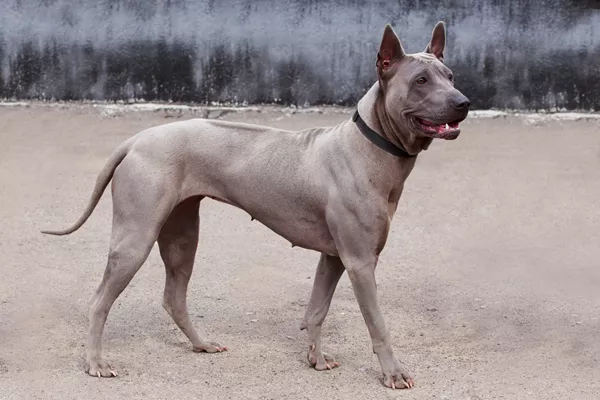
The character of the Thai Ridgeback is a blend of primal independence and deep devotion to its family. This is not a dog for a novice. It is intelligent, quick-witted, and prone to making decisions independently. If you do not establish yourself as a consistent and fair leader, the Ridgeback will quickly take the initiative into its own paws. They do not tolerate rough handling or corporal punishment – this will only destroy trust. Training must be based on positive reinforcement, patience, and mutual respect.
Towards their family, Thais behave with incredible tenderness and loyalty. They finely tune into the owner’s mood and can be surprisingly affectionate. At home, provided there is enough physical exercise, it is a calm and balanced dog. However, they are wary of strangers, sometimes even cold. This makes them excellent guards who will always warn of a stranger’s arrival with a loud bark. Their primitive nature, similiar to dogs like the Taiwan Dog, requires early and thorough socialisation.
Care and maintenance
The Thai Ridgeback is a low-maintenance breed, but certain aspects require the owner’s attention.
- Grooming: The short coat does not require complex care. It is enough to wipe the dog once a week with a damp cloth or a rubber mitt to remove dead hairs. Shedding is moderate. You should bathe the dog only when necessary, as frequent water procedures can disrupt the skin’s natural protective layer.
- Claws: Trim the claws regularly if they do not wear down naturally during walks.
- Ears and eyes: Periodically inspect the ears and eyes for dirt or signs of inflammation.
- Living conditions: This is a tropical breed, so the Thai Ridgeback tolerates cold poorly. It is absolutely ill-suited for living in a kennel during a British winter. It will feel best in a private house with a well-fenced garden where it can run freely. However, provided there are sufficient walks, it can live in a flat. In the cold season, warm clothing will be required for walks.
Training and socialisation
This is the most important aspect in raising a Thai Ridgeback. Early and constant socialisation is the key to appropriate behaviour in the adult dog. From puppyhood, introduce him to different people, animals, sounds, and situations. This will help avoid excessive timidity or aggression in the future.
In training, the keywords are patience, consistency, and creativity. Monotonous repetition of commands will quickly bore a Ridgeback. Sessions should be short, interesting, and based on play and positive reinforcement (treats, praise). Forceful methods are categorically forbidden. It is important to show the dog that cooperation with you is beneficial and interesting. Obedience courses under the guidance of an experienced dog handler familiar with primitive breeds will be very useful.
Physical exercise and activity
The Thai Ridgeback is an energiser. He needs daily long walks (at least 2 hours a day) with the opportunity to run freely. Simple walking on a lead will not satisfy his needs. Ideal activities for him would include:
- Jogging with the owner or cycling trips.
- Games with a frisbee or ball.
- Canine sports: coursing (chasing a mechanical lure), agility.
- Long hikes in the woods or park (on a long line or in a safe place).
A lack of physical and mental activity can lead to destructive behaviour at home. Its energy and hunting instincts make it akin to other primitive breeds, for example, the Portuguese Podengo Pequeno, which also needs space to release its energy.
Health and typical breed diseases
Thanks to its natural origins, the Thai Ridgeback has strong immunity and is generally a healthy breed. However, they are prone to certain genetic diseases that every owner should be aware of.
The main problem associated with the ridge gene is Dermoid Sinus (DS). This is a congenital anomaly, a tubular skin growth that can reach the spine. The presence of DS requires surgical intervention. Responsible breeders always check puppies for this defect. Interestingly, this problem is also characteristic of another famous breed with a “comb” – the Rhodesian Ridgeback, although genetically these breeds are not directly related.
Among other possible health issues:
- Hip dysplasia.
- Gastric torsion (bloat), characteristic of dogs with deep chests.
- Allergic reactions.
Regular visits to the vet, timely vaccination, and parasite treatment are mandatory for maintaining your pet’s health.
Nutrition: key recommendations
As with any dog, two types of feeding are suitable for the Thai Ridgeback: natural food or ready-made dry kibble. It is important to choose premium or super-premium class food for active medium-sized dogs.
With natural feeding, the basis of the diet (about 70%) should be lean raw meat (beef, turkey, chicken) and offal. The rest consists of:
- Fermented milk products (cottage cheese, kefir).
- Seasonal vegetables and fruits (carrots, pumpkin, apples).
- A small amount of cereals (buckwheat, rice).
- Sea fish (once a week).
Important: avoid feeding the dog from the table. Tubular bones, sweets, smoked meats, and fatty foods are forbidden. It is better to divide the daily allowance into two meals to avoid the risk of gastric torsion.
Pros and cons of the breed
| Pros (Advantages) | Cons (Disadvantages) |
|---|---|
| ✅ Exotic and rare appearance | ❌ Requires an experienced owner |
| ✅ High intelligence and cleverness | ❌ Tendency towards dominance and stubbornness |
| ✅ Devotion to family and tenderness with loved ones | ❌ Wary of strangers, requires socialisation |
| ✅ Excellent guarding qualities | ❌ Strong hunting instinct (requires a reliable lead) |
| ✅ Minimal coat care, almost no smell | ❌ Tolerates cold poorly, not for outdoor living in winter |
| ✅ Cleanliness, similar to a cat | ❌ Requires high physical and mental exercise |
| ✅ Robust health, strong immunity | ❌ There are specific hereditary diseases (dermoid sinus) |
Interesting facts about the Thai Ridgeback
- Primitive dogs: The Thai Ridgeback belongs to the group of primitive (indigenous) breeds, which means minimal human intervention in their formation. This explains their independence and strong instincts.
- Excellent jumpers: Thanks to their athletic build, Ridgebacks can clear high obstacles, so the fence on the property must be secure and high (at least 2 metres).
- Silent hunters: During the hunt, the Ridgeback behaves very quietly, which made it unnoticeable in the jungle.
- Not for everyone: Due to its independent character, the Thai Ridgeback is not on the list of the most popular breeds in the world, remaining a rather rare and exotic dog for true connoisseurs. As is the case with the Taiwan Dog, this breed requires a special approach.
Frequently Asked Questions (FAQ)
Is the Thai Ridgeback suitable for a family with children?
Yes, but under certain conditions. Ridgebacks who have grown up with kids are usally very patient and gentle with them. However, it is important to teach the child to respect the dog’s personal space and not to disturb it while sleeping or eating. Any interaction between small children and the dog should be supervised by an adult.
Do Thai Ridgebacks get along with other animals?
This depends on socialisation. If the puppy grew up with cats or other dogs, there will likely be no problems. However, due to their strong hunting instinct, they may perceive small animals (rodents, birds) as prey. Introduction to new animals should be gradual and controlled.
Does the Thai Ridgeback shed a lot?
Shedding in Thai Ridgebacks is moderate. Thanks to the short coat without a thick undercoat, caring for them during the shedding period is uncomplicated. Regular brushing with a rubber brush will help keep this process under control. They are considered a fairly “clean” breed in terms of smell and grooming.
Can the Thai Ridgeback be left alone for long periods?
Thai Ridgebacks become strongly attached to their family and tolerate loneliness poorly. If the dog is left alone for a long time and does not get enough exercise, it may start to get bored, which will manifest in destructive behaviour (chewing furniture, howling). This breed will not suit people who spend most of the day out of the house.
Video about the breed
- Agile and hardy
- Devoted to its family
- Short, easy coat care
- Tolerates heat well
- Independent, self-reliant — not for a novice
- A strong hunting instinct
- Wary of strangers
- Needs early socialisation
| Rhodesian Ridgeback | Pharaoh Hound | Basenji | |
|---|---|---|---|
| Height | 61–69 cm | 53–63 cm | 40–43 cm |
| Energy | 4 | 4.5 | 4 |
| Apartment | 2 | 2 | 3 |
| Beginners | 2.5 | 2.5 | 2.5 |
What is the “ridge” on the Thai Ridgeback?
Is the Thai Ridgeback suited to a novice?
Does the Thai Ridgeback get on with cats?
FCI Standard No. 338 · The Kennel Club
For apartments · For kids · For beginners · Active · Smartest · Hypoallergenic · All rankings →