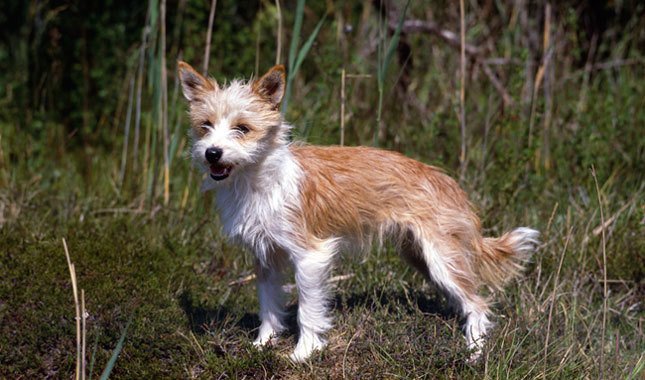
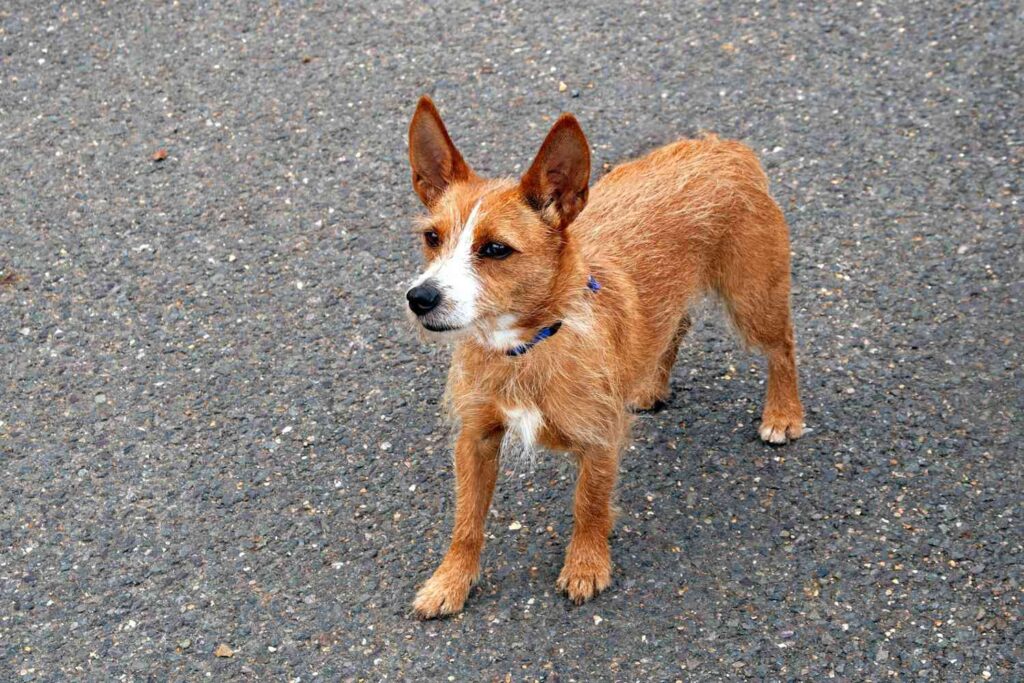
The smallest of the ancient Portuguese Podengos — a lively, brave little dog: energetic, clever, devoted and watchful. The Podengo Português Pequeno is the smallest variety of one of the world's oldest breeds; despite its modest size, a truly hardy rabbit hunter and excellent watchdog that has won hearts far beyond Portugal.
A strong hunting instinct (dangerous to small pets)
Independent, reserved with strangers
Prone to barking
Needs activity for its sharp mind
Size
ToySmallMediumLargeGiant
Compatibility
ApartmentKidsCats · not suitableOther dogsBeginners
The Small Portuguese Podengo(Pequeno Portuguese Podengo) is the smallest of three variations of one of the world's most ancient dog breeds. Energetic, sharp-witted and incredibly loyal, this miniature hunter has won hearts not only in its native Portugal but far beyond its borders. Despite its modest size, it is the true embodiment of bravery and stamina. Find out more on Tvaryny.
Small Portuguese Podengo: A Brief Breed Overview
Small Portuguese Podengo: A Brief Breed Overview · 9
Breed Name
Small Portuguese Podengo
Country of Origin
Portugal
FCI Classification
Group 5 (Spitz and primitive types), Section 7 (Primitive type - Hunting dogs)
Life Expectancy
15–17 years
Height at Withers
20–30 cm
Weight
4–6 kg
Coat Type
Smooth (Liso) and Wire (Cerdoso)
Primary Purpose
Rabbit hunting, companion dog
Temperament
Lively, intelligent, loyal, brave, alert
Interesting Facts About the Breed
Ancient Hunter: The Podengo is one of the few breeds that still hunts in the same way as thousands of years ago, using sight, hearing and smell.
National Treasure: In Portugal, the Podengo is a national symbol and is depicted on postage stamps.
Two in One: The presence of two completely different coat types in one breed is a unique feature. This is not just a cosmetic difference - the harsh coat better protected the dog in thorny bushes.
Hollywood Star: A wire-haired Small Portuguese Podengo named Pilot played one of the leading roles in the popular American sitcom "High School Musical: The Musical".
Escape Artist: Thanks to their agility and flexibility, Small Portuguese Podengos are known as skilled "escapees". They can squeeze into narrow gaps and jump over fences that seem far too high for them.
History of the Breed
The history of the Portuguese Podengo traces its roots back to ancient times. It is believed that these dogs are descendants of ancient Egyptian hunting dogs, similar to the Pharaoh Hound, which were brought to the Iberian Peninsula by Phoenician and Roman traders over 2,000 years ago. Isolation in this territory and harsh living conditions contributed to the formation of an exceptionally resilient, healthy and functional breed. For centuries, Portuguese peasants and hunters selected dogs for their working qualities rather than their appearance.
This led to the emergence of three size variations, each adapted to a specific type of hunting:
Small Portuguese Podengo - was indispensable for flushing rabbits out of their burrows and other hard-to-reach places.
The Small Portuguese Podengo was particularly valuable aboard Portuguese caravels during the Age of Discovery (15th-16th centuries). They were kept on ships to control rodent populations, which saved food supplies and prevented the spread of disease. This role as a "ship's dog" is a testament to their incredible adaptability and unpretentiousness. Official recognition came much later, and the standard was approved in the 20th century, which helped preserve its unique features.
What the Small Portuguese Podengo Looks Like: Breed Standard
The appearance of the Small Portuguese Podengo is the embodiment of functionality and natural harmony. It is a dog of proportionate, slightly elongated build, with dry musculature and strong bone structure. Its appearance gives an impression of agility and readiness for action. The main feature of the breed is the existence of two coat types.
Head and Muzzle: The head is shaped like a four-sided pyramid with a wide base and a pointed muzzle. The skull is flat, and the transition from forehead to muzzle is barely noticeable. The muzzle is shorter than the skull and straight. The lips are thin and fit tightly.
Eyes and Ears: The eyes are small, almond-shaped and set obliquely. The colour ranges from honey to chestnut, matching the coat. The gaze is very expressive, lively and intelligent. The ears are the breed's calling card. They are set high and slightly oblique, erect, triangular in shape and very mobile. The dog uses them like radars, turning them in the direction of sound.
Body and Tail: The body is slightly longer than the height at the withers. The back is straight and long, the loin is strong and muscular. The chest is not very wide but deep, reaching down to the elbows. The belly is dry and tucked up. The tail is set quite high, thick at the base and tapering towards the end. At rest, it hangs down, but in motion, it is raised horizontally or slightly higher, but never curls into a ring.
Coat Types and Colours:
Smooth (Liso): The coat is short, dense and smooth, but not too soft. There is no undercoat. This coat type requires minimal maintenance.
Wire (Cerdoso): The coat is of medium length, harsh, resembling wild boar bristles. It stands out and lacks shine. On the muzzle, it forms a characteristic "beard". The undercoat is also absent.
Colours: The predominant colours are yellow and fawn (from light to very dark) and black (diluted). Solid variations are possible, as well as those with white markings. White with patches of the mentioned colours is also permitted.
Character and Temperament
The Small Portuguese Podengo is a big dog in a small body. Its character is a vibrant cocktail of energy, intelligence, loyalty and hunting instincts. This is not a lapdog, but an active companion that craves attention and mental stimulation.
Loyalty to Family: The Podengo is very family-oriented. It forms a strong bond with its owner and strives to participate in all family activities. This dog can be a great companion for school-aged children who know how to behave with animals. However, due to its hunting past, relationships with small pets (hamsters, guinea pigs, birds) can be problematic. Early socialisation helps establish contact with cats if they grow up together.
Watchdog Qualities: This is an extremely alert dog. It will always be the first to announce the arrival of guests or any suspicious sounds outside the door with a loud bark. Unlike some other primitive breeds, such as the Basenji which rarely barks, the Podengo is quite "chatty". This makes it an excellent alarm, but can become an issue if the barking isn't controlled from a young age.
Intelligence and Independence: Like most primitive breeds, the Podengo is very clever but simultaneously independent. It was bred to make independent decisions while hunting, so don't expect blind obedience. It learns quickly but will only follow a command when it sees the point. Training must be consistent, patient and based on positive reinforcement.
Energy and Need for Movement: This is a true bundle of energy. The Small Portuguese Podengo needs long daily walks, games and the chance to run off-lead in a safe area. A bored Podengo is a destructive Podengo. Left alone without sufficient physical and mental stimulation, it may start chewing furniture, digging holes in the garden or barking incessantly.
Pros and Cons of the Breed
Pros and Cons of the Breed · 6
✅ Pros
❌ Cons
Robust health and longevity. One of the healthiest breeds with a lifespan of up to 17 years.
Strong hunting instinct. May chase small animals; a reliable lead is needed.
Compact size. Ideally suited for living in a flat provided there is sufficient exercise.
Tendency to bark. Very alert and "chatty", which neighbours might not like.
Low maintenance. The coat does not require complex grooming.
Requires lots of movement. Not suitable for sedentary people.
High intelligence. Learns quickly and responds well to training.
Independent character. Can be stubborn, requiring patience in upbringing.
Loyal companion. Becomes very attached to its family.
Needs early and prolonged socialisation. Especially with other animals.
Two coat types. You can choose the smooth-haired or the more exotic wire-haired variety.
Can suffer from separation anxiety if left alone for long periods.
Care and Maintenance: What Should Owners Know?
Although the Small Portuguese Podengo is an undemanding breed, certain aspects of care are critical for its health and happiness.
Coat Care:
Smooth variety: Simply wiping the coat with a damp cloth or rubber glove once a week is enough to remove dead hairs. Shedding is moderate.
Wire variety: Requires brushing with a brush or comb 1–2 times a week to avoid matting. Particular attention should be paid to the "beard", which needs cleaning of food debris after every meal. Occassionally (2–3 times a year) hand-stripping (plucking old hair) is reccomended to stimulate new growth and maintain the correct texture.
Bathing: Bathe the Podengo only when necessary, using a mild dog shampoo so as not to dry out the skin, which lacks a protective undercoat. Usually, 2–4 baths a year are sufficient.
Teeth, Ears and Nails: Like all small breeds, the Podengo is prone to tartar build-up. Regular teeth brushing (2–3 times a week) is mandatory. Ears should be checked weekly for dirt or signs of infection and cleaned if needed. Claws are trimmed every 3–4 weeks if they do not wear down naturally.
Activity and Walks: The minimum requirement is two walks a day of 30–45 minutes each, with the opportunity to run. Ideally, one of the walks should be longer and more intense. This breed loves agility, coursing, flyball and long hikes. Important: due to a strong hunting instinct, the Podengo should only be let off the lead in a securely fenced area.
Nutrition
Nutrition: Key Recommendations
Health and risks
Health and Common Breed Diseases
Frequently Asked Questions · 5
Is the Small Portuguese Podengo suitable for flat living? Yes, provided it receives enough daily physical and mental exercise. Without this, the dog can become destructive and noisy.
Is this breed hypoallergenic? No, no breed is 100% hypoallergenic. However, since Podengos do not have an undercoat and shed moderately (especially the wire-haired type), they may suit some people with mild allergies. Before buying, it is advised to spend time with representatives of the breed.
Is it easy to train a Small Portuguese Podengo? They are clever and learn quickly, but their independence can be a challenge. Training requires patience, consistency and the use of positive reinforcement methods. They dislike monotonous repetition.
How do they get on with other dogs? With proper and early socialisation, they usually get along well with other dogs. They may be a little wary at first meeting, but are not prone to unprovoked aggression.
How much does a Small Portuguese Podengo puppy cost? This is a relatively rare breed outside of Portugal, so the price for a puppy from a responsible breeder can be quite high. The useful question is what you are paying for rather than how much: registration, health-tested parents, a litter reared to the proper age and vaccinated, and the breeder's support afterwards. A suspiciously cheap offer usually means one of those is missing.
Video About the Breed
FAQ
How many varieties does the Portuguese Podengo have?
Three by size — small (Pequeno), medium (Médio) and large (Grande); the small one is the smallest and most popular, historically a skilled rabbit hunter and ratter.
Is the small Podengo good for a flat?
Yes — a compact, clever and devoted dog that lives well in a flat; the keys are an outlet for its energy, activity and training its barking.
Does the small Podengo get on with cats?
Poorly — it has a strong hunting instinct; living with cats and small animals is risky.