

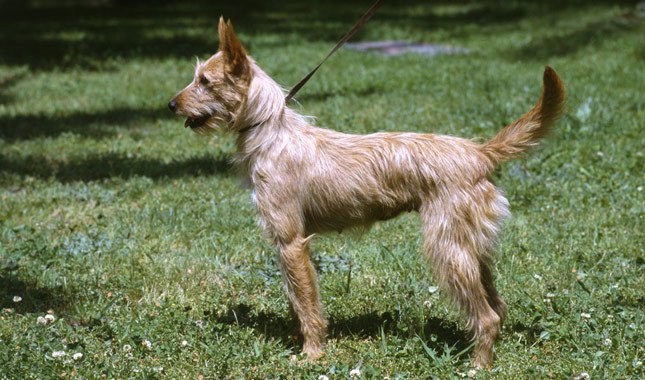
| Height | 40–56 cm |
| Weight | 16–20 kg |
| Lifespan | 12–14 years |
| FCI group | 5 · primitive |
| Origin | Portugal |
Exact ratings
Common health issues
Nutrition
The Medium Portuguese Podengo (Médio Portuguese Podengo) is more than just a dog- it is a living piece of Portuguese history, embodying energy, intelligence, and a keen hunting drive. This versatile rabbit hunter is increasingly becoming a devoted companion, winning hearts with its charisma and lively temperament. Bred by selecting smaller representatives of the Grand Podengo, the Medium Podengo inherited many of their traits but adapted them for hunting smaller game. You can find out more on Tvaryny.
Medium Portuguese Podengo: Key Breed Facts
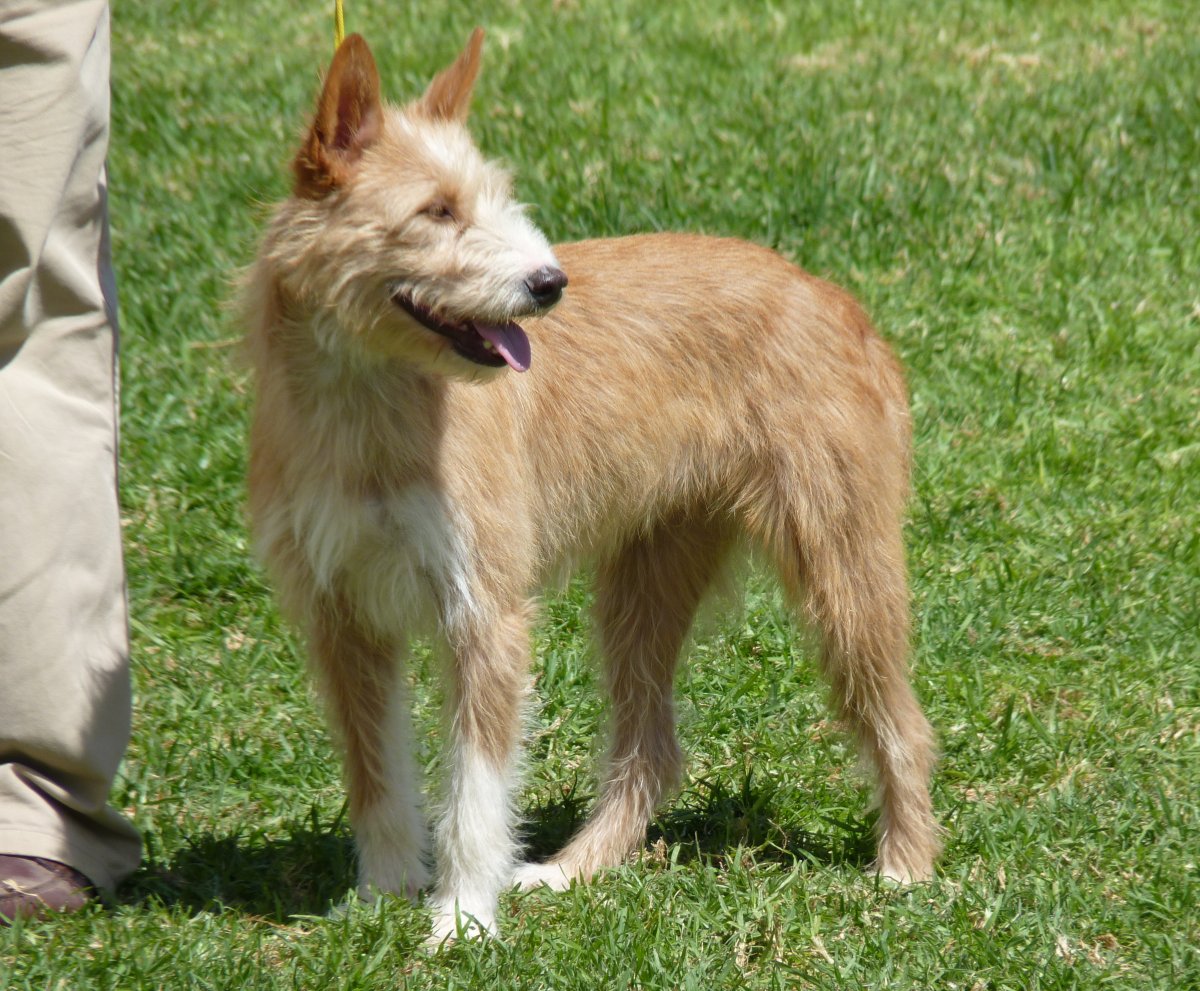
| Breed Name | Medium Portuguese Podengo (Portuguese Podengo Médio) |
| Country of Origin | Portugal |
| Time of Origin | Ancient times, standard approved in the 20th century |
| Type | Primitive Hunting Dog |
| FCI Group | Group 5 (Spitz and Primitive Types), Section 7 (Primitive Types – Hunting Dogs) |
| Lifespan | 12-15 years |
| Height (at the Withers) | 40–54 cm (15.7-21.3 inches) |
| Weight | 16–20 kg (35-44 lbs) |
| Coat Types | Smooth (liso) and Wirehaired (cerdoso) |
| Temperament | Energetic, Intelligent, Devoted, Vigilant, Excellent Hunter |
| Purpose | Rabbit hunting, companion dog, watchdog |
History of the Breed
The history of the Portuguese Podengo stretches back into antiquity, interwoven with the age of navigation and trade. It is believed that the ancestors of these dogs were ancient hunting hounds brought to the Iberian Peninsula by Phoenician and Roman merchants over 2,000 years ago. These canines, similar to the modern Pharaoh Hound and other Mediterranean sight hounds, adapted perfectly to Portugal’s rocky and hilly landscape.
Over the centuries, Portuguese farmers and hunters deliberately bred these dogs, selecting the best individuals for their working qualities. This resulted in three distinct size varieties, each performing a unique function:
- The Grand Portuguese Podengo: Used for hunting large game like deer and wild boar.
- The Medium Portuguese Podengo: Became the specialist rabbit hunter. Its size was ideal for pursuing this agile prey across rugged terrain.
- The Small Portuguese Podengo: The smallest of the trio, used for flushing rabbits from burrows and crevices, and served as an effective rat catcher on the ships of Portuguese navigators.
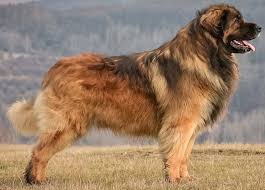
The Medium Podengo is, essentially, the original form from which the larger and smaller varieties were derived through selection. Its ability to work alone or in a pack, coupled with incredible stamina, made it an indispensable aid to Portugal’s rural dwellers. The breed remained relatively unknow outside its homeland until the second half of the 20th century, when it was finally recognised by international kennel clubs.
| Variety | Height at Withers | Weight | Primary Role |
|---|---|---|---|
| Small | 20-30 cm | 4-6 kg | Hunting rabbits in burrows, rodent control |
| Medium | 40-54 cm | 16-20 kg | Rabbit hunting in open terrain |
| Large | 55-70 cm | 20-30 kg | Hunting large game (deer, wild boar) |
Appearance and Breed Standard
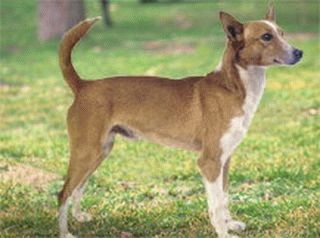
The Medium Portuguese Podengo is a dog of harmonious, proportional build with well-developed musculature and a sturdy skeleton. Its appearance speaks of agility, speed, and endurance. The overall impression is one of elegance combined with rural simplicity and functionality.
Head, Eyes, and Ears
The Podengo’s head is shaped like a quadrangular pyramid, with a broad base and a pointed muzzle. The skull is flat, and the stop (transition from forehead to muzzle) is barely visible. The muzzle is shorter than the cranial part and straight. Lips are thin and tightly closed. The eyes are almond-shaped, small, and set slightly obliquely. Eye colour ranges from honey to brown, harmonising with the basic coat colour. Their gaze is very intelligent, lively, and expressive. The ears are one of the breed’s most distinctive features. They are large, triangular, thin, set high, and stand erect, being extremely mobile and turning towards any sound.
Body and Limbs
The neck is straight, long, muscular, and without a dewlap. The body is slightly longer than the height at the withers. The back is straight or slightly arched, and the loin is wide and muscular. The chest is deep but not too wide, allowing space for the lungs and heart without impeding fast running. The abdomen is moderately tucked up. The tail is set quite high, thick at the base, and tapers towards the tip. When resting, it hangs down, and when moving, it is raised horizontally with a slight curve or held vertically in a sickle shape.
Coat and Colour
Two coat types exist, both considered standard. Dogs of both types can be born in the same litter.
- Smooth-Haired (Liso): The coat is short, dense, and smooth, but not overly soft.
- Wirehaired (Cerdoso): The coat is medium length, harsh, and feels like boar bristles to the touch. It is less dense than the smooth-haired variety. A characteristic feature is the presence of a long “beard” on the muzzle.
Undercoat is absent in both types. The main colours are: yellow, fawn (in all shades from light to dark) and black (which may be less saturated, or “faded”). Solid colours or the same colours with white markings are permitted. White as the primary colour is undesirable.
Character and Temperament: Energy in Every Move
The character of the Medium Podengo is a wonderful blend of strong hunting instinct and deep family devotion. They are highly energetic and resilient dogs that require significant physical exercise. They are smart and agile, but can also be independent and stubborn- a typical trait of primitive breeds. They don’t aim to please their owners at all costs; rather, they prefer to cooperate as partners.
Towards their family, Podengos show great tenderness and loyalty. They generally get on well with children, especially if they are raised together, and are eager to join in all family activities. However, due to their high energy levels, playtime with small children should always be supervised by adults.
They are usually reserved and wary of strangers, but not aggressive. Their vigilance makes them excellent watchdogs- they will always alert you with a loud bark to the approach of visitors or anything unusual. Regarding other pets, the situation is tricky. Their powerful hunting drive makes coexistence with cats, rodents, or decorative birds extremely risky. They can also be reserved around other dogs, particularly those of the same sex, which makes early and ongoing socialisation absolutely essential.
Care and Maintenance
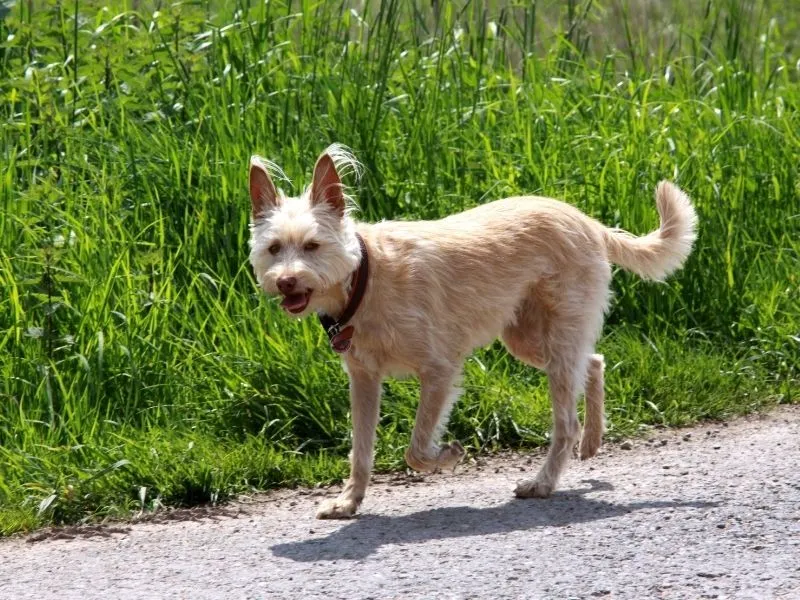
Caring for the Medium Portuguese Podengo has its own specifics, tied to its origins and purpose. It is certainly not a lap dog for lazy owners.
Exercise Requirements
This is the key aspect of their care. The Medium Podengo needs a minimum of 1-1.5 hours of intensive exercise daily. This cannot be limited to slow walks on a lead. The dog requires the opportunity to run freely in a safe, securely fenced area. The ideal option is a large garden at a private home with a high fence (Podengos are fantastic jumpers!). They will thrive on activities such as:
- Long runs with the owner;
- Agility or coursing (chasing a mechanical lure);
- Active games with a frisbee or ball;
- Long hikes in the countryside.
If physical activity is insufficient, the unspent energy can translate into destructive behaviours: excessive barking, digging holes, or damaging possessions.
Grooming and Coat Care
Coat care for the Portuguese Podengo is straightforward. Neither coat type requires professional grooming.
The Smooth-Haired variety requires brushing with a rubber brush or glove once a week to remove dead hair. The Wirehaired variety demands a little more attention: it should be brushed 2-3 times a week to prevent matting, especially on the “beard” and legs. Stripping or clipping the wirehaired Podengo is not recommended, as it spoils the coat’s texture. The dog does not require frequent bathing, only when heavily soiled.
It is important to regularly inspect and clean the ears, as their large, open shape can promote dirt accumulation. Also, monitor dental health and trim nails on time.
Health and Typical Breed Issues
Training and Socialisation
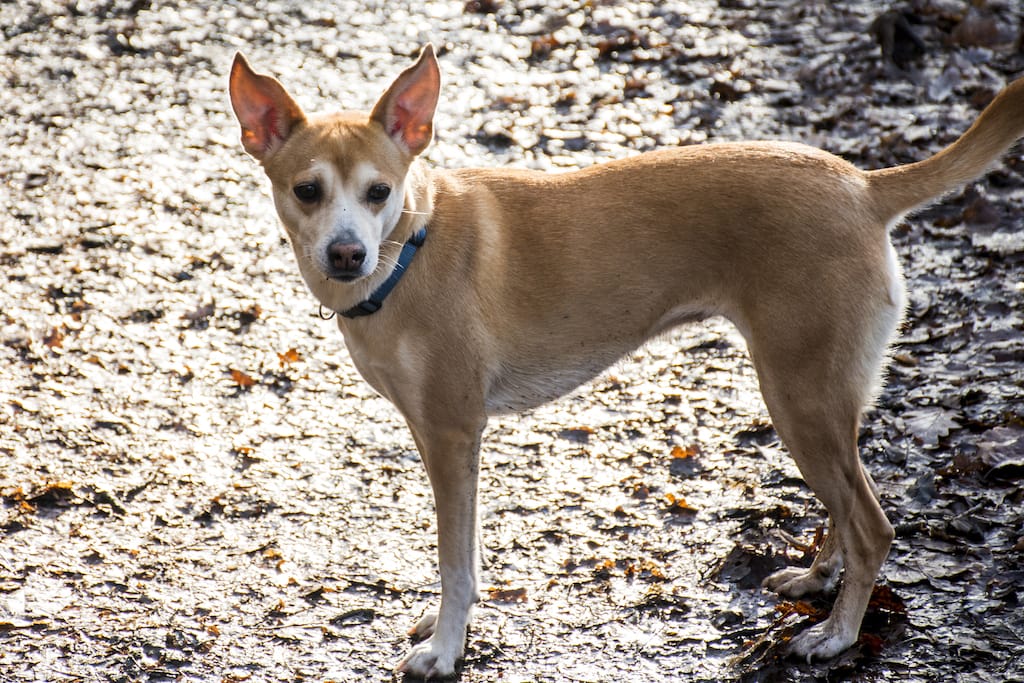
Training the Portuguese Podengo is an interesting, yet challenging, process. Their sharp minds allow them to grasp commands quickly, but their independence demands patience, consistency, and creativity from the owner. Harsh methods and punishment simply don’t work with them- this will only lead to stubbornness and refusal to cooperate. Positive reinforcement works best: praise, games, and treats.
Early socialisation is critically important. From puppyhood, introduce your Podengo to different people, sounds, places, and other dogs (after full vaccination). This will help raise a balanced and confident dog, rather than a timid or overly reactive one. Special attention should be given to controlling their hunting instinct. Teach the dog a reliable recall command (“Come!”) and never let them off the lead in unfenced areas where other animals might be present.
Nutrition: Fuel for the Perpetual Engine
Pros and Cons of the Breed
| ✅ Pros | ❌ Cons |
|---|---|
| Very robust health and longevity | Requires a very high level of physical exercise |
| Devotion and love for their family | Strong hunting instinct (dangerous for small pets) |
| High intelligence and agility | Tendency towards independence and stubbornness in training |
| Undemanding coat care | Needs a securely fenced area (high fence) |
| Excellent watchdog (vigilant and vocal) | Can be noisy (barks a lot) |
| Unique and rare appearance | Wary of strangers, requires early socialisation |
The Medium Portuguese Podengo Compared to Other Breeds
To better grasp the essence of the Podengo, it is helpful to compare it with similar breeds. For instance, the Podenco Canario, its ‘cousin’ from the Canary Islands, is also a primitive rabbit hunter, but is usually larger than the Medium Podengo and has a slightly different temperament. Another Mediterranean relative is the Cirneco dell’Etna from Sicily. It is smaller and lighter than the Medium Podengo, possesses an even more refined physique, and is considered a bit gentler in a domestic setting.
Interesting Facts About the Breed
- National Treasure: The Portuguese Podengo is considered a national breed of Portugal, and its image can be found on historical artefacts of the country.
- Two Coat Types in One Litter: A unique feature of the breed is that both smooth-haired and wirehaired puppies can be born in the same litter.
- Masters of the Hunt: While hunting, Podengos use all their senses- sharp sight, acute hearing, and excellent smell- making them incredibly efficient hunters.
- Navigator Dogs: Historically, Small Podengos were permanent members of the crews of Portuguese caravels during the Age of Discovery, where they successfully dealt with rats on the ships.
- “Feline” Habits: Podengos are known for their agility and ability to climb and jump, sometimes resembling the behaviour of cats. They can jump onto a table or a high fence without much effort.
Frequently Asked Questions About the Breed (FAQ)
Is the Portuguese Podengo suitable for flat life?
It is highly inadvisable. Due to its high energy needs and tendency to bark, a flat is not the best environment for a Medium Podengo. They require space to run. If you do live in a flat, you must be prepared for very long (2+ hours a day) and active walks in a park or outside the city.
Do they get along with children and other pets?
They usually get along well with children in their own family, especially if they grow up together. However, their energy requires supervision. With other pets, especially small ones (cats, rabbits, rodents), the situation is complex. The hunting instinct is very strong, and the risk remains even with shared upbringing. Coexistence is possible, but demands enormous effort and does not guarantee the safety of the smaller animal.
Do they shed heavily?
Shedding is moderate and seasonal. Regular brushing helps to keep the amount of hair in the house under controal. They are not considered a hypoallergenic breed.
Is the Portuguese Podengo difficult to train?
They are intelligent but independent. This is not a breed that will unconditionally obey every command. Training requires patience, consistency, and an approach based on partnership and positive reinforcement. This is not the best choice for a novice owner who has never dealt with dogs before.
Video About the Breed
- Generally very healthy
- Agile, clever, hardy
- Devoted and playful with the family
- An undemanding primitive dog
- Independent, not always easy to train
- A strong hunting instinct (rabbits)
- Reserved with strangers
- Needs exercise and activity
| Podengo (Small) | Podengo (Large) | Ibizan Hound | |
|---|---|---|---|
| Height | 20–31 cm | 55–70 cm | 60–72 cm |
| Energy | 3.5 | 4.5 | 5 |
| Apartment | 3 | 2.5 | 2 |
| Beginners | 3 | 2.5 | 2.5 |
What does the Portuguese Podengo hunt?
Is the Podengo healthy?
Does the Podengo get on with cats?
FCI Standard No. 94 · The Kennel Club
For apartments · For kids · For beginners · Active · Smartest · Hypoallergenic · All rankings →