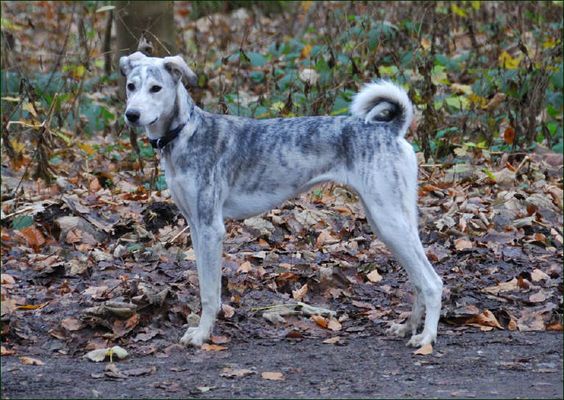
The Cretan Hound, or Kritikos Ichnilatis, is a living legend of the Mediterranean. This ancient breed of hunting dog enjoys immense popularity in its homeland of Greece but remains a rare treasure beyond its borders. Intelligent, boundlessly loyal, and incredibly enduring, they have long been used to hunt small and large game across difficult, rocky terrain. Today, they are not just working tools but beloved four-legged companions that, with the right upbringing, fit easily into life with other pets. Learn more on Tvaryny.
The Cretan Hound: A Brief Overview and Characteristics
The Cretan Hound: A Brief Overview and Characteristics · 7
| Origin | Greece (Island of Crete) |
|---|---|
| First Mentioned | Approx. 2000–3000 BC (based on archaeological data) |
| Life Expectancy | 12–15 years (often long-lived) |
| Height at Withers | Males: 52–60 cm; Females: 50–58 cm |
| Weight | 15–22 kg (depending on sex and condition) |
| Purpose | Hunting (sight and scent), coursing |
| FCI Classification | Group 5 (Spitz and primitive types), Section 7 (Primitive hunting dogs) - recognized at the national level |
What the Cretan Hound Looks Like: Detailed Description
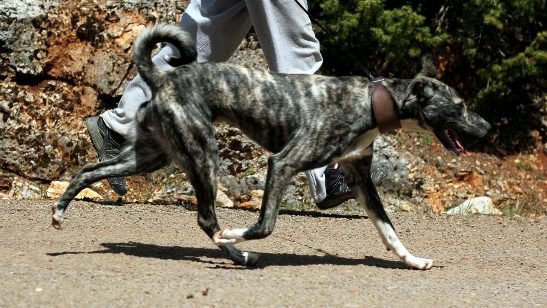
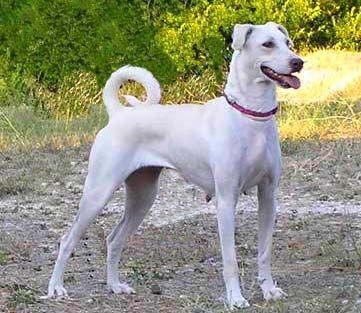
The breed type of the Kritikos Ichnilatis, although formed over millennia, has clear standards within the Greek cynological community. Generally, its appearance is classified within the group of Primitive Hounds - these are athletic animals with a dry build, developed musculature, and elongated limbs, allowing them to perform high jumps over rocks.
Head and Muzzle
The head is wedge-shaped and elongated, which is typical for dogs that rely on both sight and scent. The skull is slightly flat, and the transition from forehead to muzzle (stop) is smooth, not abrupt. The elongated muzzle tapers to a nose with a black lobe (a dark brown shade is acceptable in light-coloured dogs). The jaws are strong, with a full scissor bite - this is critical for a working dog that must hold prey. The eyes are medium-sized, almond-shaped, placed slightly obliquely; the colour varies from amber to dark brown, and the gaze is always intelligent, attentive, and piercing.
Body and Limbs
The body of the Cretan Hound fits into a square or a slight rectangle. The chest is deep, descending to the elbows, which ensures a large lung capacity for prolonged running, but it is not too wide at the front. The belly is significantly tucked up, like that of a sighthound. The paws are a distinct feature: they are oval ("hare feet"), with strong, curved claws and thick pads that are insensitive to sharp stones and thorns. This allows the dog to run on volcanic rock without injury.
Coat and Colour
The short coat is very dense and hard to the touch, fitting tightly to the body. It can be solid or combine 2–3 colours. The palette of the Cretan dog includes:
- Pure white;
- Coal-black;
- All shades of red and fawn;
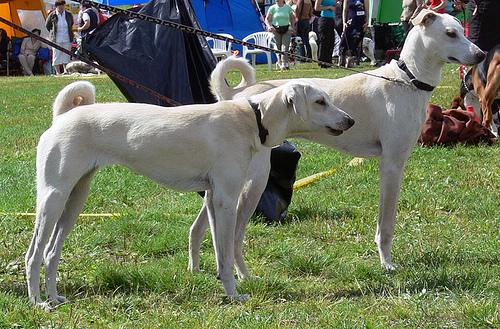
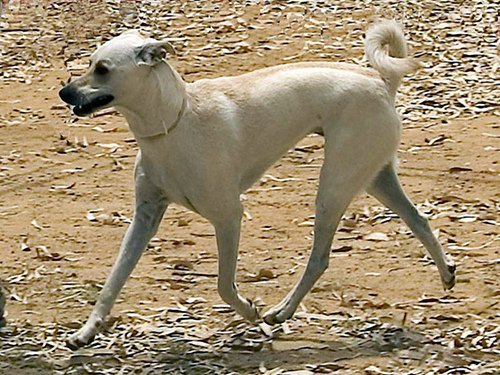
- Cream (ivory shade);
- Brindle on various backgrounds.
The coat may have spots, carry tan markings, or white markings on the chest, paws, and the tip of the tail.
Tail and Ears
The ears of the Kritikos Ichnilatis are very mobile, triangular, and broad at the base. They can stand upright (when excited) or hang semi-erect, folding back ("rose ear") when at rest. A characteristic feature of the breed is the long tail, which often forms a ring or "doughnut", curling over the back. Usually, when moving, the dog carries it raised, which helps the hunter see the dog in tall grass.
Hunting Qualities and Use
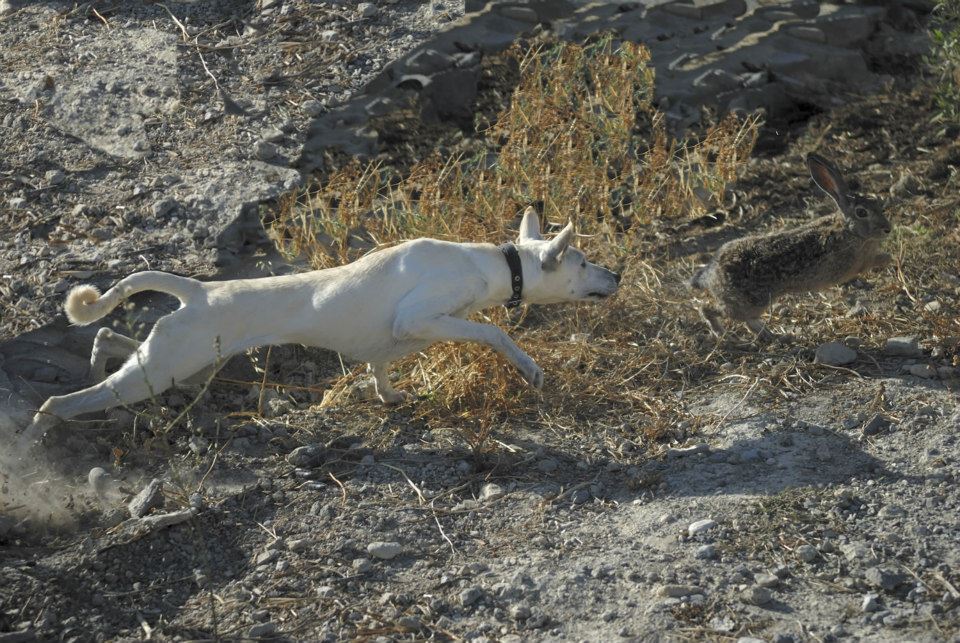
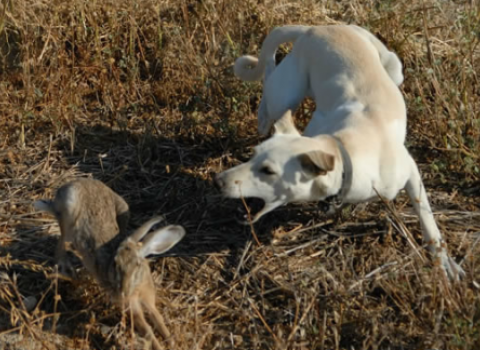
This is the section that most fully reveals the essence of the breed. The Cretan Hound is a versatile hunter. It uses both sight (like a sighthound) and scent (like a scent hound). This combination makes it unique among Mediterranean breeds. If you are interested in other primitive breeds with similar characteristics, we advise reading about Asian relatives such as the Korean Jindo or the rare Japanese Kishu Ken, which have also preserved their primal instincts.
Hunting Style: The Cretan Hound thoroughly searches the terrain. Upon catching a scent, it begins to wag its tail, and upon seeing the prey, it pursues with immense speed, leaping over rocks and bushes. Its movements are elegant and springy. An important trait is that the dog may "give voice" when detecting a fresh trail, but often pursues silently so as not to startle the game prematurely, erupting into barking only in the final phase.
Interesting Facts About the Kritikos Ichnilatis
- Living Exhibit: The Natural History Museum of Crete recognises this breed as an integral part of the island's fauna and history.
- Rock Climber: These dogs can climb almost vertical cliffs, using their grippy claws and unique sense of balance.
- Ancient Roots: It is believed that the Cretan dog is the one depicted next to the goddess of hunting, Artemis, on ancient frescoes.
- Special Bark: Hunters on Crete distinguish the different intonations of their dogs' barks, understanding exactly what game (hare or something larger) the dog is pursuing, even without seeing it.