

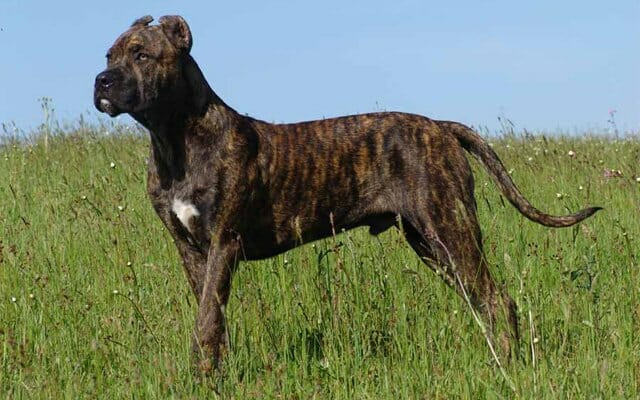
| Height | 55–61 cm |
| Weight | 33–45 kg |
| Lifespan | 10–14 years |
| FCI group | 2 · pinschers, schnauzers, molossoids |
| Origin | Uruguay |
Exact ratings
- “Healthy” here means no mass syndrome, not no risk
- Hip dysplasia
- Gastric torsion (deep chest)
- Skin problems (less common)
- Prone to boredom without a job
Quality food for a muscular, active breed, with weight control; feed in small portions (torsion risk). Provide work, space and early socialisation; moderate exercise.
The Uruguayan Cimarrón, or Cimarrón Uruguayo, is a true national treasure of Uruguay – a breed with a rich history and a strong character. Although these dogs are relatively rare in Europe, they’ve gained immense popularity in their homeland as versatile working dogs. They’re used for guarding, hunting, herding livestock, and even in competitive dog sports. This overview, prepared by Tvaryny, will help you get to know this unique breed in detail. It’s worth noting straight away that this breed’s representatives are serious, independent animals requiring an experienced owner who understands their nature and can channel their powerful energy effectively. For a Cimarrón to become a loyal friend and companion, early and intensive socialisation is key. This helps the dog become more trusting of people and react appropriately to new situations without undue aggression or fear.
Uruguayan Cimarrón: Breed Summary
| Official Name | Cimarrón Uruguayo |
| Country of Origin | Uruguay |
| FCI Classification | Group 2 (Pinscher & Schnauzer, Molossoid Breeds, Swiss Mountain and Cattle Dogs), Section 2.1 (Molossoid, Mastiff type). Without working trial. |
| Lifespan | 10-14 years |
| Height at Withers | Males: 58-61 cm Females: 55-58 cm |
| Weight | Males: 38-45 kg Females: 33-40 kg |
| Temperament | Balanced, brave, calm, loyal to family, distrustful of strangers |
| Use | Guard dog, companion, hunting dog, herding dog |
| Exercise Needs | High |
| Grooming Difficulty | Low |
| Trainability | High, but requires an experienced owner |
History and Development of the Uruguayan Cimarrón Breed
The history of the Uruguayan Cimarrón is inextricably linked with the history of Uruguay itself. The exact origin of the breed is shrouded in mystery, but the main theory suggests that its ancestors were Mastiff and Sighthound-type dogs brought to the continent by Spanish and Portuguese colonisers in the 16th-17th centuries. These dogs share common roots with many large Iberian breeds used for guarding and working with livestock, such as the Portuguese Rafeiro do Alentejo. They were left to their own devices and began to breed uncontrollably across the vast plains of the pampas. The word “cimarrón” itself translates from Spanish as “wild” or “feral,” which directly points to their origins.
For centuries, these dogs survived in harsh conditions, undergoing a rigorous natural selection process. Only the strongest, smartest, and most resilient individuals survived, shaping the unique traits of the breed: robust health, incredible adaptability, and outstanding working qualities. In the 18th century, their population grew so large that they began to pose a threat to livestock and even people. The government at the time issued an order for their mass extermination, offering rewards for their hides. The breed was on the verge of extinction.
However, some local farmers and landowners (estancieros) saw not a threat, but immense potential in these dogs. They began to capture the best specimens of the “cimarrones,” tame them, and use them to guard their properties and work with livestock. It’s thanks to these enthusiasts that the breed was not only preserved but also purposefully developed, maintaining its purity and unique qualities. This work was carried out on isolated ranches, which helped prevent interbreeding with other breeds.
Official recognition came much later. In 1969, the Uruguayan Cimarrón was first presented at a dog show organised by the Kennel Club Uruguayo. In 1989, the breed was officially recognised at a national level, and its first standard was developed. International recognition came in 2006, when the Fédération Cynologique Internationale (FCI) provisionally recognised the breed, and then permanently in 2017. Today, the Uruguayan Cimarrón is a national pride of Uruguay and is used by the country’s army, police, and rescue services.
Breed Standard and Appearance of the Uruguayan Cimarrón
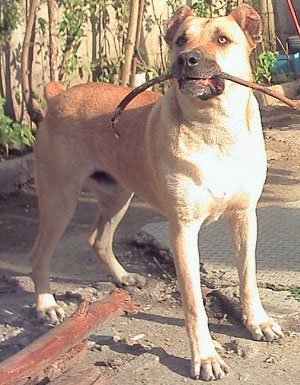
The Uruguayan Cimarrón is a medium-sized, Molossoid-type dog with a sturdy build, well-developed musculature, and strong bones, yet it’s very agile and nimble. It gives an impression of strength, confidence, and calmness.
- Head: Powerful, mesocephalic type (medium length). The skull is wider than long, with a noticeable but not abrupt stop. The muzzle is strong, slightly shorter than the cranial part. Lips are tight-fitting, not pendulous. The nose is large and black.
- Jaws and Teeth: Very strong and broad. Scissor bite is preferred, though a level bite is permissible. A complete set of teeth is desirable.
- Eyes: Medium-sized, almond-shaped, with an intelligent and inquisitive expression. Colour – shades of brown; the darker, the better.
- Ears: Medium-sized, triangular, dropped but not tightly pressed to the cheeks. Historically, ears were very short-cropped, resembling a puma’s ear, to avoid injuries during hunting large game. Today, ear cropping is banned in many countries.
- Body: Strong, balanced. Topline is straight or with a barely perceptible rise over the loin. Back is short and strong. Chest is broad and deep, reaching the elbows. Belly is well tucked up.
- Tail: Thick at the base, set at a medium height. Carried low when at rest, raised horizontally or slightly higher when moving.
- Limbs: Straight, parallel, with strong bone and well-defined musculature. Paws are oval, compact, with strong pads. Movements are free, powerful, and elastic.
Coat and Colour
The Cimarrón’s coat is short, smooth, tightly fitting to the body, with an undercoat. This coat structure provides excellent protection from the elements. Colour is one of the breed’s hallmarks.
| Coat Type | Description |
|---|---|
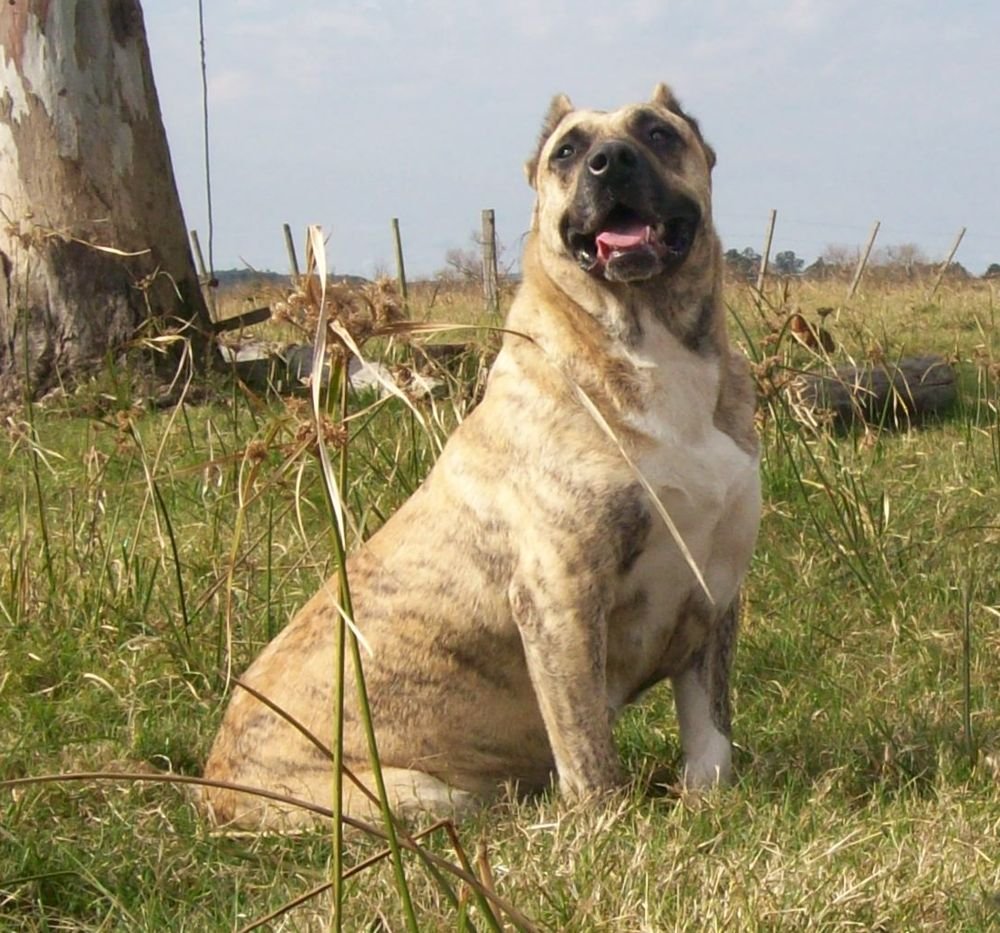
| Brindle | Any shade from light fawn to dark brown with dark transverse stripes. This is the most common and desirable colouration. |
| Fawn | Various shades of fawn or yellowish-brown. Can be light or rich in tone. |
Both coat types may feature a black or dark mask on the muzzle. Small white markings are permissible on the chest, lower neck, belly, and toes, but they shouldn’t be excessively large.
Temperament and Character of the Uruguayan Cimarrón
The Uruguayan Cimarrón’s character reflects its history: it’s brave, intelligent, independent, and extremely devoted to its family. This dog possesses an innate guarding instinct. It’s always vigilant, carefully observing its surroundings, and will unhesitatingly defend its territory and “pack.” It treats strangers with great distrust and reserve but doesn’t show unprovoked aggression. Its reaction is more of a watchful waiting and an assessment of the situation.
Within the family circle, the Cimarrón transforms into a calm, affectionate, and well-balanced companion. It keenly senses its owner’s mood and can be wonderfully gentle with children it knows and grew up with. However, due to its strength and size, any interaction with small children should always be supervised.
Intelligence and the ability to make independent decisions are another key trait. It learns quickly, but its independence can sometimes be perceived as stubbornness. A Cimarrón needs an owner who will be an undisputed leader – consistent, fair, and confident. Its protective instincts and territoriality can be compared to serious breeds such as the Dogo Canario or the even more demanding Fila Brasileiro, requiring great responsibility from the owner.
Pros and Cons of the Breed
| Pros | Cons |
|---|---|
| ✅ Outstanding Guardian: Innate protective instinct makes it an unbeatable watchdog for home and family. | ❌ Not for Novices: Requires an experienced, confident, and strong-willed owner. |
| ✅ High Intelligence: The dog learns quickly and is capable of performing complex tasks. | ❌ Requires Early Socialisation: Without it, it can become overly suspicious or aggressive towards strangers. |
| ✅ Family Loyalty: Extremely faithful and attached to its owners. | ❌ Tendency to Dominate: Will test boundaries, especially during adolescence. |
| ✅ Robust Health: the absence of described hereditary disease is not the absence of risk — breeding animals are screened all the same. | ❌ High Exercise Needs: Not suitable for a sedentary lifestyle. |
| ✅ Low Grooming Requirements: Short coat needs minimal upkeep. | ❌ Potential Aggression Towards Other Animals: Especially towards same-sex dogs or small animals due to hunting instinct. |
| ✅ Versatility: Can be not only a guardian but also a herding dog, hunting dog, and companion for active people. | ❌ Requires Space: Thrives best in a private house with a well-fenced area. |
Care and Upkeep: Creating Ideal Conditions
Caring for a Uruguayan Cimarrón isn’t overly complicated, but it has its specifics, tied to the breed’s high energy levels and character traits.
Physical Exercise and Activity
This is a very active breed that needs daily and prolonged physical exercise to maintain good fitness and mental health. Simple leash walks won’t be enough. Ideal activities for a Cimarrón include:
- Long walks or runs (1-2 hours per day).
- Opportunity to run freely in a large, securely fenced area.
- Dog sports: agility, coursing, protection work (Schutzhund), search and rescue.
- Mind-stimulating games: retrieving objects, fetching, obeying commands.
Without sufficient activity, a Cimarrón can become restless, destructive, and exhibit behavioural problems.
Grooming and Hygiene
Grooming the Cimarrón’s short coat is minimal. It’s sufficient to brush them with a rubber brush or grooming glove once a week to remove dead hair and keep the coat clean. During seasonal shedding (spring and autumn), you might need to brush more frequently. Bathe the dog only when necessary. Unlike giant breeds with dense coats, such as the Newfoundland, the Cimarrón’s coat care is significantly simpler and less time-consuming.
It’s important to regularly check their ears, especially if they aren’t cropped, to prevent infections. Also, monitor the condition of their teeth and claws, trimming them as needed.
Training and Socialisation: The Key to Harmonious Relationships
Training a Uruguayan Cimarrón is a task for an experienced dog handler. These dogs are intelligent and capable learners, but their natural independence demands a special approach. Early socialisation is absolutely essential. From puppyhood, introduce the dog to different people, sounds, places, and other animals (under control). This will help it grow into a confident and well-adjusted dog, rather than a timid or aggressive one.
The foundation of training is building a trusting relationship where you are the undisputed leader. Use positive reinforcement methods (praise, treats), but be firm and consistent in your demands. The Cimarrón must clearly understand the rules and boundaries. Harshness and physical punishment are unacceptable, as they can provoke aggressive responses and destroy trust.
Feeding the Uruguayan Cimarrón: From Puppy to Adult Dog
Proper nutrition is crucial for the Cimarrón’s health and longevity. A balanced diet is vital for maintaining muscle mass, joint health, and a shiny coat. You can choose one of two feeding types: ready-made dry food or a natural diet.
When choosing dry food, opt for super-premium or holistic class products, specifically formulated for large and active breeds. The food should be rich in animal protein (meat, fish), with a minimal amount of grains.
For a natural diet, raw meat (beef, poultry, offal) should form the basis of the diet (around 50-60%). The rest should consist of:
- Grains: buckwheat, rice, oatmeal.
- Vegetables and Fruits: carrots, pumpkin, courgettes, apples.
- Fermented Dairy Products: cottage cheese, kefir, yoghurt.
- Eggs: 1-2 times a week.
| ✅ Recommended Foods | ❌ Forbidden Foods |
|---|---|
| Lean meat (beef, turkey) | Chocolate, cocoa |
| Sea fish (boneless) | Onions, garlic |
| Offal (liver, heart) | Grapes, raisins |
| Rice, buckwheat | Cooked bones (especially hollow ones) |
| Kefir, low-fat cottage cheese | Sweets, pastries |
| Seasonal vegetables and fruits | Smoked meats, spicy and fatty foods |
Puppies should be fed 3-4 times a day, adult dogs 1-2 times. It’s crucial not to overfeed your dog, especially during growth, to avoid joint problems. Always ensure access to fresh drinking water.
Health and Typical Breed Ailments
The Uruguayan Cimarrón is a breed that developed under conditions of rigorous natural selection, so it’s characterised by robust health and resilience. However, like many other large breeds, it has a predisposition to certain ailments:
- Hip and Elbow Dysplasia: This is the most common issue for large dogs. It’s crucial to choose a puppy from responsible breeders who test their breeding animals for this inherited condition. Proper nutrition and moderate exercise during growth also play a key role in prevention.
- Bloat (Gastric Dilatation-Volvulus): A life-threatening condition common in dogs with deep chests. To prevent it, feed your dog small portions twice a day and avoid strenuous activity immediately after eating.
Overall, with proper care, nutrition, and regular vet visits, Cimarrones live long and healthy lives, rarely troubling their owners.
Interesting Facts About the Uruguayan Cimarrón
- National Symbol: The Uruguayan Cimarrón is a living emblem and national pride of Uruguay, embodying the nation’s strength, courage, and resilience.
- Military Dogs: Thanks to their intelligence, strength, and bravery, Cimarrones successfully serve in the Uruguayan army and police, performing tasks such as patrolling, guarding, and searching.
- Large Game Hunter: Historically, these dogs were used for hunting large and dangerous game, such as pumas and wild boars, which speaks volumes about their incredible bravery.
- Almost Extinct: In the 18th century, the breed was on the verge of complete extinction due to a government order for their eradication, and only the efforts of a few farmers saved them.
- Puma-like Ears: Traditional ear cropping made them resemble a puma’s ears. This was not only an aesthetic feature but also a practical necessity to protect against injuries.
Frequently Asked Questions About the Breed (FAQ)
Is the Uruguayan Cimarrón suitable for an inexperienced owner?
Absolutely not. This breed requires an owner with experience in handling large, dominant, and working dogs. A novice might struggle with their strong character, potentially leading to serious behavioural problems.
How does the Uruguayan Cimarrón get along with children and other animals?
With its own children, with whom it has grown up, the Cimarrón is usually very patient and gentle. However, due to its size and strength, interactions with small children should always be supervised by adults. Regarding other animals, the situation is complex. Due to strong hunting and territorial instincts, conflicts may arise with other dogs (especially of the same sex) and small household pets. The key to peaceful coexistence is very early and proper socialisation.
Can a Cimarrón be kept in a flat?
Keeping them in a flat is highly undesirable. This dog needs space to move. The ideal place for it is a private house with a large, securely fenced plot. If you do decide to keep one in a flat, be prepared to dedicate several hours a day to intensive walks and outdoor training.
Does the Uruguayan Cimarrón shed a lot?
Shedding is moderate, intensifying twice a year (in spring and autumn). Regular brushing during this period will help control the amount of hair in the home.
Video About the Breed
- Versatile: guarding, hunting, herding
- Level-headed, stable, family-friendly
- Clever and brave
- Very robust “natural” health
- A serious, self-reliant animal — not for a novice
- Needs work, space and socialisation
- Guarding instinct towards strangers
- Not for a flat
| Dogo Argentino | Fila Brasileiro | Cane Corso | |
|---|---|---|---|
| Height | 60–68 cm | 60–75 cm | 60–70 cm |
| Energy | 4 | 3.5 | 3.5 |
| Apartment | 2 | 1.5 | 2 |
| Beginners | 1.5 | 1.5 | 2 |
What is the Uruguayan Cimarrón used for?
Is the Cimarrón good with children?
Is the breed suited to a novice?
FCI Standard No. 353 · Kennel Club Uruguayo
For apartments · For kids · For beginners · Active · Smartest · Hypoallergenic · All rankings →