Group 2 · pinschers, schnauzers, molossoids, mountain dogs · Portugal, Alentejo region
Rafeiro do Alentejo
A Portuguese giant guardian of the Alentejo plains — brave and thoughtful: calm, confident, devoted and a fearless protector. The Rafeiro do Alentejo is a powerful Iberian molosser that for centuries guarded flocks from predators on its own; a reliable shield for family and property, yet a devoted, level-headed companion for an experienced owner with space.
Apartment · not suitableKidsCats · with caveatsOther dogs · with caveatsBeginners · not suitable
If you're seeking a majestic, courageous, and endlessly devoted guardian for your property, or a reliable shepherd capable of single-handedly protecting a flock from predators, the Portuguese breed Rafeiro do Alentejo truly deserves your close attention. This isn't just a dog; it's a genuine family member and a thinking companion, able to instantly assess situations and make sound decisions. This magnificent hound will become a steadfast shield for you, your family, and your possessions. This detailed overview of the Rafeiro do Alentejo breed has been prepared by the team at Tvaryny, so you can discover everything about this unique dog.
Rafeiro do Alentejo: A Brief Breed Overview
Rafeiro do Alentejo: A Brief Breed Overview · 8
Origin
Portugal, Alentejo region
FCI Classification
Group 2 (Pinscher and Schnauzer, Molossoid and Swiss Mountain and Cattle Dogs), Section 2.2 (Molossoid / Mountain Type). Without working trial.
Primary Purpose
Flock and property guardian, companion dog
Lifespan
12–14 years
Height at Withers
Males: 66–74 cm; Females: 64–70 cm
Weight
Males: 45–60 kg; Females: 35–50 kg
Temperament
Calm, confident, vigilant, highly territorial, devoted to family
Colour
Black, wolf grey, fawn, or yellow, either solid or with white markings.
Interesting Facts about the Rafeiro do Alentejo
Record-breaking Dog: The most famous representative of the breed worldwide was a dog named Bobi, who in 2023 entered the Guinness World Records as the oldest dog in history. He lived for 31 years and 165 days, more than double the average lifespan of the breed. (Note: The record was later temporarily suspended for verification, but the fact remains widely known).
Meaning of the Name: The word "Rafeiro" in Portuguese can mean "mongrel" or "mixed breed." This isn't an insult but rather an indication that the breed formed naturally from local dogs, rather than through targeted aristocratic selection. "do Alentejo" simply refers to the region of origin.
Night Watchman: The temperament of the Rafeiro do Alentejo changes noticeably at dusk. During the day, it is a calm and even somewhat lazy dog, but at night its instincts sharpen, and it transforms into an exceptionally vigilant and effective guardian.
National Treasure: In Portugal, the Rafeiro do Alentejo is considered a national treasure and an important part of the cultural heritage of the Alentejo region.
History and Origin of the Rafeiro do Alentejo Breed
The history of the Rafeiro do Alentejo, also known as the Portuguese Mastiff, stretches back to ancient times and is deeply intertwined with the history of livestock farming on the Iberian Peninsula. It is believed that the ancestors of these magnificent dogs arrived in what is now Portugal with nomadic tribes from Central Asia thousands of years ago. These were large, powerful Molosser-type dogs, used to protect livestock from large predators such as wolves and bears.
The breed takes its name from the historic region of Alentejo in southern Portugal, characterised by its vast plains and hot climate. It was here, amidst the seasonal movement of livestock (transhumance), that a unique type of dog developed. In winter, when mountain pastures were covered in snow, herds were driven to the Alentejo plains, and in summer – back to the mountains. Rafeiro do Alentejo accompanied these herds, guarding them day and night. Their endurance, ability to withstand heat, and instinctive distrust of strangers were crucial for survival in these conditions.
For centuries, the breed developed in relative isolation, mixing with other Iberian Mastiffs, such as the Spanish Mastiff, which gave them similar traits. The Rafeiro do Alentejo is part of a large family of Portuguese herding dogs, which also includes the Estrela Mountain Dog and the Cão de Castro Laboreiro, each adapted to the conditions of their specific region.
In the 20th century, with changes in agricultural practices, a decrease in predator numbers, and the decline of transhumance, the need for such large flock guardians began to diminish. This led to a significant reduction in the Rafeiro do Alentejo population, and the breed found itself on the brink of extinction. It was only thanks to the efforts of enthusiasts in the 1980s that a systematic restoration of the breed began. A standard was developed, and the breed received official FCI recognition in 1953 (final in 2007). Today, the Rafeiro do Alentejo remains a relatively rare breed, highly valued for its exceptional guarding qualities and balanced temperament.
Breed Standard and Appearance of the Rafeiro do Alentejo
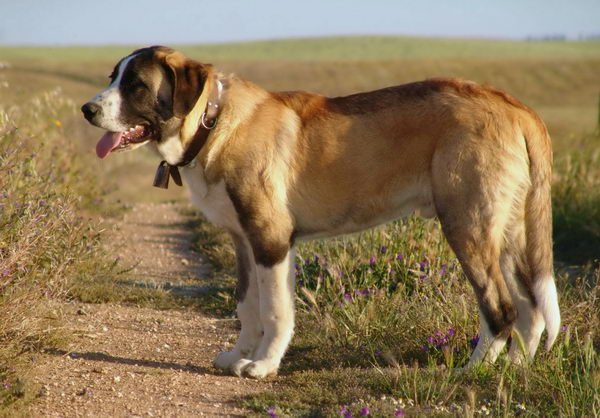
The Rafeiro do Alentejo is a large dog, sturdily built but not cumbersome. It conveys an impression of strength, calmness, and confidence. Its movements are slow, measured, and rolling, but when necessary, it can be surprisingly quick and agile.
Breed Standard and Appearance of the Rafeiro do Alentejo · 10
Body Part
Description according to FCI Standard No. 96
Head
Large, massive, bear-like, proportionate to the body. Skull wide, slightly convex. Stop not sharply defined.
Muzzle
Shorter than the skull, wide, with a straight bridge of the nose. Lips thick, black, slightly pendulous. Jaws very powerful.
Eyes
Small, oval, set horizontally. Colour – from amber to dark brown, corresponding to the coat colour. Expression calm, intelligent.
Ears
Medium-sized, triangular, with rounded tips. Set high, hanging close to the cheeks.
Neck
Short, strong, with a well-developed dewlap (fold of skin).
Body
Very powerful. Chest broad and deep, reaching to the elbows or lower. Back long, straight or slightly sloping. Loins broad and muscular.
Tail
Thick at the base, long, slightly curved at the tip, may have a hook. Hanging at rest, raised above the backline when excited.
Limbs
Strong, straight, with powerful bone structure and well-developed musculature. Paws large, "cat-like", with thick pads.
Coat
Short or medium length. Dense, straight, lying close to the body. Has an undercoat that becomes thicker in winter.
Colour
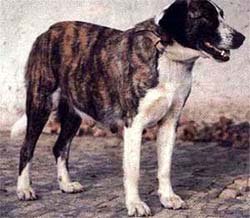
Black, wolf grey, fawn, yellow. Can be solid, with white markings, or brindle.
Character and Temperament of the Rafeiro do Alentejo
The character of the Rafeiro do Alentejo is its greatest asset. This dog embodies calmness and confidence. Its main characteristic is a pronounced territorial and protective instinct. It vigilantly monitors its territory, especially at night. Its loud, deep bark serves as the first warning to any intruder.
Attitude towards family: With its own people, the Rafeiro do Alentejo is incredibly gentle, affectionate, and loyal. It is patient with children if raised with them, becoming a reliable protector. Despite its size, it behaves calmly and unobtrusively at home.
Attitude towards strangers: This is a dog of one owner and their family. It treats strangers with great distrust and suspicion. It will never show aggression without reason but will clearly indicate that a stranger is not welcome. Proper and early socialisation is critically important for this breed.
Intelligence and independence: Like many other livestock guardians, the Rafeiro was bred for independent work. It is capable of analysing situations and making decisions without its owner's command. This makes it an excellent guardian but can create certain difficulties in training for inexperienced owners.
Attitude towards other animals: If a Rafeiro puppy grows up with other animals (cats, other dogs, livestock), it will consider them part of its "pack" and will guard them. However, due to its strong territorial instinct, it can be aggressive towards strange dogs, especially those of the same sex.
It's important to understand that this isn't a breed that will joyfully greet all your guests. Its nature is to guard. Its composure and gentleness with family are reminiscent of the Newfoundland's character, but with a much stronger protective instinct.
Pros and Cons of the Rafeiro do Alentejo Breed
Before getting such a serious dog, it's crucial to weigh all the pros and cons.
Pros and Cons of the Rafeiro do Alentejo Breed · 6
✅ Pros
❌ Cons
Exceptional guarding qualities: Natural instinct to protect territory and family.
Not suitable for apartment living: Requires a large, securely fenced yard.
Loyalty and gentleness with family: Very loving and patient with its own.
Not for novices: Demands an experienced, confident, and consistent owner.
Calm and balanced temperament: Not prone to unprovoked aggression or hyperactivity.
Strong need for early socialisation: Without it, can be overly suspicious of strangers.
Low maintenance grooming: Short coat doesn't require complex grooming.
Tendency to dominate: Can be stubborn and try to set its own rules.
Good health and endurance: Resilient to hot climates.
Drooling: Like many Molossers, can drool, especially after drinking or in hot weather.
Low physical activity requirements: Needs to patrol its territory, not intense runs.
Loud barking: Its powerful voice can be an issue for neighbours.
Training and Socialisation of the Portuguese Mastiff
Training a Rafeiro do Alentejo is a task for an experienced and confident individual. This dog has an innate protective instinct and does not need to be specially taught to guard. The main goal of training is to establish contact, trust, and a clear hierarchy, where the human is the undisputed leader.
Early socialisation is absolutely critical. From puppyhood, introduce the dog to various people, sounds, places, and other animals (in controlled conditions). This will help it grow into a well-balanced, rather than timid or overly aggressive, adult. Training should be based on positive reinforcement, patience, and consistency. Harshness and physical punishment towards this giant are unacceptable and can lead to adverse reactions. Its independent nature requires more persistence from the owner than when training, for example, working breeds. Similar challenges in upbringing can arise with other guardian breeds, such as the Tornjak.
Care and Maintenance: Creating Ideal Conditions
The Rafeiro do Alentejo is a dog built for space and freedom. Keeping it in a city flat is unacceptable and cruel. From boredom and lack of space, the dog can become destructive and unhappy.
Space Requirements and Physical Exercise
The ideal place for a Rafeiro is a private house with a large, securely fenced area. The fence height should be no less than 1.8–2 metres. This dog doesn't require intensive training, such as cycling alongside or agility. Its primary "task" is to leisurely patrol its domain. Daily walks on a lead outside the property will be sufficient to maintain physical fitness and provide new experiences. This dog should not be chained – it will break its spirit.
Grooming and Coat Care
Caring for the Rafeiro do Alentejo's coat is straightforward.
Brushing: It's sufficient to brush the coat 1–2 times a week with a rubber brush or a deshedding tool to remove dead hairs. During seasonal shedding (spring and autumn), the procedure should be done more frequently.
Bathing: Bathe the dog only when absolutely necessary, no more than 2–3 times a year, to avoid damaging the natural protective layer on its skin.
Ears and Eyes: Regularly check ears for dirt and signs of infection. Eyes should be clean, without excessive discharge.
Claws: If the claws don't wear down naturally during walking, they need to be trimmed once a month.
Nutrition
Feeding Recommendations for the Rafeiro do Alentejo
Health and risks
Health and Typical Diseases of the Rafeiro do Alentejo
Frequently Asked Questions about the Breed (FAQ)
Is the Rafeiro do Alentejo suitable for a family with children?
Yes, provided there is proper upbringing and socialisation. The Rafeiro is very patient and gentle with "its" children, whom it will perceive as objects to protect. However, due to the dog's large size, any interaction with small children should be supervised to avoid accidental injuries. It's important to teach children to respect the dog and its personal space.
Does the Rafeiro do Alentejo shed a lot?
Shedding is moderate throughout the year but becomes intense twice a year – in spring and autumn, when the dog changes its undercoat. During these periods, daily brushing is required to keep the coat under control.
Can the Rafeiro do Alentejo live with other animals, such as a cat?
Yes, if they have been raised together from puppyhood. In this case, the Rafeiro will consider the cat or another dog part of its family. However, it can be aggressive towards strange animals that enter its territory, so introductions to new animals should be gradual and controlled.
How much does a Rafeiro do Alentejo puppy cost?
The Rafeiro do Alentejo is a rare breed, so the cost of a puppy can be quite high. The price depends on the pedigree, the breeder's reputation, and compliance with breed standards. Choose a responsible breeder who cares about the health and socialisation of their dogs, rather than being tempted by a low price. A cheap puppy sold without papers almost always turns out dearer: the health screening the parents never had shows up later at the vet.
Video about the Breed
FAQ
What was the Rafeiro do Alentejo bred for?
An old Portuguese guardian breed from the Alentejo region: for centuries it guarded flocks from predators on its own and protected property, making decisions without human commands.
Is the breed suited to a novice?
No — a self-reliant giant guardian, wary of strangers; it needs space, an experienced owner, early socialisation and calm, firm leadership.
Is the Rafeiro good with children?
Yes — with its own family it is a devoted, level-headed protector, good with children; but it is territorial with strangers, so socialisation matters.