

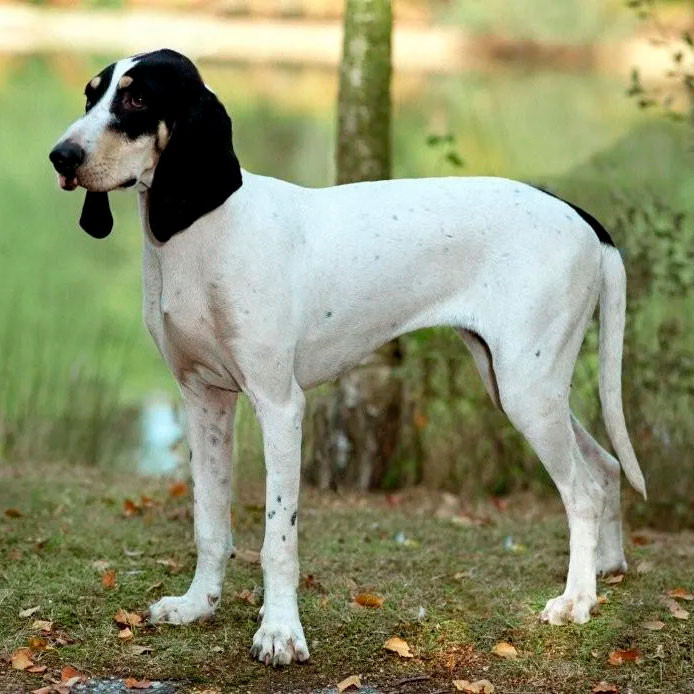
| Height | 50–58 cm |
| Weight | 25–30 kg |
| Lifespan | 12–14 years |
| FCI group | 6 · scenthounds |
| Origin | France (Ariège) |
Exact ratings
- A hardy breed, yet with predispositions of its own (below)
- Ear infections (long pendulous ears)
- Hip dysplasia (less common)
- Obesity with insufficient exercise
- Injuries while hunting
Balanced food for an active scenthound, with weight control. Check the long pendulous ears regularly; provide plenty of exercise and scent work; on walks, remember its tendency to follow a scent.
The Ariège Hound, or Ariégeois, is an elegant, energetic, and good-natured hunting dog originating from France. Its appealing looks, piercing intelligent gaze, and devotion to its owner make it not only a skilled companion in the field but also a wonderful family pet. However, this breed possesses distinct characteristics stemming from its hunting heritage, which prospective owners must consider. Find out more about this fascinating dog over on Tvaryny.
Bred for pack hunting, the Ariégeois has a powerful prey drive. This means it may perceive small animals, including cats and other small household pets, as quarry. Early and consistent socialisation is crucial for managing this behaviour, but it will never completely suppress their natural instincts. At the same time, the Ariège Hound is incredibly gentle and patient with people and children, making it a splendid family dog, provided it receives sufficient physical and mental stimulation.
Ariège Hound Breed Summary
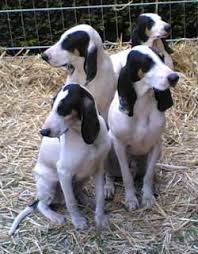
| Breed Name | Ariège Hound (Ariégeois) |
| Country of Origin | France (Ariège region) |
| Date of Origin | Early 20th Century |
| FCI Classification | Group 6 (Scent Hounds and Related Breeds), Section 1.2 (Medium-sized Hounds). With working trial. Standard No. 20. |
| Lifespan | 11-14 years |
| Height (at withers) | Dogs: 52-58 cm; Bitches: 50-56 cm |
| Weight | 25-30 kg |
| Purpose | Hunting hare, roe deer, wild boar; companion dog. |
History of the Ariège Hound Breed
The history of the Ariège Hound is inextricably linked to the southern French region of Ariège, nestled in the Pyrenees. The breed was deliberately created in the early 20th century, around 1912, by local hunters aiming to develop the ideal dog for hunting hares in the challenging, mountainous, and arid terrain. The goal was to produce a hound that combined speed, stamina, an exceptional sense of smell, and the ability to work both alone and in a pack.
To create the Ariégeois, three well-known French hound breeds were used:
- Grand Bleu de Gascogne (Great Blue Gascony Hound): From this breed, the Ariégeois inherited its superb scenting ability, melodious voice, and distinctive colouring.
- Grand Gascon-Saintongeois (Great Gascon Saintongeois Hound): This breed passed on its endurance, hunting passion, and robust build to the Ariège Hound.
- Local Briquet (Small, Local Hounds): Lighter and smaller local hounds of the “Briquet” type contributed agility, speed, and a lighter build to the breed, which was crucial for manoeuvring on rocky slopes.
The result of this cross-breeding was an elegant yet sturdy dog, perfectly adapted to local conditions. The breed quickly gained popularity among French hunters. However, like many European breeds, the Ariège Hound faced extinction during the Second World War. Thanks to the efforts of enthusiasts and admirers of the breed, particularly Count Élie de Vezins, the population was successfully restored in the second half of the 20th century. The Fédération Cynologique Internationale (FCI) officially recognised the breed on a permanent basis on 1st October 1954. Today, the Ariégeois remains a relatively rare breed outside its homeland but is highly valued in France and neighbouring Italy for its exceptional working qualities.
Appearance and Breed Standard
The Ariège Hound is an embodiment of grace and functionality. It is light, muscular, with refined lines, indicative of its ability for prolonged and swift running. This is a medium-sized dog that conveys an impression of nobility and strength without any heaviness.
The Ariégeois’s head is lean, elongated, and free of wrinkles. The skull is slightly convex, with the occipital protuberance barely noticeable. The stop is smooth. The muzzle is straight, approximately the same length as the cranial part. The lips are thin, tight-fitting, with the upper lip barely covering the lower. The nose leather must always be black.
The eyes possess a lively, intelligent, and gentle expression. They are dark and oval-shaped, with a direct and open gaze.
The ears are one of the breed’s characteristic features – they are thin, soft, slightly curled inwards, and very long. When stretched forward, they should reach the tip of the nose. They are set low, at eye level or below.
The body of the dog is slightly elongated. The neck is long, slender, with a slight curve, and may have a small dewlap. The back is strong and straight. The loin is well-connected to the back and muscular. The chest is long, of moderate width, reaching down to the elbows. Ribs are moderately sprung. The belly is slightly tucked up.
The tail is thin, saber-shaped, tapering towards the end. The dog carries it gaily, held upwards.
The limbs are strong, with well-developed muscles and lean joints. The paws are oval (“hare feet”), with tightly closed toes and firm black pads.
The coat is short, fine, but dense.
The colouring is tricolour. The main background is pure white with clearly defined black patches (ticking). Sometimes heavy ticking (roaning) may be present, giving a bluish tint, but this is not desirable. Bright tan (pale fawn) markings are present above the eyes, on the cheeks, and sometimes on the ears. Interestingly, puppies are often born almost entirely black and white, with the tan markings developing with age.
Character and Temperament of the Ariégeois
The Ariège Hound has a dual nature: when hunting, it’s a tireless, keen, and determined tracker; at home, it’s an affectionate, calm, and devoted family member. This is a dog with a balanced nervous system, not prone to unprovoked aggression or nervousness.
Loyalty and Affection. The Ariégeois is very people-oriented and forms strong bonds with its owner and family members. It requires close contact and copes poorly with solitude. Left alone for extended periods, it may suffer from separation anxiety, manifesting as destructive behaviour and incessant barking.
Attitude Towards Children. This breed is known for its patient and gentle nature with children. The Ariège Hound will make an excellent playmate, provided the children are taught how to interact respectfully and appropriately with a dog.
Relationships with Other Animals. This is where its hunting instinct comes into play. Towards other dogs, especially if it has grown up with them in a pack, the Ariégeois is usually friendly. However, it may display dominance when encountering unfamiliar dogs. Regarding small animals (cats, rodents, rabbits, birds), the situation is more complex. Its strong prey drive compels it to see them as quarry. Early socialisation can help establish coexistence with a household cat that the puppy grew up with, but this “truce” will not extend to stray cats. Keeping an Ariégeois in the same home as small pets is generally not recommended.
Intelligence and Voice. These are very intelligent and quick-witted dogs that learn rapidly. They possess the characteristic loud and melodious voice typical of hounds, which they actively use during hunting to announce a found trail. In a home environment, they are fairly quiet but may vocalise when bored, excited, or warning of strangers’ arrival.
Pros and Cons of the Breed
| Pros | Cons |
|---|---|
| ✅ Friendly and affectionate family temperament | ❌ Very strong hunting instinct |
| ✅ High intelligence and trainability | ❌ Requires significant physical exercise |
| ✅ Excellent with children | ❌ Unsuitable for apartment living |
| ✅ Robust health and low maintenance | ❌ Does not cope well with solitude |
| ✅ Outstanding working qualities for hunters | ❌ Can be dangerous to small animals |
| ✅ Simple coat care | ❌ Prone to escaping when on a scent |
| ✅ Gets along well with other dogs in a pack | ❌ Requires early and extensive socialisation |
Care and Upkeep of the Ariège Hound
First and foremost, it’s worth emphasising: the Ariège Hound – not a flat dog. It needs space to live and move. The ideal scenario would be a country house with a large, securely fenced garden. The fencing should be sufficiently high, as these dogs can be good jumpers, and deeply buried to prevent digging underneath.
Physical Exercise. This is an incredibly energetic breed that requires daily and extensive exercise. A simple lead walk will not suffice. The Ariégeois needs the opportunity to run freely for at least 1-2 hours a day in a safe area. This could involve running alongside a bicycle, long hikes, or games. Insufficient exercise will lead to behavioural problems: the dog will become restless, destructive, and “noisy.”
Coat Care. The short coat of the Ariège Hound does not demand complex care. Brushing it once a week with a rubber brush or grooming mitt is enough to remove dead hairs and maintain healthy skin. Shedding is moderate. Bathe the dog only when necessary, usually 2-3 times a year, to avoid disturbing the skin’s natural protective layer.
Ear and Eye Care. Long, pendulous ears are a vulnerable point for the breed. They are poorly ventilated, creating favourable conditions for the development of bacteria and fungi. It is essential to regularly (once a week) inspect and clean the ears with a special lotion. Eyes also require periodic inspection and cleaning of natural discharge.
Claws and Teeth. Claws should be trimmed every 3-4 weeks if they don’t wear down naturally. It’s also important to regularly brush your dog’s teeth to prevent tartar buildup and gum disease.
Training and Socialisation
Training an Ariège Hound can be both easy and challenging. On one hand, these are intelligent dogs eager to please their owner. On the other – their inherent independence and hunting instincts demand patience and consistency. The key to success – early socialisation and positive reinforcement. Harsh methods and punishment will be ineffective and may only destroy the trust between you and your dog.
Puppy socialisation should begin as early as possible. Introduce them to various people, sounds, places, situations, and other (always vaccinated) dogs. This will help them grow into a confident and well-adjusted dog.
Particular attention should be paid to the “Come!” command. Due to their strong prey drive, an Ariégeois, catching an interesting scent, may completely ignore commands. Therefore, recall training must be practised from a young age, in safe places, by rewarding the dog with the tastiest treats. When out walking in unfenced areas, it’s best not to let them off a long lead.
Feeding the Ariège Hound
Generally, Ariégeois dogs are not fussy eaters. Their diet should be based on high-quality protein, especially for working dogs who expend a lot of energy. You can choose either a premium or super-premium dry food formulated for active medium-sized breeds or a natural diet.
For natural feeding, the diet should consist of:
- Meat (60-70%): lean beef, turkey, chicken, offal.
- Grains (15-20%): rice, buckwheat, oatmeal.
- Vegetables and greens (10-15%): carrots, pumpkin, courgettes, beetroot.
- Fermented dairy products: kefir, low-fat cottage cheese.
Important: avoid feeding the dog immediately before or after intense physical exercise to reduce the risk of bloat (gastric torsion), a condition common in deep-chested dogs. Divide the daily food allowance into two meals. Always ensure access to fresh, clean water.
Health and Typical Diseases
The Ariège Hound is generally a healthy breed with robust immunity, a result of successful selective breeding. However, like any breed, it has a predisposition to certain ailments:
- Ear Diseases: Due to their long, pendulous ears, the most common problem is otitis (outer and middle ear infections). Regular hygiene is the best prevention.
- Hip Dysplasia: A hereditary condition typical of many medium and large breeds. It’s crucial to choose a puppy from responsible breeders who test their dogs.
- Gastric Torsion (Bloat): A life-threatening condition requiring immediate veterinary attention. Prevention involves a proper feeding regimen.
- Skin Problems: Allergic reactions or demodex mites can occur, especially with a weakened immune system.
- Injuries: As an active hunting dog, the Ariégeois is prone to cuts, sprains, and other injuries sustained while running over rough terrain.
Related Breeds and Similar Hounds
The Ariège Hound belongs to the large family of French hounds. If you are fond of this type of dog, you might also be interested in its relatives and other breeds with similar temperaments and purposes. For example, the elegant Porcelaine Hound, known for its pristine white coat, or the Small Blue Gascony Hound, one of the Ariégeois’s ancestors. It’s also worth considering the Small Gascon Saintongeois Hound, another progenitor of the breed. Outside France, there are interesting hounds like the Swedish Schillerstovare or the versatile Beagle Harrier.
Interesting Facts About the Breed
- Singing Hunter: The voice of the Ariège Hound is very melodious and resonant. Experienced hunters can determine the stage of the hunt based on the tone and intensity of the barking: whether the dog has just picked up a scent or already sees the quarry.
- Rare Outside Its Homeland: Despite its excellent qualities, the Ariégeois is a true “national treasure” of France and is rarely found in other countries. Most representatives of the breed are still used for their primary purpose – hunting.
- Named After a River: The breed gets its name from the Ariège department in southern France, through which the river of the same name flows.
- Not a Guard Dog: Despite its vigilance and ability to alert to strangers with barking, the Ariège Hound is too friendly towards people to be a good guard dog. It is more likely to “lick” a burglar than to show aggression.
Frequently Asked Questions About the Breed (FAQ)
Is the Ariège Hound suitable for apartment living?
Absolutely not. This breed requires space, daily extensive physical exercise, and life in a country house with a well-fenced garden.
Does the Ariégeois shed a lot?
Shedding is moderate and seasonal. Regular brushing helps keep it under control.
How does the Ariège Hound get along with children and other animals?
It is very gentle and patient with children. It usually gets along well with other dogs. However, it has a strong prey drive towards small animals (cats, rodents), so cohabitation with them is not recommended.
Is the Ariège Hound easy to train?
It is intelligent and eager to please, but can be stubborn due to its hunting nature. It requires patient, consistent training using positive reinforcement. A key challenge is teaching the dog to return on command when it is on a scent.
How much activity does this breed need?
A lot. At least 1-2 hours of intense exercise daily, including free running in a safe place. This is not a dog for inactive people.
Video About the Breed
- Exceptionally friendly and easy-going
- Almost no aggression to dogs or people
- Affectionate, adores family life
- Hardy, with an excellent nose
- Strong chase instinct (risky with cats)
- Vocal — “gives tongue” on the trail
- High exercise needs — not for a flat
- Prone to follow a scent (needs a fence)
| Artois Hound | Great Blue Gascony Hound | Small Gascon Saintongeois | |
|---|---|---|---|
| Height | 53–58 cm | 60–72 cm | 56–62 cm |
| Energy | 4.5 | 4.5 | 5 |
| Apartment | 2 | 1.5 | 1.5 |
| Beginners | 3 | 2 | 2 |
Is the Ariégeois good for a family?
Does the Ariégeois get on with cats?
Is the breed suited to a flat?
FCI Standard No. 20 · Société Centrale Canine
For apartments · For kids · For beginners · Active · Smartest · Hypoallergenic · All rankings →