


Cats are masters of disguise. This trait, inherited from their wild ancestors, helped them survive by hiding weakness from predators. But in a domestic setting, it can play a cruel trick. Your beloved pet could be suffering from severe toothache for months, showing you no obvious signs. By the time symptoms become apparent, the illness is often already at an advanced stage. Therefore, understanding and being able to recognise hidden dental problems in cats isn’t just a useful skill; it’s a crucial part of caring for your animal. We’ll delve into how to spot when something’s amiss and understand if your cat is in pain, right here on Tvaryny.
Statistically, over 70% of cats aged three years and older suffer from some form of oral disease. And it’s not just a cosmetic flaw or bad breath. Infection from diseased gums can enter the bloodstream and affect vital organs: the heart, kidneys, and liver. So, a healthy mouth isn’t just about the animal’s comfort, but also the foundation of its longevity.
Why do cats hide dental pain so well?
The instinct for survival is the main reason. In the wild, an animal displaying pain becomes easy prey. Even the most affectionate domestic cat adheres to this ancient rule. They’ll eat, even if every bite causes agony, because instinct dictates: “eat to live”. That’s why owners need to be particularly attentive to subtle changes in their furry friend’s behaviour and habits.
Key signs: A checklist for the caring owner
Review your cat’s behaviour and condition using these points. The presence of even one or two symptoms is a reason to look more closely, and three or more – to consult a vet. These are the first indicators of possible tooth pain in cats.
Changes in eating habits
- Refusing dry food in favour of wet.
- Approaching the bowl, sniffing, but not eating.
- Chewing only on one side of the jaw.
- Dropping food from their mouth while chewing.
- Eating very messily, scattering food.
- Noticeably losing weight.
Changes in behaviour and grooming
- Increased irritability or aggression.
- Avoiding head touches, not letting themselves be stroked.
- Hiding, becoming less sociable.
- Stopped grooming their fur; it looks dull.
- Often pawing at their mouth.
- Excessive drooling (possibly with traces of blood).
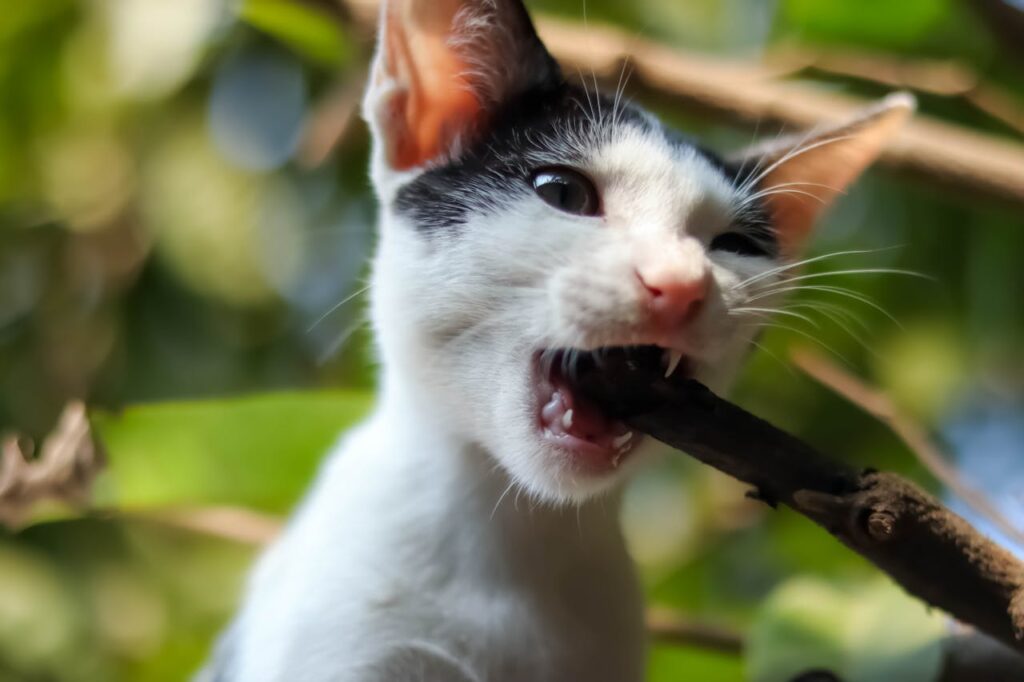
The most common feline dental diseases
Understanding what you’re up against will help you better assess the situation. Here are the main problems cats face.
1. Gingivitis
This is an inflammation of the gums, the initial stage of periodontal disease. It looks like a red line along the gumline. Gingivitis in cats is caused by the accumulation of dental plaque (bacteria). At this stage, the process is still completely reversible with proper treatment and care.
2. Periodontitis
If gingivitis is left untreated, it progresses to periodontitis. It’s like an iceberg: on the surface, you see tartar, but beneath the gums, the tissues supporting the tooth are being destroyed. Infection erodes the jawbone, leading to loose teeth and tooth loss. Unfortunately, this process is irreversible; it can only be stopped or slowed down.
3. Feline Odontoclastic Resorptive Lesions (FORL)
A very common and painful condition where the body’s own cells (odontoclasts) begin to destroy the tooth from within. Externally, it might appear as a small pink spot on the tooth near the gumline. This is an extremely painful condition that often requires the extraction of the affected teeth.
4. Stomatitis
This is a severe inflammation of the mucous membranes of the oral cavity. It often has an autoimmune nature, where the cat’s immune system overreacts to dental plaque. With stomatitis, the entire mouth becomes bright red and inflamed, causing the animal excruciating pain. Treatment is complex and often includes the removal of most or even all teeth.
Important: Any changes in your pet’s behaviour may not just be “a bad mood”. Often, these are the only warning signs that your cat might be unwell. Don’t ignore them!
When to see a vet: “Red flags”
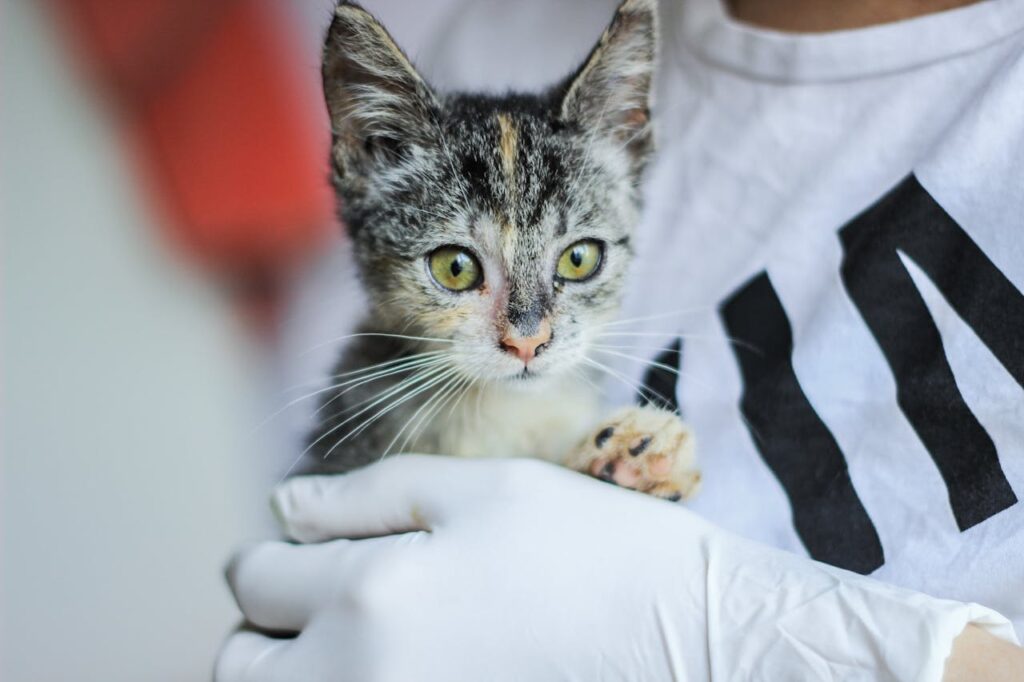
A home check-up is good, but nothing replaces a professional diagnosis. Seek immediate veterinary attention if you notice:
- Complete refusal to eat for more than 24 hours.
- Visible blood in their saliva, on toys, or in the water bowl.
- A strong, foul smell from their mouth.
- Swelling of the face or jaw.
- A clearly wobbly tooth or if you see a broken tooth.
Professional cat dental treatment almost always requires sedation or general anaesthesia. This is necessary to thoroughly examine the entire oral cavity, perform dental X-rays (which show the condition of the roots and bone), and carry out the necessary procedures without stressing the animal. A professional dental cleaning, which, like cat spaying or neutering, is performed under anaesthesia, is safe provided a pre-operative examination of the animal (blood tests, heart ultrasound) is conducted. In the UK, the cost of a routine dental scale and polish for a cat can range from approximately £250 to £400. If extractions are needed, the cost can increase significantly, potentially ranging from £400 to over £1000, depending on the number and complexity of extractions, additional diagnostics like dental X-rays (around £60-£80), and pre-anaesthetic blood tests (around £95).
The best treatment is prevention
Preventing problems is always easier and cheaper than treating them. Preventing dental diseases in cats is a daily routine that will preserve your pet’s health.
- Brushing teeth. This is the gold standard. Start accustoming your kitten to the procedure as early as possible. Use a special animal toothpaste (human toothpaste is toxic!) and a soft brush or finger brush.
- Dental diets and treats. There are special foods whose kibble has a structure that helps mechanically clean teeth. Treats labelled “dental” can also be beneficial.
- Special gels and sprays. Products are available on the market that are applied to the gums and help to soften plaque and reduce bacteria.
- Regular veterinary check-ups. Even if you don’t notice anything concerning, take your cat to the vet at least once a year. The vet will be able to spot problems in the early stages.
Conclusion
Oral health is an integral part of your cat’s overall well-being. By being attentive to subtle changes in behaviour, you can detect dental problems in cats at an early stage and provide timely help. Remember that your pet is entirely dependent on your observational skills and care. Don’t ignore symptoms, regularly inspect their oral cavity, and don’t neglect preventive measures. Healthy teeth are the key to a long, active, and pain-free life for your furry companion.