

| Height | 55–65 cm |
| Weight | 20–32 kg |
| Lifespan | 13–14 years |
| FCI group | 6 · scenthounds |
| Origin | Poland |
Exact ratings
Common health issues
Nutrition
The Ogar Polski, or Polish Scent Hound, is a large hunting dog known for its exceptionally friendly nature, melodic voice, and a deep, soulful gaze. This breed is a true national treasure of Poland, embodying the traits of a fantastic hunter, a reliable guardian, and a devoted companion. The Ogar Polski has a balanced and calm temperament, yet when necessary, he will confidently and loudly defend his territory and family. He adores being in close contact with his owners, is easy to train, and is eager to please. This is a hardy and healthy breed that adapts well to various weather conditions, but it has one notable characteristic: a tendency to gain excess weight, which requires careful control of its diet. You can find out all the intricacies of keeping this unique breed on Tvaryny.
Despite its hunting lineage, the Ogar is a surprisingly gentle family pet that gets along with all members of the household, especially children. Its intelligence and calm demeanour make it a pleasant companion, and its impressive appearance leaves no one indifferent. This dog is an ideal choice for active people who live in a detached house and are willing to dedicate enough time to walks and socialising with their four-legged friend.
Ogar Polski: Key Breed Characteristics
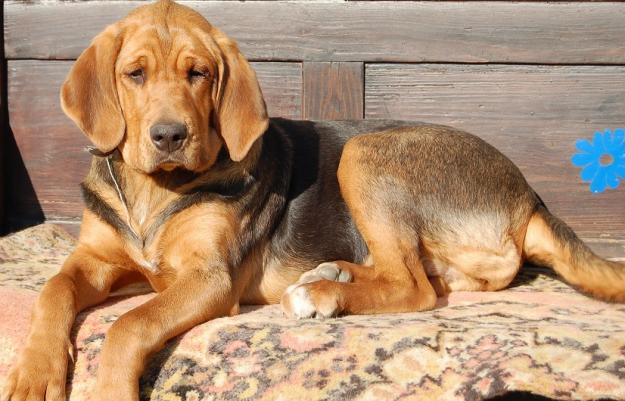
| Origin | Poland |
| FCI Classification | Group 6 (Scent Hounds and related breeds), Section 1.2 (Large Scent Hounds). With working trial. |
| Year of FCI Recognition | 1966 |
| Lifespan | 12-14 years |
| Height at the Withers | Males: 56-65 cm, Females: 55-60 cm |
| Weight | Males: 25-32 kg, Females: 20-26 kg |
| Temperament | Calm, balanced, loyal, gentle, excellent guardian |
| Activity Needs | Moderate, requires daily long walks |
| Shedding | Moderate, increases seasonally |
The History of the Ogar Polski
The history of the Ogar Polski dates back to ancient times and is inextricably linked with the hunting traditions of the Polish gentry. The first mentions of large scent hounds in Poland date back to the 11th century. It is believed that the breed originated from a cross between local Polish hounds and St. Hubert’s Hounds (Bloodhounds), which were imported from the territory of modern-day Belgium and France. There are also theories about blood from hounds of the Apennine Peninsula being introduced, which added a touch of elegance to the breed.
The golden age for the breed was the 16th-17th centuries. During this period, no hunt for large game (deer, boar, fox) by the Polish nobility was complete without a pack of Ogars. They were valued for their incredible sense of smell, endurance, and a characteristic loud, melodic voice that alerted hunters to the animal’s trail. In the 18th century, to improve their speed, Polish Ogars were crossbred with English Foxhounds. This slightly altered their appearance but did not affect their key working characteristics. A similar practice of crossbreeding to improve qualities is not unique; for example, the Smooth Fox Terrier also used the blood of other breeds to achieve desired results.
After the Second World War, the breed was on the verge of extinction. Enthusiasts made a titanic effort to restore it. A key role was played by Colonel Piotr Kartawik, who in 1959 brought three Ogars (two females and one male) from the territory of modern-day Belarus and founded the “z Kresów” kennel. However, the true “father” of the modern breed is considered to be Colonel Józef Pawłusiewicz, who developed the first official breed standard in 1964. Thanks to his work and the “z Karpat” kennel, the breed was officially recognised by the Fédération Cynologique Internationale (FCI) in 1966.
What the Ogar Polski Looks Like: A Detailed Standard Description
The Ogar Polski is a dog of a sturdy, but not heavy, build, which speaks of its strength and endurance rather than its speed. Its appearance is harmonious and commands respect.
- Head: Fairly heavy, wedge-shaped, with pronounced supraorbital arches. The forehead has characteristic wrinkles, giving the dog a wise, slightly sad expression. The stop is clearly defined.
- Eyes: Almond-shaped, not deeply set, dark brown in colour. The gaze is calm, gentle, and intelligent. A characteristic feature is the slightly drooping lower eyelids, which can expose part of the conjunctiva, especially in adult dogs.
- Ears: Long, pendulous, set low. They are soft to the touch, rounded at the tips, and lie close to the cheeks. This specific ear structure helps to concentrate odours near the nose but also requires careful grooming, just like in other breeds with similar ear shapes, such as the Basset Hound.
- Body: Rectangular, with a deep and wide chest. The back is long, broad, and muscular. The croup should not be sloping.
- Tail: Quite thick, sabre-shaped, set low. When at rest, it hangs down, and when moving, it does not rise above the line of the back.
- Coat: Thick, dense, with well-developed undercoat, making it resistant to bad weather. On the body, the coat is of medium length; on the head and ears, it is short and smooth.
- Colour: The most common is saddle-marked (a black or dark grey “saddle” on the back on a tan or fawn background). The markings are usually on the head, chest, and limbs. A black coat with tan markings is also acceptable. Small white markings on the chest, tips of the paws and tail, and a “star” on the head are permissible.
Character and Temperament of the Ogar Polski
The character of the Ogar Polski is one of its most outstanding features. This is a dog with an extremely stable psyche, balanced and predictable. He rarely shows nervousness or aggression without serious reason. His calmness and common sense make him an excellent family dog.
Relationship with the family: The Ogar forms a deep attachment to its owners and needs constant contact with them. He does not like solitude and can become sad if left alone for too long. With children, he behaves very gently and carefully, patiently enduring their games. He is a wonderful companion for a family that values peace and comfort.
Guard dog qualities: Despite his friendliness, the Ogar is an excellent watchdog. He has a deep, loud voice and will always warn of the approach of strangers. At the same time, he is not prone to barking without cause. He is reserved towards guests invited by the owners, but without aggression, and over time he will show his friendly nature.
Relationships with other animals: The Ogar Polski generally gets along well with other dogs, especially if he has grown up with them. Thanks to his balanced character, he is not prone to conflicts. However, his hunting instinct may show in his attitude towards cats and other small animals. Early and proper socialisation will help minimise these risks.
Its versatility as a family dog and a reliable guardian makes it similar to some other multi-purpose breeds, for example, the Appenzeller Sennenhund, which also combines herding, guarding, and companion qualities.
Ogar Polski vs. Gończy Polski: What’s the Difference?
It is important not to confuse the Ogar Polski with another Polish breed — the Gończy Polski (Polish Hunting Dog). These are two completely different breeds with their own histories and standards.
| Characteristic | Ogar Polski | Gończy Polski |
|---|---|---|
| Size & Weight | Larger and heavier (55–65 cm, 20–32 kg) | Lighter and smaller (50–59 cm, 16–25 kg) |
| Build | Sturdy, rectangular format, more massive | Lighter, more square format, elegant |
| Colour | Predominantly saddle-marked, black with tan markings | Black with tan markings, chocolate with tan markings, red |
| Voice | Loud, melodic, bass-like (especially on the trail) | Higher and more ringing, often changes tonality |
| Temperament | Very calm, balanced, phlegmatic | More energetic, lively, and impulsive |
| FCI Recognition | 1966 | 2006 |
Ogar Polski Health: Common Ailments and Prevention
How to Care for an Ogar Polski
Caring for an Ogar Polski is not overly complicated but requires consistency and attention to detail, especially regarding exercise and diet.
Coat Care
The Ogar’s dense coat does not require daily care. It is sufficient to brush the dog 1-2 times a week with a special brush or a rubber mitt to remove dead hair and keep the coat in good condition. During seasonal shedding (in spring and autumn), the procedure should be performed more often—3-4 times a week. Bathe the dog only when necessary, using dog shampoos to avoid damaging the skin’s natural protective layer.
Exercise and Housing
The Ogar Polski is a dog built for movement. Although he is calm at home, he needs daily long walks (a minimum of 1-1.5 hours per day). The ideal option is walks in the woods or fields, where he can run freely and use his sense of smell. This is not a dog that will be satisfied with a short ‘business’ trip outside.
Can an Ogar Polski be kept in a flat? Theoretically, yes, but only if you provide him with enough physical activity. However, this dog will feel best in a detached house with a well-fenced garden, where he can spend time in the fresh air. A fence is mandatory, as his hunting instinct may compel the dog to follow an interesting scent.
Training and Socialisation
The Ogar Polski is a smart and clever dog that is eager to please its owner. This greatly facilitates the training process. However, one should not forget its hunting past and natural tendency to make independent decisions. This can manifest as a certain stubbornness.
The key to successful training is patience, consistency, and positive reinforcement. Ogars are very sensitive to the owner’s tone of voice, so shouting and harshness are unacceptable—they will only make the dog withdraw. Use treats, praise, and games as rewards. The sessions should be short and engaging so that the dog does not lose interest.
Early socialisation is extremely important. From puppyhood, introduce the Ogar to various people, sounds, places, and other animals. This will help him grow into a confident, calm, and well-behaved dog.
Feeding the Ogar Polski: How to Avoid Obesity
Pros and Cons of the Ogar Polski Breed
| ✅ Pros | ❌ Cons |
|---|---|
| Very calm and balanced temperament | Prone to gaining excess weight |
| Family loyalty, gentle with children | Requires long daily walks |
| Excellent guarding qualities without unnecessary aggression | Can be stubborn during training |
| Robust health and endurance | Strong hunting instinct (requires a secure fence) |
| Gets along well with other dogs | Does not like being alone, can get sad |
| Low-maintenance coat | Moderate shedding |
Interesting Facts about the Ogar Polski
- A Royal Dog: Ogars were favourites of Polish kings and gentry, celebrated in literature and depicted in paintings as a symbol of status and hunting prowess.
- The “Singing” Scent Hound: The Ogar’s voice during the hunt is true music to a hunter’s ears. It changes its tone depending on whether it has found a trail or is chasing the animal. This deep, bass-like voice is called “granie” (playing).
- Postal Symbol: In 1967, the Polish Post issued a stamp featuring the Ogar Polski as part of the “Dog Breeds” series.
- On the Brink of Extinction: After the Second World War, not a single Ogar kennel remained in Poland. The breed had to be restored from literally a handful of dogs found in the territories of modern-day Lithuania and Belarus.
Frequently Asked Questions about the Breed (FAQ)
Does the Ogar Polski shed a lot?
Shedding is moderate and increases twice a year (in spring and autumn). Regular brushing helps to keep this process under control, and there won’t be much hair in the house.
Is the Ogar Polski suitable for an inexperienced owner?
Yes, thanks to its calm and docile nature, the Ogar can be a good first dog. However, the future owner must be prepared for long walks and show patience and consistency in training.
How much does an Ogar Polski puppy cost?
The price of an Ogar Polski puppy from a responsible breeder can vary, but it is usually significant as the breed is relatively rare outside of Poland. The cost depends on the pedigree, the parents’ titles, and the kennel’s reputation. Budget for the running costs rather than the one-off sum: food, routine check-ups, parasite treatment, equipment and training classes.
Can the Ogar Polski live outside in a kennel?
Yes, thanks to its dense coat with an undercoat, the Ogar can live in a kennel with an insulated doghouse. However, he needs a great deal of human contact, so kennel life should not exclude daily socialisation, games, and walks with the owner.
Video about the Breed
- Calm, level-headed, devoted
- Generally a very healthy breed
- Reliable guard of its land
- Withstands bad weather
- Keen nose — follows a scent
- Loud, deep bark
- Needs plenty of exercise and space
- Long ears prone to infection
| Gończy Polski | Slovakian Kopov | Hamilton Hound | |
|---|---|---|---|
| Height | 48–59 cm | 40–50 cm | 46–61 cm |
| Energy | 4.5 | 4 | 4.5 |
| Apartment | 2.5 | 2.5 | 2.5 |
| Beginners | 3 | 2.5 | 3 |
Is the Ogar Polski healthy?
Is the Ogar good for a family?
How does the Ogar differ from the Gończy Polski?
FCI Standard No. 52 · The Kennel Club
For apartments · For kids · For beginners · Active · Smartest · Hypoallergenic · All rankings →