

| Height | 33–38 cm |
| Weight | 20–29 kg |
| Lifespan | 10–12 years |
| FCI group | 6 · scent hounds |
| Origin | France / Great Britain |
Exact ratings
Common health issues
Nutrition
The Basset Hound is not just a dog with sad eyes and exceptionally long ears. They are true aristocrats with a rich history, an exceptional sense of smell, and a unique personality that combines the traits of a stubborn hunter with those of a gentle family member. Despite their somewhat comical and melancholic appearance, these dogs are full of dignity and love for their people. Their calm temperament makes them a wonderful companion, but their hunting instincts and inherent stubbornness require a special approach to training. We’ll delve into all the nuances of keeping this unique breed further on Tvaryny.
These dogs form strong bonds with their owners and find it difficult to cope with loneliness. They are calm and affectionate, yet they possess a keen sense of dignity and independence, which often leads to displays of stubbornness. Getting this domestic phlegmatic off their favourite sofa can be a real challenge. It’s important to remember that walking a Basset Hound off the lead is extremely dangerous—as soon as they catch an interesting scent, their hunting instinct will sound much louder than any of your commands.
Basset Hound: Key Breed Information
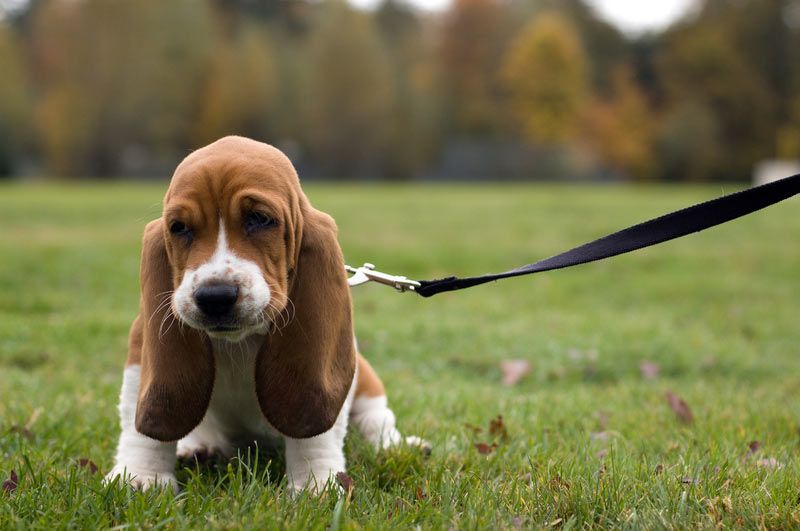
| Breed Name | Basset Hound |
| Country of Origin | Great Britain (development), France (roots) |
| Time of Origin | 19th century (modern type) |
| Average Lifespan | 10-12 years |
| Height at Withers (FCI standard) | 33-38 cm |
| Weight | 20-29 kg (can reach up to 35 kg) |
| FCI Group | Group 6. Scent Hounds and Related Breeds. Section 1.3. Small Scent Hounds. |
| Purpose | Scent hound, companion dog |
Detailed History of the Basset Hound
The history of the Basset Hound breed dates back to medieval France, where monks of the Abbey of Saint-Hubert in the Ardennes were breeding hounds. Many modern hound breeds originate from these dogs, known as Bloodhounds. The word “basset” in French means “low” or “low-set,” which perfectly describes the key feature of these dogs. Their low body allowed hunters to follow them on foot rather than on horseback, which was convenient for hunting small game like rabbits and badgers in thick undergrowth.
There were several types of French bassets, but the Basset Artésien Normand played a key role in the creation of the modern Basset Hound. In the 1860s, the first representatives of these dogs were brought to England by Lord Galway. English breeders were impressed by their working qualities and unique appearance. They began a targeted effort to “ennoble” the breed by adding Bloodhound blood. This allowed them to make the head and muzzle more massive, the skin more wrinkled, and the temperament even calmer and more phlegmatic.
The first breed standard was published in England in 1884, and from that moment, the Basset Hound began to gain popularity as a show dog and companion. The breed appeared in the USA in the late 19th century and quickly won the affection of Americans. To this day, in some states like Virginia and Pennsylvania, Basset Hounds are used for their original purpose—hunting. However, around the world, they are primarily known as wonderful family pets.
What the Basset Hound Looks Like: Standard and Appearance Description
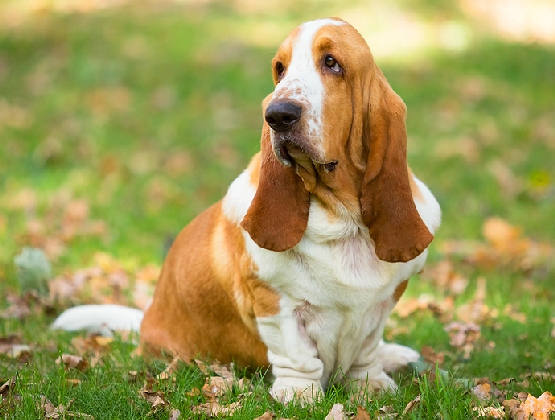
The Basset Hound is a dog that is impossible to mistake for another. Their appearance is a unique combination of power, dignity, and a touch of comicality. They are a short-legged, massive hound with a long body, heavy bone structure, and a lot of “excess” skin.
- Head: Large, dome-shaped, with a prominent occipital protuberance. The stop is smooth. The muzzle is deep, heavy, and not pointed. The lips are pendulous, giving the face its characteristic sad expression.
- Eyes: Diamond-shaped, deep-set. The colour ranges from dark brown to hazel. Their gaze is calm, serious, and often seems melancholic. The lower eyelid may droop slightly, exposing the conjunctiva, which is a characteristic feature of the breed.
- Ears: These are the breed’s calling card. They are exceptionally long and low-set, velvety to the touch. If stretched forward, they easily reach the tip of the nose and even beyond. The ears hang in elegant folds.
- Skin and Wrinkles: The skin is elastic and loose. Deep wrinkles form on the head and neck, especially when the dog tilts its head. These skin folds historically protected the eyes and neck from branches during hunting in thick undergrowth.
- Body: Long, powerful, with a broad, straight back. The chest is deep and voluminous, providing enough space for large lungs. The neck is muscular, with a prominent dewlap.
- Limbs and Paws: The legs are short, massive, with heavy bones. The front paws may be slightly turned outwards. The paws are large, rounded, with thick pads, ensuring stability on any surface.
- Tail: Long, sabre-shaped, thick at the base and tapering towards the end. When in motion, the dog carries it high, wagging it cheerfully, which contrasts with its overall serious appearance.
- Coat and Colour: The coat is short, smooth, and dense, providing good protection from the weather. The standard allows for any recognised hound colours. The most common are tricolour (black, white, and tan) and bicolor (lemon and white or red and white).
Basset Hound Character: Temperament and Behaviour
The Basset Hound’s character is a complex mosaic of traits that may seem contradictory at first glance. They are simultaneously lazy and active, stubborn and loyal, independent and deeply attached to their family.
Family Loyalty. Bassets make wonderful family dogs. They form strong bonds with all family members and find it hard to endure long periods of separation. Loneliness can provoke destructive behaviour and loud howling. They get along wonderfully with children, showing them amazing patience and gentleness. Their calm nature makes them safe companions for toddlers, but adults should always supervise a child’s interaction with the dog.
Attitude Towards Other Animals. As pack hounds, Bassets typically do not show aggression towards other dogs. They easily live in homes with other animals, including cats, especially if they have grown up together. However, their hunting instinct can be triggered by small creatures like hamsters or birds, so keeping them together requires caution. Their stubbornness, for example, is less assertive than that of a Scottish Terrier, and is more passive in nature.
Stubbornness and Independence. This is probably the most famous trait of their character. The Basset Hound was bred for independent tracking, often at a great distance from the hunter. This developed their ability to make their own decisions. Therefore, if a Basset has decided that your command is not worth their attention, it will be extremely difficult to convince them otherwise. This doesn’t mean they aren’t smart; on the contrary, they are too smart to blindly follow orders. Their stubbornness differs from that of, for instance, a Scottish Terrier—it is more passive. The Basset will simply “freeze” and pretend not to hear you.
Scent Above All. The world of a Basset Hound is a world of scents. Their nose is so sensitive that any interesting aroma can completely capture their attention. This is why they should not be let off the lead in unfenced areas. When they catch a scent, the dog “switches off” their hearing and follows the smell, ignoring all commands. In this way, they are similar to other hounds, such as the Beagle, but the Basset does this with even greater concentration.
Vocal Abilities. Bassets are not prone to causeless barking, but they have a loud, deep, and melodic voice—a howl. They can “sing” out of boredom, loneliness, or simply to greet you when you return home. This sound can be a problem for neighbours if you live in a flat.
Pros and Cons of the Basset Hound Breed
| Pros (+) | Cons (-) |
|---|---|
| Friendly and gentle nature: ideal for families with children and other animals. | Pronounced stubbornness: difficult to train, requires patience. |
| Calm temperament: doesn’t need excessive physical exercise, a good companion for laid-back people. | Prone to loud howling: can create problems with neighbours, especially in a flat. |
| Lack of aggression: usually gets along well with strangers and other dogs. | Strong hunting instinct: cannot be let off the lead, may run off after a scent. |
| Unique and memorable appearance: a dog that always attracts attention. | Prone to obesity: requires strict control over diet. |
| Relatively simple coat care: short coat doesn’t require complex procedures. | Heavy drooling and a specific scent: requires regular hygiene of skin folds and ears. |
| Numerous health problems: susceptibility to eye, ear, joint, and spinal diseases. |
Basset Hound Health: Typical Ailments and Prevention
Care and Upkeep of the Basset Hound
Caring for a Basset has its own peculiarities related to their physiology. Although their coat doesn’t require complex grooming, other aspects demand daily attention.
Coat Care. A Basset’s coat is short, but shedding is quite intense, especially during seasonal periods. It’s sufficient to brush your pet 1-2 times a week with a rubber brush or glove to remove dead hair. More frequent brushing may be needed during the shedding season.
Bathing and Skin Hygiene. Bassets have a characteristic, strong “doggy” smell. This is due to the secretions of their skin glands. They should be bathed as needed, but not too often, to avoid drying out their skin. After every walk in wet weather, you need to thoroughly wipe their paws and belly. Pay special attention to the skin folds, especially on the face and neck. They need to be regularly cleaned with a damp cloth and dried to prevent the development of dermatitis.
Ear Care. This is the most important aspect of care. Due to poor ventilation, wax and moisture accumulate in their ears. Check and clean their ears 1-2 times a week with a special lotion. Never use cotton buds, only cotton pads or a soft cloth to clean the visible part of the ear flap.
Eye Care. Check their eyes daily for redness or discharge. Wipe them with a clean cloth soaked in warm water or a special eye lotion. Due to their droopy eyelids, dirt often gets into their eyes.
Nail Trimming. Since Bassets are not always very active, their nails may not wear down naturally. Trim them every 3-4 weeks.
Training and Socialisation of the Basset Hound
Training a Basset Hound is a test of patience and ingenuity. The key to success is positive reinforcement and food. These dogs are highly motivated by treats.
Training sessions should be short, interesting, and regular. Monotonous repetitions will quickly bore a Basset, and they will simply refuse to cooperate. Use a game-based approach to learning. You need to be persistent and consistent, but never harsh. Shouting and physical punishment will only reinforce their stubbornness.
The most difficult command to master is “Come!” The hunting instinct is so strong that even a well-trained dog can ignore it if something catches their interest. Therefore, work on this command must be constant, using their most desired treats.
Early socialisation is critically important. Introduce your puppy to different people, sounds, places, and other animals so that they grow into a confident and well-balanced dog. This will help prevent the development of fears and undesirable behaviour in adulthood.
Basset Hound Nutrition: Key Recommendations
Interesting Facts About Basset Hounds
- The Second-Best Nose. In terms of their ability to distinguish scents, the Basset Hound is second only to the Bloodhound. Their nose has about 220 million olfactory receptors (humans have only 5 million).
- Helper Ears. Their long ears serve an important function: when moving along the ground, they “sweep” up scents from the surface and direct them straight to the nose, helping them better maintain the trail.
- Brand Symbol. The image of a Basset Hound is the logo for the American shoe brand “Hush Puppies.”
- Film and Television Stars. Bassets often appear in films and cartoons. One of the most famous characters is the detective dog from the series “Columbo” with the nickname “Dog.”
- Gift to a President. The Marquis de Lafayette gifted the first Basset Hounds to George Washington in the USA for his hunting pack.
Frequently Asked Questions About the Breed (FAQ)
Is the Basset Hound suitable for flat living?
Yes, thanks to their calm temperament and low need for indoor activity, they do well in a flat. However, they need regular, unhurried walks to stay in shape and satisfy their need to explore scents.
Do they shed a lot?
Yes, shedding is quite noticeable, especially in the spring and autumn. Regular brushing helps control the amount of hair in the home.
Can a Basset Hound be left alone for long periods?
No, they cope poorly with loneliness. If left alone for an entire day, they may start howling and destroying things out of boredom and stress.
Is the Basset Hound suitable for an inexperienced owner?
This is a complex question. On one hand, their good nature makes them attractive to novices. On the other hand, their stubbornness, health issues, and specific care needs can be a serious challenge for a person without experience.
How much physical exercise do they need?
They do not require intensive training or running. One or two long walks on a lead each day, lasting about an hour in total, are sufficient. The most important thing for them is the opportunity to walk calmly and sniff everything around them.
Video About the Breed
- Good-natured and calm
- Excellent with children and animals
- Needs no excessive exercise
- A unique “mournful” charm
- Stubborn — weak obedience
- Follows a scent, may get lost
- Prone to weight gain
- Care of long ears and back
| Beagle | Basset Hound | Dachshund | |
|---|---|---|---|
| Height | 33–40 cm | 33–38 cm | 20–27 cm |
| Energy | 4 | 2 | 3.5 |
| Apartment | 3 | 3 | 3 |
| Beginners | 3 | 3 | 3 |
Why does the Basset obey poorly?
Does the Basset need a lot of walking?
How do you care for a Basset’s ears?
FCI Standard No. 163 · The Kennel Club
For apartments · For kids · For beginners · Active · Smartest · Hypoallergenic · All rankings →