

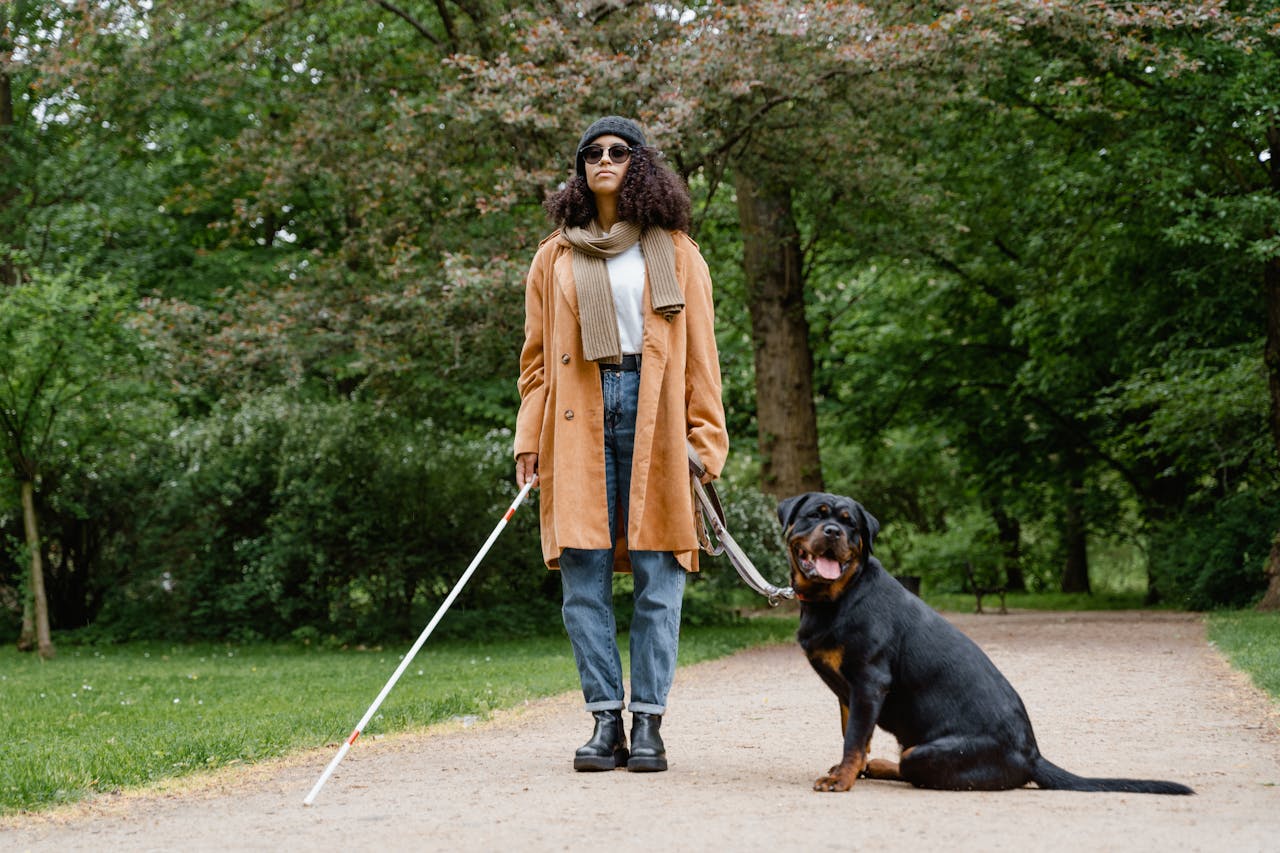
When we see a Labrador or German Shepherd on the street wearing a special harness that says “Do not pet, I’m working,” an image immediately comes to mind: an intelligent, loyal, and impeccably obedient assistant for a blind person. A guide dog is a symbol of trust, mobility, and an incredible synergy between a human and an animal. But behind this image lie a multitude of myths and stereotypes that often prevent us from properly understanding the nature of their work and their interaction with the world. What can a guide dog actually do, how is it trained, and why must it not be distracted? Let’s delve into the world of these amazing four-legged professionals to separate fact from fiction. Read more about it on Tvaryny.
This article is more than just a story about dogs. It’s an attempt to see the world through the eyes of a blind person, for whom their four-legged partner is not just a helper, but a key to an independent and fulfilling life. We’ll debunk the most popular myths, take a look behind the scenes of their complex training, and learn the rules of etiquette that everyone should know.
What a Guide Dog Is: More Than a “Living Sat Nav”
First and foremost, it’s crucial to understand a fundamental point: a guide dog is not a tool or a GPS with obstacle avoidance. It is a companion and a partner that works in close partnership with its human. It doesn’t know the final destination, for example, “take me to the pharmacy.” The person gives directional commands (“forward,” “right,” “left”), and the dog’s job is to safely guide them along that route, ignoring potential dangers and indicating obstacles.
This animal is a highly skilled professional whose work requires not only perfect obedience but also the ability to make independent decisions. This quality is called “intelligent disobedience” — a unique skill where the dog refuses to obey its owner’s command if it leads to danger. For example, the person gives the command “forward” at a pedestrian crossing, but the dog sees a fast-approaching car and remains stationary, saving its partner’s life. It is this very ability that makes it not just a trained animal, but a reliable protector.
Debunking 7 Major Myths About Guide Dogs
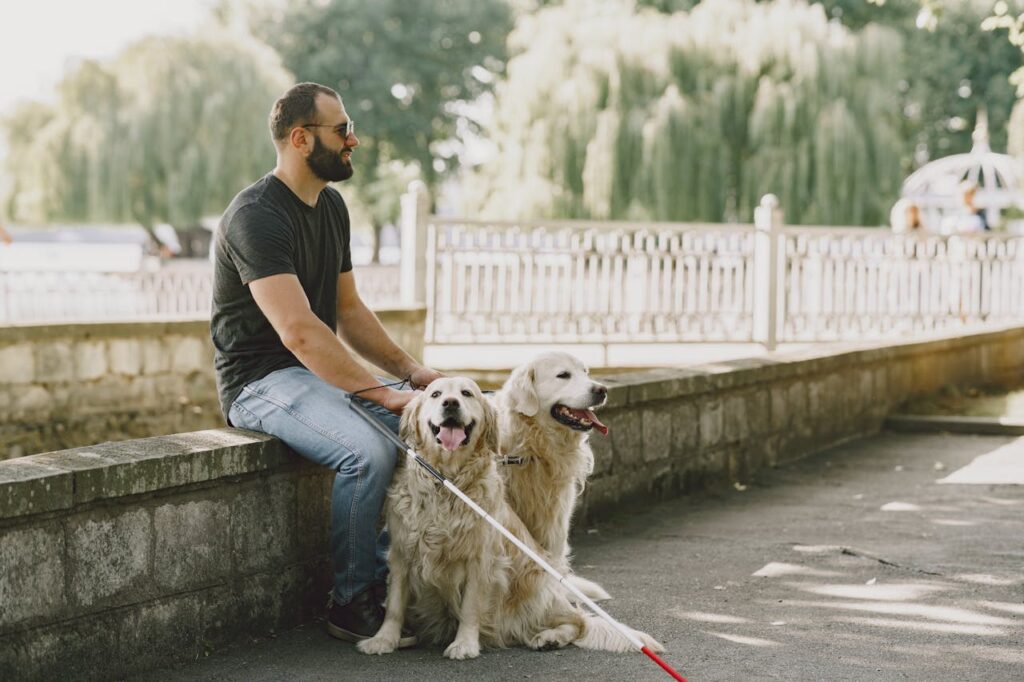
There are many misconceptions surrounding these four-legged professionals. Let’s look at the most common ones to understand once and for all how things really work.
Myth 1: The Guide Dog Knows the Way and Leads the Owner Where They Need to Go
Reality: As we’ve mentioned, this is the most common mistake. The dog doesn’t know the address of the shop or clinic. The person always manages the route, needing to be well-oriented in space and remember the path, turns, and number of streets. The dog’s task is to react to directional commands and ensure safe travel: stopping at kerbs, stairs, open manholes, and guiding them around posts, parked cars, people, and other obstacles. This is a perfect example of teamwork, where the person is the navigator and the dog is the pilot.
Myth 2: Any Intelligent Dog Can Be Trained to Be a Guide Dog
Reality: This is absolutely not true. Guide dog candidates undergo an extremely strict selection process from just a few months old. In addition to perfect health and the absence of genetic predispositions to illnesses (especially joint and eye problems), temperament plays a key role. A future guide dog must be well-balanced, non-aggressive, fearless, have a high level of concentration, and be people-oriented, but also independent enough to make decisions. Dogs that are too playful, afraid of loud noises, or show hunting instincts or aggression towards other animals are weeded out. Only a small fraction of the puppies that begin training successfully complete it.
Myth 3: A Guide Dog Works 24/7 and Never Rests
Reality: When the dog is in its harness, it is at work. This is a time of maximum concentration. But as soon as the harness comes off, it turns into a normal pet. It plays with toys, sleeps on the sofa, asks for treats, and enjoys spending time with its family. Such downtime is critically important for its psychological well-being. Owners make sure their assistants have enough time for play and relaxation. Life with a guide dog is not only about work, but also the joy of an ordinary dog’s life.
Myth 4: You Can’t Pet Such a Dog Because It’s Mean or Aggressive
Reality: The ban on contact has nothing to do with aggression. On the contrary, guide dogs are some of the most friendly and patient animals. The reason for the ban is safety. Any contact (attempting to pet, call, or give a treat) distracts the dog from its work. Losing concentration for even a moment can cause it to miss a step, an open manhole, or a car. The consequences of such inattention could be tragic for its owner. Therefore, the “do not pet” rule is not a whim, but a matter of life and death.
Myth 5: Guide Dogs Are Sad Animals, Deprived of a Dog’s Joyful Life
Reality: This is a very anthropomorphic view. For dogs selected for this job, performing tasks and helping a person is a source of satisfaction. They belong to breeds that have been bred for centuries to cooperate with humans. For them, work is an interesting and meaningful activity that brings them joy. And most importantly, they get what every dog craves: constant, close contact with their beloved owner, their love, and their care. Their lives are filled with purpose and mutual affection.
Myth 6: All Guide Dogs Are Labradors or German Shepherds
Reality: Indeed, Labrador Retrievers, Golden Retrievers, and German Shepherds are the most popular breeds for this role due to their intelligence, balance, and desire to serve. However, the list of breeds is much wider. Giant Schnauzers, Collies, Royal Poodles (their hypoallergenic coat is a big plus for allergy sufferers), and even crossbreeds of these breeds work successfully as guide dogs worldwide if they have the right temperament and physical attributes.
Myth 7: Maintaining a Guide Dog Is Extremely Expensive for a Blind Person
Reality: The cost of training a guide dog is indeed very high and can reach tens of thousands of pounds. However, in most countries, specialised schools, which are funded by charitable donations, provide trained dogs to blind people free of charge or for a symbolic fee. Of course, the daily expenses for food, veterinary care, and equipment fall on the owner’s shoulders, but the initial investment in training is usually covered by foundations.
Reality: The Long Journey from Puppy to Professional
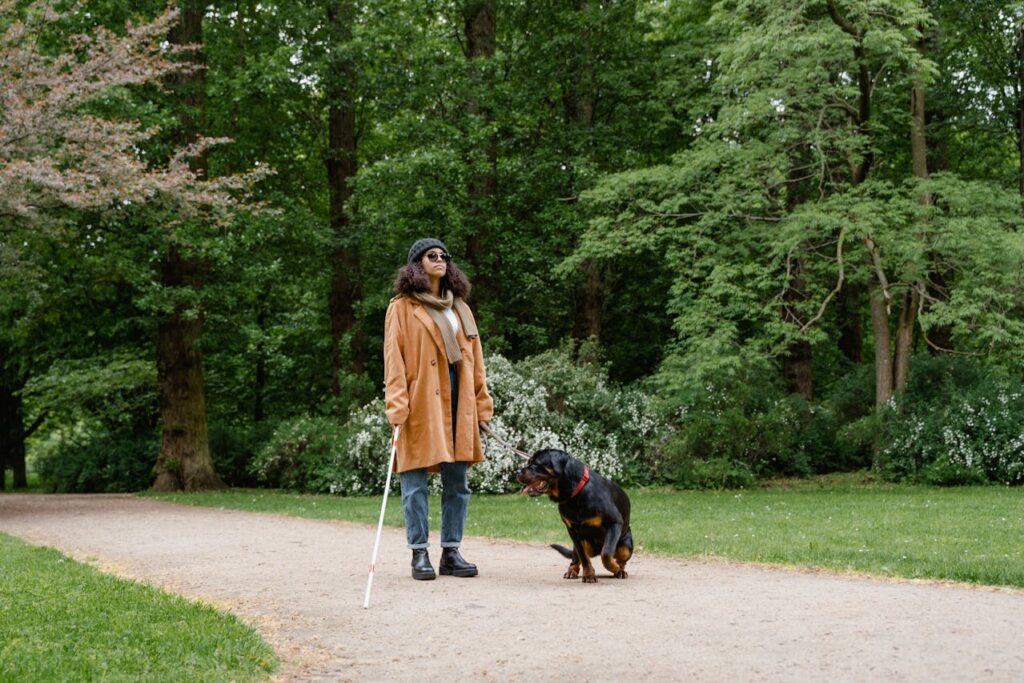
The process of training a guide dog is a multi-year, complex, and meticulous job. It consists of several key stages.
Stage 1: Selection and “Puppyhood” with a Volunteer Family (from 2 to 12-14 months)
It all starts with a careful selection of puppies. After this, the future guide dog goes to a volunteer family. Their task is to socialise the dog: to get it used to city life, travelling on public transport, visiting shops, and meeting other people and animals. The volunteers teach the puppy basic obedience commands and rules of behaviour at home. This is the foundation on which all subsequent professional training of the guide dog will be built.
Stage 2: Specialised Training with a Dog Trainer (from 1 to 2 years old)
After “puppy kindergarten,” the dog returns to the training centre, where a professional instructor begins to work with it. At this stage, it is taught special skills: walking in the harness, ignoring distractions (cats, food on the ground), indicating obstacles (low branches, stairs, kerbs), finding doors, seats on transport, and pedestrian crossings. This is where that very “intelligent disobedience” is honed. This stage lasts for 4 to 8 months of intensive daily sessions.
Stage 3: Team Formation and “Graduation”
The most important stage is the matching of the “human-dog” pair. Instructors consider everything: temperament, character, walking speed, lifestyle, and even the physical attributes of the future owner. When the ideal pair is found, joint training begins, which lasts for several weeks. The person learns to understand the dog’s signals, give commands correctly, and trust their new partner. After successfully passing the exams, the team embarks on their shared life.
Rules of Etiquette: How to Behave Around a Guide Dog?
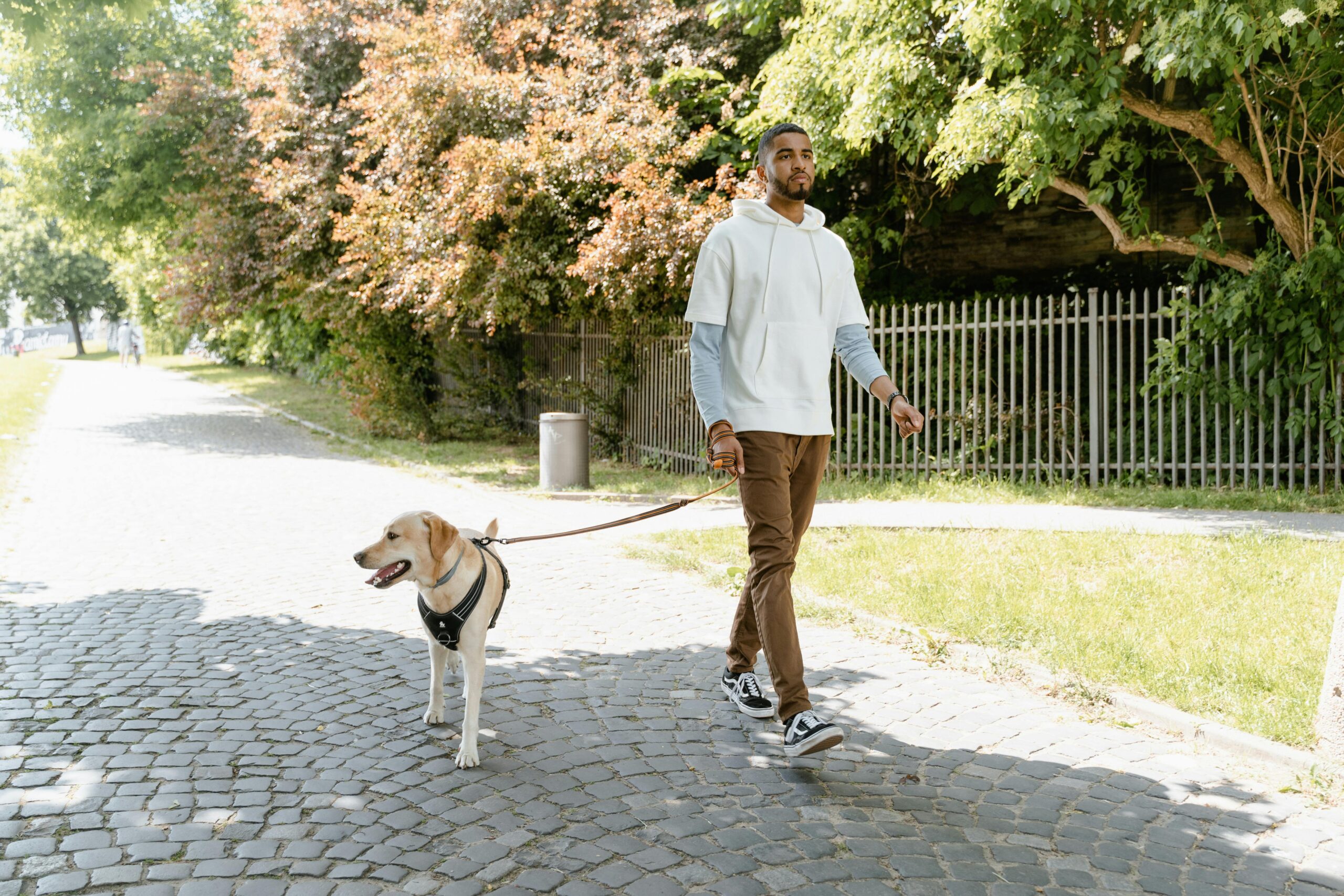
When you encounter a blind person with a guide dog on the street, many people get confused, unsure of how to behave. Following these simple rules is the best display of your respect and care.
- Do not distract the dog. This is the golden rule. Do not call to it, click your tongue, whistle, or try to pet it or give it a treat. Remember: it is at work, and the person’s safety depends on its concentration.
- Speak to the person, not the dog. If you want to ask something or offer help, address the owner directly. Ignoring the person and talking to their dog is extremely impolite.
- Do not grab the harness or lead. If you want to help the person cross the road, offer them your elbow. Never take control of the dog.
- Keep your own dog on a lead. Even if your pet is very friendly, do not let it run up to the guide dog. This can distract it from its work and cause a dangerous situation.
- Give them space. Do not stand in the team’s way. If you see them approaching, simply take a step to the side to give them enough room to manoeuvre.
- Do not be afraid. Guide dogs undergo the most rigorous selection for the absence of aggression. They are completely safe for those around them.
Conclusion: A Partnership That Changes the World
A guide dog is much more than just a trained animal. It is the result of many years of work by many people, a symbol of boundless trust and devotion. It represents the eyes, freedom, and independence for a blind person. By understanding the reality of their work and respecting their space, we are not just being polite. We are making our small but extremely important contribution to creating a safe and comfortable world for these unique teams, where a human and a dog together overcome any obstacles.