

| Height | 30–36 cm |
| Weight | 15–18 kg |
| Lifespan | 12–14 years |
| FCI group | 6 · scenthounds |
| Origin | France |
Exact ratings
Common health issues
Nutrition
The Basset Artésien Normand is a charming French hound that combines an endearing appearance with a gentle nature and a keen passion for the hunt. Cheerful and sociable, this dog gets along famously with other canines, both at home and in the field. Beyond its outstanding working qualities—confidently tracking game with a fantastic nose and a resonant bark—this breed has great potential as a family pet and companion. While its kind disposition is often paired with a stubborn streak, a common trait among many hounds, this can be easily managed with early training. To find out more about life with this unique dog, read on at Tvaryny.
With its short legs, sorrowful eyes, and long ears, this hunter is capable of stealing hearts at first sight. However, behind its melancholy facade lies a lively mind, a strong sense of independence, and a loyal heart. It makes a wonderful friend for an active family willing to dedicate time to long walks and activities that stimulate its natural instincts.
Basset Artésien Normand: Key Breed Information
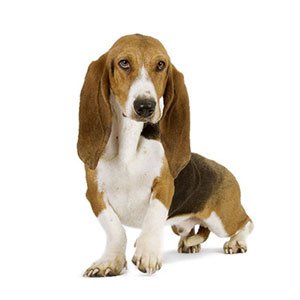
Before we delve into the details, here is a quick overview of the breed’s key characteristics in a convenient table. This will help you get a general impression of this unique dog at a glance.
| Parameter | Characteristic |
| Origin | France |
| FCI Classification | Group 6 (Scent hounds and related breeds), Section 1.3 (Small hounds). Standard №34. |
| Height at Withers | 30–36 cm (with a tolerance of +/- 1 cm) |
| Weight | 15–20 kg |
| Lifespan | 13–15 years |
| Temperament | Friendly, calm, brave, stubborn, social |
| Coat Colour | Tricolour (fawn with black saddle and white markings), Bicolour (fawn and white) |
| Physical Exercise | Moderate but regular (1-1.5 hours per day) |
| Grooming Difficulty | Low (requires regular ear cleaning) |
| Training Difficulty | Medium (requires patience and consistency) |
History of the Basset Artésien Normand Breed
The history of the Basset Artésien Normand is rooted in centuries of French hunting dogs popular among the aristocracy. The first records of short-legged hounds, or “bassets” (from the French “bas,” meaning “low”), date back to the 16th century. They were valued for their ability to slowly but persistently pursue game, navigating through dense undergrowth, which allowed hunters to follow them on foot.
The modern breed type began to take shape in the late 19th century. Two key figures in its development were Count Le Couteulx de Canteleu and Monsieur Louis Lane. They held differing views on the ideal Basset type:
- The d’Artois Type: Developed by Monsieur Lane, this type was lighter, more agile, with straight front legs. It resembled a miniature version of the ancient Artois hound.
- The Normandy Type: Count de Canteleu preferred a more massive dog, with a heavier build and bowed front legs, similar to the Basset Hound.
For a long time, these two types co-existed. However, in 1924, under the direction of Léon Verrier, a decision was made to merge them into a single breed called the Basset Artésien Normand. The new standard aimed for a utilitarian type that combined the traits of both ancestors, but with an emphasis on the straight, functional legs of the d’Artois type. The modern representative of the breed is the result of this compromise—it is significantly lighter and more agile than its massive Norman ancestors, while retaining a superb sense of smell and a passion for hunting.
What the Basset Artésien Normand Looks Like: Breed Standard
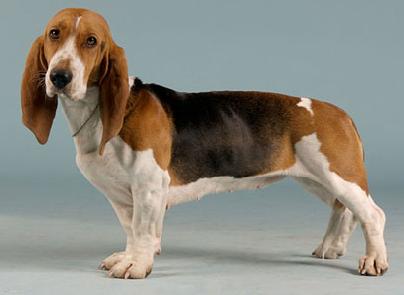
This is a long, low-slung dog that gives the impression of strength and nobility. Its appearance is entirely dictated by its function—working a scent trail through dense thickets. Let’s take a closer look at the key features of its physique.
- Head: The skull is dome-shaped and of medium width. The stop (the transition from forehead to muzzle) is well-defined. The muzzle is long and slightly convex. The lips are thick, with the upper lip significantly overlapping the lower.
- Eyes: Large, oval, and dark in colour. The expression is calm and serious, sometimes appearing a little sad, which adds to the breed’s special charm.
- Ears: Very long and set low, at eye level. They are thin, flexible, and spiral inwards, and when extended, they should reach the tip of the nose.
- Body: Elongated, with a broad and deep chest. The back is straight and strong. This build provides a large lung capacity, which is important for long pursuits of game with a voice.
- Limbs: Short and sturdy. The modern standard requires the front legs to be straight or only slightly bowed. Severely bowed legs are considered a fault. Small skin folds may be present at the wrists.
- Tail: Long, thick at the base, and tapering to the tip. When moving, the dog carries it like a sabre, never curling it over its back.
- Coat: Short, smooth, and close-lying. The colour can be one of two varieties: tricolour (fawn with a black saddle and white markings, typical of hounds) or bicolour (fawn and white).
Temperament and Character of the Basset Artésien Normand
Behind its serious exterior lies the soul of a sociable and cheerful dog. The Basset Artésien Normand is the embodiment of calmness and friendliness. It gets along wonderfully with all family members, including children, to whom it shows amazing gentleness and patience.
Its key trait is sociability. This dog was bred to work in a pack, so it coexists beautifully with other dogs and even cats, especially if raised with them. Aggression towards other animals is completely uncharacteristic for the breed. However, it’s worth remembering its hunting instincts: small household pets like rodents or birds may be perceived as prey.
At the same time, the Basset Artésien Normand is an independent thinker. Its stubbornness is legendary. Once it has picked up a scent, getting its attention on something else is nearly impossible. This trait also shows up in daily life: it’s not inclined to unquestioning obedience and often makes its own decisions. This doesn’t mean it can’t be trained, but the owner will need to demonstrate considerable patience, consistency, and ingenuity.
It is also quite “vocal.” Its clear, melodic bark is a working tool it uses to alert the hunter to a find. At home, it may use its voice to get attention or when it’s bored. This is something to consider if you live in a flat with thin walls.
Grooming the Basset Artésien Normand
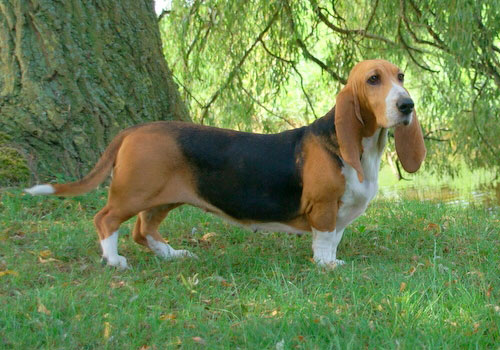
Caring for this breed isn’t complicated, but there are a few important aspects that require regular attention.
Coat Care
The Basset’s short coat doesn’t require complex grooming. A quick brush with a rubber mitt or a natural bristle brush once a week is enough to remove dead hairs and maintain its shine. During seasonal shedding (in spring and autumn), this can be done more frequently. Frequent bathing is not recommended as it can strip the skin of its natural protective layer. You should only bathe your dog when it’s particularly dirty, using a shampoo designed for short-haired breeds.
Most Importantly – Ear Care
The long, floppy ears are a hallmark of the breed but also its most vulnerable point. Poor ventilation in the ear canal creates an ideal environment for bacteria and fungi to multiply, which can lead to ear infections. Therefore, the ears require regular inspection and cleaning. Check your pet’s ears at least 2-3 times a week. If they are clean, there is no need to intervene. If there is dirt or wax, gently wipe the inner surface of the ear with a cotton pad soaked in a special ear-cleaning lotion. Never use cotton buds, as they can damage the ear canal.
Other Hygiene Procedures
- Claws: Since Bassets don’t always wear down their claws sufficiently during walks, they need to be trimmed 1-2 times a month with a special nail clipper.
- Eyes: Regularly check the eyes. Small discharge in the corners is normal and can be wiped away with a clean cloth soaked in warm water.
- Teeth: To prevent tartar buildup, regularly brush your dog’s teeth with a special toothpaste and toothbrush or provide dental chews.
Health and Typical Breed Illnesses
Training and Socialisation: How to Approach a Stubborn Intellectual?
Training a Basset Artésien Normand is a true test of patience and consistency. Their stubbornness and independence require a creative approach from their owner. The main rule is no pressure or harshness. These dogs only respond well to positive reinforcement: praise, treats, and games.
Early socialisation is key. From a young age, introduce your puppy to different people, animals, sounds, and situations. This will help them grow into a confident and well-balanced dog.
Special attention should be paid to the “Come!” command. Due to their strong hunting instinct, a Basset on a scent trail may completely ignore its owner’s calls. Therefore, it should only be let off the lead in a securely fenced area. On walks in the city or countryside, it’s better to use a long lead.
To satisfy their natural need to use their nose, engage them in scent games, nosework, or simply hide treats around the house or garden. This is a great mental stimulation that will make your dog happier and more obedient.
Nutrition: How to Properly Feed a Basset Artésien Normand?
Pros and Cons of the Basset Artésien Normand
Like any breed, the Basset Artésien Normand has its strengths and weaknesses. Prospective owners should weigh up all the pros and cons before getting one.
| ✅ Pros | ❌ Cons |
|---|---|
| Friendly and gentle nature. Gets along wonderfully with children and other animals. | Pronounced stubbornness. Can be challenging to train for beginners. |
| Low-maintenance coat. Does not require complex grooming. | Strong hunting instinct. Prone to running off if it picks up a scent. Should not be let off the lead in unsafe areas. |
| Moderate exercise requirements. Suitable for flat living as long as it gets enough walks. | Prone to “singing.” Loves to bark and howl, especially when left alone. |
| Robust health and longevity. | Requires careful ear care due to a predisposition to ear infections. |
| Comical and charming appearance. | Prone to gaining excess weight. Requires strict control over its diet. |
| Excellent sense of smell. Can be engaged in scent games and sports. | Prone to spinal problems. Needs careful management of physical activity. |
Interesting Facts About the Breed
- Despite its long history, the breed remains quite rare outside its native France.
- The name “Basset” comes from the French word “bas,” which means “low.” This directly refers to their main characteristic: short legs.
- Their sad expression is deceptive. In reality, they are very cheerful and playful dogs.
- Thanks to their incredible sense of smell, a Basset Artésien Normand can distinguish scents that a human wouldn’t even detect.
- Their long ears have a practical function: as they move along the ground, they “sweep” scents up and direct them towards the dog’s sensitive nose.
Frequently Asked Questions About the Basset Artésien Normand (FAQ)
Is the Basset Artésien Normand suitable for living in a flat?
Yes, absolutely. Thanks to their calm temperament and moderate size, they do well in a flat. The main condition is to ensure they get enough daily walks (at least 1-1.5 hours per day) with opportunities to explore the world with their nose.
Do they shed a lot?
Their shedding is moderate but constant, with two more pronounced periods in spring and autumn. Regular brushing with a rubber brush will help keep the amount of hair in your home under control.
Can this dog be left alone for a long time?
Basset Artésien Normands are very social and don’t cope well with loneliness. If left alone for extended periods, they may suffer from separation anxiety, which can manifest as destructive behaviour and loud barking or howling. This breed is best suited for families where someone is almost always at home.
What kind of game are they used to hunt?
They are traditionally used for hunting small game such as rabbits and hares, and sometimes roe deer. Their job is to find the trail, flush the animal out, and chase it while “giving tongue” (barking) in the direction of the hunter. Their slow speed allows the hunter to easily follow the dogs on foot.
How much does a Basset Artésien Normand puppy cost?
As the breed is rare in the UK, finding a puppy can be difficult. The price depends on the pedigree, the breeder’s reputation, and compliance with the breed standard. You should be prepared for a significant cost, and it may be necessary to look for a puppy from breeders abroad.
Video About the Breed
- Cheerful, good-natured, good with children
- A superb ground nose, a ringing voice
- Friendly to other dogs
- The potential of an excellent companion
- Hound stubbornness (correctable by training)
- Loud — "gives tongue" on the trail
- A strong hunting instinct
- A long back — protect from strain (IVDD)
| Basset Hound | Basset Fauve de Bretagne | Basset Bleu de Gascogne | |
|---|---|---|---|
| Height | 33–38 cm | 32–38 cm | 34–38 cm |
| Energy | 3 | 4 | 4 |
| Apartment | 3.5 | 3 | 3 |
| Beginners | 3.5 | 3.5 | 3 |
Is the Basset Artésien Normand good for a family?
Is this basset noisy?
Is the breed suitable for a flat?
FCI Standard No. 34 · Société Centrale Canine
For apartments · For kids · For beginners · Active · Smartest · Hypoallergenic · All rankings →