

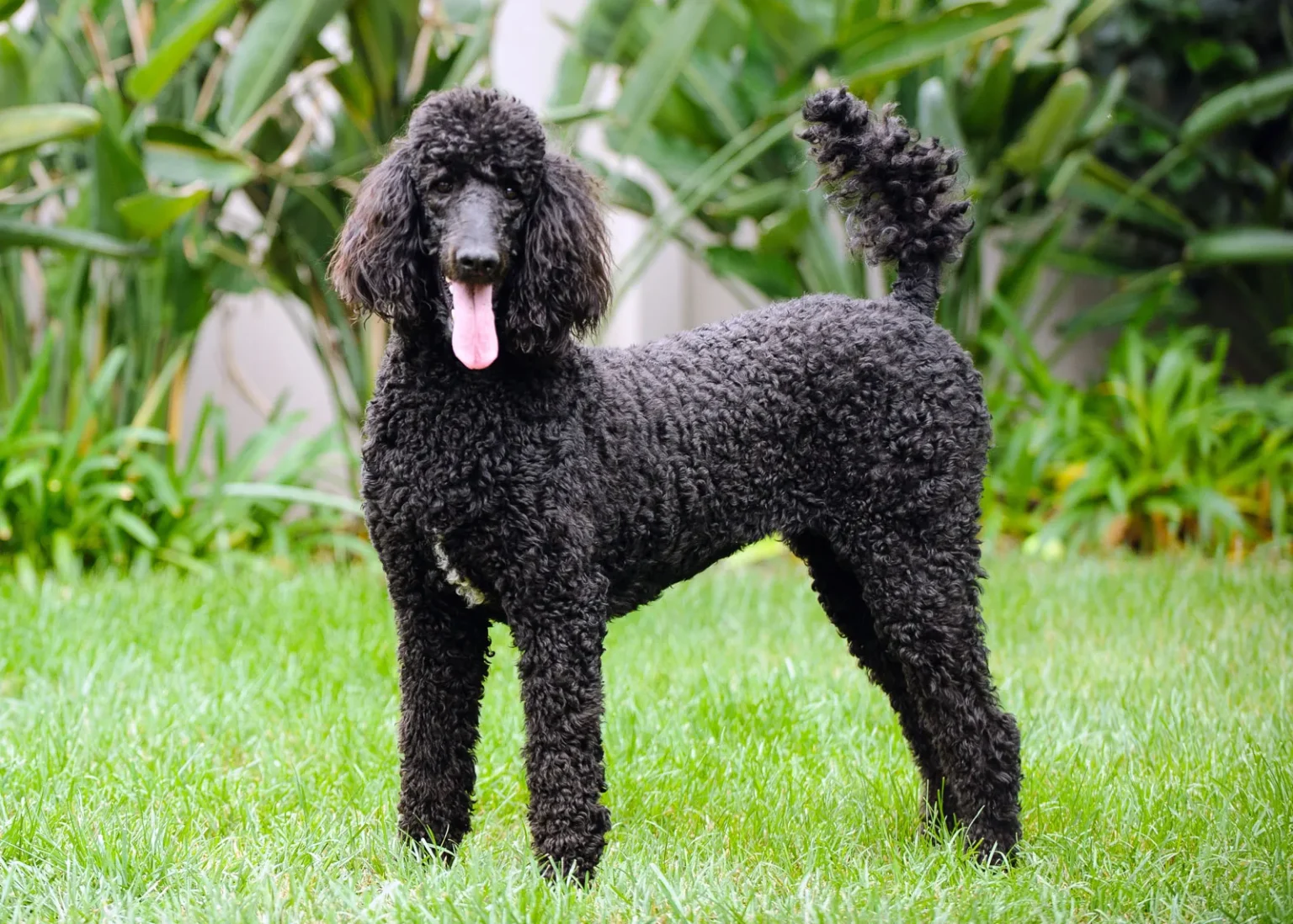
| Height | 45–60 cm |
| Weight | 20–32 kg |
| Lifespan | 12–15 years |
| FCI group | 9 · companion dogs |
| Origin | France / Germany |
Exact ratings
- Gastric torsion (bloat)
- Addison's disease
- Hip dysplasia
- Progressive retinal atrophy
- Epilepsy
A quality food for active breeds, with weight control; feed small portions (bloat risk). Grooming every 6–8 weeks.
The Standard Poodle is a descendant of various hunting dogs and the ancestor of several companion breeds. This dog, often associated with elegance and aristocracy, actually has working roots and incredibly high intelligence. The smaller varieties – the Medium, Miniature, and Toy Poodle – all stem from the Standard. They are united by their characteristic curly, solid-coloured coat and natural talent.
These cheerful family pets are always ready for fun and tricks, and they also get along splendidly with other household animals. They are not just sofa decorations but are also superb athletes and companions. You can read more about all aspects of keeping this amazing breed on Tvaryny.
The Poodle (Standard): A Brief Breed Overview
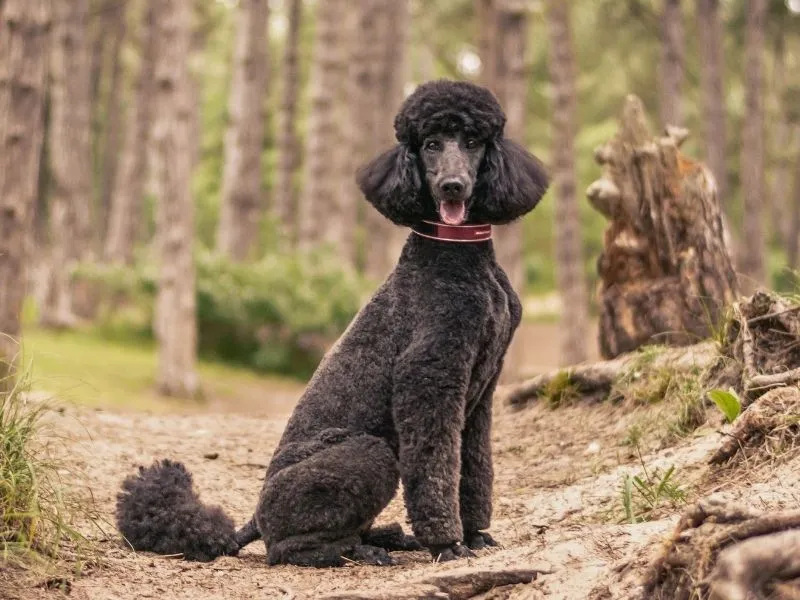
| Breed Name (Original) | Poodle (Standard) / Grosspudel |
| Origin | France (considered country of origin), Germany (roots) |
| First Mentioned | 16th century (depictions), 1954 (from info card) |
| FCI Classification | Group 9 (Companion and Toy Dogs), Section 2 (Poodles) |
| Lifespan | 12-15 years |
| Height at Withers (Standard) | 45-62 cm (usually 56-62 cm for Standard) |
| Weight | 20-32 kg (depending on height and sex) |
| Intelligence | Exceptionally high (ranks in the top 3 most intelligent breeds) |
| Energy Level | High |
| Grooming Needs | Very high |
| Shedding | Minimal (hypoallergenic coat) |
History and Origin
Although the Standard Poodle is France’s national dog today, its history is a subject of debate, with roots tracing back to Germany. The breed’s name comes from the German word “pudeln,” meaning “to splash in water.” This directly points to their original purpose. Standard Poodles were bred as water retrievers – dogs that fetched shot game (mainly ducks) from the water for hunters.
Their unique coat, now a hallmark of the show ring, had a purely practical function. The dense curls protected the dog from cold water. The famous clips, such as the “lion clip,” also arose from practical needs: hair was left on the chest and joints (to protect vital organs and limbs from hypothermia and arthritis), while the rest of the body was clipped to make swimming easier.
From Germany, the breed made its way to France, where it was highly valued for its intelligence and trainability. The French began using them not only for hunting but also in circus performances, where the Poodle’s showmanship truly shone. It was in France that the breed gained its aristocratic reputation and elegant look. They were also used for truffle hunting thanks to their keen sense of smell. In time, smaller versions were bred to serve as companion dogs.
What the Standard Poodle Looks Like: Appearance
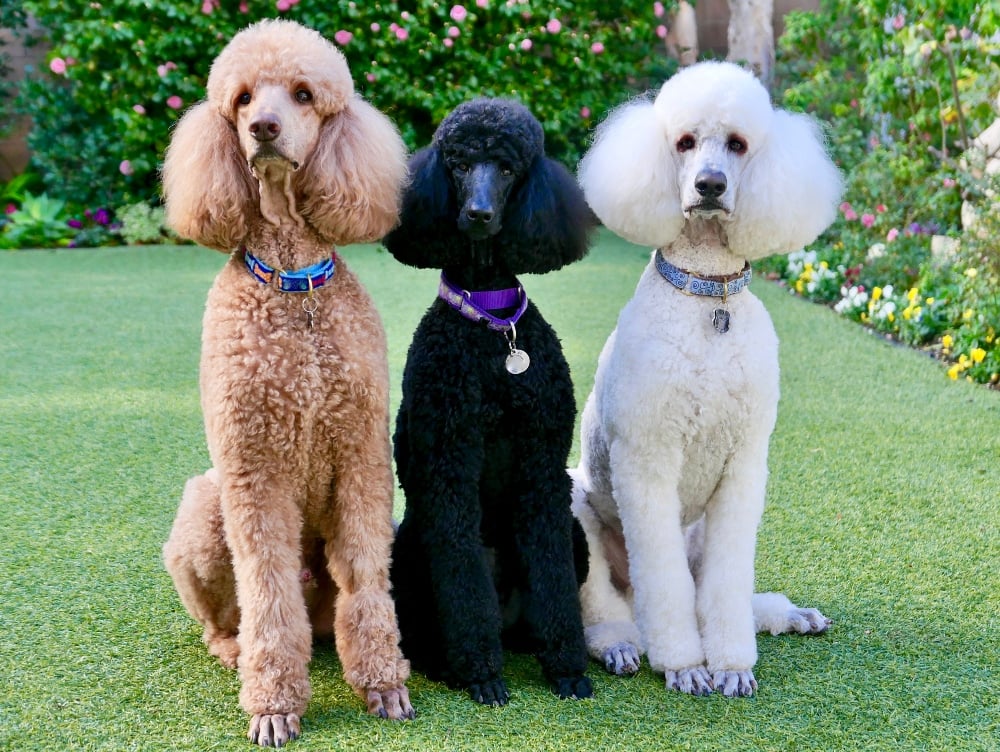
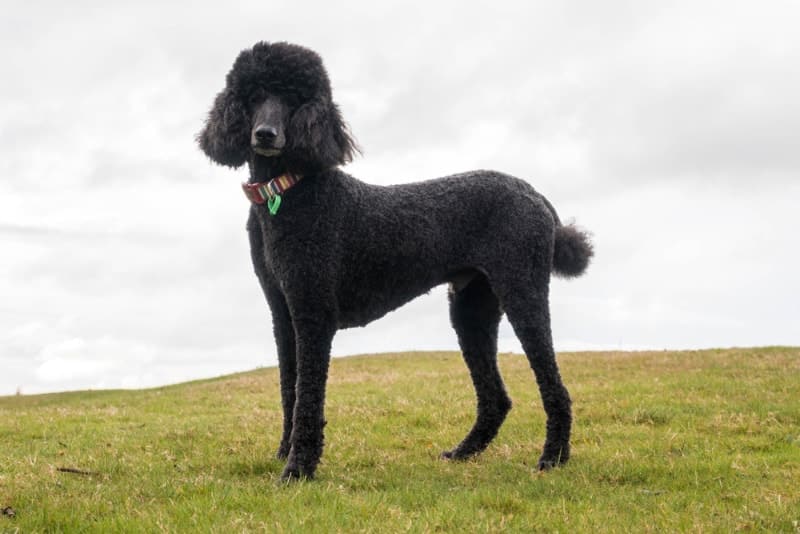
The Standard Poodle is a dog of elegant, harmonious, and proportional build. He gives the impression of being intelligent, alert, and active. His gait is light and springy. It is the largest of the four Poodle varieties.
Head and Muzzle
The Poodle has a refined, rectilinear head that is proportional to the body. The skull is slightly convex. The stop (the transition from forehead to muzzle) is slight but defined, not sharp. The muzzle is long, straight, and not snipey. The lips are dry and tight-fitting. The bite is scissor-like. The eyes are almond-shaped and set slightly obliquely. Eye colour is dark – from black to dark brown or dark amber, depending on the coat colour. The ears are long, flat, hang close to the cheeks, and are covered in dense, wavy hair.
Body and Tail
The neck is strong, slightly arched, and of medium length. The back is short and level. The loin is muscular and strong. The chest is deep and moderately wide. The abdomen is tucked up. The tail is set high. It was once commonly docked, but this is now banned in many countries, and a natural tail is the norm. The dog carries it gaily, angled slightly away from the body.
Coat and Colours of the Standard Poodle
The coat is the breed’s main distinguishing feature. It has no undercoat and is considered hypoallergenic as it barely sheds (dead hairs get trapped in the curls rather than falling out). There are two coat types:
- Curly coat: Very dense, springy, fine, and woolly. It forms even curls.
- Corded coat: Also dense and fine, but it forms characteristic cords of uniform length (at least 20 cm). This type is rarer and requires specific care.
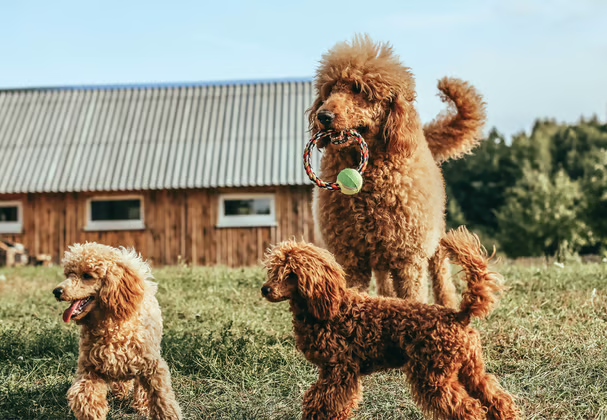
The breed standard recognises only solid (self-coloured) coats. These include: black, white, brown (a deep, warm shade), silver (grey), apricot, and red. Other colours, such as phantom, harlequin, or parti-coloured (spotted), are not recognised by the FCI standard but do exist.
Besides the Standard Poodle, there are three other FCI-recognised size varieties, which differ only in height: the Medium Poodle (35-45 cm), the Miniature Poodle (28-35 cm), and the Toy Poodle (up to 28 cm).
Character and Temperament
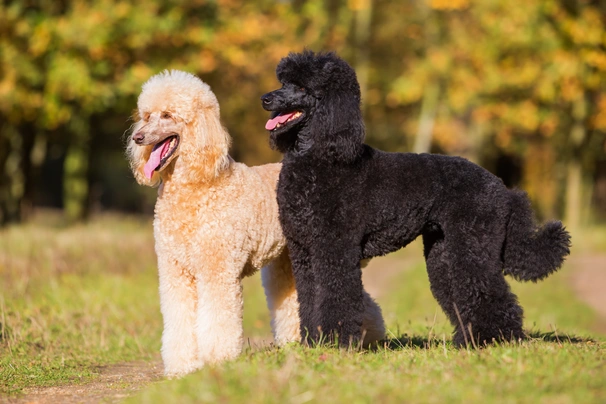
The reputation of a “circus clown” or “delicate aristocrat” is just one small part of the Standard Poodle’s complex character. First and foremost, this is an incredibly intelligent dog. In most rankings of canine intelligence, Poodles consistently take second place (after the Border Collie). This means they learn at lightning speed – both good habits and bad. They need constant mental stimulation.
The Standard Poodle is an active, playful, and devoted companion. He is very people-oriented and strives to be a full-fledged member of the family. They tolerate loneliness poorly and can suffer from seperation anxiety if left alone for long periods. This is not a dog that will be happy in a kennel or on a chain.
Thanks to their hunting past, Standard Poodles have a lot of energy, especially in their youth. They adore walks, games, swimming, and any joint activity with their owner. With proper socialisation, they get on wonderfully with children (though due to their large size, they might accidentally knock over a small child) and other pets. They can have protective instincts and be good watchdogs, alerting you to strangers with a bark, but aggression is not typical for them.
Pros and Cons of the Breed
Like any breed, the Standard Poodle has its advantages and disadvantages. It’s important to assess them soberly before deciding on such a pet.
| Advantages (Pros) | Disadvantages (Cons) |
|---|---|
| High intelligence: Easy to train, capable of complex commands. | Needs mental stimulation: Can become destructive or neurotic if bored. |
| Hypoallergenic coat: Sheds very little, a plus for allergy sufferers. | Very high grooming needs: Requires daily brushing and regular (every 4-8 weeks) professional clipping. |
| Devotion to family: Very people-oriented, loves to be the centre of attention. | Prone to separation anxiety: Hates being left alone. |
| Active and playful: Great companion for active people and families. | High energy level: Needs long daily walks and physical exercise. |
| Good with children and pets: With proper socialisation. | Prone to certain diseases: Has a list of genetic conditions (details below). |
| Elegant appearance: A dog that always turns heads. | High cost: Both the puppy and ongoing upkeep (grooming, vet). |
Care and Maintenance
Keeping a Standard Poodle is a serious commitment that requires time and financial investment, especially when it comes to coat care.
Grooming: Coat Care
This is the most challenging aspect of their care. A Poodle MUST be brushed daily. Their coat doesn’t shed, but the dead hairs get tangled in the curls, instantly creating mats. Mats don’t just look bad – they pull on the skin, causing pain, irritation, and can lead to serious skin infections. You must brush thoroughly, right down to the skin, using a special comb and a slicker brush.
In addition to daily brushing, a Poodle needs professional clipping every 4-8 weeks. This can be expensive, which is why some owners learn to clip their dogs themselves. There are countless clip options: from the practical “sporting clip” (short hair all over) to complex show clips like the “Continental” or “Scandinavian Lion.” Even if you keep your dog in a short “pet trim,” it still needs regular updating.
Poodles should be bathed with each groom, using a quality shampoo and conditioner to make brushing easier. Unlike the Maltese, whose coat is simply long, the Poodle’s curly coat requires careful drying with a high-velocity dryer while simultaneously brushing it out to prevent it from matting up again.
Eye, Ear, and Nail Care
The Poodle’s long, hanging ears create a warm, moist environment, ideal for the development of ear infections (otitis). You must regularly (once a week) inspect the ears, clean them with a special lotion, and remove the hair that grows inside the ear canal (this improves ventilation). Eyes should be wiped daily to prevent tear stains, especially on light-coloured dogs. Nails should be trimmed every 2-3 weeks if they don’t wear down naturally.
Dental Care
Poodles, especially the smaller varieties, are prone to tartar build-up and periodontal disease. Standard Poodles also need attention. Get your puppy used to having its teeth brushed from a young age with a special dog toothpaste and brush. This should ideally be done several times a week. It’s much cheaper and safer than a professional clean under anaesthetic at the vet’s later on.
Health and Common Conditions
Despite their aristocratic appearance, the Standard Poodle is generally a robust breed with a lifespan of 12-15 years. However, like many purebred dogs, they are predisposed to a number of genetically inherited conditions. Responsable breeders test their dogs for these problems, which reduces the risk of them appearing in puppies.
The most common health problems in Standard Poodles include:
- Addison’s Disease (Hypoadrenocorticism): A serious endocrine disorder where the adrenal glands don’t produce enough hormones. Symptoms can be vague (lethargy, vomiting, weight loss), making diagnosis difficult.
- Bloat (Gastric Dilatation-Volvulus or GDV): A life-threatening condition common in deep-chested dogs. The stomach fills with gas and can twist. It requires immediate veterinary intervention.
- Hip Dysplasia: Improper development of the hip joint, leading to pain and arthritis.
- Sebaceous Adenitis (SA): An autoimmune skin disease affecting the sebaceous glands. It leads to hair loss (alopecia), dandruff, and an unpleasant odour. This is likely the “hair loss” mentioned in old descriptions.
- Progressive Retinal Atrophy (PRA): A degenerative eye disease that leads to blindness.
- Epilepsy: A neurological disorder that causes seizures.
- Thyroid Problems (Hypothyroidism).
Prevention involves choosing a puppy from health-tested parents, providing a proper diet, ensuring sufficient activity, and having regular veterinary check-ups.
Training and Rearing
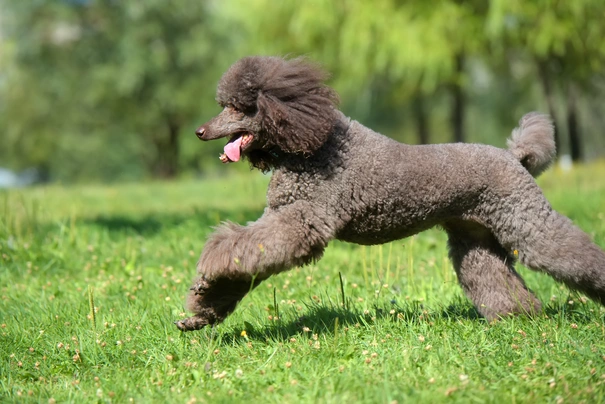
Training a Standard Poodle is both a pleasure and a necessity. Their sharp mind soaks up everything new like a sponge. They learn extremely quickly and get genuine enjoyment from the training process and interacting with their owner. Positive reinforcement – praise, treats, and games – works best.
Due to their high intelligence, they get bored quickly with monotonous repetition. Training sessions should be short, varied, and interesting. The Standard Poodle isn’t just a companion dog; it’s a working dog in an elegant “package.” They need a “job.” They achieve huge success in dog sports such as:
- Agility
- Obedience
- Freestyle (Heelwork to Music)
- Retrieving (especially from water)
- Nosework (Scentwork)
They are incredibly clever, often placing second in rankings of canine intelligence, and are eager to please their owner. This makes them excellent students, but it also means they need mental work to avoid boredom – unlike more independent companions such as the Coton de Tulear. Without mental stimulation, their intelligence can be channelled into undesirable behaviours: they’ll learn to open doors, steal food from the table, or find other ways to entertain themselves.
Exercise and Activity
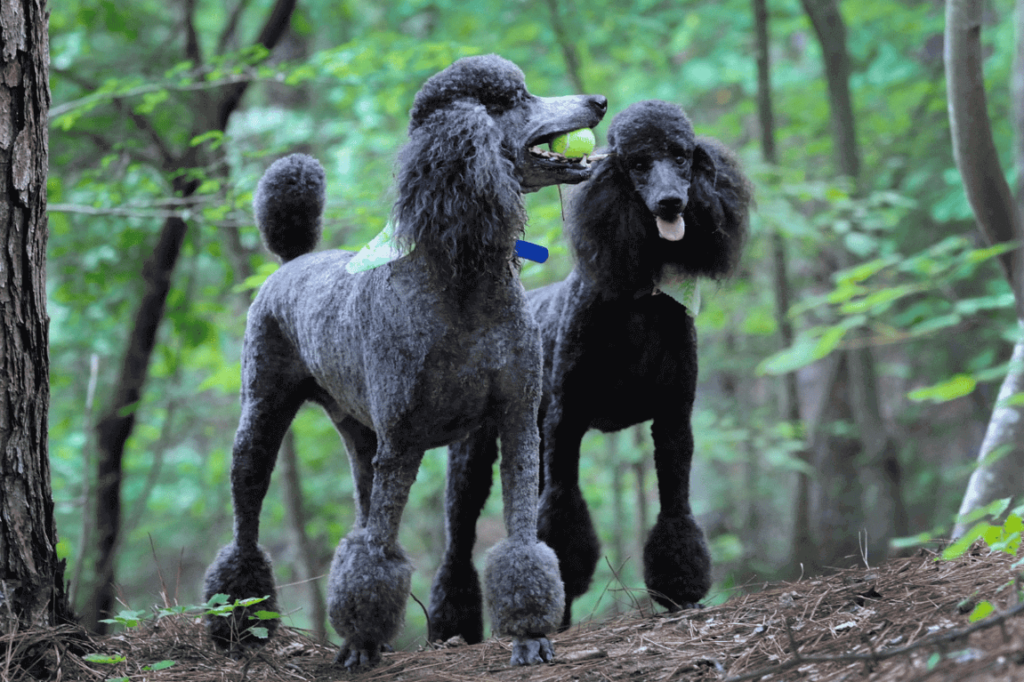
The Standard Poodle is a high-energy breed. Don’t be fooled by their sophisticated appearance. They need long daily walks (a minimum of 1-1.5 hours a day) with the opportunity to run freely in a safe area. This is in addition to shorter relief walks.
They love games of fetch, long jogs with their owner, and hiking. And, of course, swimming. Most Standard Poodles instinctively love water and are excellent swimmers. This is ideal physical exercise for them as it doesn’t put stress on their joints. Providing enough activity is the key to a calm and happy dog indoors.
Nutrition: Key Recommendations
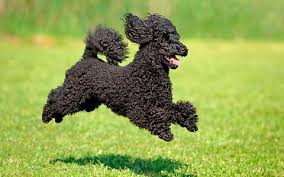
A proper diet is fundamental to a Poodle’s health and beautiful coat. You can choose either a high-quality dry food (super-premium or holistic) or a balanced natural diet (raw or home-cooked). For a Standard Poodle, it’s particularly important not to overfeed, to avoid joint problems.
On a natural diet, the base of the ration (around 50-70%) should be lean meat: beef, turkey, chicken (if no allergies), or rabbit. It’s better not to mince the meat but to cut it into chunks – this is good for their teeth and digestion. Raw meat can be scalded with boiling water. To the meat, add:
- Offal (liver, heart, stomachs) – 1-2 times a week.
- Sea fish (boneless) – instead of meat 1-2 times a week.
- Grains (buckwheat, rice, occasional oats) – around 15-25%.
- Vegetables and fruits (carrots, pumpkin, courgette, apples, greens) – around 15-20%. It’s best to give them grated or lightly steamed with a drop of oil (to help absorb fat-soluble vitamins).
- Dairy products (kefir, low-fat cottage cheese) and eggs (1-2 times a week).
Important: To avoid the risk of bloat (GDV), feed your dog 2 times a day (not one!) and never play active games or walk him immediately after eating. Let him rest for at leest an hour.
| Recommended Foods | Forbidden Foods |
|---|---|
| Lean meat (beef, turkey) | Chocolate, cocoa |
| Sea fish (boneless) | Grapes, raisins |
| Dairy (kefir, cottage cheese) | Onions, garlic (in large amounts) |
| Eggs (cooked) | Bones (especially cooked and tubular) |
| Grains (buckwheat, rice) | Sweets, baked goods, sugar |
| Vegetables (carrots, pumpkin, broccoli) | Fatty, fried, smoked food |
| Fruits (apples, bananas – in moderation) | Xylitol (sweetener) |
Interesting Facts About the Standard Poodle
- France’s National Dog. Despite its German roots, France is credited with developing the breed into what it is today, and in 1936 it was officially recognised as the national dog.
- Truffle Hunters. Thanks to their keen nose and trainability, Poodles (especially smaller ones) were used for centuries to hunt for expensive truffles.
- Circus Stars. Their intelligence and desire to please made them ideal performers. They were stars of travelling circuses all over Europe.
- War Dogs. During the World Wars, Poodles served in the military, delivering messages, locating wounded soldiers, and even guarding installations.
- The Point of Show Clips. As mentioned, the elaborate clips had a practical purpose. “Pompons” on the legs and tail protected the joints and tail tip from the cold, while the shaved portions made swimming easier.
- A Favourite of Celebrities. Poodles were beloved by many famous figures, including Elvis Presley, Marilyn Monroe, Winston Churchill, and Grace Kelly.
Frequently Asked Questions (FAQ)
Does the Standard Poodle shed a lot?
No, virtually not at all. This is one of their biggest advantages. Dead hairs get trapped in the curly coat. But this is precisely why they must be brushed daily – otherwise, this trapped hair will form mats.
Is the Standard Poodle suitable for living in a flat?
Yes, but on one crucial condition: they must get sufficient physical and mental exercise. Indoors, a Standard Poodle is usually calm and happy to lie at his owner’s feet. But if he doesn’t get to burn off energy outside, he may start to “redecorate” the flat out of boredom.
Do Standard Poodles get on well with children and other animals?
Yes, usually very well. They are playful and patient, which makes them great companions for children (always supervised, of course, as they are large dogs). They also co-exist peacefully with other dogs and cats, especially if they are raised together or have been properly socialised.
How much does a Standard Poodle cost, and what is its upkeep?
But the puppy price is just the beginning. The main ongoing expense is grooming. Add to this high-quality food, vet check-ups, and training costs. This is a breed with high maintenance costs. Expect to wait: established breeders have their litters spoken for well in advance.
Video About the Breed
- Very clever, learns easily
- Barely sheds (often for allergy sufferers)
- Athletic and hardy
- A sensitive, devoted companion
- Needs grooming every 6–8 weeks
- The mind demands constant work
- Risk of gastric torsion
- Can grow bored when alone
| Medium Poodle | Lagotto Romagnolo | Portuguese Water Dog | |
|---|---|---|---|
| Height | 35–45 cm | 41–48 cm | 43–57 cm |
| Energy | 4 | 4 | 4.5 |
| Apartment | 4 | 3.5 | 2.5 |
| Beginners | 4 | 3.5 | 3 |
Does the poodle suit allergy sufferers?
How clever is the Standard Poodle?
Does the poodle need a lot of care?
FCI Standard No. 172 · The Kennel Club
For apartments · For kids · For beginners · Active · Smartest · Hypoallergenic · All rankings →