

| Height | 23–33 cm |
| Weight | 3.5–5.5 kg |
| Lifespan | 13–15 years |
| FCI group | 9 · companion and toy dogs |
| Origin | China / United Kingdom (standard) |
Exact ratings
Common health issues
Nutrition
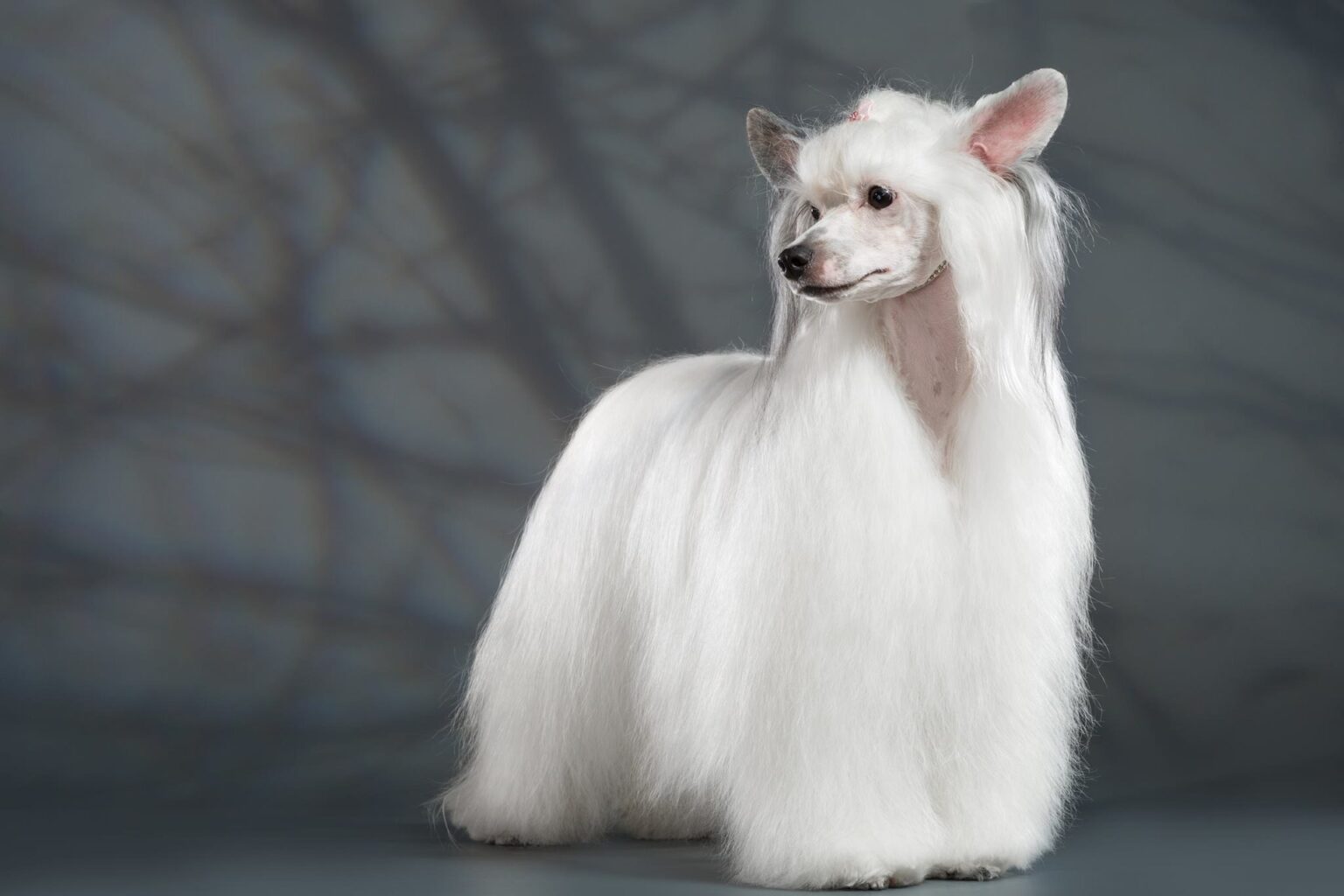
The Powderpuff Chinese Crested Dog is a tiny toy breed known for its elegant build and long, thick coat. They require significant grooming and a great deal of human attention, finding the lack of it deeply distressing. These gentle companions do not cope well with changing owners in adulthood and thrive on being constantly in their person’s company. They will delight a family not only with their beautiful appearance but also with walking on their hind legs or other tricks you teach them. The meticulous care this fluffy little one needs is rewarded by its complete devotion to its favourite owner. More on this at Tvaryny.
Chinese Crested Dog (Powderpuff): A Brief Breed Overview
| Characteristic | Details |
| Origin | China (possibly Africa or Mexico) |
| Year of Recognition (FCI) | 1971 |
| Lifespan | 12-14 years (sometimes up to 16) |
| Height at Withers (Male) | 28-33 cm |
| Height at Withers (Female) | 23-30 cm |
| Weight | 2-6 kg (standard doesn’t specify exact weight, but it should not exceed 5.5 – 6 kg) |
| Coat Type | Long, soft, double (with undercoat) |
| Colour | Any colour or combination of colours |
| Temperament | Affectionate, playful, devoted, sensitive |
| Intelligence | High |
| Grooming Needs | Very high |
| Activity Needs | Medium (daily walks and playtime are sufficient) |
History of the Breed
Although the breed’s name points to its territory of origin, England should be recognised as the homeland for the revival and standardisation of the nearly extinct Powderpuff. These tiny dogs were brought there from China around 1800. There is a theory (based on archaeological data) that Crested dogs first came to China from Mexico or Africa. It’s believed they descend from African hairless dogs, which Chinese traders took on their ships to hunt rats. It was via these ships that the dogs spread throughout the world.
Interestingly, Powderpuffs are born in the same litter as the Hairless variety – so it’s difficult to determine the type of the future puppies before they are born. For centuries, Powderpuffs were not valued as highly as their exotic hairless siblings. They were often culled, considered an ‘unsuccessful’ variant. It was only thanks to enthusiasts like the American breeder Debora Wood and her ‘Crest Haven’ kennel that the Powderpuff began to gain recognition in the mid-20th century. She saw their beauty and importance to the gene pool. Today, Powderpuffs are fully-fledged and beloved representatives of the breed at shows and in homes worldwide.
Genetics: Why Powderpuffs and Hairless Dogs Are One Breed
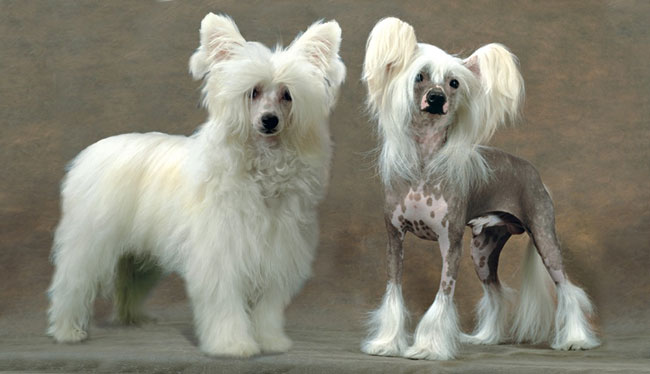
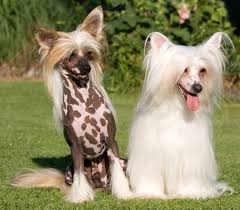
Understanding the difference between the Powderpuff and Hairless varieties lies in genetics. A dominant gene, which we’ll call ‘H’, is responsible for hairlessness. A recessive gene, ‘h’, is responsible for having a coat.
- Hairless Dog (Hh): Has one gene for hairlessness and one for a coat. This is a heterozygous state. The hairless gene dominates, so the dog is mostly bald (with a crest, ‘socks’, and a plume on the tail).
- Powderpuff Dog (hh): Has two recessive genes for a coat. This is a homozygous state. As there is no dominant ‘H’ gene, the dog is born fully covered in a soft, long coat.
- Lethal Gene (HH): A state where a puppy inherits two dominant hairless genes is lethal. Such embryos usually die in the womb.
This means that Powderpuffs are absolutely essential for the healthy breeding of Chinese Crested Dogs. They do not carry the ‘lethal’ gene in a double copy and are the genetically sound ‘foundation’ of the breed. Mating two Hairless dogs (Hh x Hh) will statistically produce 50% Hairless puppies, 25% Powderpuffs, and 25% non-viable embryos (HH). Mating a Hairless (Hh) and a Powderpuff (hh) yields the healthiest litter with no lethal combinations: 50% Hairless and 50% Powderpuffs.
Therefore, if you see a Chinese Hairless dog, know that there are definitely Powderpuff ancestors in its pedigree, and fluffy siblings may have been born in its litter.
What Does a Chinese Crested Powderpuff Look Like?
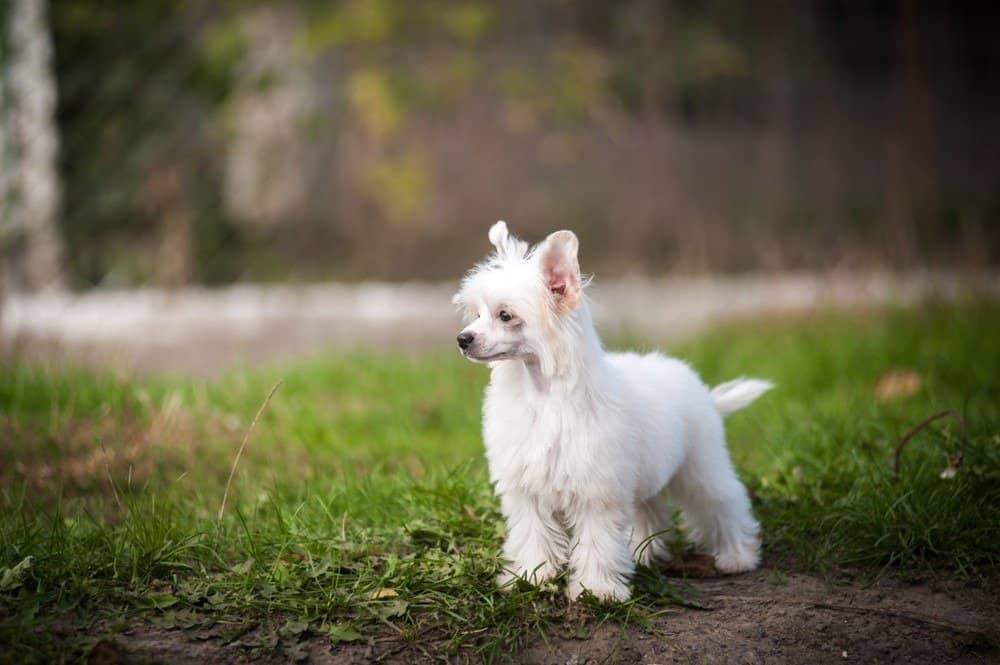
Unlike its hairless relative, the Powderpuff looks like a classic small, long-haired dog and is often confused with other breeds. However, beneath the long coat lies the same refined body structure.
This is a small, exquisite dog with an elongated head, a flat muzzle, and wide-set dark eyes resembling black olives. For Powderpuffs, unlike the Hairless variety, both pricked (upright) and drop (hanging) ears are permissible. Usually, if they are pricked, they are large in relation to the dog’s head. Hairless dogs must almost always have pricked ears (sometimes they are cropped or taped in puppyhood, though cropping is illegal in the UK).
The breed is distinguished by slender ‘hare feet’ with fine pasterns. This means their toes are longer than most dogs’, giving the paw a particular elegance. The body is slightly longer than the height at the withers. There are two body types: ‘deer type’ – lighter, with a finer bone structure, and ‘cobby type’ – sturdier, with a stronger frame. Both types are acceptable.
The long tail is carried low, but rises up in a sickle shape when the dog is in motion. Its tapered tip is adorned with a long plume of hair. At the same time, any excess hair (feathering) on the neck is not permitted by the standard.
The main feature is the coat. The Powderpuff has a double coat: a long, straight, soft, and silky outer coat, and a short, soft undercoat. This coat covers the entire body. It doesn’t ‘shed’ in the conventional sense (like a German Shepherd, for example), but dead hairs fall out and get trapped in the undercoat, which demands daily brushing to prevent mats.
Character: Temperament and Behaviour
This dog is simply made for human companionship, without which it can suffer greatly and bark from sorrow. The Powderpuff is loyal to all members of the family it lives with – however, it usually chooses one or two favourite people whom it will adore. It is devoted and extremely affectionate, finding separation from its owner and the need to adapt very difficult. This is a true ‘velcro dog’ that wants to be by your side 24/7.
This fine-boned little dog greets strangers friendly, if properly socialised. If you keep such a pet away from new people and don’t accustom it to different places, the Powderpuff will grow up to be timid and shy. Early socialisation is key for this breed.
They get along well with other dogs and cats, especially if they grew up together. Their prey drive is almost non-existent. They can be excellent companions for other small dogs, such as the Petit Brabancon. However, due to their fragile build, they are not recommended for families with very young or boisterous children who might accidentally injure the dog.
Chinese Cresteds are intelligent dogs, but they possess a certain stubbornness characteristic of primitive breeds. They learn quickly when they see the point (usually for treats), but they also learn just as quickly how to manipulate their owners. Their sensitivity means they react badly to shouting or harsh training methods.
Pros and Cons of the Breed
Before getting such an exotic, albeit fluffy, friend, it’s important to weigh all the pros and cons.
| Pros | Cons |
|---|---|
| Low shedding: Despite the long coat, they shed very little. | Very high grooming needs: Requires daily brushing without fail. |
| Hypoallergenic: Considered one of the better breeds for allergy sufferers (though no 100% guarantee). | Prone to separation anxiety: Hates to be left alone. |
| High intelligence: Easily learns tricks and commands. | Fragile build: Not suitable for homes with small children or large dogs. |
| Devotion: Extremely attached to their owner. | Prone to dental problems: Needs frequent teeth cleaning. |
| Ideal companion: Perfectly suited for flat living. | Tendency to bark: Can be noisy if bored or anxious. |
| Friendliness: Good with other pets. | Needs weather protection: Gets cold easily, despite the coat. |
How to Care for a Powderpuff’s Coat
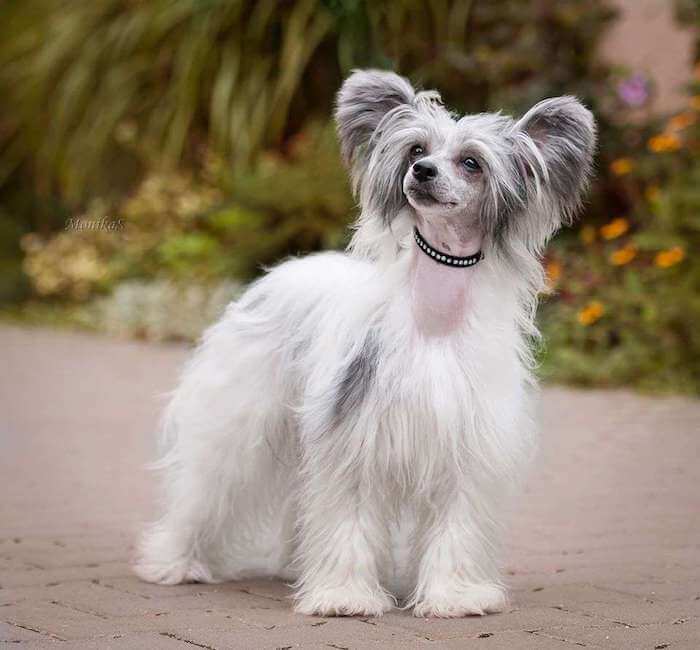
It’s well known that the difficulty of grooming often increases as the size of the breed decreases. The purpose of toy dogs is to please the eye, and their appearance demands daily procedures. Grooming is the most challenging aspect of keeping this variety.
Notably, Chinese Crested dogs do not shed seasonally. Hairs that fall out get caught in the undercoat and, if not brushed out, instantly form mats. Mats pull at the skin, causing pain, irritation, and even infections. Therefore, daily brushing is mandatory.
- Daily Brushing: You will need a brush with long metal pins (a pin brush) and a metal comb with varying teeth spacing. You must thoroughly brush the entire coat from root to tip, paying special attention to areas behind the ears, under the armpits, and on the legs.
- Bathing: They need to be bathed quite frequently – every 2-4 weeks, or as needed. Use a quality moisturising shampoo and always follow with a conditioner to keep the coat manageable.
- Clipping (Grooming): Many owners prefer to clip their Powderpuffs to make care easier. A popular clip is the ‘pony clip’, where the body is clipped short, leaving long hair on the head (‘mane’), legs (‘socks’), and tail. Some also shave the muzzle to keep it clean, similar to a Poodle.
- Teeth Cleaning: This is an extremely important ritual. Due to genetic traits (linked to the hairless gene still in their lineage), Powderpuffs are prone to weak teeth and rapid tartar build-up. Brushing their teeth with special toothpaste needs to be done daily, or at least 3-4 times a week.
Health: Typical Illnesses and Prevention
Training and Socialisation
Members of this breed are easy to teach commands and various tricks. This is helped by their innate desire to please their owner – if a Powderpuff senses your joy at a completed task, it will try to delight you with it again and again. They are sensitive to intonation and react poorly to shouting. Only positive reinforcement (treats, praise) will yield results.
Such a pet is taught not only ‘circus’ skills but also more mundane ones – like using an indoor potty tray or pad. This delicate toy dog can struggle with going outside in very cold or hot weather, so an “indoor toilet” is often a necessity. However, this does not replace the need for daily walks for socialisation.
Early socialisation is critically important. Without it, Powderpuffs grow up to be fearful, nervous, and yappy. From a young age, the puppy must be introduced to different people, sounds, surfaces, and other calm dogs. Thanks to their intelligence and playfulness, Powderpuffs excel in dog sports like agility, freestyle (doggy dancing), and rally obedience. Like the Maltese, they simply adore being the centre of attention and performing tricks.
Feeding: Key Recommendations
Interesting Facts About the Chinese Crested Dog
- They are the ‘cats’ of the dog world. Powderpuffs (and Hairless) love heights. They often climb onto the backs of sofas and armchairs to observe the world from above, just like cats.
- They use their paws like hands. Many owners note that Chinese Cresteds often ‘hug’ their owners with their paws or hold toys and treats in their front paws, manipulating them deftly.
- Powderpuffs were ‘hot water bottles’. In ancient China, Hairless dogs were used as living hot water bottles for sick people. But the Powderpuffs, unappreciated at the time, often served as rat hunters on ships.
- Champions of ‘ugliest dogs’. Although Powderpuffs are the epitome of elegance, their Hairless siblings are constant participants and winners of the ‘World’s Ugliest Dog Contest’. This has brought the breed unexpected fame.
- Celebrity Owners. The breed became very popular thanks to celebrities. One of the most famous breeders was the burlesque queen Gypsy Rose Lee.
Frequently Asked Questions (FAQ)
Does the Powderpuff shed a lot?
No. This is one of their biggest advantages. They shed practically no hair in the traditional sense. Dead hair stays in the coat and is removed during daily brushing. If they are not brushed, this hair forms mats.
Is it true they are hypoallergenic?
No dog is 100% hypoallergenic, as the allergy is caused not by the hair itself, but by a protein found in saliva, urine, and dead skin cells (dander). However, because Powderpuffs shed so little, they spread far fewer allergens around the home. They are often recommended for allergy sufferers.
Do they need a coat in winter?
Yes. Despite their long coat, they have a very thin undercoat (or almost none) and no layer of body fat. They get cold very quickly. In cold, damp, or windy weather, they absolutely need a warm coat or snowsuit.
Powderpuff or Hairless – which to choose?
This is a choice between ‘bad’ and ‘even worse’ grooming. The Powderpuff requires daily, sometimes hour-long, brushing. The Hairless dog requires daily skin care: washing, moisturising with creams, sun protection (suncream), acne treatment, and protection from the cold (clothes). Many experienced owners say that caring for a Powderpuff’s coat is actually easier than caring for the sensitive skin of a Hairless dog.
Are they difficult to train?
No, but they require a special approach. They are intelligent and want to please, but are very sensitive. Harshness or shouting will cause them to ‘shut down’ and refuse to cooperate. They respond wonderfully to play-based methods and positive reinforcement.
Video About the Breed
- Affectionate, devoted, people-oriented
- Clever, easily learns tricks
- Ideal for a flat
- Unlike the hairless — protected by a coat
- Feels a lack of attention and solitude keenly
- The long double coat needs daily care
- Fragile — take care with small children
- Copes poorly with a change of owner as an adult
| Chinese Crested (hairless) | Papillon | Maltese | |
|---|---|---|---|
| Height | 23–33 cm | 20–28 cm | 20–25 cm |
| Energy | 3 | 3.5 | 3 |
| Apartment | 5 | 5 | 4.5 |
| Beginners | 3.5 | 4 | 4 |
How does the Powderpuff Chinese Crested differ from the hairless?
Is the Powderpuff hard to groom?
Is the breed suitable for a flat and a novice?
FCI Standard No. 288 · The Kennel Club
For apartments · For kids · For beginners · Active · Smartest · Hypoallergenic · All rankings →