

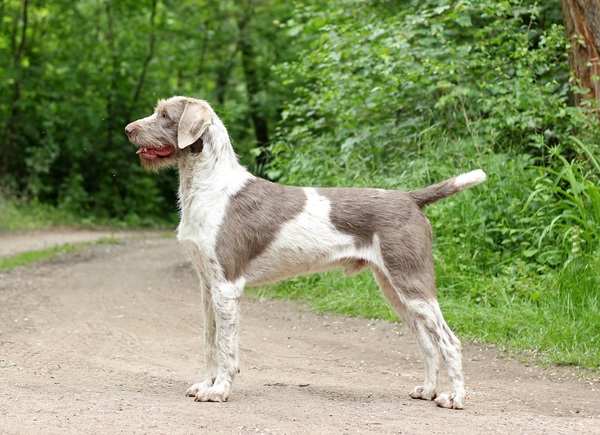
| Height | 57–68 cm |
| Weight | 25–35 kg |
| Lifespan | 12–14 years |
| FCI group | 7 · pointing dogs |
| Origin | Slovakia |
Exact ratings
Common health issues
Nutrition
Elegant yet robust, with intelligent amber eyes and a distinctive “beard,” the Slovakian Rough-haired Pointer (Slovenský Hrubosrstý Stavač) is a true gem for hunting dog enthusiasts. This versatile canine feels equally at home in the field, forest, and water, showcasing exceptional stamina and a passion for its work. Developed in the latter half of the 20th century, this breed has inherited the best traits of its ancestors, evolving into a reliable hunting partner and a loyal family companion. We’ll delve into all aspects of this unique breed further on Tvaryny.
The blood of the German Wirehaired Pointer manifests in its wiry coat, forming the characteristic beard that protects it from harsh weather and thorny thickets. From the Weimaraner, it inherited an aristocratic appearance, grace, and an incredible silvery-gray coat. And from the Bohemian Wirehaired Pointing Griffon (Český Fousek), it gained tireless energy, an excellent sense of smell, and a biddable nature. This combination of qualities makes the Slovakian Pointer not just a hunter but also a wonderful family dog, highly trainable and deeply devoted to its human companions.
Slovakian Rough-haired Pointer: A Quick Breed Overview
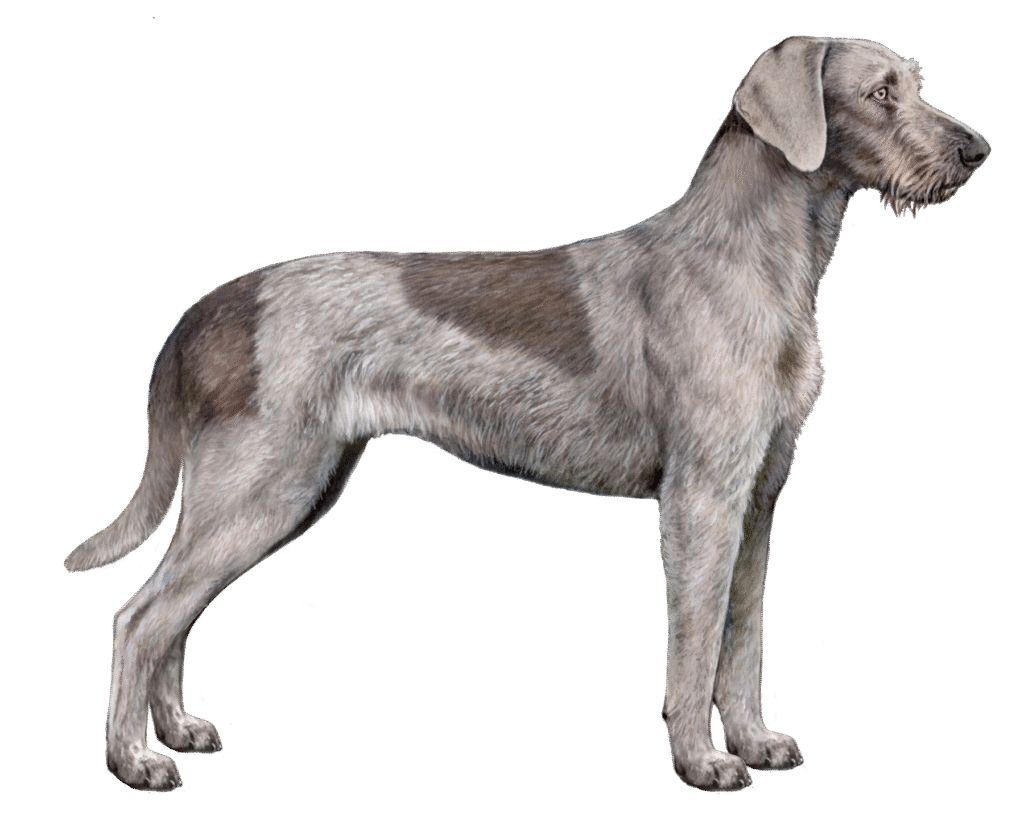
| Breed Name | Slovakian Rough-haired Pointer (Slovenský Hrubosrstý Stavač), Slovakian Wirehaired Pointer |
| Country of Origin | Slovakia |
| Time of Origin | 1950s |
| FCI Recognition | 1983 (Provisional), 1995 (Full), Group 7, Section 1.1 |
| Lifespan | 10-14 years |
| Height at Withers | Males: 24.5-27 inches (62-68 cm) Females: 22.5-25 inches (57-64 cm) |
| Weight | Males: 55-77 lbs (25-35 kg) Females: 44-66 lbs (20-30 kg) |
| Temperament | Energetic, loyal, intelligent, biddable, highly trainable, family-friendly |
| Purpose | Versatile gundog (pointer, retriever), companion |
| Activity Level | High |
| Grooming Needs | Moderate |
History of the Slovakian Rough-haired Pointer
The history of this relatively young breed is closely linked to the name of Slovak cynologist Koloman Slimák. After World War II, there was a need to create a versatile hunting dog perfectly suited to the climatic and landscape conditions of Slovakia: a dog that could work in fields, dense forests, and water, track game, point, and retrieve. Most representatives of this small breed are owned by hunters, although Slovakian Wirehaired Pointers are also pleasant household pets.
Work on developing the breed began in the 1950s. Three key breeds formed the basis for creating this new dog:
- Weimaraner: From this breed, the Slovakian Pointer inherited its elegant build, stamina, characteristic gray coat, and excellent hunting instincts. Interestingly, both short-haired and long-haired Weimaraners were used in the selection process.
- Bohemian Wirehaired Pointing Griffon: This breed passed on its rough, water-repellent coat, tireless nature, and superb working qualities to the new dog, especially in scent work.
- German Wirehaired Pointer: To solidify the coat type and enhance its protective properties, German Wirehaired Pointer blood was introduced into the breeding program. This added even greater versatility and resilience to harsh conditions.
The result of many years of selective breeding was a dog with desirable qualities: robust, hardy, with a characteristic wiry gray coat and innate hunting talents. The breed was provisionally recognized by the Fédération Cynologique Internationale (FCI) in 1983 and gained full recognition in 1995 under the name “Slovenský Hrubosrstý Stavač.” While the breed remains quite rare outside its homeland, it has gained popularity among hunters in the Czech Republic, France, Great Britain, and Scandinavia.
What Does a Slovakian Rough-haired Pointer Look Like: Breed Standard
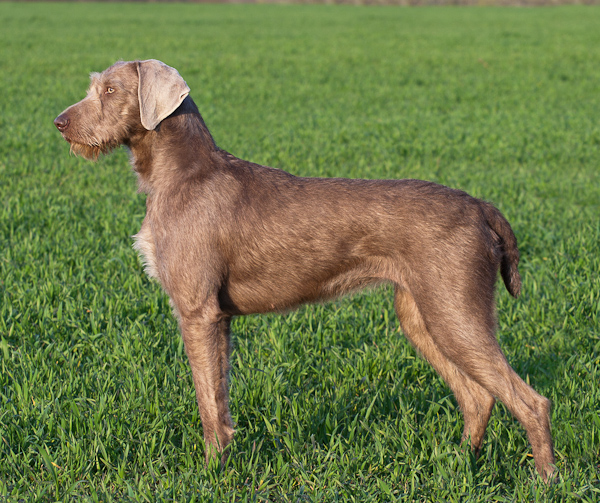
The Slovakian Pointer is a noble-looking dog, with a strong but not heavy build. It combines strength, speed, and elegance. Its appearance speaks to its ability for prolonged work in challenging environments.
Head and Muzzle: The head is lean, long, and proportionate to the body. The skull is slightly domed, with a smooth transition from forehead to muzzle. The muzzle is broad and rectangular. A distinctive feature is the “beard” and “mustache” made of wiry hair, giving the dog a serious expression.
Eyes: Almond-shaped, intelligent, and penetrating. Puppies have bright blue eyes, which change to amber or light brown with age. A darker eye shade is undesirable.
Ears: Pendulous, rounded, set above eye level. They lie close to the cheeks and are covered with shorter, softer hair.
Body: Slightly elongated, with a well-defined wither and a straight, strong back. The chest is deep and broad, providing ample room for lungs and heart. The belly is moderately tucked up.
Tail: Set fairly high, thick at the base, and tapering to the tip. When at rest, the dog carries it low; in motion, it is held horizontally. Historically, tails were often docked to about half their length, but this practice is now prohibited in many countries.
Coat and Color: The coat is a key feature of the breed. It consists of a dense, soft undercoat that protects against cold, and harsh, straight guard hairs about 1.5 inches (4 cm) long. On the muzzle, the hair forms a beard and mustache, and over the eyes, thick eyebrows. The primary color is gray, ranging from silvery-gray to mouse-gray. White markings on the chest and paws are permissible. Gray coloration with patches or ticking (roan) is also possible.
Temperament: Character and Behavior
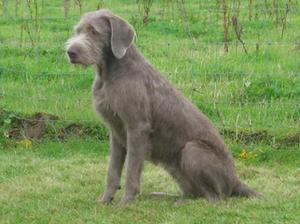
The Slovakian Wirehaired Stavač (another name for the breed), thanks to its amenable nature, is suitable for both experienced owners and novices willing to dedicate time to training and physical activity. This is not a couch potato dog but a true athlete who needs an active lifestyle. They are generally easy to manage, and the dog will gladly perform commands.
Breed members are very people-oriented and form strong bonds with their families. They do not cope well with loneliness and can suffer from separation anxiety if left alone for extended periods. This is a companion and family pet that is good with children – even when “out of sorts,” they won’t refuse to play with them. However, as with any dog, interactions with young children should be supervised.
They may be somewhat reserved with strangers but without aggression. They generally get along well with other dogs, especially with proper socialization from an early age. Their hunting instinct may manifest in their behavior towards cats and other small animals, so cohabitation requires careful supervision and gradual introduction.
Pros and Cons of the Breed
| Pros | Cons |
|---|---|
| High intelligence and trainability: Easily learn commands and tricks. | Requires high physical activity: Not suitable for inactive individuals. |
| Loyalty and family-oriented: Makes a wonderful companion. | Can suffer from loneliness: Dislikes being left alone for long periods. |
| Versatile hunting qualities: Performs in all conditions. | Strong hunting instinct: Needs control on off-leash walks. |
| Friendly with children and other dogs (with socialization). | Needs space: Ideal for living in a house with a yard. |
| Relatively low-maintenance coat care. | Rare breed: May be challenging to find a puppy. |
| Robust health and stamina. | Prone to ear infections due to ear structure. |
Care and Upkeep
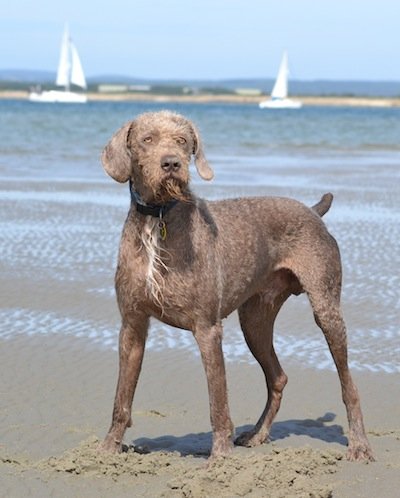
When preparing to get a Slovakian Wirehaired Pointer, consider the issue of open space. Representatives of this breed easily adapt to living in a large apartment, but only with daily, long, and intense walks. A private house with a securely fenced yard would be an ideal option for them.
Coat Care
The wiry coat of the Slovakian Pointer doesn’t require complex care but does need regular attention. Brushing the dog once or twice a week with a special brush or furminator is sufficient to remove dead hairs and undercoat. This helps prevent matting and keeps the skin healthy. Bathe your dog only as needed. Frequent washing can damage the skin’s protective oily layer. After walks in nature, always inspect the coat for ticks and other external parasites.
Ears, Eyes, Claws
Pay special attention to the cleanliness of your Slovakian Pointer’s ears. Due to their pendulous shape, ventilation is restricted, creating favorable conditions for bacteria and fungi to thrive. Regularly inspect and clean the ears with a specialized lotion. Eyes also require periodic inspection; if necessary, they can be wiped with a clean cloth moistened with chamomile tea. Claws should be trimmed every 3-4 weeks if they don’t naturally wear down on pavement.
Physical Activity
This is a crucial aspect of caring for the breed. The Slovakian Pointer needs at least 1.5-2 hours of vigorous exercise daily. This can include:
- Long walks or jogs;
- Swimming (most members of the breed adore water);
- Games of fetch with a ball or frisbee;
- Dog sports: agility, coursing, bikejoring;
- Hunting training and field work.
Insufficient physical and mental stimulation can lead to destructive behavior, excessive barking, and other problems.
Training and Socialization
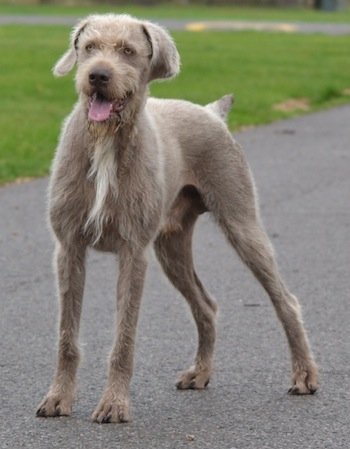
The calm and biddable Slovakian Pointer is easily trained thanks to its high intelligence and desire to please its owner. Positive reinforcement methods work best: praise, treats, and games. Harshness and physical punishment can lead to a loss of trust. Its training methods share much in common with approaches for breeds like the Saint-Germain Pointer or the Pudelpointer, which are also highly intelligent gundogs.
Early socialization is extremely important. From puppyhood, introduce your dog to various people, animals, sounds, and situations. This will help raise a confident and well-balanced doggo. Their high working qualities require additional training for feathered game, and their behavior benefits from a general obedience course. A properly prepared dog will become a loyal companion and a multi-functional aide for the hunter.
Health of the Slovakian Rough-haired Pointer: Typical Diseases
Nutrition: Key Recommendations
Interesting Facts About the Breed
- “The Gray Ghost”: Thanks to its coloring, which allows it to blend into the terrain, and its quiet, focused working style, the Slovakian Pointer is sometimes called “the gray ghost” of the Slovak forests.
- Blue-Eyed Puppies: One of the breed’s most charming features is that all puppies are born with bright blue eyes. The color changes to the characteristic amber as they mature.
- A Rare Treasure: Despite its exceptional qualities, the breed remains quite rare. The largest population is concentrated in Slovakia and the Czech Republic.
- More Than Just a Hunter: Thanks to their keen sense of smell and stamina, some members of the breed are successfully used in search and rescue operations.
Frequently Asked Questions About the Breed (FAQ)
Is the Slovakian Rough-haired Pointer suitable for apartment living?
Yes, but only if the owner is prepared to provide the dog with daily long and intense physical activity (at least 2 hours). Without sufficient activity, the dog will suffer and may start to become destructive.
How does the Slovakian Pointer get along with children?
Usually, very well. They are patient and friendly dogs who love to participate in family games. However, any interaction with young children should always be supervised by adults.
Does this breed shed a lot?
Shedding is moderate and seasonal. Regular brushing (1-2 times a week) helps keep the amount of hair in the house under control.
Can this dog be kept with a cat?
It’s possible if they grow up together from a young age. Otherwise, their strong hunting instict may become a problem. Introductions should be gradual and supervised.
How much does a Slovakian Rough-haired Pointer puppy cost?
Due to the breed’s rarity, the price for puppies can be quite high. It depends on the pedigree, the reputation of the breeder, and geographical location. A cheap puppy sold without papers almost always costs more in the end: the screening the parents never had shows up later at the vet.
Video About the Breed
- A versatile pointer: field, forest, water
- Hardy, with a superb nose
- Obedient, easy to train
- Devoted, good with children
- A very high energy level — not for an apartment
- Needs scent work or hunting
- The wiry coat needs stripping
- Can be rough with small children (energy)
| German Wirehaired Pointer | Český fousek | Weimaraner | |
|---|---|---|---|
| Height | 57–68 cm | 58–66 cm | 57–70 cm |
| Energy | 4.5 | 4.5 | 4.5 |
| Apartment | 2 | 2 | 2 |
| Beginners | 2.5 | 3 | 2.5 |
What breeds does the Slovakian Wirehaired Pointer descend from?
Is the breed suitable for an apartment?
Is this pointer good with children?
FCI Standard No. 320 · Slovenská kynologická jednota
For apartments · For kids · For beginners · Active · Smartest · Hypoallergenic · All rankings →