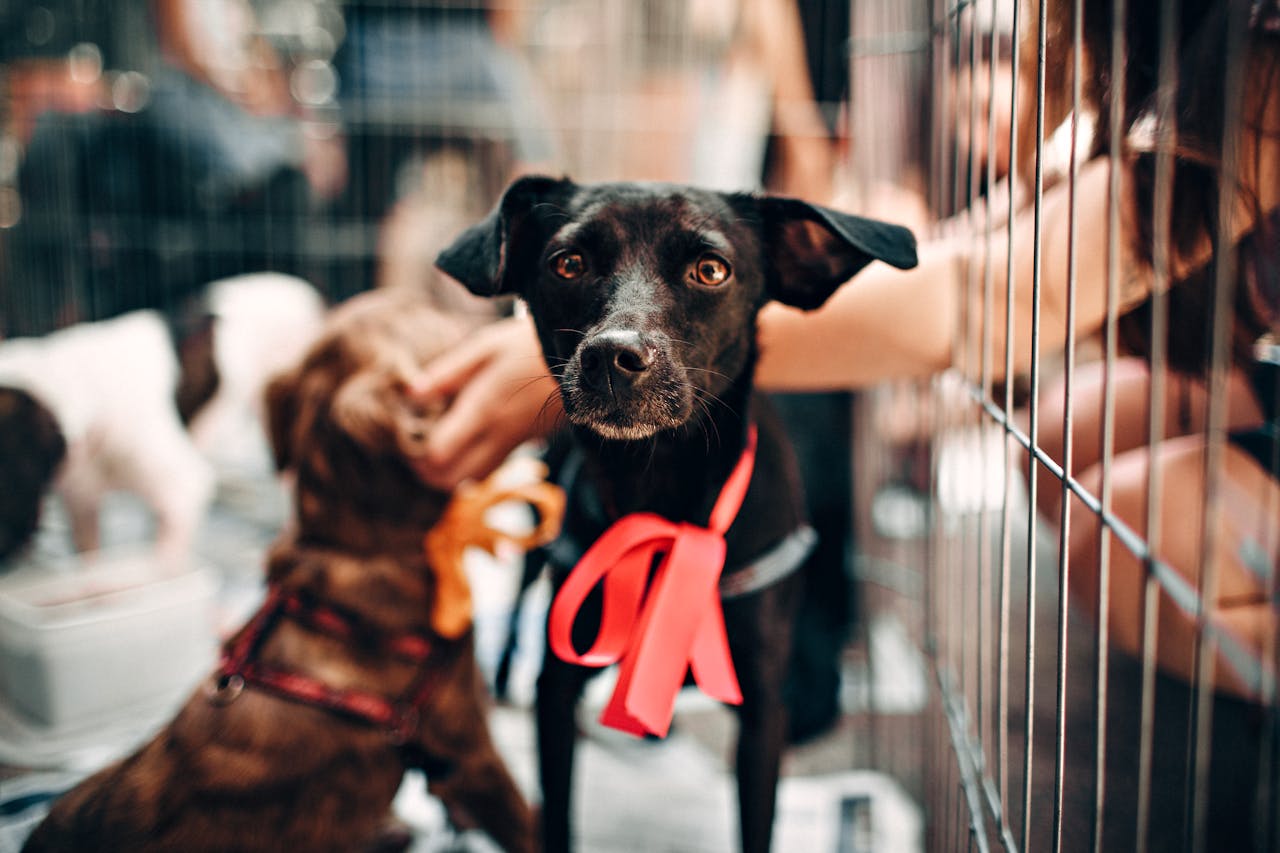
It's heartbreaking when you close the crate door and your pet starts barking frantically, whining, scratching the floor, and desperately trying to get out. Sound familiar? You're not alone. The fear of enclosed spaces is one of the most common issues dog owners face. This causes stress not only for the animal but for you, too, making you second-guess your actions. But don't worry, this can be fixed. We’ll take a detailed look at how to turn a hated crate into a favorite place for your four-legged friend, and you can read more about it on Tvaryny.
A properly organized crate or pen isn't a prison; it's a safe den, a personal space where your dog can rest and feel secure. The key to success isn't force, but the gradual creation of positive associations. Why is your dog afraid of the crate? Let's get to the bottom of the problem.
Why Is Your Dog Afraid of the Crate? Understanding the Root Causes
Before you can begin to correct the behavior, it's crucial to understand why your dog is afraid of the crate. It's rarely just a "temper tantrum." Most often, there are perfectly valid reasons behind the panic:
- Negative past experiences. If your dog was adopted from a shelter or had other owners, the crate might have been used as a form of punishment. The animal could have spent too much time in it without water, toys, and in a state of stress.
- Lack of proper introduction. The biggest mistake is simply pushing a dog into a new crate and walking away. To them, it's an unfamiliar, scary object that has suddenly restricted their freedom.
- Separation anxiety in dogs. Often, crate panic is just a symptom of a deeper issue: the fear of being alone. The dog isn't afraid of the crate itself, but of you leaving them. The crate becomes a trigger that sets off this panic.
- Wrong size or location. A crate that's too small restricts movement, while one that's too big doesn't give them the cozy den-like feeling they crave. Placing it in a dark, cold corner, or conversely, in a drafty or high-traffic area, also causes discomfort.
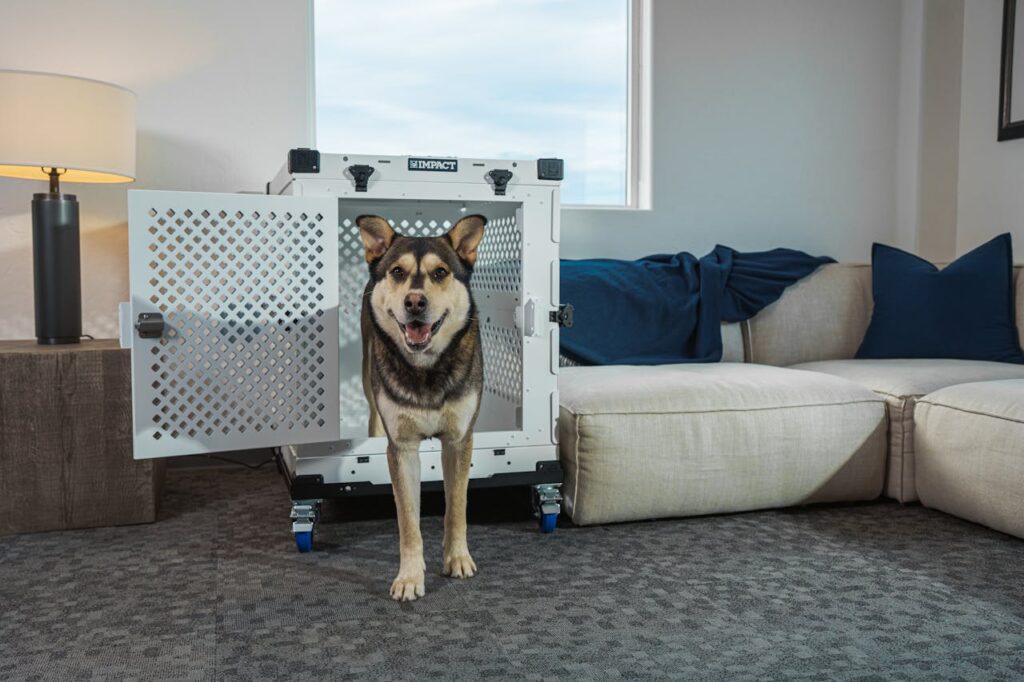
Stop! What You Absolutely Must Not Do
Before we get to the step-by-step plan, remember a few key "DON'Ts" that will help you avoid making the situation worse:
- Never use the crate for punishment. The crate should be associated with safety and calm, not with your anger.
- Do not force your dog inside. This will only intensify their fear and destroy their trust in you.
- Do not let the dog out when they are barking or whining. This is the hardest rule. If you open the door in response to their panic, your dog will learn: "I need to make a fuss to get out." Wait for at least 3–5 seconds of quiet before opening the door.
- Do not leave your dog alone for a long time at the first attempt. Crate training is a marathon, not a sprint. You should start with just a few seconds.
A Step-by-Step Guide: How to Crate Train Your Dog and Turn it Into a Fortress of Calm
This process requires patience. The speed of progress depends on your dog's temperament and previous experiences. The main thing is to take your time and celebrate small victories.
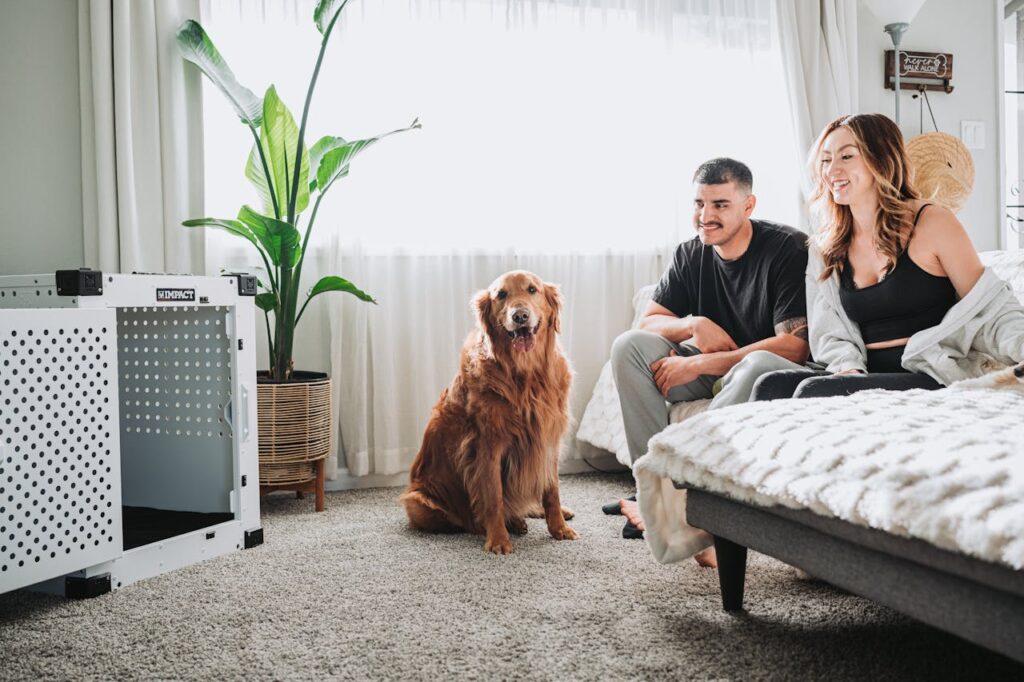
Step 1: Creating an Ideal "Den" and Positive Associations
At this stage, the crate door should always be open or removed entirely. Your goal is for the dog to start going inside on their own out of curiosity.
- Prepare the crate. Put a soft bed or a blanket with your scent inside. The crate should be the right size: your dog should be able to stand up, turn around, and lie down comfortably.
- Place it correctly. Put the crate in a room where you spend a lot of time, for example, the living room. The dog should not feel isolated.
- Feed your dog near the crate. Start by placing their food bowl next to the crate. Gradually, day by day, move it closer to the entrance, and then inside.
- Scatter treats. Periodically, when the dog isn't looking, throw their favorite treats inside the crate. Let them "accidentally" find something pleasant there.
- Use toys. Only give the most interesting and long-lasting toys (e.g., a Kong filled with dog-safe pate) inside the crate.
Step 2: Short-Term Door Closures
Once you see your dog calmly going into the crate to eat or chew on a toy, you can move to the next stage. Your goal is to show them that a closed door doesn't mean anything scary.
- Give your dog something very tasty in the crate.
- While they are distracted, calmly and without any fuss, close the door.
- Stay nearby. Praise them in a calm voice.
- After 5–10 seconds, before they have a chance to get anxious, open the door just as calmly.
- Repeat the exercise several times a day, gradually increasing the time to 30–60 seconds. If your dog whines in the pen or crate, you might have rushed the process. Go back to the previous stage.
Step 3: Increasing Time and Your Absence
When your dog can calmly handle a minute or two in the closed crate with you present, you can make the task more difficult.
- Close your dog in the crate with their favorite toy for 1–2 minutes and leave the room.
- Come back while they are still calm and open the door. Don't make a big deal about your return. Your behavior should convey that "this is normal."
- Gradually increase the time you're away: 5 minutes, 10, 20, 30. Move at a pace that is comfortable for your dog.
- Try leaving the house for a few minutes (e.g., to take out the trash). When you return, ignore your dog for the first couple of minutes, and then calmly let them out once they've settled down.
What If Nothing Helps?
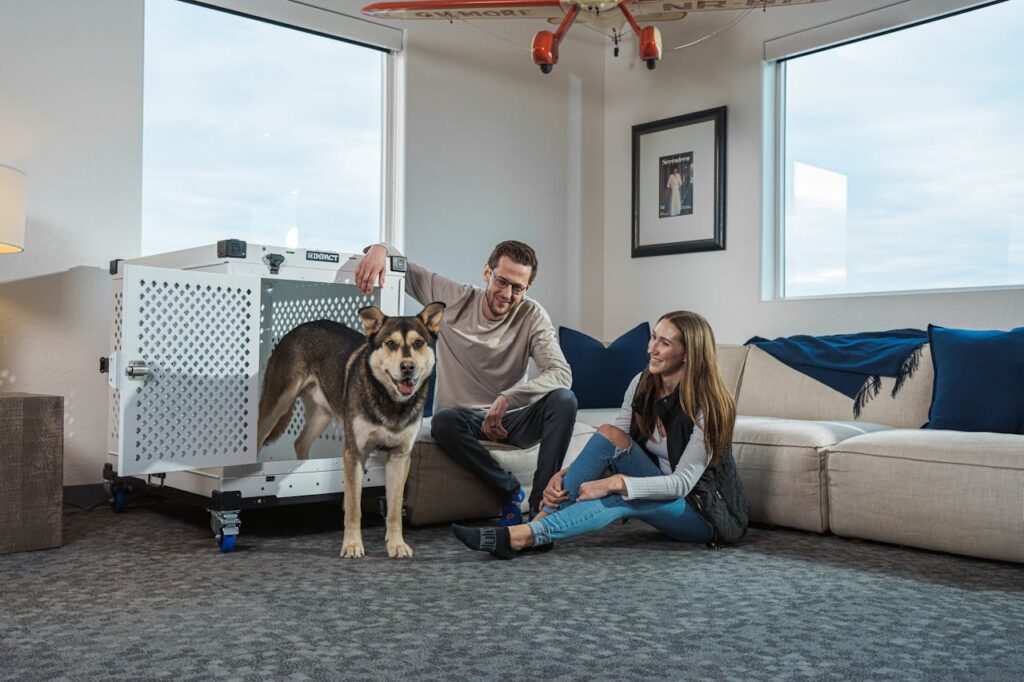
There are cases where, even with strict adherence to these instructions, the problem doesn't go away. This may indicate severe separation anxiety in dogs or other behavioral issues that require a more professional approach.
1. Try additional training methods. Sometimes, to speed up the process, you need clearer signals. For example, clicker training for beginners can be an excellent tool to "mark" and reinforce the correct behavior (calmness in the crate) with pinpoint accuracy.
2. Consult a professional. If your dog's panic is extreme, they are injuring themselves, or you feel you've reached a dead end, don't be afraid to ask for help. A qualified expert can develop an individual correction plan. We provide detailed information on when to consult a canine specialist and how to choose a qualified professional who will genuinely help, not harm.
Conclusion: Patience, Consistency, and Love
The process of crate training is an investment in your peace of mind and your dog's safety. Remember, the main goal is not to force, but to convince. Every step taken to calm your dog and show them that the crate is their own personal, safe corner brings you closer to success.
Don't compare your pet to others. Move at their pace, be consistent in your actions, generously praise them for even the smallest achievements, and very soon you will see your four-legged friend happily going into their "little house" to rest. And you'll be able to leave them at home peacefully, knowing they are completely safe.