


The dream of many dog owners is to never be separated from their pet. Today, as more and more companies adopt pet-friendly policies, this dream is becoming a reality. The ability to bring a four-legged friend to work isn’t just an incredible perk for the employee—it’s also a powerful tool for improving team morale. However, for this initiative to bring only joy and not problems, it requires careful preparation and adherence to specific rules. After all, having a dog in the office is a big responsibility. We’ll break down all the nuances of this dynamic, from preparing a puppy to workplace etiquette, right here at Tvaryny.
This guide will help you understand if your pet is ready for the role of an “office employee,” how to prepare them properly, and what etiquette norms to follow so your tailed colleague becomes a favorite with the entire team.
Step 1: The Objective Assessment. Is Your Dog Right for the Office?

Before you pack their favorite ball and leash, honestly answer a few questions. Not every dog, due to its temperament and training, is ready for office life. This doesn’t mean they are a “bad” dog, it’s just that the office environment can become a source of intense stress for them.
- Temperament: Is your dog calm and even-tempered? Do they adapt easily to new places and people? Dogs prone to anxiety, excessive excitability, or aggression may feel extremely uncomfortable in a noisy office.
- Socialization: How does your pet react to strangers and other animals? They should be friendly or, at the very least, neutral. Aggression or excessive fear are major red flags.
- Training and Obedience: Does your dog know basic commands such as “sit,” “lie down,” “come,” and most importantly, “stay” and “leave it”? The ability for a dog to stay in one place for an extended period is key for productive work.
- Noise Level: Is your dog prone to frequent barking? Barking at every sound at the door, at a courier, or at a passing colleague will quickly start to annoy everyone around.
- Health and Hygiene: Is your dog vaccinated, treated for parasites, and free of health issues that might complicate their stay in the office (for example, incontinence)? A dog should be clean and well-groomed.
- Separation Anxiety: How does your dog behave when you leave them alone? Even in the office, you’ll need to step away for meetings or lunch. The animal should not panic, whine, or destroy things when left by themselves.
If you honestly answered “yes” to most of these points, that’s great! Your pet has every chance of becoming an office superstar. If some of your answers were negative, it’s not a deal-breaker, but simply an indication of what you need to work on.
Step 2: The Preparation Phase. Homework for the Owner

The successful integration of a dog into the workplace is 90% dependent on the preparation work. You can’t just pick up your pet one morning and bring them to work. Here is a detailed plan on how to prepare your dog for the office.
1. Intensive Obedience Training
Even if your dog is well-behaved, refresh their knowledge. Pay special attention to the commands that will be useful in the office:
- “Stay”: This is the most important command. Your dog should be able to lie calmly on their mat or in their bed for 1-2 hours while you work. Start training at home, gradually increasing the time.
- “Quiet” or “Settle Down”: Teach your dog to stop barking on your command. This will help control the noise level.
- “Leave it”: This command is indispensable when your curious friend decides to explore a colleague’s trash can or their lunch.
- “Heel”: Calmly walking on a leash without pulling is mandatory for moving around the office, in corridors, and outside during walks.
2. Socialization in Office-Like Conditions
Take your dog to a few new places: a cafe with an outdoor patio that allows pets, a ride on public transportation (if permitted), or a visit to a friend’s house. Observe their reaction to unfamiliar sounds, smells, and people. The more positive experiences they have in various environments, the easier it will be for them to adapt to the office.
3. Simulating a Workday at Home
If you work remotely, set up a practice day. Arrange a “workstation” for your dog near your desk with a bed and toys. Throughout the day, work while ignoring your dog’s attempts to get your attention, and reward them when they lie calmly in their place. This will help them understand the expected behavior.
4. A Visit to the Vet and Groomer
Make sure all vaccinations are current. This is a matter of safety not only for your pet but also for those around them. Before the first office visit, your dog should be bathed, brushed, and have their nails trimmed. A tidy appearance and the absence of a specific odor are a sign of respect for your colleagues.
Step 3: Packing Your Dog’s “Work Bag”
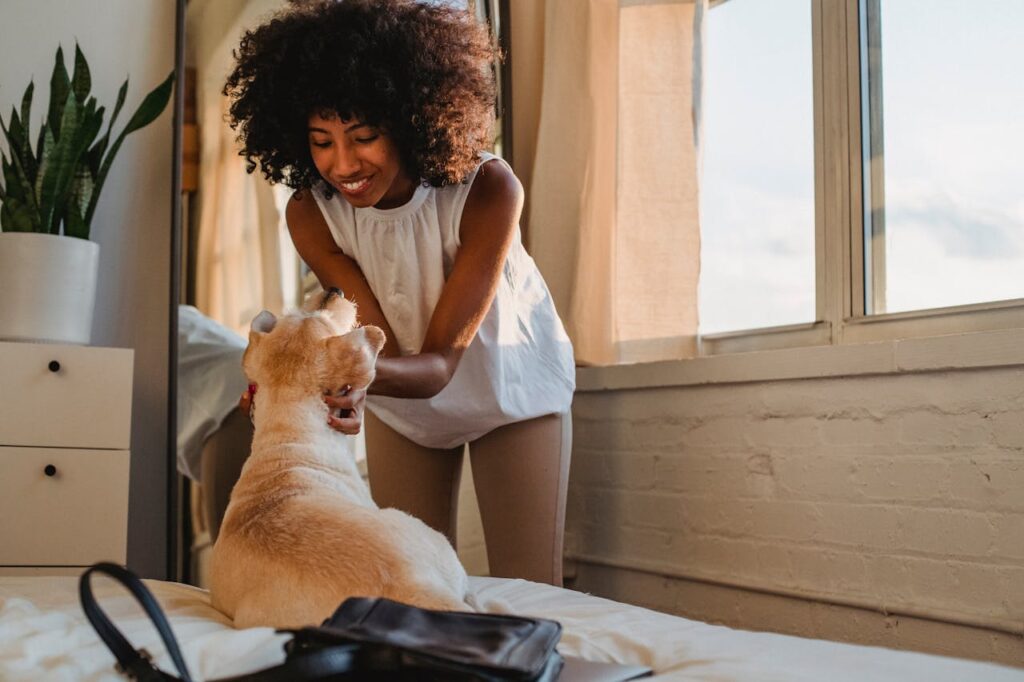
Your pet should have their own set of things to make their stay at the office comfortable and not cause inconvenience to others. Here is a rough checklist:
- Bed or Mat: A familiar item with a home scent will help your dog feel safer and clearly mark their “spot.”
- Bowls for Water and Food: Water should be freely available throughout the day.
- A Supply of Food and Treats: It’s best to feed your dog during your lunch break to avoid creating unnecessary odors during the workday.
- Quiet Toys: Chew bones, a rope, or interactive puzzles that don’t make noise will help keep your dog occupied. Forget about squeaky toys!
- Leash and Muzzle: Even if your dog is the gentlest in the world, a leash is mandatory for control. A muzzle may be needed for elevator rides or if corporate rules require it.
- Hygiene Kit: Paper towels, wet wipes, waste bags for outdoor cleanup, and a cleaning spray in case of an “accident.”
- First Aid Kit: A basic set with antiseptic, a bandage, and an allergy treatment (after consulting with your vet).
Step 4: Office Etiquette for Dog Owners. The Main Rules

Your behavior and control over the animal are crucial for a successful integration into a pet-friendly office. Following these rules will make the experience positive for everyone.
- The First Day is a Test. Don’t bring your dog for a full workday right away. Start with a few hours so they can get used to the new environment and you can assess their behavior.
- Meeting Coworkers. Don’t let your dog run up to everyone. Keep them on a short leash. Explain to your colleagues how best to interact with your pet (for example, let them sniff their hand, don’t pat them on the head).
- Respect Personal Space. Not everyone is a dog lover. Some may be afraid, while others may have allergies. Talk to your nearby colleagues beforehand. Make sure they don’t mind the new neighbor. Your dog should not enter other employees’ personal space without their permission.
- The Dog is Always on a Leash or in Their Spot. The free movement of a dog around the office is unacceptable. The animal should be either in its designated spot or on a leash with you. This is a matter of safety and control.
- “Dog-Free Zones.” The kitchen, meeting rooms, and restrooms are places where dogs are usually prohibited. Adhere to the company’s internal rules.
- Walks and Bathroom Breaks. Walk your dog well before work so they can do all their business. Throughout the day, schedule short walks every 2-4 hours. Always clean up after your pet thoroughly.
- Silence is Golden. If your dog starts barking, calm them down immediately. If this becomes a persistent problem, it might be worth temporarily returning to working from home and addressing this behavior.
Possible Problems and Their Solutions
Even with the best preparation, unexpected situations can arise. It’s important not to panic and to know how to act.
What to do if…
…a coworker has an allergy?
Solution: Talk to your coworker and the HR manager. Maybe you can be seated at different ends of the office. Using an air purifier and regular wet cleaning can help. In the worst case, you’ll have to find a compromise (for example, only bringing the dog in on certain days).
…the dog starts chewing on office furniture?
Solution: This is a sign of boredom or stress. Offer them an interesting chew toy. Increase the length of their morning walk so they get more tired. Maybe the dog needs more of your attention—take a short break and play with them.
…another “office dog” shows aggression?
Solution: Avoid contact. Don’t allow the dogs to be in the same space unsupervised. Talk to the other animal’s owner. It’s a shared responsibility to ensure peaceful coexistence.
Conclusion: Responsibility is the Key to Success
Having a dog in the office is a wonderful practice that can lower stress levels, bring the team together, and make everyone a little happier. But it requires maximum commitment, responsibility, and respect for others from the owner. Remember that your dog in the office represents not only themselves but also the entire community of responsible pet owners.
Thorough preparation, adherence to clear rules for dogs in the office, and a mindful attitude toward the needs of the animal and your coworkers will turn this idea into a success story that your entire company will be proud of.