The Japanese Spitz or Nihon Supittsu is guaranteed to create an unforgettable atmosphere in your home. These sensitive and attentive fluffballs always know when you need a laugh or some cheering up, and when it is better to just sit quietly by your side. If you have small kids, Spitzes will become their best buddies - they always treat their shenanigans with understanding. Seniors will also love the Japanese Spitz for its undemanding nature and affection. Enjoyment from hanging out with a Spitz is guaranteed for the whole family. Despite their small size, Japanese Spitzes are pretty serious dogs that, with the right desire and quality training, can perform watchdog duties. Learn more on Tvaryny.
Japanese Spitz (Nihon Supittsu): A Brief Breed Overview
Japanese Spitz (Nihon Supittsu): A Brief Breed Overview · 7
| Origin | Japan |
|---|---|
| First Mentioned | Late 19th - early 20th century (standard 1948) |
| FCI Group | Group 5 (Spitz and primitive types), Section 5 (Asian Spitz and related breeds) |
| Life Expectancy | 12–15 years (often reach 16) |
| Height at Withers | 12–15 inches (30–38 cm) (males), females slightly smaller |
| Weight | 11–22 lbs (5–10 kg) (depending on height and build) |
| Coat Type | Long, double, pure white color |
Who is the Japanese Spitz Often Confused With?
Due to the snow-white coat and typical "smile," the Japanese Spitz is often confused with other breeds of FCI Group 5. However, the difference is significant:
- Samoyed: Significantly larger and more powerful; this is a sled dog, not just a companion.
- American Eskimo Dog: Almost a twin, but this breed developed in the USA and has three size varieties (toy, mini, standard).
- Volpino Italiano: The Italian "cousin," which is usually smaller than the Japanese one and has a slightly different head structure.
What Does a Japanese Spitz (Nihon Supittsu) Look Like?
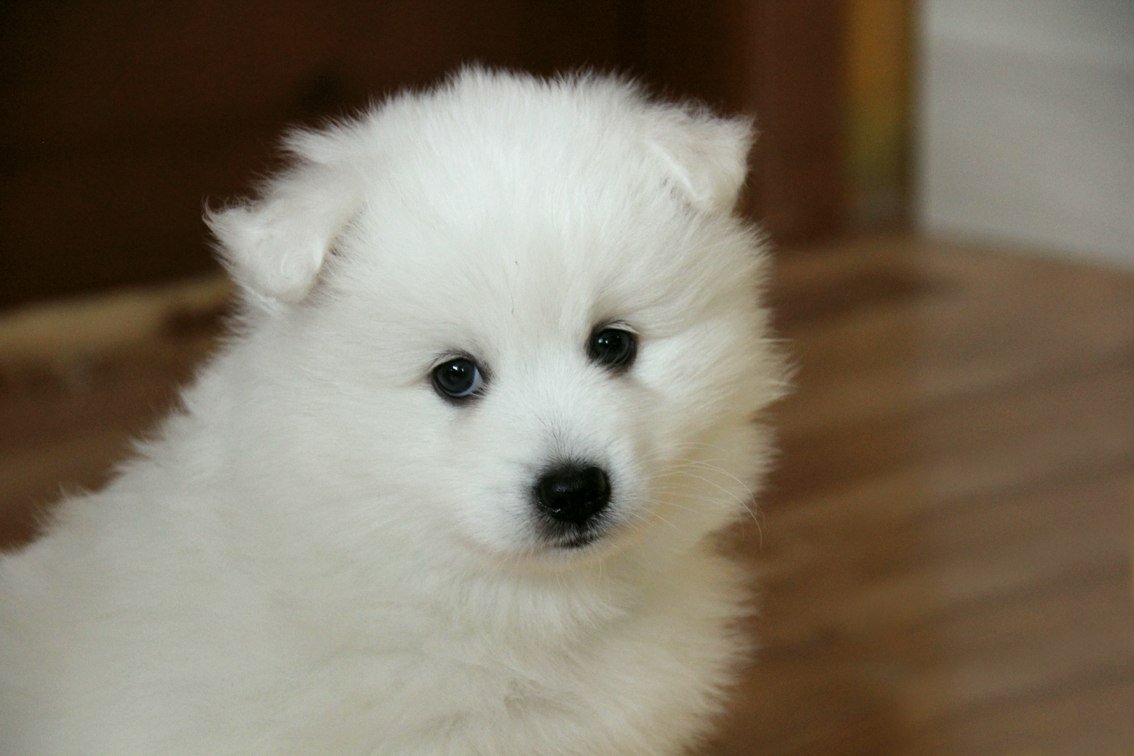
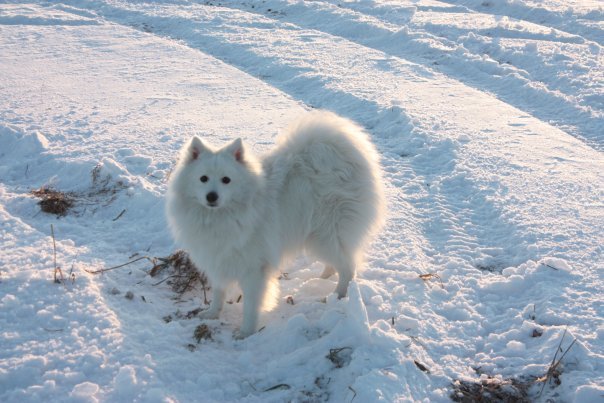
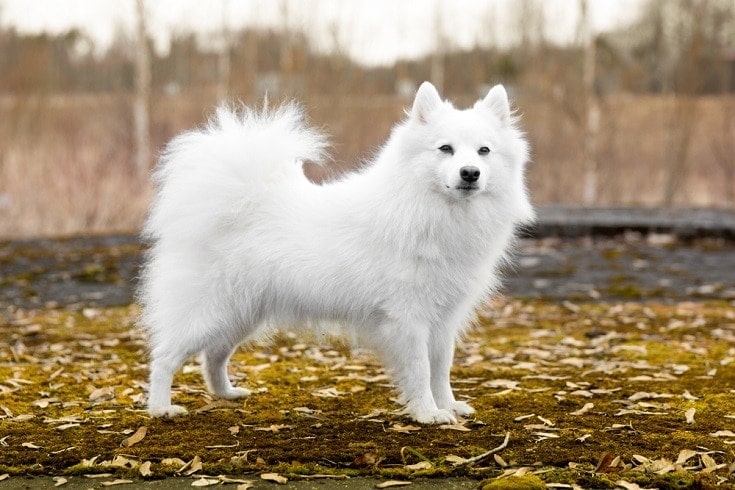
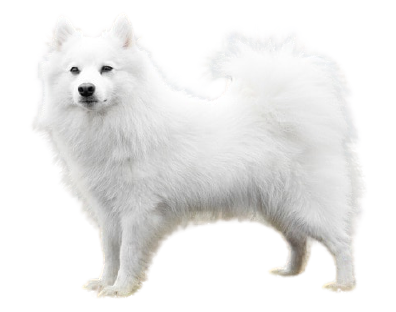
The Japanese Spitz is the embodiment of harmony. It is a dog with a proportionate build that radiates energy and dignity. Its main pride is the dazzling white coat, which stands off the body, creating a "cloud" effect.
Head and Muzzle
The head has a wedge-like shape; the skull is moderately broad and rounded. A very important characteristic is the transition from forehead to muzzle (stop) - it is well defined, but not abrupt. The muzzle is pointed, but not too thin. The bridge of the nose is straight. Contrasting pigmentation gives the dog a special charm: the nose is small, round, and necessarily jet black. The lips fit tightly and also have a black rim, creating the effect that the dog is smiling.
Eyes and Ears
The eyes are medium-sized, almond-shaped, set slightly obliquely. The eye color is dark brown, almost black. Black rims around the eyes are mandatory. The ears are set high, small, triangular in shape, stand vertically, and face forward. It is the ears that often betray the dog's mood.
Body and Limbs
The neck is of medium length, muscular. The withers are well defined. The chest is broad and deep with well-sprung ribs, which ensures sufficient lung volume for active movement. The back is short, straight, and strong. The loins are broad. The belly is well tucked up, which adds elegance to the silhouette. The tail is set high, of medium length, carried over the back and curled into a ring. It is covered with dense, long hair that falls like a fan.
The limbs are straight, parallel, and muscular. The paws ("cat-like") are small, round, with thick pads. Nails are preferably black.
Coat
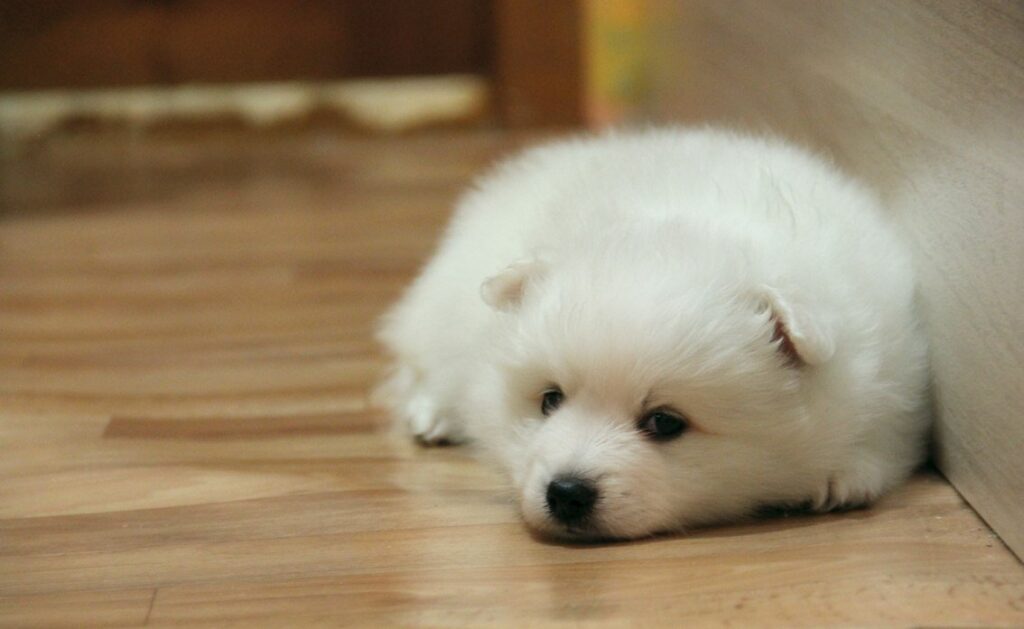
This is the breed's main decoration. The coat is double: it consists of a soft, dense undercoat (which holds volume) and longer, straight, and harsh outer hair, which stands off the body. On the muzzle, ears, and the front of the legs, the hair is short. On the neck, it forms a luxurious collar ("mane"), which is particularly pronounced in males. On the hind legs, there are lush "pants."
Interesting Facts About the Breed
- The Japanese Spitz is one of the few breeds that was bred in Japan not for hunting or fighting, but exclusively as a companion.
- In their homeland, this breed is sometimes jokingly called an "energy conserver." At home, they can be as calm as a cat, but on the street, they turn into a hurricane.
- The hunting instinct is practically absent in this breed. They may chase a bird for the sake of play, but are unlikely to harm it. This makes them ideal friends for house cats.