

| Height | toy 23–30 · miniature 30–38 · standard 38–48 cm |
| Weight | toy 2.7–4.5 · miniature 4.5–9 · standard 11–16 kg (AKC card; the standard gives no weight) |
| Lifespan | 13–15 years |
| FCI group | not recognized by the FCI · AKC Non-Sporting · UKC Northern |
| Origin | USA (breed) · Germany (ancestors) |
Exact ratings
Common health issues
Nutrition
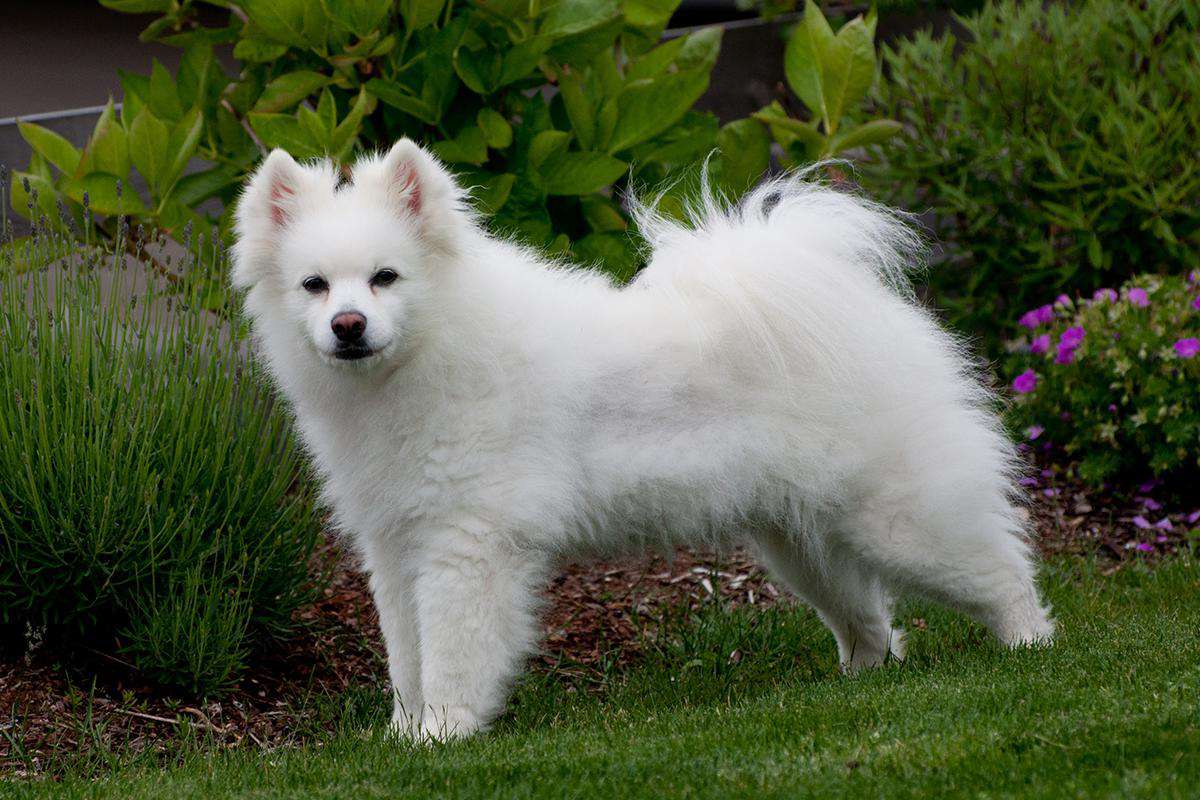
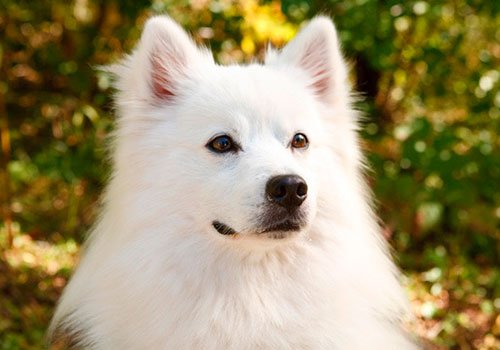
The American Eskimo Dog is a compact white spitz with black “points”, a quick mind and a loud voice. Its name misleads twice over: the breed has nothing to do with the peoples once labeled “Eskimo” or with their sled dogs, and its ancestors are German Spitz brought to the United States by German settlers. The name itself appeared during a wave of anti-German feeling and stuck because a kennel used it. What follows is only what can be checked against the registry standards, the breed club’s own papers and peer-reviewed research — and, separately, what is retold without any document behind it. Find out more at Tvaryny.
American Eskimo Dog: main characteristics

| Characteristic | Description |
| Origin | The breed took shape in the United States; the ancestors are German Spitz (the breed club names Germany as the country of origin outright) |
| Registries | UKC — Northern Breed Group; AKC — Non-Sporting Group; the FCI does not recognize the breed |
| Recognition | UKC — 1913; AKC — standard approved 11 October 1994, effective 30 November 1994, first registration 1995 |
| Lifespan | 13-15 years (AKC figure) |
| Height at withers (AKC standard) | Toy: 9-12 inches (23-30 cm) Miniature: over 12 to 15 inches (30-38 cm) Standard: over 15 to 19 inches (38-48 cm) |
| Weight | The standard gives no weight at all. The AKC breed-page card lists 2.7-4.5 kg (toy), 4.5-9 kg (miniature), 11-16 kg (standard) |
| Color | White, or white with biscuit cream; any other color is a disqualification |
| Temperament per the standard | Intelligent, alert, friendly, “slightly conservative” |
| Voice | The warning bark is written into the standard itself as normal behavior |
| Screening required by the club | Hip evaluation and eye examination after 24 months, DNA test for prcd-PRA |
| Grooming | Brushing 2-3 times a week, more often during shedding |
History of the breed
The waves of German emigration that began in the early nineteenth century brought to the United States not only a language, a brewing industry and Lutheran congregations, but dogs as well. Among them was the German Spitz — an all-round farm dog that guarded the yard, warned of strangers and stayed at its owner’s side. That is how the AKC tells it in its own breed history, and the breed club tells it the same way. German families settled in Wisconsin, Minnesota, Ohio, in New England and in southern Texas, and the white spitz spread with them.
One key detail is usually skipped over: in Germany spitz dogs came in black, brown and orange, yet it was the white variety that took hold in the United States. The breed club states honestly that the reason for this preference is unknown. In other words, the American history of the breed begins not with the creation of a new dog but with a selection by color inside a type that already existed.
The second thread is the circus. Travelling circuses, vaudeville troupes and Wild West shows crisscrossed pre-electronic America, and white spitz — trainable and eye-catching — became a mainstay of performing-dog acts. The AKC says so plainly. The breed club, however, adds a qualification found in no popular retelling: the breed was never developed or bred as a circus dog. Dogs were simply taken into the acts, as many other dogs were.
The formal registry history runs as follows. The UKC recognized the breed in 1913 and registered white dogs only. But here the paper trail breaks: in the UKC’s early years there was a fire, and part of the records burned. Because of that, the earliest surviving registration dates only from 1922 — seven dogs under the breed name “Spitz”, the first bitch Patsy Pall and the first dog Rob Roy; thirteen more followed the next year. This is the rare case where we know not only that a document is missing but why it is missing.
The AKC accepted the breed far later — and, again, not on a single date. The breed club assembled the pedigrees, the standard was approved on 11 October 1994 and made effective on 30 November 1994, and the AKC registered its first dog in 1995. The AKC’s own database gives 1994 as the year of recognition, while the history text on the same page gives 1995. This is nobody’s mistake: they are three different events that slide easily into one.
A misleading name: what exactly was renamed, and when
The most interesting thing about this breed is not its outline but the fact that its name is an artifact of political history. Every source agrees on that; they part company over the dates, and the disagreement is itself instructive.
- The AKC version. With the entry of the United States into the World War I in 1917 the country was gripped by prejudice against everything German, and the breed’s German name was changed to “American Eskimo” Dog — after the name used by a spitz breeding kennel in Ohio. In a separate facts block on the same page the AKC puts it differently: the breed was known as the “American Spitz” until 1917, when the name was changed to “American Eskimo”.
- The UKC version. The UKC standard (current revision of 1 May 2017) says: “known as the German Spitz in its homeland, the breed was renamed the American Eskimo in 1917”. Then comes a careful word: this was probably a reaction to the unpopularity of everything German during the war. And immediately afterwards: “the American Eskimo was recognized by the United Kennel Club in 1913”.
- The breed club version. The history published by the American Eskimo Dog Club of America breaks the process into four steps: 1924 — against a background of anti-German feeling the UKC changes the breed name to “American Spitz”; 1925 — the name changes again, to “American Eskimo Spitz”, taken from the kennel name of Mr and Mrs Hall, “American Eskimo Kennels”; 1926 — the word “Spitz” is dropped altogether, although the dogs went on being called spitz in everyday speech for years.
So we have 1913, 1917, 1924, 1925 and 1926, describing events of different kinds. Two of them contradict each other inside a single document: if the UKC recognized the breed under the name “American Eskimo” as early as 1913, then the 1917 renaming cannot have been that name’s first appearance. The simplest explanation — that the name in 1913 was a different one and the standard is simply applying the modern name retrospectively — is plausible, but it is a reading, not a document.
Dates that float between retellings almost always mean one thing: the primary document is gone. In this case we even know where it went — it burned in the fire at the UKC. The honest form of the claim is therefore this: the name was changed during the anti-German mood surrounding the World War I; the “Eskimo” element came from a kennel name rather than from ethnography; and sources give different years. That form is true under any of the versions.
Two further precisions this story tends to lose. First, “German Spitz” here is both an ancestor and the former name of the very same dogs, not merely a separate ancestral breed: in retelling, an old name turns easily into an independent forebear. Second, the registries do not even agree on the country of origin: the AKC database says “United States”, while the breed club’s history opens by naming Germany as the country of origin. The two statements protect different things: one the place where the breed took shape as a distinct entity, the other the provenance of the stock itself.
Not to be confused: German Spitz, Japanese Spitz and Samoyed
All of these dogs are white and spitz-like, which is exactly why their facts keep leaking from one page to another. Let us separate them by the documents.
- German Spitz (Wolfspitz/Keeshond) — under FCI standard No. 97 this is one breed with five size varieties: Wolfsspitz/Keeshond 49±6 cm, Giant Spitz 45±5, Medium Spitz 35±5, Miniature Spitz 27±3 and Toy Spitz/Pomeranian 21±3, that is 18-24 cm. White is a recognized color, and the standard requires pure white with no admixture. By height the American Eskimo Dog covers the miniature, the medium and part of the giant spitz at once — so it corresponds not to “the German Spitz” in general but to the white dogs of the middle sizes within that group.
- Japanese Spitz — 30-38 cm in dogs, bitches slightly smaller (FCI standard No. 262). The most interesting part of its history bears directly on our subject: the standard itself states that the ancestor is held to be the large white German Spitz brought to Japan around 1920, and that in 1925 two pairs of white spitz were imported from Canada, with imports arriving from Canada, the United States, Australia and China until the mid-1930s. In other words, the Japanese breed was being built up with white spitz from the States in the very years when America’s white spitz were changing their name.
- Samoyed — a different weight class and a different story: under FCI standard No. 212 the ideal height is 57 cm for dogs with a tolerance of ±3 cm and 53 cm ±3 cm for bitches, that is 54-60 and 50-56 cm respectively. This is not a “large Eskimo dog” but a separate Arctic breed.
- Canadian Eskimo Dog — the only breed carrying the word “Eskimo” in the FCI nomenclature (No. 211). Apart from that word in the name it has nothing in common with our breed: it is a genuine Arctic sled dog.
It is worth saying separately what the lists do not contain. We checked the FCI nomenclature across all ten groups: the American Eskimo Dog does not appear in it under any entry, and the only “Eskimo” line is the Canadian one. That is not a gap in our search but a statement made by the list itself: the FCI does not recognize this breed, so neither an FCI standard nor an FCI group number exists for it. A European breeder works either to the UKC standard or to the AKC one.
What the American Eskimo Dog looks like: the breed standard

The AKC standard describes a small to medium-size Nordic type dog, always white or white with biscuit cream, compactly built and well balanced, with erect triangular ears and distinctive black “points” — lips, nose and eye rims. The length of back from point of shoulder to point of buttocks is slightly greater than the height at withers, in a ratio of roughly 1.1 to 1.
- Coat. A stand-off double coat: a dense short undercoat with longer guard hair growing through it. Straight, with no curl or wave. Around the neck and chest there is a ruff, more noticeable on dogs than on bitches; the hind legs down to the hocks carry the characteristic breeches. The standard specifically forbids trimming the body coat and the whiskers and requires that this be penalized severely: the only permissible trimming is to neaten the feet and the backs of the rear pasterns.
- Head. The skull is slightly crowned and softly wedge-shaped, widest between the ears. The muzzle is broad and not longer than the skull. The bite is scissors or pincer. Pink pigment on the nose or lips is a fault.
- Eyes. Not fully round, slightly oval, set well apart. Dark to medium brown is the preferred color. Amber eye color and pink eye rims are faults. Blue eyes, however, are a disqualification — in the AKC standard and in the UKC standard alike. So this is not a “variant less desirable in the ring” but grounds for removing the dog from competition. Tear stain, unless severe, is not to be faulted — the standard says outright that it must not outweigh consideration of type, structure or temperament.
- Tail. Set moderately high, profusely covered with long hair, carried loosely on the back; it may be dropped at rest. A dropped tail at rest is not a fault — that too is written down.
- Gait. The breed trots and does not pace. As speed increases the dog single tracks, the legs converging towards the center line while the back stays firm and level.
AKC disqualifications: any color other than white or white with biscuit cream; blue eyes; height under 9 inches or over 19 inches. The UKC standard adds its own: unilateral or bilateral cryptorchidism, viciousness or extreme shyness, albinism, blindness, deafness, and any alteration of the dog beyond what the standard allows. The UKC list is longer — and the fact that deafness and blindness appear on it as separate lines is telling for a white breed.
One more detail worth knowing: there is no weight in the standard at all — neither in the AKC text nor in the breed club’s own reference material. Every weight range you see online comes from the reference card on the AKC website, not from the standard. We list those figures separately and name their source precisely because mixing the two sets of numbers produces meaningless merged ranges.
Three sizes — and why the registries count them differently
The statement “the breed has three size varieties” is only half true, because it applies to one registry out of two.
- AKC — three divisions by height at withers: Toy, 9 inches to and including 12 inches (23-30 cm); Miniature, over 12 inches to and including 15 inches (30-38 cm); Standard, over 15 inches to and including 19 inches (38-48 cm). Within each division no height is preferred. Note the wording “to and including” and “over”: the boundary values of 12 and 15 inches belong to the lower division, so the ranges meet without gaps. The breed club stresses separately that the AKC does not split these divisions into separate show varieties — all the dogs compete as one breed.
- UKC — two varieties, and they are split by sex: Miniature — dogs from 9 inches up to and including 15 inches, bitches from 9 inches up to and including 14 inches; Standard — dogs over 15 inches up to and including 19 inches, bitches over 14 inches up to and including 18 inches. UKC shows are judged by variety, in the order “Miniature, Standard”, and championship points earned in the Miniature classes count together with points earned in the Standard classes.
So the “toy” exists only inside the AKC system, and the split by sex only inside the UKC one. A dog that is a Miniature at the AKC may be either Miniature or Standard at the UKC depending on its sex. This is not a contradiction between registries but two different ways of cutting up the same continuous run of heights from 9 to 19 inches — and it is exactly where those pages come from that merge three varieties into a single “23-48 cm” with no divisions at all.
Weight is a special case of the same thing. The standard names none; the AKC reference card gives 6-10 pounds for the toy, 10-20 pounds for the miniature and 25-35 pounds for the standard, that is roughly 2.7-4.5, 4.5-9 and 11-16 kg. These are two different sets of numbers from one organization: the document and the shop window. They must not be merged: that is precisely how ranges appear that exist in no source at all.
Character and temperament
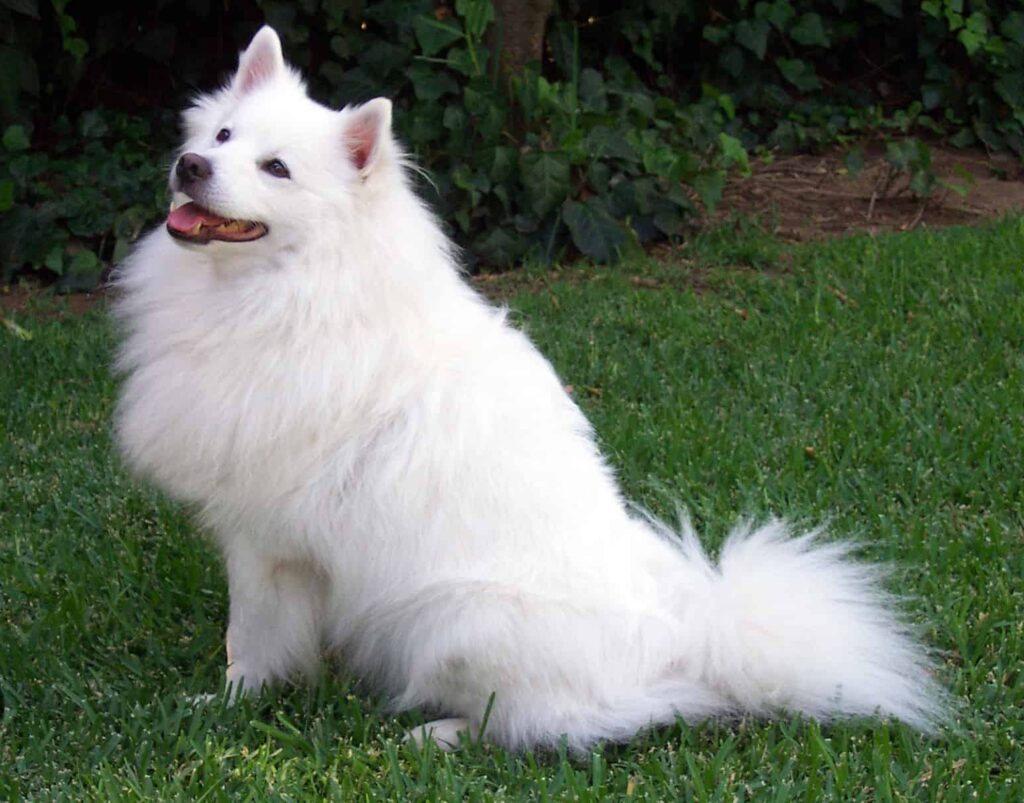
Here the standard is unusually specific, and it deserves to be read literally. The AKC describes the breed as intelligent, alert and friendly, “slightly conservative”; excessive shyness and excessive aggression are both to be penalized severely in the ring. Then comes a sentence that is almost never quoted: at home it is an excellent watchdog that sounds a warning bark to announce the arrival of any stranger, protective of home and family, yet it does not threaten to bite or attack people. The loud voice, in other words, is not an incidental drawback but a working property written into the standard. The UKC puts the same thing more briefly: intelligent, alert, energetic, loyal and friendly, but possibly reserved with strangers.
- Attachment to people. The AKC writes that, despite the warm coat, this is an indoor dog: it forms strong bonds with its family and is happiest interacting with them, and it must not simply be left in the yard all day. A dog left alone for long stretches, or short of work, quickly becomes destructive.
- Energy and age. This is an active, quick and curious dog that needs both physical and mental tasks. At the same time the AKC notes that once past middle age Eskies often become noticeably more sedate — a useful expectation for anyone taking on an adult dog.
- The work the breed was kept for. The breed club describes an all-round farm dog that had to tell its own livestock from a neighbor’s, hold the boundary of the yard and warn of strangers. Hence both the guarding instinct and the need for a job.
Unlike breeds developed for specific working tasks — hunting, for instance, to which the Bluetick Coonhound or the Treeing Tennessee Brindle are inclined — the American Eskimo Dog is first of all a companion and a doorbell. Its main “job” is to be near its people and to have something to occupy its head.
Health: typical conditions and prevention
What the research shows and what is merely retold
Several striking claims have grown up around this breed, and the best source for checking them turned out to be the breed club itself, which in several places is more skeptical than the registries.
- The dog that walked the tightrope. In its breed history the AKC names as the most famous performer of the 1930s a dog called Pierre, a tightrope walker with the Barnum & Bailey Circus; in the trivia block on the same page a stronger claim appears — that one Eskie became the first dog to walk across a tightrope. The breed club tells the same story differently: in the 1920s the Barnum & Bailey circus is said to have had a spitz named Bido in one of its acts, of whom it was said that he was the only dog trained to walk a tightrope — but there is no documentation of the dog actually performing. Different names, different decades, and the qualification coming from the very people who would gain from telling it the other way.
- The breed as a “circus breed”. That white spitz were a mainstay of performing-dog acts is confirmed by the AKC and by the club. But the club draws a line: dogs were taken into the acts, yet the breed was never developed or bred for the circus. These are two different statements, and retellings merge them.
- “The coat repels dirt.” This is not folklore: the AKC itself writes that the oil on the coat prevents dirt from adhering, so a good brushing is usually enough to remove it. We report that as the AKC’s position, not as a measured property.
- “Among the most trainable of all breeds.” Also a direct position of the AKC, and it fits the circus history. But it is an organization’s assessment, not a place in some intelligence ranking.
- Rarity. The authors of the 2019 diabetes study, justifying the size of their sample, note that fewer than 6000 American Eskimo Dogs were registered with the AKC in the ten years before publication. For scale: they were able to review over 600 dogs of the breed for possible inclusion, which in their words is a noticeable share of the whole population.
One more thread deserves the attention of future owners: genetic diversity. According to NAEDA’s report on a preliminary study by the UC Davis laboratory, the Standard variety shows higher levels of inbreeding and signs of a genetic bottleneck compared with the Toy and Miniature. This is a preliminary report as relayed by the club, so we give it as a direction rather than a figure — but it is exactly the kind of thing to ask a breeder about.
How to look after an American Eskimo Dog
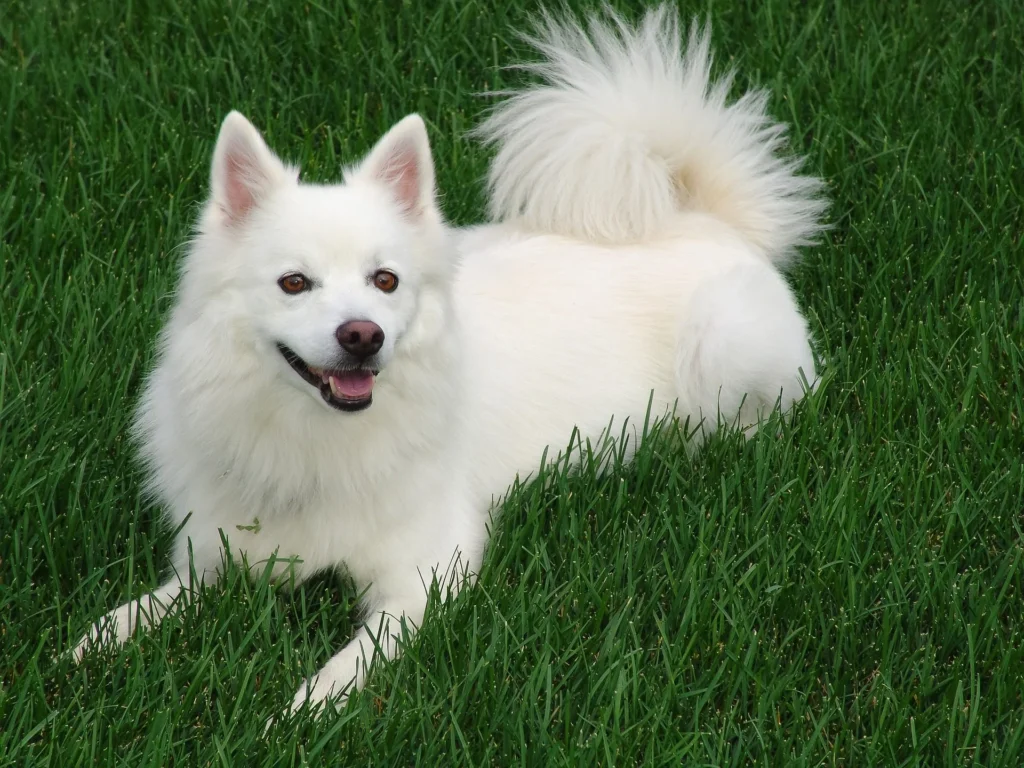
Coat. The main routine is regular brushing, 2-3 times a week, with a slicker brush or a long-toothed comb, to lift the dead undercoat and keep mats from forming. During the seasonal shed the job becomes daily. The AKC puts it more bluntly than most: Eskies shed almost constantly, and brushing two or three times a week exists precisely to remove dead hairs before they end up on the floor.
Bathing. The breed does not need frequent bathing: on the AKC’s account, the oil on the coat keeps dirt from adhering. Bathing more often than once every few months is not advisable — it dries the skin and irritates it. After a walk, wiping the feet is usually enough.
Clipping. Here the advice follows straight from the standard: trimming the body coat and the whiskers is forbidden and severely penalized in the ring, and the only permitted tidying is of the feet and the backs of the rear pasterns. If you are planning shows, “clipping for the summer” is not an option. For a pet dog, clipping a double coat is not advisable either, because it destroys the very structure that protects against both cold and heat.
Ears, teeth, nails. The AKC advises checking the ears weekly to remove debris and avoid a build-up of wax, brushing the teeth regularly and trimming the nails. The standard calls for a full complement of close-fitting teeth, so the state of the mouth matters beyond health alone.
Exercise. A long daily walk plus active play is the minimum. The breed does well in agility, obedience and freestyle, and the club adds herding tests, tracking, and companion and therapy work to that list. A securely fenced yard with toys helps but does not replace shared activity: the AKC warns specifically against leaving the dog out in the yard by itself all day.
Training and socialization
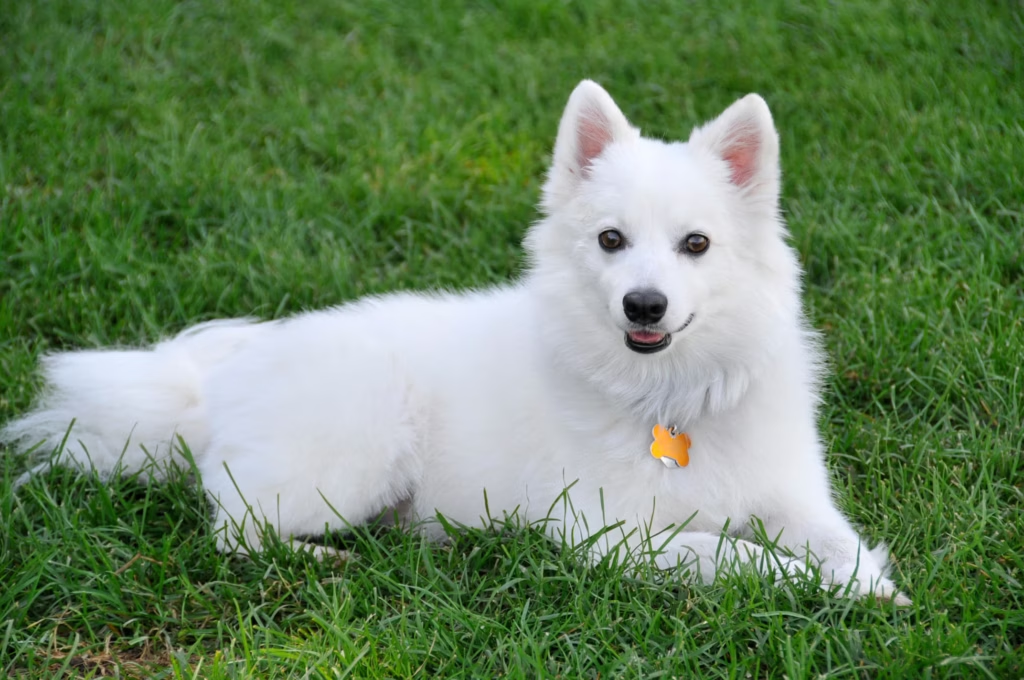
The AKC standard ends its description of temperament with the sentence that this breed learns new tasks quickly and is eager to please. On the breed page the AKC adds that Eskies sometimes learn simply by watching other dogs. It was that quality, and not any special “circus” selection, that made white spitz inhabitants of the performing acts.
- Positive reinforcement. Praise, treats, play. Harsh methods on an alert and slightly conservative dog produce the opposite effect — mistrust and withdrawal.
- Early socialization. The AKC recommends early socialization and puppy classes as the obligatory minimum. For a breed whose standard describes reserve towards strangers as the norm and excessive shyness as a penalized fault, this matters particularly: the difference between “reserved” and “timid” is laid down in puppyhood.
- Working with the bark. Since the warning bark is written into the standard as normal behavior, the sensible goal is not to “remove the voice” but to teach a quiet cue and manage how long the signal lasts. For a dog that is bored or left alone for long, barking becomes an occupation.
- Mental work. Puzzle toys, new cues, dog sports. Without them an Eskie finds a job of its own, and it rarely pleases the household.
Feeding: the key recommendations
Interesting facts about the American Eskimo Dog
- The name came out of a kennel name. The “Eskimo” element came not from ethnography but from the kennel name of Mr and Mrs Hall, “American Eskimo Kennels”. The AKC puts it more cautiously — “after the name used by a spitz breeding kennel in Ohio” — while the breed club names the owners.
- The early archive burned. The breed has been recognized by the UKC since 1913, yet the earliest surviving registration dates from 1922, because a fire destroyed part of the UKC’s early records. Hence the scatter of dates in every retelling.
- The first registered dogs were called Patsy Pall and Rob Roy. The seven dogs of 1922 were entered under the breed name “Spitz” — the name “American Eskimo” does not appear in those entries yet.
- Two registries, different numbers of varieties. The AKC distinguishes three height divisions and does not run them as show varieties; the UKC distinguishes two varieties and splits them by sex as well.
- Blue eyes are a disqualification. At the AKC and at the UKC alike. The UKC adds deafness, blindness and albinism to its list.
- The Japanese Spitz was built partly on American white spitz. FCI standard No. 262 names imports from the United States, Canada, Australia and China up to the mid-1930s.
- The breed became the subject of a genetic study of diabetes in its own right. The 2019 paper is about American Eskimo Dogs specifically — breed-specific studies of the heritability of canine diabetes are very few.
Video about the breed
- Learns fast: the standard describes a dog that picks up new tasks and is eager to please
- An alert watchdog that does not threaten to bite — the standard requires it
- Three height divisions at the AKC: the same type in different formats
- A short, checkable list of breeding health screens
- The warning bark is written into the standard as the norm
- Sheds almost constantly; brushing 2–3 times a week
- Copes badly with being left alone, needs work for the head
- Clipping the body coat is forbidden by the standard
| Japanese Spitz | Samoyed | Pomeranian | |
|---|---|---|---|
| Height | 30–38 cm | 50–60 cm | 18–24 cm |
| Energy | 3.5 | 4.5 | 3 |
| Apartment | 4 | 2.5 | 4 |
| Beginners | 3.5 | 3 | 3.5 |
Does this breed have anything to do with the Eskimo peoples?
How many size varieties does the breed have?
What should I ask a breeder?
Does the American Eskimo Dog shed much?
Do they bark a lot?
AKC standard (11.10.1994) · UKC standard (rev. 01.05.2017) · AEDCA breeding health requirements (02.11.2014) · FCI No. 97, No. 212, No. 262 · Zangerl et al., Genomics 2006 · Cai et al., JVIM 2019 · Donner et al., PLOS Genetics 2023 · Clark et al., Genes 2023
For apartments · For kids · For beginners · Active · Smartest · Hypoallergenic · All rankings →