

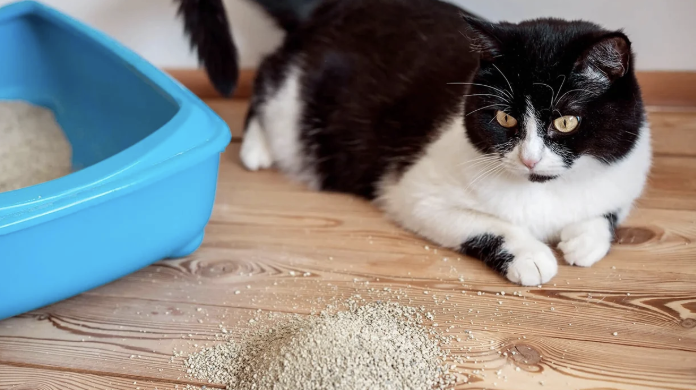
You get home from a long, exhausting day at work, and suddenly you step into a wet puddle by the door. Or worse, you find a surprise on your favorite soft bed. The initial emotion is always the same. It’s despair that instantly shifts into anger. You throw your hands up. Tears of pure exhaustion well up in your eyes. Only one bitter question pulses in your head: “Why are you doing this to me?”
As an animal behaviorist and volunteer who has spent years helping street animals, I hear these stories constantly. We often discuss these exact crises on tvaryny.com. Let’s face it – pee puddles outside the litter box are the number one reason cats get returned to shelters. People bring a confused animal back to a cage with tears in their eyes. They are absolutely convinced their pet is seeking revenge for something.
But I want to give you a hug and ask you to take a deep breath. Your fluffy friend doesn’t have a master plan for revenge. In their little, sincere soul, the concept of doing something “out of spite” simply doesn’t exist. Every miss outside the box is an SOS signal. It’s a desperate cry for help. Your cat just can’t use words to tell you they are terrified or in pain.
Today, we’re going to break down the psychology and physiology of this issue step by step. We will become detectives. We’ll help your kitty feel safe again. And we’ll help you restore peace and cleanliness to your shared home.
1. Pain hidden in silence: Medical reasons
The golden rule of animal psychology is crystal clear. Any behavior correction must start at the vet’s office. Cats are absolute masters at hiding pain. In the wild, a predator showing weakness quickly becomes prey. That’s why your little house lion will endure pain in silence until the very end.
Idiopathic cystitis, kidney stones, or urinary tract infections are common culprits. All of these cause excruciating pain during urination. The kitty steps into their usual plastic litter box. They do their business and feel a sharp, stabbing pain. How does their brain react? “This plastic box is hurting me!”
The animal begins to search for a place that is soft and safe. A place where, hopefully, it won’t hurt as much. That is exactly why blankets, pillows, sweaters left on the floor, or plush rugs become targets. Physiology is actually the root cause in nearly 70% of these sudden litter box disasters.
I remember a gorgeous ginger cat named Peach from our shelter. He was returned twice. His new owners swore he was a “vengeful scoundrel” who was ruining their bed. It turned out Peach had struvite crystals. They were tearing him up from the inside. After a proper course of treatment and a switch to prescription food, Peach never looked at that bed again.
2. Fragile feline zen: Stress and anxiety
Cats are absolute control freaks. For them, predictability equals safety. A minor change in your life might seem like no big deal to you. However, it can feel like a full-blown apocalypse to your cat.
Did you rearrange the living room furniture? Did you change your work schedule and start coming home later? Maybe a loud relative came to stay for a few days? Or perhaps you’re experiencing severe stress yourself and crying constantly? Cats read our emotions like highly tuned radars.
When a cat’s world is falling apart, they try to surround themselves with their own scent. It helps them feel at least a tiny bit of stability. Their personal scent acts as a natural sedative.
Cats often leave puddles on the belongings of their favorite person. Alternatively, they might target the person they fear the most. They are trying to mix their scent with the human’s scent. It’s their way of “making friends” with these smells to calm their anxious minds.
3. Box geometry and geography: Is it actually comfortable?
Imagine if your bathroom was located in the middle of a busy hallway. Kids are constantly running past it. Or imagine it crammed in a tiny closet next to a washing machine that suddenly starts violently vibrating on the spin cycle. Would you want to go there? Probably not.
Felines feel incredibly vulnerable while doing their business. They need a quiet, peaceful corner. They want a spot where they can survey their territory and have clear escape routes. If the litter box is in a noisy traffic area, the cat might simply be too terrified to approach it.
Size is also critically important. The length of the box should be one and a half times the length of the cat (from nose to the base of the tail). The animal needs enough room to turn around freely and dig. Modern covered litter boxes appeal to humans because they hide the “ugly” stuff. For many cats, though, they are basically a gas chamber where foul odors get trapped. It’s a scary trap with no alternative exit.
4. The war of textures: Litter matters
Our furry friends have incredibly sensitive paw pads. In the wild, their ancestors buried their waste in soft desert sand or loose soil. Finding the perfect texture is a matter of absolute necessity for a cat. They need something that won’t poke or scratch their delicate paws.
The large, chunky granules of cheap silica gel often crunch loudly. They dig into paw pads like broken glass. Wood pellets turn into sawdust when wet, sticking uncomfortably to their fur. If your cat balances awkwardly on the edges of the box and tries not to step on the litter, that’s a huge red flag. That specific texture is completely disgusting to them.
Fine bentonite (clay) litters without harsh fragrances are considered the most natural choice. You might personally love the smell of lavender or green apple. To a highly sensitive feline nose, however, it feels like a literal chemical attack.
5. Cleanliness borderline mania: The dirty box syndrome
Cats are some of the cleanest creatures on the planet. They spend half their waking hours grooming themselves. Their sense of smell is 14 times stronger than ours. Now, imagine how a litter box that hasn’t been scooped in two days smells to them.
If you use clumping litter, you need to use that scoop every single day. Twice a day is even better. A complete litter swap and a deep wash of the plastic tray should happen at least once a month. Please skip the aggressive bleach, which only amplifies the smell of ammonia. If the cat thinks their toilet is filthy, they will go find a cleaner spot. Trust me, your expesive living room rug makes a perfect backup plan.
6. Instincts and territory marking
We really need to separate two distinct concepts here. A puddle on a horizontal surface indicates a litter box issue. However, spraying on vertical surfaces (walls, doors, curtains) is a totally different story. If your cat turns its back to the wall, raises a quivering tail straight up, and releases a stream – that is territorial marking.
Unneutered males and unspayed females are biologically driven by their hormones to announce their presence. This is mother nature, and you cannot negotiate with her. The only humane solution here is a timely spay or neuter surgery.
But sometimes even fixed animals start spraying. Usually, this is a stress reaction to an outside threat. Maybe a neighbor’s tomcat is constantly wandering under your windows. Or perhaps you brought a new puppy into the house – like a massive Leonberger or a highly energetic German Longhaired Pointer. The tactical approach to dealing with territorial marking is vastly different from standard litter box training.
7. Respecting the gray hairs: When your cat gets older
As our pets age, they naturally become much less mobile. They often develop osteoarthritis. Naturally, they stubbornly keep silent about this chronic pain. The high sides of their favorite litter box, which they used to effortlessly hurdle, suddenly become an insurmountable obstacle.
Lifting their paws simply hurts too much. An elderly animal needs a special senior litter box with a very low entry point on one side. You can also just modify a plastic storage bin by carefully cutting a door out of it. Be compassionate about their old age. Right now, they need your gentle care more than ever.
How to read the clues: Analyzing the “crime” scene
The exact location where your kitty left a surprise can reveal a lot about the true root cause. I’ve put together a quick cheat sheet for you. We use this exact guide at the shelter to rapidly diagnose behavioral problems.
| Location of the “disaster” | Most likely cause | What to do first |
|---|---|---|
| Bed, sofa, pillows, or a pile of clean laundry | Stress, severe anxiety, or acute pain (like cystitis). Soft surfaces are naturally soothing. | Schedule a vet visit. Get a urinalysis. Actively reduce environmental stress factors. |
| The bath mat or rug right next to the box | The box is dirty, way too small, or the litter texture is uncomfortable. | Wash the tray thoroughly. Swap to a finer litter (like bentonite). Add an extra litter box. |
| Right by the front door or directly under windows | Territorial insecurity. They likely smell stray cats roaming outside. | Clean the area with a strict enzymatic cleaner. Block outside animals from coming near the windows. |
| Inside the bathtub or the bathroom sink | A desperate desire for cleanliness when their box is filthy. Alternatively, they are instinctively seeking a smooth, cool surface to soothe physical pain. | Do a deep clean of the litter box. Get a thorough medical checkup. |
Step-by-step rescue strategy: What to do right now
I know you are completely exhausted from constantly washing and scrubbing stains. But we can absolutely fix this. Here is your actionable plan for the coming days. It is entirely based on gentle, evidence-based feline psychology:
- Book an appointment with your vet. Collect a urine sample for analysis and ask for an ultrasound of the urinary tract. Until you completely rule out physical pain, zero psychological tricks will work.
- Buy another litter box. The golden rule of feline psychology is simple. The number of litter boxes should always equal the number of cats, plus one extra. If you have one cat, they need two boxes in different rooms.
- Change the litter in one of the boxes. Give your kitty a clear alternative. Pour in some high-quality, fine clumping clay without any added scents. The layer should be at least two inches deep.
- Clean the accident zones properly. Forget about bleach, white vinegar, or heavy perfumes! Bleach actually mimics the smell of urine. It encourages the cat to “cover” it with their own fresh scent. Only use specialized enzymatic odor eliminators from the pet store. They literally break down uric acid crystals at a molecular level.
- Surround your pet with love. Play with your kitty using an interactive wand toy every single evening. Physical exertion is fantastic for burning off stress. Plug in some calming cat pheromones (like Feliway) into the wall outlet. They create a powerful sense of peace and safety in the room.
What you absolutely MUST NOT do
When negative emotions take over, we tend to make rash mistakes. These mistakes can permanently destroy the delicate bond we share with our pets. Please read this list very carefully. Promise me you will never use these outdated methods on your animal:
- Never rub your cat’s nose in the mess. They won’t understand that you are punishing them for the location. They will simply think you are punishing them for the natural act of urinating. As a result, they will start hiding to do their business – like deep behind the closet or under the bed.
- Do not yell at or hit the animal. Violence only breeds deep fear. A terrified cat lives in a constant state of chronic stress. That stress is one of the main reasons they ignore the litter box in the first place. You will just be trapping both of you in a viscious cycle.
- Do not lock them in the bathroom with the box “until they go”. This will quickly turn the litter box into a literal torture chamber. The cat will end up resenting both the plastic tray and the room itself.
- Do not use a water spray bottle. This instantly shatters their trust in you. The cat will become terrified of your hands and actively avoid physical contact.
Remember: every single time you lose your temper and scold the cat for an accident, you take a massive step backward in their treatment. Your calm, rational reaction is the absolute foundation of their recovery.
Epilogue: Love conquers all
I know exactly how hard it can be to keep your cool sometimes. I have washed shelter blankets and scrubbed concrete floors in the middle of the night countless times. Right when I just wanted to drop dead and sleep. But every time I saw those confused, sad cat eyes full of pain, all my anger just evaporated.
Your cat is a little personality who is entirely dependent on you. They have entrusted their whole life to you. When a messy litter box disaster happens, they aren’t trying to make your life harder. They are actually begging you to step up and be their protector.
Get them thoroughly checked by a vet. Buy a softer litter. Wash the box without harsh, smelly chemicals. And most importantly – just pet them. Tell them in a soft, gentle voice that you are there for them and everything will be okay. Take my word for it, feline gratitude for your empathy will not keep you waiting. Perfect cleanliness and harmonious purring will soon reign in your home once again.