

Stress in pets is a quiet enemy that can show up in different ways: from unexpected “surprises” in your slippers to aggressive behavior or obsessive licking. Owners, striving to help their four-legged friends, often come across a wide variety of calming products, among which pheromone diffusers and sprays hold a special spot. These products promise a gentle and natural correction of behavior without medication. But how does this “magic” in a bottle actually work, and can it really bring peace back into your home? We’ll break down all the details. Find out more at Tvaryny.
Understanding the reasons behind your cat’s or dog’s anxiety is the first step toward solving the problem. This could be a move, the arrival of a new family member, loud sounds outside like fireworks or a thunderstorm, or even just a visit to the vet. It’s precisely in these situations that manufacturers recommend using synthetic pheromones, which mimic animals’ natural chemical signals, creating a feeling of safety and comfort.
What Are Pheromones and How Do They ‘Talk’ to Pets?
Simply put, pheromones are chemical “messages” that animals use to communicate with each other. They’re a kind of chemical social network – invisible and odorless to people, but totally clear to animals. They’re released by special glands and carry a variety of information: about mating readiness, danger, territorial boundaries, or – most importantly in our context – about calm and security.
Animals pick up these signals using a specialized vomeronasal organ (or Jacobson’s organ), located in the nasal cavity. When a pheromone molecule enters this organ, it triggers a nerve impulse directly into the emotional centers of the brain, bypassing conscious analysis. This is why the reaction to pheromones is instinctive, not learned. It’s not a smell in the usual sense; the animal doesn’t “smell” the pheromone, but “reads” it as a message.
How Pheromone Diffusers and Sprays Work
Pheromone products for pets contain synthetic analogues of natural “calming” pheromones. Their goal is to recreate an atmosphere of safety and well-being in the animal’s environment. Let’s look at the main types.
For Cats: Mimicking ‘Happy Cheeks’ and Mom’s Care
The most popular products for cats (e.g., Feliway) use two main types of synthetic pheromones:
- F3 (Feline Facial Pheromone Fraction 3): In nature, cats rub their cheeks on objects, people, and other animals, leaving these “happy marks.” This pheromone signals: “It’s safe here, this is my territory, I’m calm.” F3 diffusers create a stable sense of a familiar environment in the room, which helps with stress from moving, renovations, and also reduces unwanted urine marking and furniture scratching.
- C.A.P. (Cat Appeasing Pheromone): This is an analogue of the pheromone released by a mother cat for her kittens, helping them feel safe and preventing conflict between them. Products with this pheromone are ideal for multi-cat households, helping to smooth out relationships, reduce fights, and ease tension between the animals.
For Dogs: Memories of Maternal Nurturing
For dogs, the analogue D.A.P. (Dog Appeasing Pheromone) is used. This pheromone is released by a nursing mother in the first few days after the puppies are born. It gives them a feeling of absolute calm, comfort, and protection near their mother. In adult dogs, this pheromone works the same way, activating feelings of security. Products based on D.A.P. (e.g., Adaptil) are effective for puppy adaptation to a new home, fear of loud noises, separation anxiety, and during travel or visits to the groomer.
When to Give Pheromones a Try: Practical Scenarios
Pheromone diffusers and sprays aren’t a miracle cure, but they can be an excellent tool in a comprehensive approach to behavior correction and stress reduction. Here is a list of situations where their use is most warranted:
- Adapting to a New Home: Moving is a huge stressor. A diffuser will help a kitten or puppy feel “at home” faster.
- Fear of Loud Noises: Plug in the diffuser a few days before expected fireworks, a thunderstorm, or a loud party to create a “buffer of safety.”
- Travel and Vet Visits: 15-20 minutes before a trip, treat the carrier or car interior with pheromone spray (never spray the product directly onto the animal!). This helps reduce anxiety during transport.
- The Arrival of a New Family Member: Whether it’s a baby or another pet, pheromones can help smooth the period of introduction and adaptation.
- Unwanted Behavior in Cats: If your cat has started territory marking or scratching furniture due to stress, an F3 pheromone diffuser can help solve this problem.
- Separation Anxiety: For dogs that struggle with being alone, the diffuser creates a calming background during your absence.
How to Pick and Use Correctly: An Owner’s Guide
To get the most out of pheromone products, it’s important to follow the usage guidelines. Incorrect application can completely negate the entire potential effct.
Diffuser or Spray: What to Choose and When?
A Diffuser is a device that plugs into an outlet and gradually spreads pheromones throughout the room. It’s ideal for creating a stable, calming background in the space where the animal spends the most time. This is the best choice for long-term behavior correction (adaptation, conflicts between pets, stress from being alone).
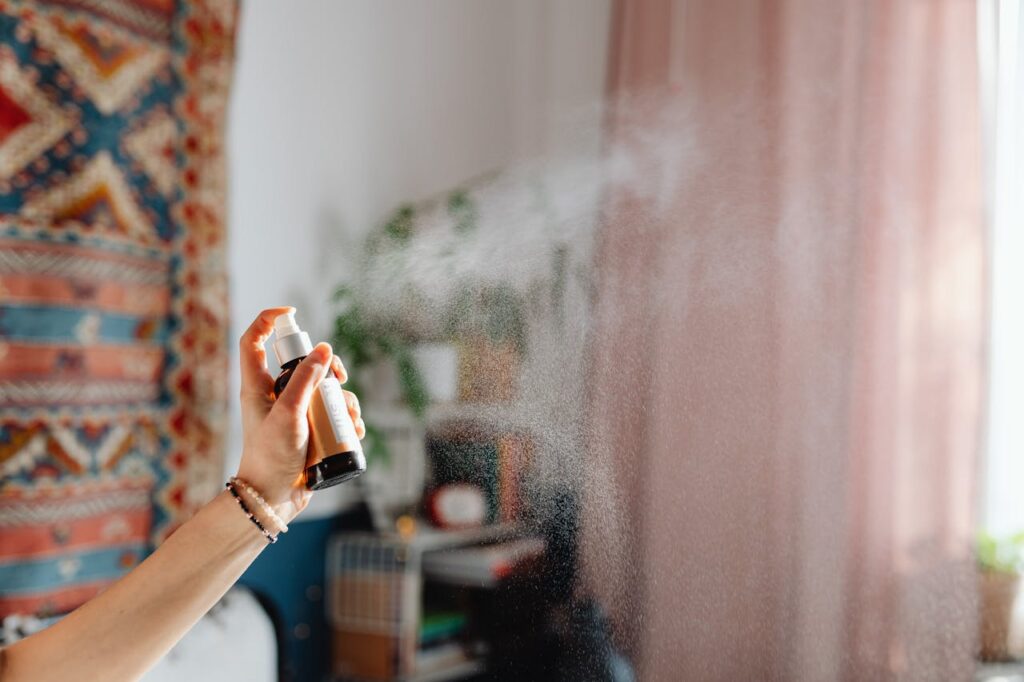
A Spray is a product for targeted, short-term use. It’s essential for treating carriers, cars, beds, or specific spots where the animal shows unwanted behavior (e.g., scratching the sofa). The spray’s effect starts faster but doesn’t last as long.
Rules for Using a Diffuser:
- The Right Spot: Plug the diffuser into the room where your pet spends the most time. Don’t plug it into the hallway if the animal is rarely there.
- Open Space: Don’t plug the device in behind curtains, doors, under tables, or shelves. The air around the diffuser must circulate freely for the pheromones to spread effectively.
- Away from Drafts: Don’t place the diffuser near open windows, ventilation, or air conditioning, or the pheromones will quickly dissipate.
- Constant Operation: The diffuser should be switched on 24/7. Don’t turn it off at night. One refill is typically designed for 30 days of continuous use.
- One Diffuser Per Room: A standard diffuser covers an area of 50-70 m². If you have a large house or your pet has access to several rooms, you might need multiple units.
Are They Actually Effective? Truth and Myths
It’s important to be realistic here. Pheromone products are not a magic pill that will instantly fix all behavioral issues. Their effectiveness depends on the individual animal’s characteristics, the cause of the stress, and correct usage.
Numerous studies confirm that pheromones are a powerful tool for reducing stress levels in many situations. However, they work best in combination with other methods: behavioral therapy, creating an enriched environment (toys, scratching posts, resting spots), and, if needed, consultation with a veterinarian or animal behaviorist. If the cause of aggression or soiling is a medical problem (like pain or a urinary tract infection), no pheromones will help without proper medical treatment.
Safety and Frequently Asked Questions (FAQ)
One of the main questions that concerns owners is: are these products safe? The answer is yes; when used correctly, they are totally safe.
- For Animals: Pheromones are species-specific. That means feline pheromones only affect cats, and canine ones only affect dogs. They don’t impact other household pets (rodents, birds).
- For People: Humans (including children and pregnant women) do not perceive animal pheromones and can’t smell them. The products are not sedatives and don’t cause addiction.
- Is there a smell? The pheromone itself is odorless. The diffuser base is a colorless, odorless oily liquid, which, when heated, might create a barely detectable specific aroma, but it is not an air freshener.
- How quickly should I expect results? Some animals react within the first day. However, for stable results, especially when addressing long-term issues, up to 4 weeks of continuous use of the diffuser may be required.
- Can I use a dog’s calming product for my cat? No way. Pheromones are strictly species-specific. A canine pheromone will be completely useless for a cat, and vice versa. Always use the product intended for the specific animal species.
Conclusion: Your Tool for Calm, Not a Panacea
Pheromone diffusers and sprays are a modern, scientifically backed, and safe way to help your pet deal with stress. They don’t mask the problem; they work on its root cause, creating a basic feeling of safety and comfort for the animal. It’s an excellent auxiliary tool that can significantly improve the quality of life for your cat or dog.
However, it’s important to remember that pheromones won’t replace your love, care, proper handling, and, if necessary, consultation with a specialist. Use them wisely, as part of a comprehensive approach to creating a happy and harmonious environment for your four-legged family member. That way, calm and mutual understanding will always reign in your home.