

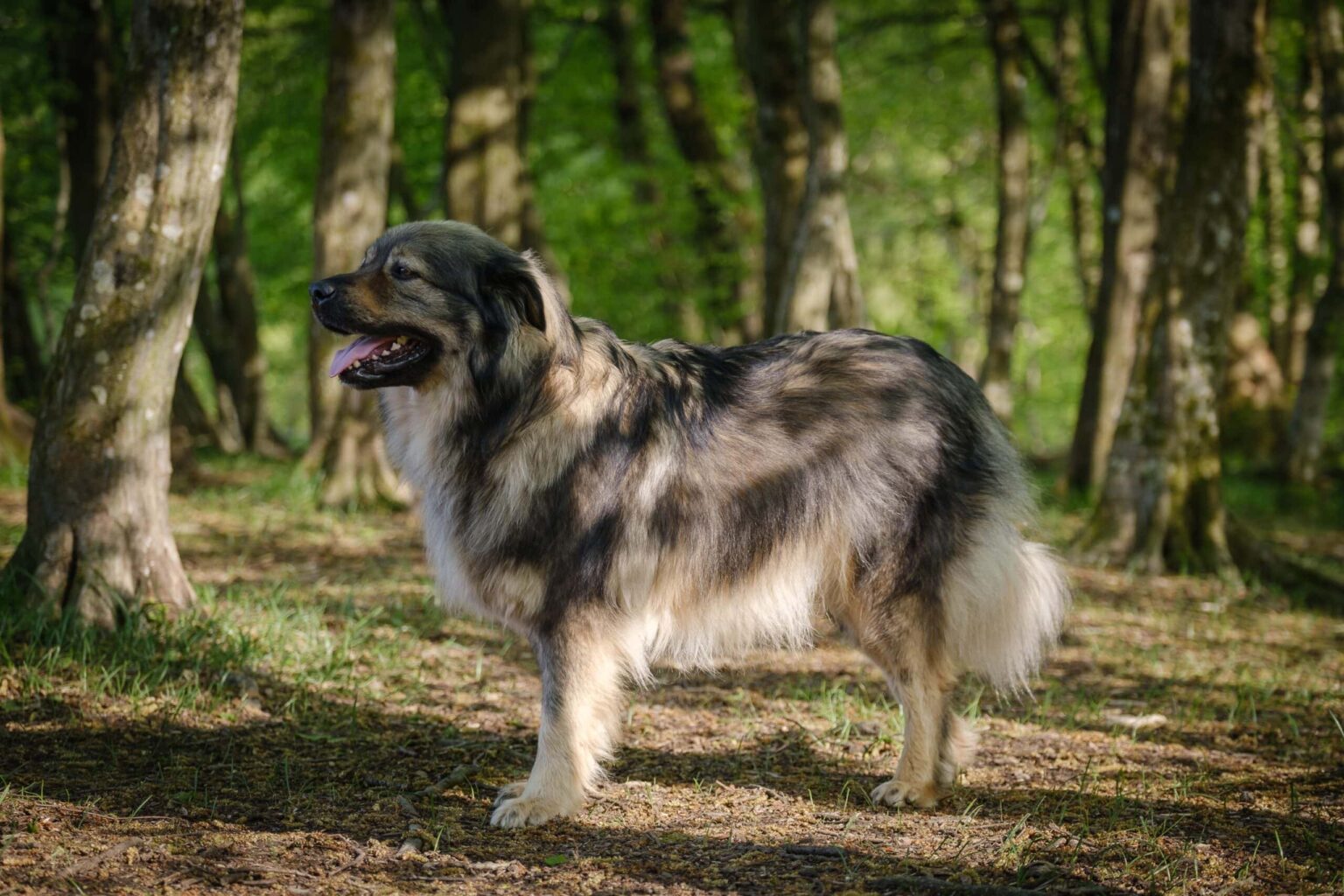
| Height | 54–63 cm |
| Weight | 25–42 kg |
| Lifespan | 11–14 years |
| FCI group | 2 · pinschers, schnauzers, molossoids, mountain dogs |
| Origin | Slovenia |
Exact ratings
- Generally a robust working breed
- Hip dysplasia
- Gastric torsion (deep chest)
- Ear infections (pendulous ears)
- Grooming the dense coat prevents matting
Balanced food for a large working breed, with weight control; feed in small portions (torsion risk). Regular brushing of the dense coat; enough space and moderate exercise.
The Karst Shepherd, also known as the Kraški ovčar, is a resilient, courageous, and well-balanced mountain dog of ancient origin, officially recognized as a national treasure and source of pride for Slovenia. Historically, this breed was developed to protect flocks from predators in the harsh conditions of the Karst plateaus. Today, it’s not just an excellent guard dog but also a devoted companion and reliable family protector. The dog gets its name from the Karst mountain range in the north-western Balkans. This detailed breed overview has been prepared for you by the Tvaryny portal, so you can learn all about this rare yet extraordinary dog, which is practically unknown outside its homeland.
Karst Shepherd: Key Breed Information

| Breed Name | Karst Shepherd (Kraški ovčar, Karst Shepherd) |
| Country of Origin | Slovenia |
| Time of Breed Emergence | Ancient times, first written mention — 1689 |
| FCI Recognition | 1939 (Standard No. 278) |
| FCI Group | Group 2 (Pinscher and Schnauzer, Molossoid breeds, Swiss Mountain and Cattle Dogs), Section 2.2 (Molossoid breeds, Mountain type) |
| Lifespan | 11–13 years |
| Height (at Withers) | Males: 57–63 cm Females: 54–60 cm |
| Weight | Males: 30–42 kg Females: 25–37 kg |
| Temperament | Courageous, calm, loyal, independent, excellent guardian |
| Usage | Guard dog, sheepdog, companion |
History of the Karst Shepherd Breed
The history of the Karst Shepherd stretches back to ancient times and is inextricably linked with the Alpine region of Slovenia. It is one of the oldest indigenous breeds, having developed on the Istrian Peninsula. It is believed that its ancestors arrived in the territory of modern Karst with the Illyrian tribes who migrated through the Balkans. These dogs were indispensable helpers to shepherds, protecting livestock from wolves and bears.
The first written record clearly describing these dogs belongs to the Slovenian baron and scholar, Janez Vajkard Valvasor. In his monumental work “The Glory of the Duchy of Carniola” (1689), he meticulously described the sturdy and fearless sheepdogs from the Karst plateau, which were an integral part of local life. This indicates that the breed had existed in a stable form for over 300 years.
Systematic breeding and standardization of the breed began much later. For a long time, the Karst Shepherd and its closest relative, the Šarplaninac, were considered a single breed called the “Illyrian Shepherd Dog”. Both breeds originated from common ancestors and developed under similar conditions in the Balkans. However, in 1939, the Fédération Cynologique Internationale (FCI) officially recognized the breed, registering it as the Illyrian Shepherd Dog. Only a decade later, in 1948, the standard was revised, and the Yugoslavian Cynological Association acknowledged that these were two distinct, though related, breeds. In 1968, the Karst Shepherd was finally separated as an independent breed, cementing its modern name — Kraški ovčar. This decision put an end to years of confusion. The history of this breed is a matter of national pride, as it is a vivid example of preserving a unique genetic heritage. You can also read about breeds with similar origins and functions, such as the Tornjak, on our website.
Despite its ancient history, the Karst Shepherd remains a relatively rare breed. The main gene pool is concentrated in Slovenia, where enthusiasts are making efforts to preserve and popularise it.
What the Karst Shepherd Looks Like: Breed Standard
The Karst Shepherd is a medium-sized dog, compact, sturdy, and muscular, with a thick, long coat that gives it a dignified appearance. It exudes calm strength and confidence. Its appearance is perfectly adapted to survival in harsh mountain conditions.
| Body Part | Description according to FCI Standard No. 278 |
|---|---|
| Head | Broad in the cranial region, slightly convex, proportionate to the body. The stop is smooth but noticeable. The muzzle is medium length, broad at the base, gradually tapering towards the nose. The nose is large, black. |
| Eyes | Almond-shaped, slightly oblique, chestnut or dark brown. The gaze is calm, confident, sometimes appearing melancholic, but always alert. |
| Ears | Pendant, lying close to the cheeks, V-shaped, medium length. Set not too high. |
| Body | Slightly elongated. Back straight, broad, muscular. Withers well-defined. Chest deep and broad, with well-sprung ribs. Belly slightly tucked up. |
| Tail | Sabre-shaped, long, reaching the hock. Thick at the base, densely covered with hair forming a “sultan”. Carried low in repose, raised to back level or slightly above when excited. |
| Limbs | Straight, parallel, with strong bones and well-developed musculature. Paws rounded, compact, with firm pads and strong dark claws. |
| Coat | Long (about 10 cm), dense, with abundant, thick undercoat. On the head, front of the ears, and limbs, the hair is short. Around the neck, it forms a thick collar (“mane”), on the hindquarters — “trousers”. |
| Color | Iron-grey (wolf-grey). Darker shades are preferred. The color is darker on the back, transitioning to lighter grey or sandy shades towards the belly and limbs. There is a dark “mask” on the head. |
Character and Temperament of the Karst Shepherd
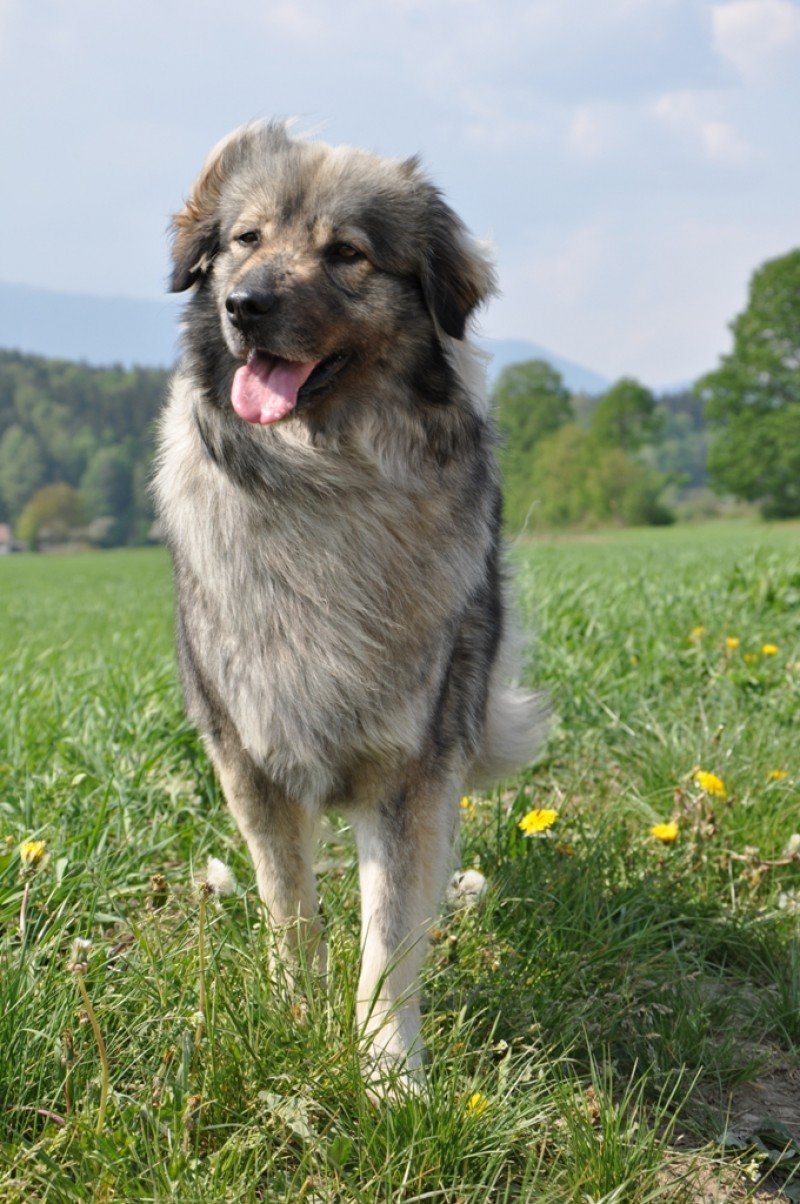
The character of the Karst Shepherd is a unique blend of working dog traits and a devoted family member. It possesses a balanced temperament, high intelligence, and an innate guarding instinct. This is a serious and brave dog that never shows aggression without cause.
- Devotion to Family. The Karst Shepherd forms a very strong bond with its owners and creates a deep connection. It is affectionate and patient with members of its “pack,” including children, whom it perceives as objects to be protected.
- Guarding Instinct. This is one of the breed’s key characteristics. The dog is always vigilant and controls its territory. It is not noisy but will alert to the approach of strangers with a loud, deep bark. It treats outsiders with suspicion but without aggression if it doesn’t perceive a direct threat.
- Independence and Self-Reliance. Like many pastoral breeds, the Karst Shepherd is accustomed to making its own decisions. This trait makes it somewhat stubborn in training. It will not blindly obey commands if it doesn’t see the point. The owner must earn its respect and become a partner, not a dictator.
- Attitude Towards Other Animals. With early socialization, the Karst Shepherd generally gets along well with other household pets, especially if raised with them. However, its strong territorial instinct may manifest towards unfamiliar dogs, particularly those of the same sex.
Overall, this is a dog for experienced owners who understand the psychology of working breeds. Its character is largely similar to other large guardians, such as the Spanish Mastiff, but with a more pronounced herding behaviour. At the same time, unlike some fighting breeds, such as the Ca de Bou, its aggression is directed towards defence, not attack.
Pros and Cons of the Breed
Before getting such a serious dog as the Karst Shepherd, it’s important to weigh all the pros and cons.
| Pros | Cons |
|---|---|
| ✅ Outstanding Guarding Qualities. A born guardian that doesn’t require special training to protect its territory. | ❌ Requires an Experienced Owner. Independent nature makes training difficult for novices. |
| ✅ Devotion and Love for Family. Very gentle and patient with close family members, especially children. | ❌ Early and Constant Socialization is Essential. Without it, may show excessive distrust towards strangers. |
| ✅ Robust Health. Health is generally robust, but no breed-wide list of hereditary diseases has been compiled — “not described” means “not studied”, not “not there”. | ❌ Sheds Heavily. The dense coat requires regular brushing, especially during seasonal shedding periods. |
| ✅ High Intelligence. The dog is capable of analyzing situations and making correct decisions independently. | ❌ Needs Space. Not the best choice for living in a small apartment. Ideal conditions are a private house with a large territory. |
| ✅ Calm and Balanced Temperament. Not prone to unprovoked aggression or hysterical behaviour. | ❌ Rare Breed. Finding a puppy outside Slovenia can be difficult and expensive. |
Karst Shepherd Health: Typical Diseases and Prevention
The Karst Shepherd is a breed that has undergone strict natural selection, which is why its representatives are distinguished by robust health and endurance. They are perfectly adapted to cold climates and have a strong immune system. Health is generally robust, but no breed-wide list of hereditary diseases has been compiled — “not described” means “not studied”, not “not there”.
Potential health issues to be aware of include:
- Hip and Elbow Dysplasia. This is a common problem among medium and large dog breeds. It is important to choose a puppy from responsible breeders who test their breeding dogs. For prevention, it is necessary to control the dog’s weight, ensure a balanced diet, and avoid excessive strain during puppyhood.
- Bloat (Gastric Dilatation-Volvulus). Like other large dogs with deep chests, Karst Shepherds can be prone to this dangerous condition. Prevention includes feeding small portions several times a day and avoiding physical activity immediately after meals.
- Eye Problems. Occasionally, conditions such as entropion (inward-rolling eyelid) or cataracts may occur, but they are not widespread in the breed.
Regular veterinary check-ups, timely vaccinations, and parasite treatments are essential for maintaining your pet’s health throughout its life.
Care and Maintenance of the Karst Shepherd
Living Conditions
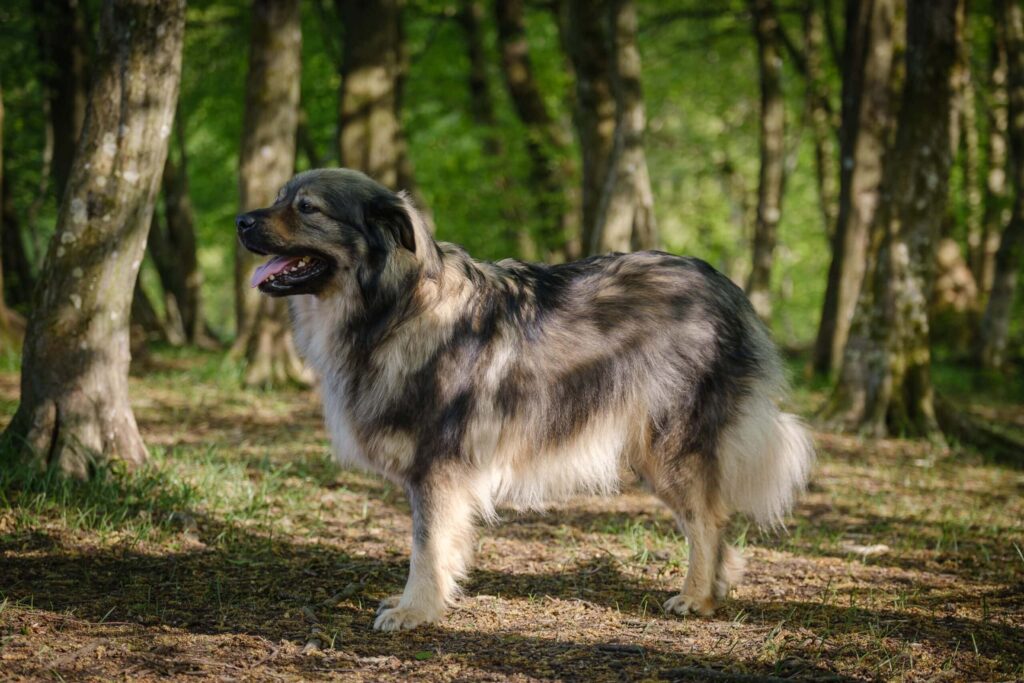
The best place to keep a Karst Shepherd is a private house with a large, securely fenced territory. This dog is not designed for apartment living. It needs space to move and the opportunity to perform its natural function – to patrol and guard. A high fence is mandatory, as these dogs can be prone to expanding their territory.
Coat Care
The Karst Shepherd’s thick double coat requires regular care. It needs to be brushed 1-2 times a week with a wide-toothed comb or a special deshedding tool (like a Furminator) to prevent matting. During seasonal shedding periods (spring and fall), the procedure will need to be done more frequently, possibly daily. Bathing the dog should only be done when absolutely necessary, as frequent washing disrupts the natural oily layer that protects the skin and coat. This breed’s coat has self-cleaning properties, so dirt can be easily brushed off once dry.
Physical Exercise and Activity
This is a very energetic and active dog that requires significant physical exercise. Daily long walks (at least 1-2 hours) are mandatory. Ideally, these should be walks over varied terrain, hikes in forests or mountains. Monotonous games like “fetch” can quickly bore this intelligent dog. It needs tasks that stimulate its mind: scent work, obedience training, or herding work.
Training and Socialization
Training a Karst Shepherd is not an easy task, but it is a very rewarding one. Due to their independence and stubbornness, they are not inclined to unquestioning obedience. They won’t serve you; they will cooperate with you. The key to success is building a trusting relationship based on mutual respect.
Early socialization is critically important. From puppyhood, introduce the dog to various people, sounds, places, and other animals. This will help raise a confident and well-adjusted dog that won’t show fear or aggression in unfamiliar situations. Harsh methods, shouting, and physical punishment are absolutely unacceptable. They will only destroy trust and can provoke defensive aggression. Positive reinforcement works best: praise, treats, and games. Training should be consistent, patient, and fair. This dog will gladly perform tasks related to its primary purpose, such as guarding a perimeter.
Feeding the Karst Shepherd: Key Recommendations
Representatives of this breed are not fussy eaters, but their diet must be balanced and nutritious. The basis of their diet should be animal protein.
- Natural Diet. The foundation should be raw or boiled meat (beef, lamb, turkey), offal, and sea fish (boneless). The diet is supplemented with porridges (buckwheat, rice), vegetables (carrots, pumpkin, zucchini), fermented dairy products, and eggs.
- Commercial Foods. If you choose dry food, it should be a high-quality super-premium or holistic product for large, active breeds.
Do not feed: hollow bones, fatty meat (pork), smoked products, sweets, chocolate, baked goods, grapes, onions. Always ensure access to fresh, clean water. It’s best to feed an adult dog twice a day to reduce the risk of bloat.
Interesting Facts About the Breed
- National Symbol: The Karst Shepherd is one of two indigenous breeds of Slovenia (along with the Istrian Hound) and is considered a national heritage.
- Border Patrol Dog: Thanks to their endurance and vigilance, these dogs were sometimes used to patrol mountainous border sections.
- “Name Dispute”: For a long time, Slovenia and Yugoslavia (later Serbia) disputed the origin of the “Illyrian Shepherd Dog”. Eventually, two separate breeds were recognized: the Slovenian Karst Shepherd and the Macedonian-Serbian Šarplaninac.
- Almost Extinct Breed: After World War II, the breed was on the verge of extinction. Its population was only restored thanks to the efforts of a small group of enthusiasts.
Frequently Asked Questions About the Breed (FAQ)
Is the Karst Shepherd suitable for a family with children?
Yes, provided there is proper upbringing and socialization. It is very patient and gentle with “its” children, perceiving them as part of the pack that needs protection. However, as with any large dog, interaction with small children should be supervised.
Can a Karst Shepherd live in an apartment?
This is highly undesirable. The dog needs space, its own territory to guard, and a high level of physical activity, which is difficult to provide in an apartment. This can lead to destructive behaviour and psychological problems for the animal.
Do they bark a lot?
They do not bark without reason. Their bark is a warning. They will vocalise if they notice something suspicious on their territory, but they are not prone to aimless barking.
How aggressive are they?
The Karst Shepherd is a protector, not an aggressor. Its reaction is always proportionate to the threat. It is self-confident and will not attack without serious reason. Distrust of strangers is a normal trait, but it should not escalate into uncontrolled aggression.
Where can you buy a Karst Shepherd puppy?
This is a rare breed, so finding a puppy outside Slovenia is a stroke of luck. The search should begin with official Slovenian cynological clubs and breeders specialising in this breed. Be prepared for a waiting period and thorough vetting by the breeder.
Video about the Breed
- A brave guardian of flock and home
- Devoted, level-headed with the family
- Withstands cold and bad weather
- Generally robust health
- Wary and watchful with strangers
- Self-reliant — not for a novice
- Not for an apartment — needs space
- Dense coat sheds heavily
| Šarplaninac | Tornjak | Istrian Shepherd (type) | |
|---|---|---|---|
| Height | 56–62 cm | 58–70 cm | 55–65 cm |
| Energy | 3 | 3 | 3 |
| Apartment | 1.5 | 1.5 | 1.5 |
| Beginners | 1.5 | 2 | 1.5 |
Is the Karst Shepherd the same as the Krainer?
Is the Karst Shepherd suited to a novice?
How rare is the breed?
FCI Standard No. 278 · Kinološka zveza Slovenije
For apartments · For kids · For beginners · Active · Smartest · Hypoallergenic · All rankings →