

Dreaming of a perfectly behaved dog that understands you with a glance and happily follows your lead? Imagine strolling through the park with your four-legged friend walking flawlessly by your side, sitting on command, and returning to you the moment you call. This dream can become a reality faster and easier than you might think, and the key is a small device with big potential: a clicker. It’s not just a trendy gadget; it’s a scientifically-proven tool that transforms dog training into a fun and engaging game for both you and your pet.
Clicker training is a philosophy of interaction built on trust and positive reinforcement. Forget about strict methods and punishment. Instead, you’ll learn to “capture” the right behaviors and reward them instantly, building a strong bond with your dog. In this article, we’ll break down everything from A to Z: what a clicker is, how it works, how to get started, and how to avoid common mistakes. Get ready to discover a new, joyful world of mutual understanding with your furry companion. You can find more great tips and tricks like these on Tvaryny.
What Is Clicker Training and Why Is It So Effective?
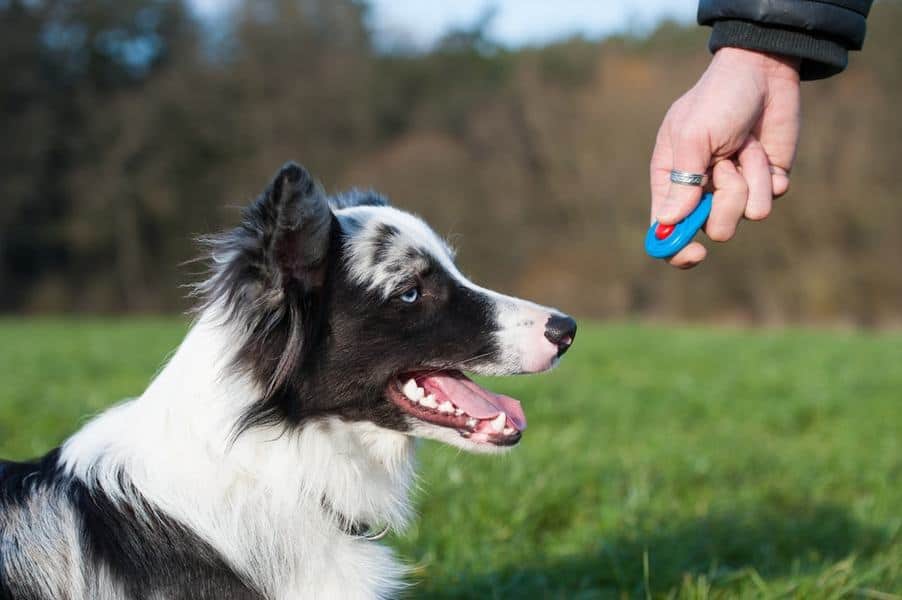
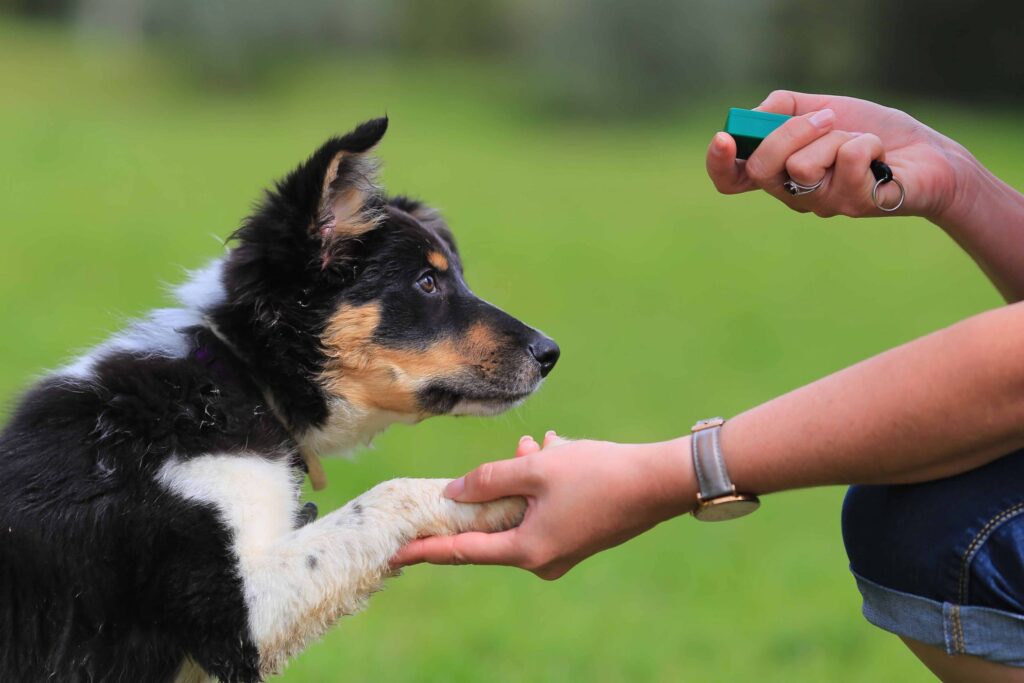
Imagine trying to explain a complex idea to a foreigner without knowing their language. You might gesture and point, but your signals would be imprecise. A clicker is like a universal translator in the world of dogs. It’s a small plastic box with a metal strip inside that, when pressed, makes a clear, unique “click” sound.
The core of the method is simple: a click is a marker. It instantly tells your dog, “Yes! That exact thing you just did is right, and you’re about to get a reward for it.”
- Instant Feedback: A click is much faster than saying “good” or “yes.” It allows you to mark the desired action the very moment it happens, so your dog knows exactly what they’re being praised for.
- Clarity and Consistency: The sound of a clicker is always the same, unlike our voices, which can change in tone depending on our mood. For a dog, it’s an unambiguous signal that can’t be confused with anything else.
- Positive Association: Because a reward (a treat) always follows the click, the sound of the clicker itself becomes extremely pleasant for your dog. This is the foundation of the method, known as positive reinforcement.
Key Benefits of Clicker Training
- Speeds up learning: Dogs grasp the concept of a task faster because they get immediate and clear feedback.
- Builds trust: Training becomes a fun game without stress or force. This strengthens your bond and makes your dog more confident.
- Encourages initiative: Your dog will start to offer different behaviors, trying to earn that click and reward. This develops their intelligence and creativity.
- Versatility: The method is great for teaching everything from basic commands (“Sit,” “Stay”) to complex tricks and even correcting problem behaviors.
- Helps in tough cases: The clicker is invaluable for working with shy or anxious dogs, as it allows you to reward even the smallest steps toward the correct behavior.
Getting Ready for Your First Session: What You’ll Need
The beauty of clicker training is its simplicity. You don’t need expensive equipment. Here’s your starter kit:
- A dog clicker. They come in various styles: with a button, a metal plate, and different volumes. Any simple one will do to start. If your dog is timid, choose a model with a quieter sound.
- High-value treats. This is the key ingredient! Forget about regular kibble. You need jackpot treats: tiny pieces of cooked chicken, cheese, hot dogs, or special training treats. The main thing is that they should be small (one-bite size) and something your dog absolutely loves.
- A quiet space. Conduct your first sessions at home, where there are no distractions like other people, pets, or loud noises.
- A positive attitude. Your good mood is contagious. Be patient and celebrate every small success.
Step 1: “Loading” the Clicker. Teaching the Clicker’s Language
Before you start training, you must first explain to your dog what this strange sound means. This process is called “loading” the clicker. The goal is to create a strong association in your dog’s mind: CLICK = TREAT.
- Hold a handful of treats (about 10-15 pieces) in one hand and the clicker in the other.
- Click the clicker (just once).
- Immediately give your dog one treat.
- Repeat this 10-15 times in a row. Don’t ask your dog to do anything. They can be sitting, standing, or lying down—it doesn’t matter. Your only job is to click and treat.
Pro Tip: Do several of these short sessions (1-2 minutes each) throughout the day. To check if the clicker is “loaded,” click it when your dog isn’t looking at you. If they instantly turn their head in anticipation of a treat, congratulations—your clicker is ready to go!
Practice: Learning the First Basic Commands
Now that your dog understands the meaning of the click, you can move on to the fun part: learning commands. We’ll start with simple but fundamental exercises.
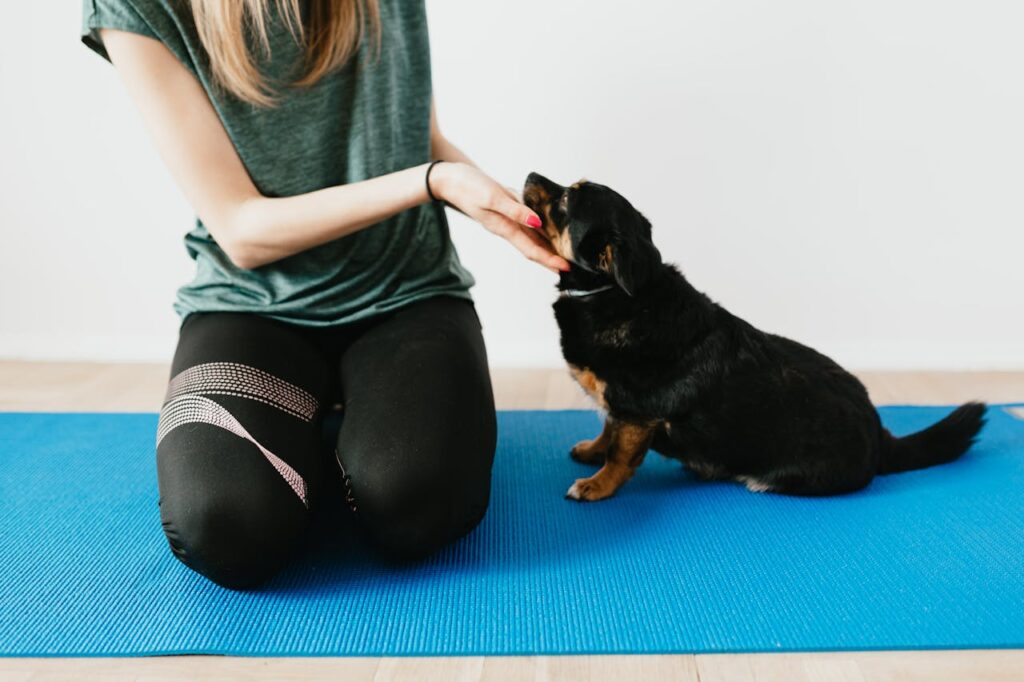
The “Sit” Command (using luring)
- Hold a treat in your hand and bring it up to your dog’s nose.
- Slowly raise your hand up and slightly back over your dog’s head. Their nose will follow your hand, and their back end will instinctively lower into a sit position.
- The very moment your dog’s rear touches the floor, CLICK!
- Immediately after the click, give them the treat from your hand.
- Repeat a few times. Once your dog is sitting consistently, add the verbal command “Sit” a second before you start the hand movement.
The “Come” Command (one of the most important)
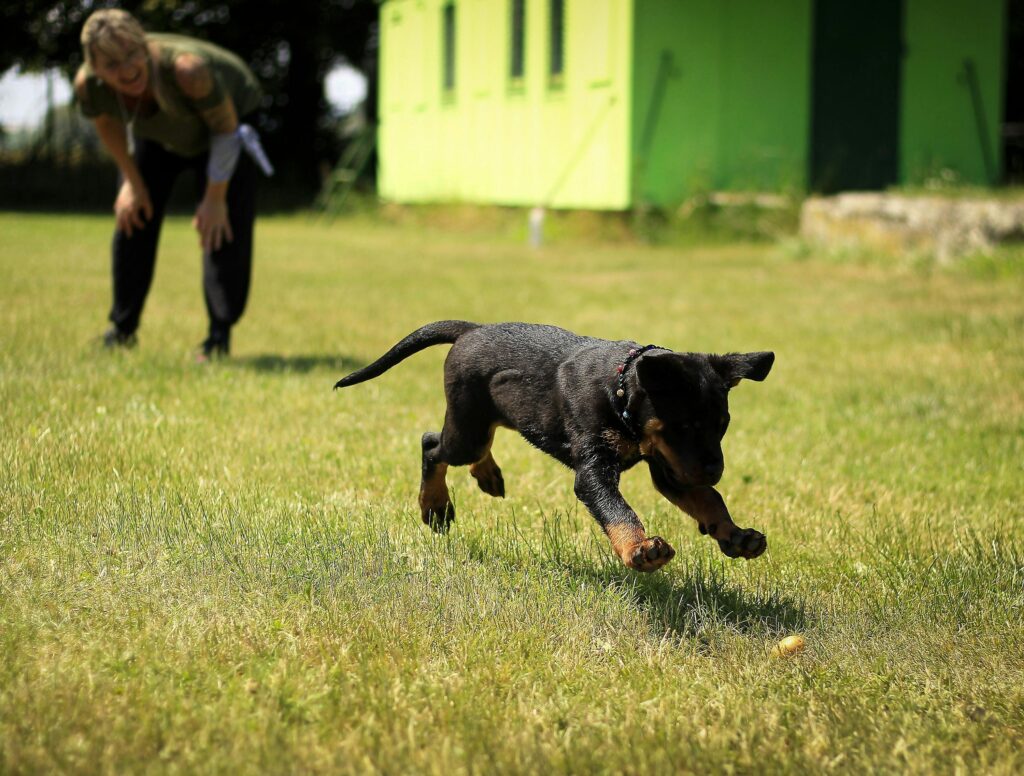
A reliable recall is crucial for your pet’s safety. It’s vital that your dog associates coming back to you with only positive feelings. Proper training of this command can help prevent many issues, such as a dog jumping on people from over-excitement during greetings.
- Start indoors at a short distance (6-10 feet).
- Call your dog with a happy, high-pitched voice, saying their name and the command, “Come!” You can crouch down or clap your hands lightly to get their attention.
- As soon as your dog takes a step toward you, CLICK!
- When they reach you, give them several treats in a row and praise them enthusiastically. Make it a real celebration!
- Gradually increase the distance and introduce minor distractions.
Common Mistakes and How to Fix Them
Obstacles can happen on the road to success. Here are some of the most common issues and how to overcome them.
| Problem | Possible Cause | Solution |
|---|---|---|
| My dog doesn’t react to the click. | The clicker isn’t “loaded” enough. | Go back to step one. Do a few more click-and-treat sessions without any demands. |
| My dog performs the command slowly or reluctantly. | 1. The treats aren’t valuable enough. 2. The training session is too long. | 1. Use something your dog loves even more (cheese, meat). 2. Keep sessions short (3-5 minutes) and always end on a successful note. |
| I click too late or too early. | Lack of practice with timing. | Practice without your dog. Toss a ball and try to click the exact moment it hits the floor. This will improve your reaction time. |
| My dog is afraid of the clicker sound. | The sound is too loud for a sensitive dog. | Muffle the sound by clicking it inside your pocket, wrapping the clicker in a cloth, or using a retractable pen with a clicker-like sound. Start “loading” from a distance. |
When to Call a Professional?
Clicker training is a powerful tool, but sometimes you might face challenges that are difficult to overcome alone, such as complex behaviors, aggression, or deep-seated fears. In these cases, it’s important to seek help. A professional trainer can create a customized plan for you. If you’re unsure if you need help, it’s worth learning about when a dog trainer is necessary and how to choose a qualified professional to ensure the right approach for your pet.
Frequently Asked Questions (FAQ)
Can I use a word instead of a clicker, like “Yes!”?
Yes, you can. This is called a “verbal marker.” The key is that the word should be short, unique (not a word you use in everyday conversation), and always said with the same cheerful intonation. However, a mechanical click is a more stable and distinct signal for a dog.
Will I have to carry a clicker and treats for the rest of my dog’s life?
No. The clicker is a tool for teaching new behaviors. Once a command is well-established and your dog performs it reliably on a verbal cue, the clicker is no longer needed for that specific command. You can also make rewards “variable”—giving them only occasionally to keep your dog interested. But don’t forget to praise your dog with your voice and affection!
Can I use clicker training with an old dog?
Absolutely! The old saying “you can’t teach an old dog new tricks” is a myth. Adult and even senior dogs learn wonderfully with a clicker. They might need a little more time, but the process itself is fantastic mental stimulation that keeps their brains sharp.
Conclusion: The Key to a Better Bond Is in Your Hands
Clicker training is so much more than just a training method. It’s a path to building a deep, trusting relationship with your dog. You learn to communicate, not command; to motivate, not force. Each click is a small “thank you” to your pet for their effort and smarts.
Don’t be afraid to experiment, be patient, and most importantly, have fun with the process. You’ll be amazed at how smart, capable, and ready to cooperate your four-legged friend truly is. Remember: every training session is an investment in your happy future together.