

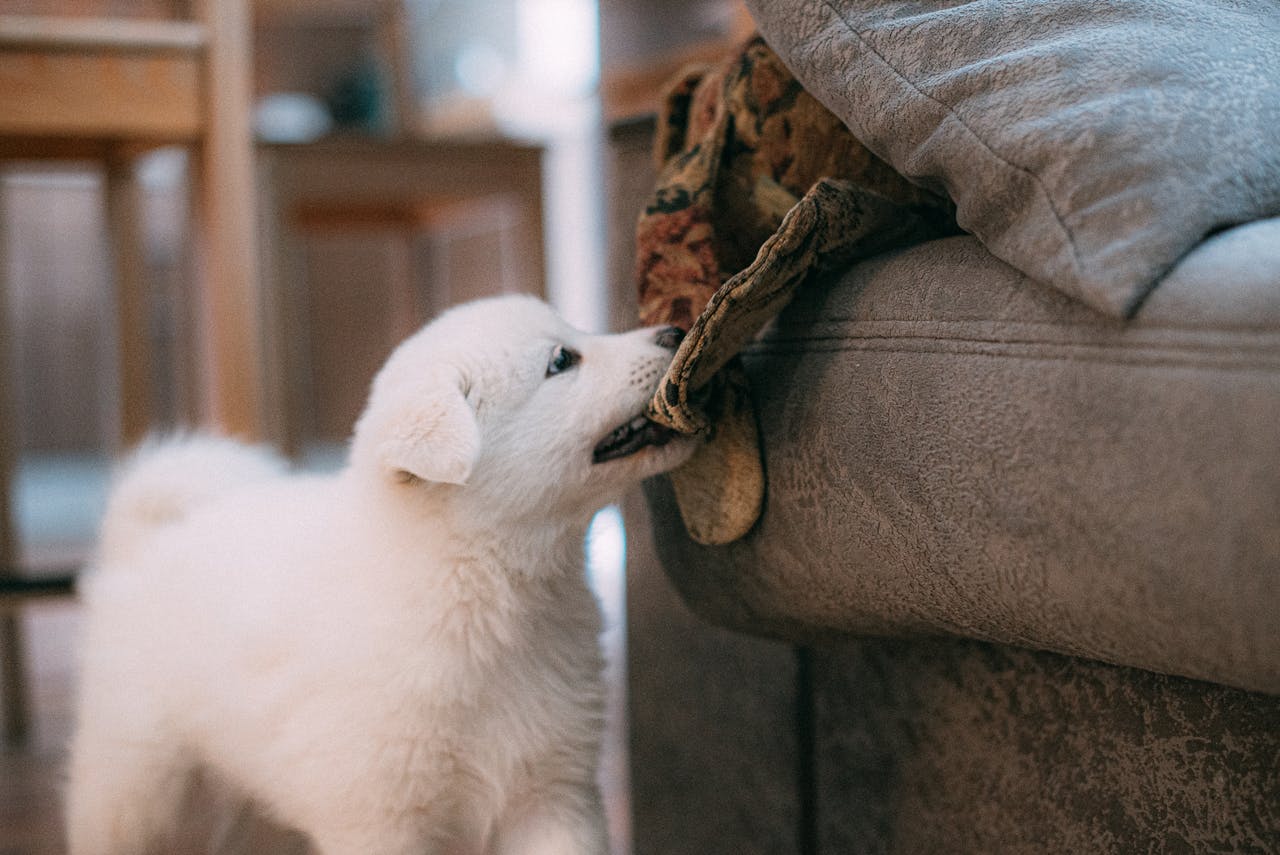
Your home is filled with joyful barking and the pitter-patter of little paws. You adore your new family member, but there’s one small issue that turns playtime into a trial—those needle-sharp puppy teeth that constantly sink into your hands, legs, and clothes. Sound familiar? Don’t worry, you’re not alone. This is one of the most common problems all puppy owners face. The main thing is to know that it’s not a sign of aggression, but a natural developmental stage that can and should be gently corrected. We’ll tell you in detail how to do this on Tvaryny.
The right approach to this problem won’t just save your hands from scratches; it will also lay the foundation for a healthy and trusting relationship with your dog for years to come. After all, you are teaching them the boundaries of acceptable interaction with humans right now.
Why Do Puppies Bite Anyway? Understanding the Reasons is the First Step to a Solution
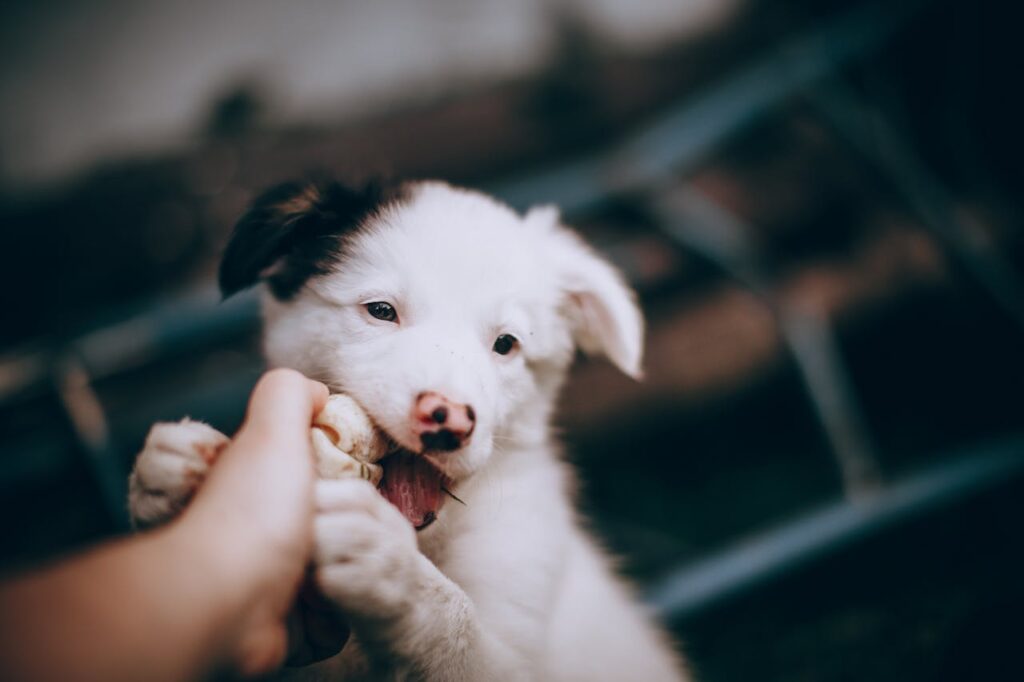
Before you begin the training process, it’s important to understand what drives your little “land shark.” This will help you act patiently and consistently, without getting too frustrated. There are a few key reasons for this behavior.
- Teething. Just like with human babies, puppies between 3 and 6 months old go through a phase of losing their milk teeth and growing permanent ones. This process causes discomfort and itchy gums, and chewing and biting help to relieve it. Your hands just happen to be the most convenient “teether.”
- Instinct and Learning. When playing with their littermates, puppies learn to control the strength of their bite. If one bites another too hard, the other puppy yelps and stops playing. This is how the little one learns what “too much” means. Now it’s your role to become their main teacher in this matter.
- Exploring the World. Puppies don’t have hands with sensitive fingers, so their main tool for exploring their environment is their mouth. They will try to bite everything that interests them: furniture, shoes, and, of course, you.
- Playful Aggression. This isn’t true aggression, but rather excessive excitement during play. When a puppy “gets in a frenzy,” it might forget to be gentle and start biting harder. Your job is to teach it to calm down and control its emotions.
Step-by-Step Instructions: How to Stop a Puppy from Biting
This method is based on imitating the natural behavior of puppies in a pack. It requires consistency and the participation of all family members. Be ready to repeat these actions dozens of times a day.
Step 1: The “Forbidden Bite” Method
When you’re playing with your puppy and it starts to bite your hands, do the following:
- Make a loud, short sound. This could be “Ouch!”, “Yip!” or even a sound imitating a puppy’s yelp. The sound should be unexpected, not necessarily loud. This will surprise the puppy and make it release its jaws for a moment.
- Immediately stop the game. Take your hand away right away. Don’t pull it out of its mouth forcefully, to avoid triggering the “tug-of-war” instinct. Just relax your hand and take it away when the puppy loosens its grip.
- Ignore the puppy. This is a key moment. Stand up, turn away, and cross your arms. Show with your whole demeanor that the game is over. Ignore it for 15-30 seconds. For a puppy, the loss of attention and play is the most serious “punishment.”
Step 2: Redirect Attention to a Toy
After a short pause (15-30 seconds), offer the puppy a proper alternative for chewing.
- Grab a toy. This could be a rope, a rubber ring, or a special chew bone.
- Resume the game, but with the toy. Actively praise the puppy when it grabs and chews the toy: “Good boy!”, “That’s a good dog, play with your toy!”. This shows it: “Biting hands—the game stops. Biting a toy—the game continues, and I am happy.”
Step 3: Consistency and Patience
Repetition is the mother of all learning. If you are consistent, the puppy will understand the rules very quickly. It’s important that all family members and guests follow these rules. If mom forbids biting, but a child allows it, the puppy will be confused, and the training process will be prolonged.
What You Absolutely CANNOT Do
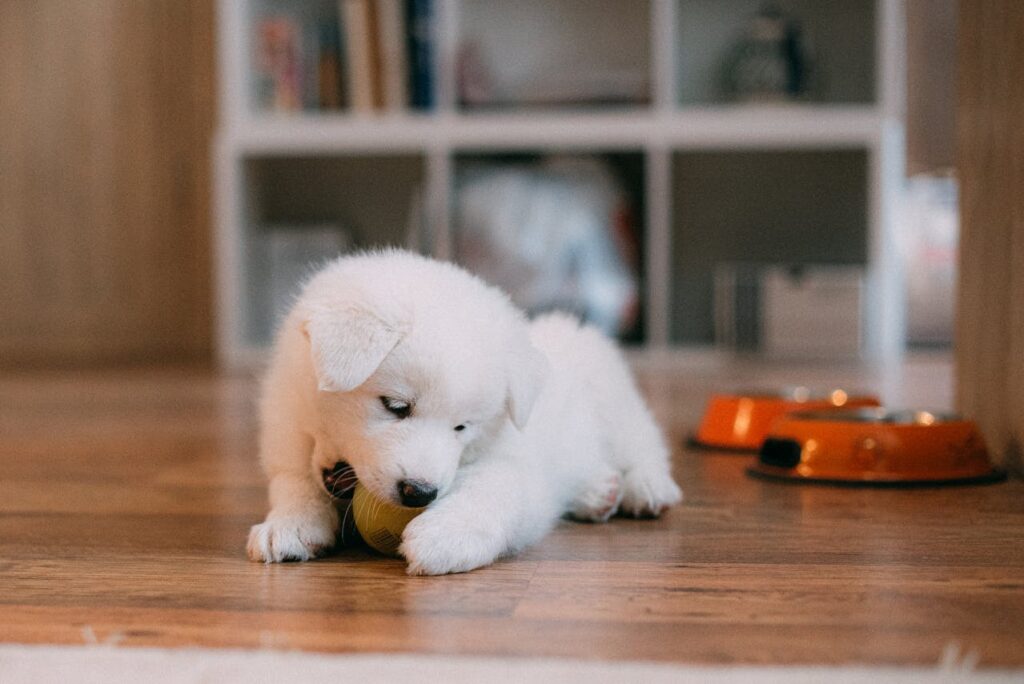
Often, in trying to solve the problem, owners make mistakes that only make the situation worse. Remember, knowing what to do when a puppy bites is just as important as knowing what not to do.
- ❌ Do NOT use physical punishment. Never hit your puppy, poke its nose, or shake it by the scruff of its neck. This can cause fear, real aggression, and destroy your trust. The dog might start to fear your hands, which will make caring for it difficult in the future.
- ❌ Do NOT yell at the puppy. A loud, angry yell can be perceived as a “bark” in return, which will only stoke the puppy’s playful frenzy even more. Your sharp “Ouch!” should be a signal, not an expression of anger.
- ❌ Do NOT hold the puppy’s muzzle shut. Some “experts” advise holding a puppy’s mouth shut. This can be painful and, again, lead to negative associations with your hands.
- ❌ Do NOT play with your puppy using bare hands. In the initial stages, always use toys as a buffer between your hands and the puppy’s teeth. Don’t teach it that hands are a toy.
Prevention and Useful Commands for Puppy Training
In parallel with discouraging biting, it’s important to work on general training and prevention.
Provide Plenty of the “Right” Chewing Objects
A puppy should always have a choice of 3-5 toys with different textures: rubber, textile, wooden (specialized), and chew bones. Change them out periodically to maintain interest.
Teach the “Leave It” or “Drop It” command
This is one of the most important commands. Start with a simple exercise: show the puppy a treat in an open palm. When it tries to take it, say “Leave it!” and close your fist. As soon as the puppy turns away or stops trying to get the treat, praise it and give it a treat from your other hand. Gradually make the exercise more difficult by putting the treat on the floor.
Control the Level of Excitement
Don’t let the puppy get to a state where it loses control. If you see that the game is getting too rough, and the puppy is biting your hands harder and harder, take a break even before the “forbidden bite” happens. Calm it down, pet it, give it a “Sit” command, and then continue the game more calmly.
When to Contact a Dog Trainer or Behaviorist
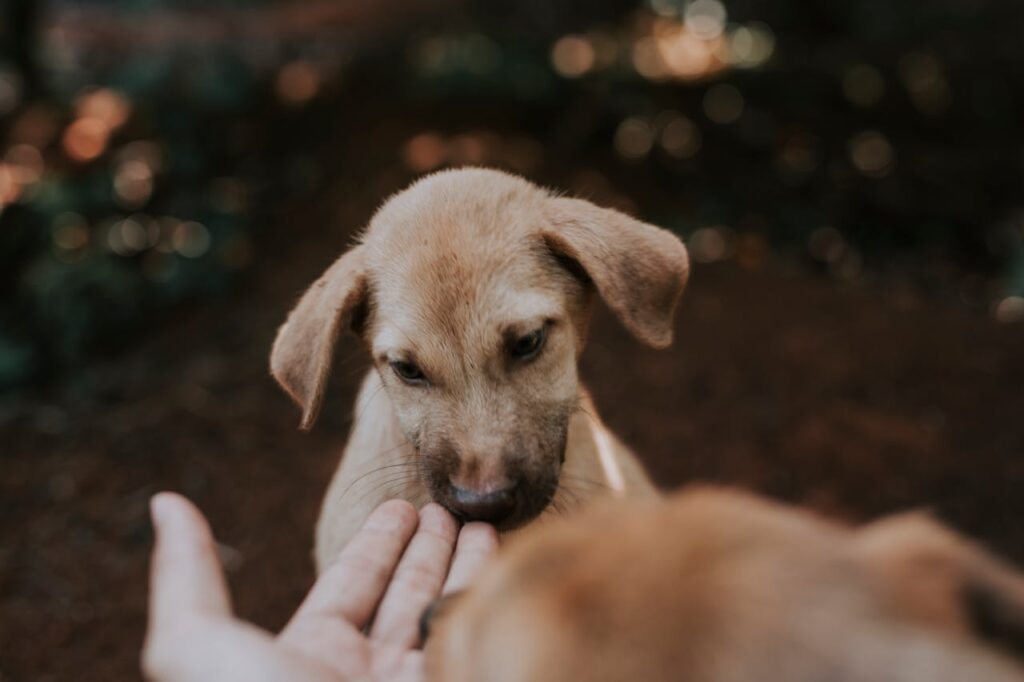
In 99% of cases, playful puppy bites are normal and can be corrected with the methods described above. However, there are situations where a professional consultation is needed:
- If the bites are accompanied by growling, a tense posture, and baring its teeth outside of a play context.
- If the puppy doesn’t just nip, but breaks the skin until it bleeds, and does so aggressively.
- If the behavior doesn’t improve within a few weeks despite your consistent efforts.
- If you simply feel you can’t cope and you need help.
Don’t be shy about asking for help. A professional outside perspective can quickly identify mistakes in your communication with the dog and correct them.
Frequently Asked Questions (FAQ)
At what age should a puppy stop biting?
Typically, with proper training, unwanted playful biting will significantly decrease or disappear by 6-8 months of age, after its full set of adult teeth have come in and it has learned the rules.
What should I do if a puppy bites my legs and pants while walking?
Use the same principle. Stop. Freeze. When the puppy lets go of your pants, offer it a toy that you can carry with you on walks or around the house. Do not run or shake your leg at it – this will only encourage a game of “hunt.”
Is it true that some breeds bite more than others?
Yes, breeds that were bred for hunting or herding (terriers, sheepdogs, retrievers) may be more prone to grabbing and biting during play, as it’s part of their working instincts. This doesn’t mean they are aggressive; it just means they need more persistent correction and energy redirection.
Conclusion: Patience and Love Are Your Main Tools
Teaching a puppy not to bite is not a one-day process, but a marathon that requires you to be a consistent, patient, and loving leader. Remember, every time you react correctly to a bite, you are not just solving the current problem, but investing in your dog’s future, teaching it to be a well-behaved and pleasant companion.
Don’t give up. Praise its smallest successes, provide your pet with toys and your attention, and soon those sharp little teeth will stop being a problem, and your games will become truly joyful and safe.