

| Height | 52–61 cm |
| Weight | 20–25 kg |
| Lifespan | 10–12 years |
| FCI group | 6 · scenthounds |
| Origin | Finland |
Exact ratings
- Hip dysplasia
- Ear infections (drop ears)
- Eye disease
- Generally an exceptionally healthy breed
- Injuries on the hunt
A quality food for an active breed, with weight control. Plenty of exercise is a must; clean the drop ears; the dense coat holds warmth well in frost.
The Finnish Hound (Suomenajokoira) is one of the most beloved hunting breeds in its homeland of Finland and throughout Scandinavia. This energetic and independent dog was bred specifically for hunting hares and foxes in the harsh conditions of northern forests and snowy plains. It’s famous for its loud, melodious baying, which allows the hunter to track its location from a great distance. At the same time, thanks to its friendly and calm nature at home, the Finnish Hound can make a wonderful companion for an active family. Learn more about this unique breed and others on Tvaryny.
This breed combines stamina, an excellent nose, and an innate passion for the chase. However, potential owners should remember that this is not just a handsome pet. The Suomenajokoira is a serious working dog that requires significant physical exercise and consistent training. Its independent mind and hunting instincts demand patience, understanding, and leadership from its owner. In this article, we’ll take a detailed look at all aspects of the breed: from its history and standards to its temperament, care, and health, so you can make an informed decision.
Finnish Hound Breed at a Glance
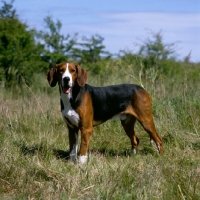
| Breed Name | Finnish Hound (Suomenajokoira) |
| Country of Origin | Finland |
| Time of Origin | Late 19th Century |
| Purpose | Hunting hares and foxes, companion dog |
| FCI Classification | Group 6 (Scent Hounds and Related Breeds), Section 1.2 (Medium Scent Hounds). With working trial. |
| Height (at withers) | Males: 21.5–24 inches (55–61 cm); Females: 20.5–23 inches (52–58 cm) |
| Weight | 44–55 lbs (20–25 kg) |
| Lifespan | 11–13 years |
| Temperament | Energetic, friendly, independent, calm at home |
| Coat Care | Minimal, weekly brushing |
| Activity Level | Very high |
| Tendency to Bark | High, especially while working |
| Compatibility with Children | Very good |
| Compatibility with Other Animals | Good with other dogs, needs supervision with small animals due to strong hunting instinct |
History and Origin of the Finnish Hound
The history of the Finnish Hound is deeply intertwined with the cultural and geographical characteristics of Finland. The need for a durable, reliable hunting dog capable of working in challenging conditions was the driving force behind the creation of this breed. Its development began in the late 19th century when Finnish hunters and dog breeders aimed to create a national breed that would be perfectly suited to the local hunting environment.
The foundation of the Suomenajokoira was laid using various European hounds that came to Finland. A significant contribution to the breed’s development was made by Finnish jeweler S.F. Tammelin, who is considered the “father” of the breed. He and his like-minded colleagues systematically crossbred local hounds with dogs imported from England, Germany, Switzerland, and Scandinavia. Among the ancestors of the Finnish Hound are the English Foxhound, German hounds, and Swiss and Scandinavian relatives. In terms of appearance and hunting abilities, it resembles other scent hounds such as the Hamilton Hound and the Schiller Hound.
The goal of the selective breeding was to produce a dog with these key qualities:
- Endurance: The ability to work for long hours without tiring, often in deep snow.
- Excellent Scenting Ability: The skill to find and confidently follow a scent trail.
- Loud Baying: A melodious and powerful bark that allows the hunter to keep track of the dog in dense forests.
- Independence: The ability to make its own decisions while pursuing prey.
- Calm Temperament: Outside of hunting, the dog was expected to be balanced and friendly to its family.
The first breed standard was developed in 1932, and official recognition by the Fédération Cynologique Internationale (FCI) came in 1954. Today, the Finnish Hound remains one of the most popular breeds in Finland, where it is highly valued for its working abilities. Outside of Scandinavia, the breed is still quite rare, but its fans appreciate its unique combination of hunting drive and friendly character.
Breed Standard and Appearance
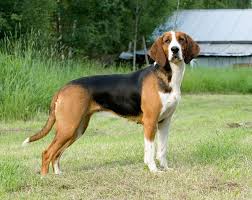
The Finnish Hound is a medium-sized dog with a robust but not heavy build. Its appearance is a harmonious blend of strength, speed, and endurance. This is an athletic dog with well-developed muscles and elegant body lines, built for sustained running over varied terrain.
The head of the Suomenajokoira is elongated and noble. The skull is slightly domed. The stop is smooth but noticeable. The muzzle is long and rectangular, with powerful jaws. The lips are tight-fitting and dry. The nose is large and black, with well-developed nostrils, which indicates its exceptional sense of smell. The eyes are medium-sized, oval, and dark brown, with an intelligent, calm, and friendly expression.
The ears are one of the breed’s most distinctive features: they are long, floppy, set low, and lie close to the head. Their tips are slightly rounded.
The body has a rectangular shape, slightly longer than it is tall. The back is straight and strong. The chest is deep and long, providing ample space for the lungs and heart, which is essential for an endurance runner.
The tail is long, saber-shaped, and set low. When the dog is at rest, it hangs down, but it is raised when the dog is in motion, though it should never curl over the back. The limbs are strong and straight, with well-developed muscles that allow the dog to move easily over any terrain.
The Finnish Hound’s coat is short, dense, and coarse to the touch, with a soft and thick undercoat that provides reliable protection from the elements. The classic coloring is tricolor. The main color is a rich tan, with a large black “mantle” or “saddle” on the back and sides. White markings are mandatory on the head (a blaze), neck, chest, lower part of the legs, and the tip of the tail. This bright and contrasting coat makes the Finnish Hound highly recognizable.
Key Parameters of the Finnish Hound Breed Standard
| Parameter | Male | Female |
|---|---|---|
| Ideal Height at Withers | 22.5-23 inches (57-59 cm) | 21-22 inches (54-56 cm) |
| Acceptable Height at Withers | 21.5-24 inches (55-61 cm) | 20.5-23 inches (52-58 cm) |
| Weight | 44-55 lbs (20-25 kg) | 44-55 lbs (20-25 kg) |
| Body Shape | Slightly elongated | |
| Eyes | Dark brown, oval | |
| Bite | Scissor bite | |
Finnish Hound Character and Temperament
The Finnish Hound’s character is a unique blend of two opposing traits. When hunting, it is a passionate, relentless, and independent pursuer who is completely dedicated to its work. It can follow a scent for hours, ignoring fatigue or weather conditions, and alerting the hunter of its progress with a loud, melodious voice. Its ability to make independent decisions is a huge advantage in the forest but can create certain challenges in everyday life and training.
At home, the Suomenajokoira transforms into a calm, gentle, and friendly companion. It is very family-oriented and forms a strong bond with its owner and other family members. These dogs are not prone to aggression toward people; they are patient and gentle with children, which makes them great family pets, provided their need for activity is met. They get along well with other dogs, especially if they grew up together, as hounds are used to working in packs. However, their strong hunting instinct makes cohabitation with cats, rodents, and other small animals risky. Any small creature can be perceived as potential prey.
Finnish Hounds are smart dogs, but their intelligence is combined with a certain stubbornness. They’re used to thinking for themselves, so blindly following commands isn’t their style. They may seem disobedient if training is monotonous or too harsh. Successful training requires an owner with a firm but fair character who can engage the dog and become an authoritative leader.
Pros and Cons of the Finnish Hound
Like any breed, the Finnish Hound has its strengths and weaknesses. Before getting one, it’s important to objectively assess whether you can provide it with the necessary conditions and if its temperament matches your lifestyle.
| ✅ Pros | ❌ Cons |
|---|---|
| Friendly Temperament: Very gentle and loyal to the family, shows no aggression toward people. | Extremely High Activity Needs: Requires long and intense physical exercise every day. |
| Great Companion for Children: Patient and gentle when interacting with kids. | Tendency to Bark: Has a loud and ringing voice that it uses frequently. Not suitable for apartment living. |
| Robust Health: no one has studied this breed systematically, so no list of hereditary diseases exists for it — that is a gap in the data, not evidence of health. | Stubbornness and Independence: Can be difficult to train for inexperienced owners. |
| Low Maintenance Grooming: Short coat doesn’t require complex grooming. | Strong Hunting Instinct: Cannot be let off the leash in unfenced areas, poses a threat to small animals. |
| Excellent Hunter: An ideal partner for hunters of hares and foxes. | Requires Space: Thrives best in a house with a large, securely fenced yard. |
Care and Maintenance
Caring for a Finnish Hound is not complicated, but it has its specifics related to the breed’s active lifestyle and physiology.
Grooming and Coat Care
The short and coarse coat of the Suomenajokoira doesn’t require professional grooming. It is sufficient to brush the dog once a week with a rubber brush or grooming mitt to remove dead hair and keep the skin healthy. During seasonal shedding (in spring and fall), this procedure can be performed more often. Bathe the dog only when necessary, using specialized shampoos for short-haired breeds so as not to disrupt the skin’s natural protective layer. Frequent washing can lead to dryness and irritation.
Ear, Eye, and Nail Care
You should pay special attention to the ears. The long, floppy ears are poorly ventilated, which creates a favorable environment for bacteria and fungi. Regularly (once a week) inspect the ear canals for redness, dirt, or a bad smell. If needed, clean them with a specialized lotion and a cotton pad. The eyes should be checked daily and any natural discharge removed with a clean cloth. Nails usually wear down during active walks on hard surfaces, but if you hear them clicking on the floor, they need to be trimmed with nail clippers.
Physical Exercise and Living Conditions
This is the most important aspect of owning a Finnish Hound. This dog is absolutely not suitable for apartment living or for inactive people. It needs at least 1.5-2 hours of intense exercise daily. This can include long walks, running alongside a bicycle, or hikes in the woods. The ideal living situation for it would be a house with a large, securely fenced yard where it can run freely. The fence must be tall and secure, as a hound can easily escape if it catches an interesting scent.
Training and Socializing the Finnish Hound
Training a Finnish Hound is a challenge that requires patience, consistency, and an understanding of the breed’s psychology. Because of their innate independence, they are not a breed that aims to please their owner at all costs. You have to engage and motivate them.
Early socialization is key to raising a well-balanced dog. From a puppy’s age, introduce it to different people, sounds, places, and other animals. This will help prevent the development of fear and aggression. The foundation of training should be based on positive reinforcement methods: praise, treats, and toys. Harshness, shouting, and physical punishment are unacceptable. They are not only ineffective but can also destroy the trust between you and your dog, leading to resistance and aggression.
The biggest problem in training is the “come!” command. A strong hunting instinct makes the dog ignore everything else when it’s on a scent trail. Therefore, practicing this command must be a top priority from puppyhood, starting in a quiet place and gradually making the conditions more difficult. Even a well-trained Finnish Hound is not recommended to be let off the leash near roads or in unfamiliar places.
Health and Common Breed Diseases
Finnish Hounds are generally a robust and healthy breed, which is a result of selective breeding focused on working qualities and endurance. Their average lifespan is 11-13 years. However, like any breed, they are prone to certain health conditions.
- Ear Infections (Otitis): This is the most common problem due to the ear structure. Regular hygiene is the best prevention.
- Hip Dysplasia: While not as common as in some other large breeds, the risk exists. It’s important to choose a puppy from parents with appropriate health tests.
- Cerebellar Ataxia (Hereditary Ataxia): This is a serious inherited neurological disease that leads to a loss of coordination. Fortunately, a genetic test is available, and responsible breeders test their dogs to prevent the spread of the disease.
- Bloat and Gastric Torsion (GDV): Like many dogs with deep chests, Finnish Hounds are susceptible to this life-threatening condition. Prevention involves feeding smaller portions 2-3 times a day and avoiding physical activity immediately after eating.
Diet Recommendations
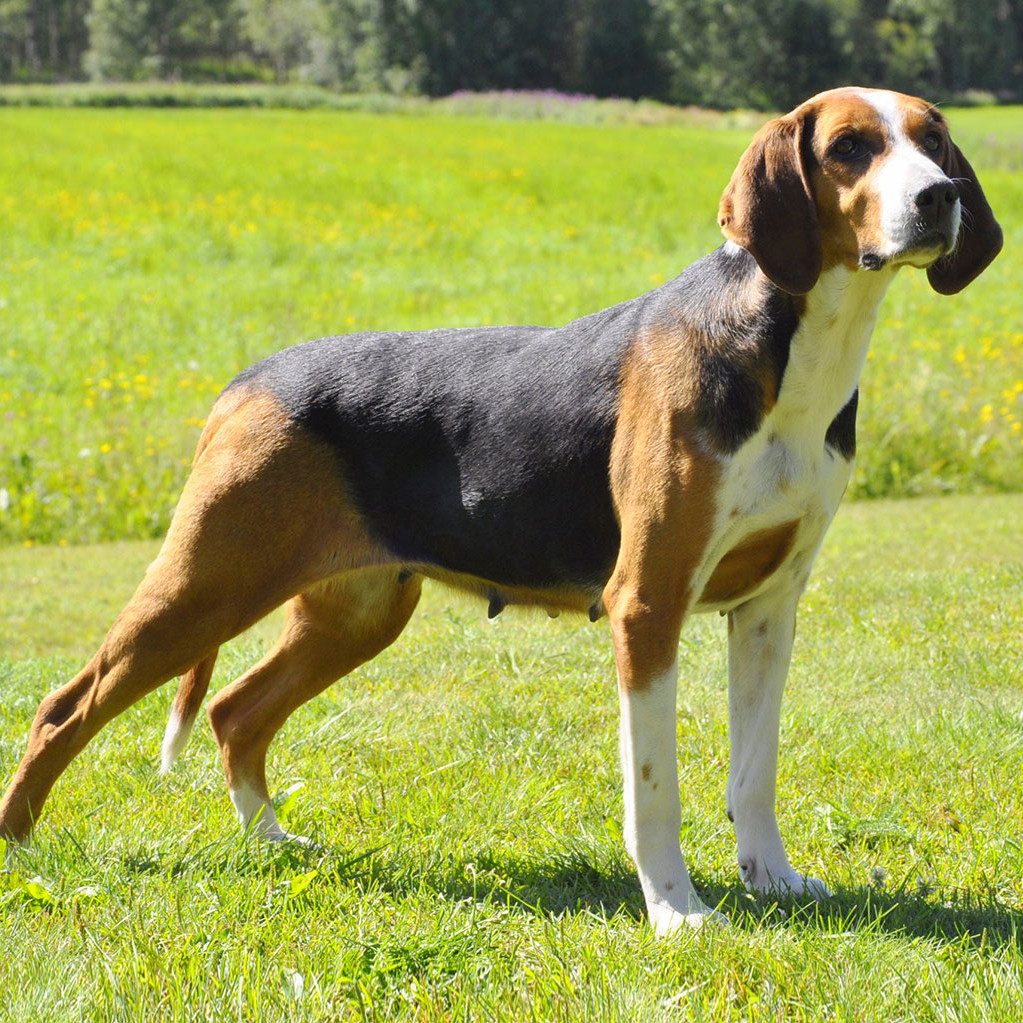
A Finnish Hound’s diet must meet its high energy needs. The diet should be balanced and rich in high-quality animal protein, which is the main building block for muscles. The basis of the diet can be either a high-quality dry food for active medium to large breeds or a raw food diet.
When choosing dry food, pay attention to the ingredients: meat (chicken, beef, turkey) should be listed first, not grains. The protein content should be at least 25-30%, and fat – 15-20%. For a raw diet, lean meat and offal should make up the majority of the food (about 60-70%). The rest is supplemented with cereals (buckwheat, rice), vegetables (carrots, pumpkin, zucchini), fermented dairy products, and a small amount of vegetable oil. It’s important to remember that adult dogs should be fed twice a day to reduce the risk of bloat. The dog should always have access to clean and fresh drinking water.
The Finnish Hound as a Hunting Dog
It’s impossible to talk about the Finnish Hound without mentioning hunting, as this is its true calling. It is a specialized hound for hares and foxes. Its work style is to use its exceptional sense of smell to find the animal’s trail, flush it out, and chase it, alerting the hunter with its characteristic, loud baying. The dog works independently, often at a considerable distance from the hunter, which makes its independence and ability to make decisions its key qualities. It does not retrieve the prey; its job is to “present” the animal to the hunter.
The Finnish Hound is perfectly adapted to working in harsh conditions: its thick undercoat protects it from the cold, and its strong paws allow it to cover miles over snow and forest undergrowth. Its endurance is simply astonishing. In Finland and Sweden, field trials are still held to assess the working abilities of these dogs. Thanks to their outstanding hunting talents, the Finnish Hound is similar to other hound breeds like the Halden Hound or the Harrier, which are also valued for their work on the trail.
Fun Facts About the Finnish Hound
- National Treasure: The Suomenajokoira is the national breed of Finland and is considered an important part of the country’s hunting culture.
- “Musical” Bark: The Finnish Hound’s voice is so characteristic that hunters call it “musical” or “melodious.” An experienced owner can determine from the intonation of the baying how fresh the trail is and how far away the prey is.
- The Name Says It All: The name “Suomenajokoira” literally translates from Finnish as “Finnish driving hound” (from “ajaa” – to drive, to chase, and “koira” – dog), which accurately describes its purpose.
- Popularity Champion: For many decades, the Finnish Hound has consistently been among the top five most popular breeds in Finland.
Frequently Asked Questions (FAQ)
Is the Finnish Hound suitable for an inexperienced owner?
Generally, no. Because of their stubbornness, independence, and high demands for physical exercise, this breed is better suited for people who already have experience with active and independent dogs.
Do they shed a lot?
Shedding is moderate and increases twice a year (in the spring and fall). Regular brushing helps to keep this process under control.
Can they live outside in a kennel?
Yes, a Finnish Hound can live in a kennel, provided it has an insulated doghouse that protects it from the weather. However, it absolutely needs daily close contact with its family, otherwise, the dog will suffer from loneliness.
How much does a Finnish Hound puppy cost?
The price can vary significantly depending on the pedigree, the reputation of the breeder, and whether the parents have working diplomas. As the breed is rare outside Scandinavia, finding a puppy can be difficult and expensive.
Can a Finnish Hound be used just as a companion and not for hunting?
Yes, but only if you can provide it with an adequate substitute for hunting. This means daily long runs, hikes, and engaging in sports like canicross or bikejoring, where the dog can satisfy its need to run.
Video about the Breed
- Level-headed, friendly
- A very healthy, hardy breed
- Resistant to hard frost
- Devoted to its handler
- A keen nose — follows the scent
- A passionate loud bark on the trail
- Independent, at times stubborn
- Needs plenty of exercise and space
| Hamiltonstövare | Dunker | Norwegian Elkhound | |
|---|---|---|---|
| Height | 46–61 cm | 47–58 cm | 49–53 cm |
| Energy | 4.5 | 4.5 | 4 |
| Apartment | 2.5 | 2.5 | 2.5 |
| Beginners | 3 | 3 | 2.5 |
Is the Finnish Hound healthy?
Is the Finnish Hound suitable for an apartment?
Is it good with children?
FCI Standard No. 51 · The Kennel Club
For apartments · For kids · For beginners · Active · Smartest · Hypoallergenic · All rankings →