

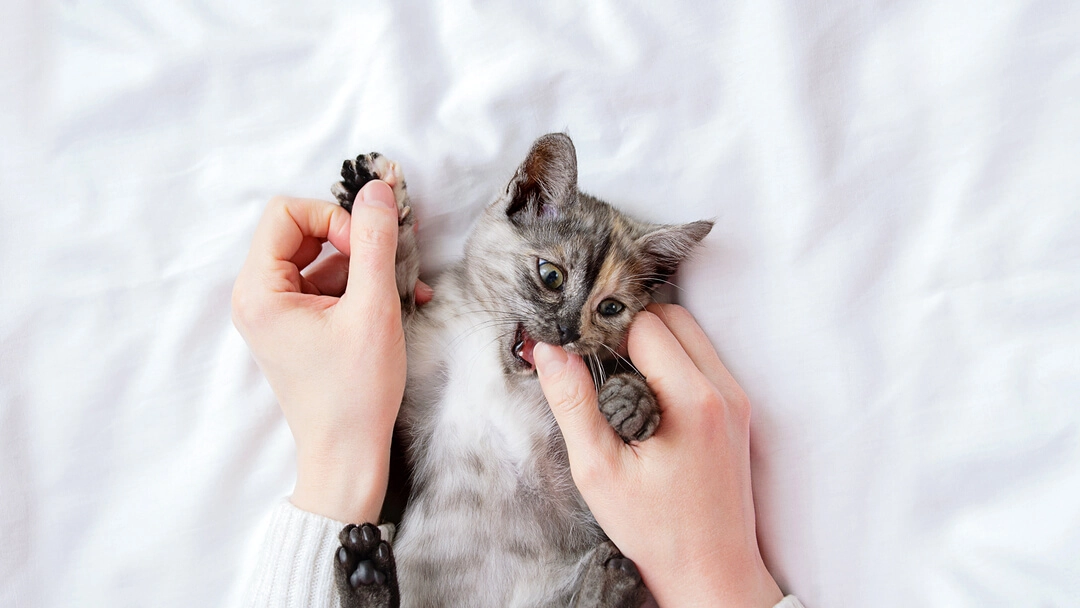
Small, fluffy, and incredibly cute… until it transforms into a miniature predator, sinking its sharp little teeth into your hands. Sound familiar? You’re not alone. Many owners face the problem of their charming kitten biting and scratching, turning playtime into an acupuncture session and their hands into a battleground.
The good news: in 99% of cases, this isn’t a sign of cruelty or a “bad character.” It’s a normal, though unwelcome, part of growing up. This is a common problem, but not a life sentence. Understanding the reasons for this behavior is the first step to solving it. Our job isn’t to punish, but to gently but firmly teach the little one the rules of living together and redirect their energy into a safe outlet. Find out more about this on Tvaryny.
Why Do Kittens Bite at All? Understanding the Reasons
Before treating the “symptom,” you need to understand its source. A kitten’s aggressive behavior almost always has a logical explanation.
1. Play Aggression – The #1 Cause
This is the most common type of aggression. In the wild, kittens learn to hunt by wrestling with their brothers and sisters. They practice biting, pouncing, and grappling on them. When a kitten enters your home, it’s deprived of these playmates. And who do they replace them with? That’s right – your hands and feet.
The little one doesn’t intend to hurt you. It’s simply playing, honing the hunting skills ingrained by nature. It doesn’t yet realize that your skin is much more delicate than it’s littermates’ fur.
2. Lack of Early Socialization
Ideally, kittens should stay with their mom and littermates until 10-12 weeks of age. It’s during this period that the mother cat and siblings teach ‘bite inhibition.’ If a kitten bites a sibling too hard, that one will yelp and stop the game. This is how the little one learns: ‘Aha, I can’t do that, or the game will end.’
If the kitten was taken from its family too early, it simply never learned this lesson. Now, you’ll have to be that ‘teacher’ for it.
3. Teething
At approximately 3 to 6 months of age, kittens’ baby teeth are replaced by their permanent teeth. This process can cause discomfort and itchy gums. To get relief, the kitten will start to chew on everything in its path – including your fingers.
4. Fear, Pain, or Defense
This is a less common but more serious cause. If a kitten bites not during play, but when you try to pick it up, pet it in a certain spot, or approach it, this could be a defensive reaction. It might be in pain (from an injury or illness) or have had a negative experience with people in the past and is now defending itself. This type of aggression is usually accompanied by hissing, growling, and flattened ears.
Common Owner Mistakes: What NOT to Do
Often, without realizing it, we encourage the very behavoir we want to stop. Before we get to how to train a kitten not to bite, let’s look at how we’re making the situation worse.
- Playing with the kitten using your hands or feet. This is mistake #1. When you wiggle your fingers under a blanket or tickle the kitten with your hand, you’re sending a direct signal: ‘My hand is a toy. It’s okay to catch, scratch, and bite it.’ When the kitten grows up, this ‘hunting’ habit won’t disappear, but the bites will be much more painful.
- Physically punishing the kitten. Never hit a kitten, tap its nose, yell at it, or shake it. Cats don’t understand punishment the way dogs do. Instead, this teaches them to fear you, destroys trust, and can lead to an escalation of aggression – the animal will start to defend itself for real.
- Pulling your hand away quickly. When a kitten bites you, the instinctive reaction is to yank your hand away. To the kitten, this looks like ‘the prey is escaping.’ This only fuels its hunting drive and provokes it to latch on tighter.
- Ignoring ‘light’ bites. Inconsistency is the enemy of training. If you let it gently ‘mouth’ your finger today but scold it for a hard bite tomorrow, the kitten won’t understand where the line is. The rule must be one: teeth on human skin are taboo. Always.
A Step-by-Step Plan: How to Train a Kitten to Stop Biting and Scratching
Okay, we’ve reached the main event – the practical steps. Behavior correction requires patience and 100% consistency from everyone in the household.
Step 1. The Immediate ‘STOP-PLAY’ Reaction
This is the most important method, as it mimics the reaction of a kitten’s littermates.
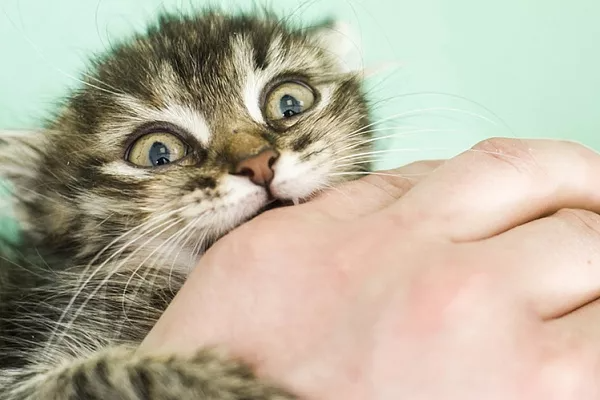
- As soon as you feel teeth or claws on your skin: Immediately make a short, loud, and sharp sound. It could be ‘Ouch!’, ‘Ow!’, or even a high-pitched yelp. This should startle the kitten and let it know it hurt you.
- Freeze. Don’t pull your hand away. Just stop all movement. Your hand should become ‘dead’ and uninteresting. This shows the kitten that aggressive play makes the ‘prey’ disappear.
- Stop the game. If the kitten doesn’t let go, gently press your finger on its nose or carefully push your finger slightly deeper into its mouth (this is uncomfortable, and it will release you). Immediately after, get up and silently leave the room for 1-2 minutes.
- Repeat. Always. The kitten must learn the clear connection: ‘Bite -> Yelp -> Game Over -> Owner Leaves.’ This is the most effective ‘punishment’ for a social animal.
Step 2. Redirection: ‘Hands Are for Petting, Toys Are for Playing’
You can’t just forbid a kitten from biting. It’s an instinct. You must give it a safe alternative. This golden rule should become your mantra.
Never start playing with your bare hands. You must always have a ‘mediator’ – a toy. Carry toys in your pockets. If the kitten starts to ‘nip’ your hand while you’re petting it, immediately offer it a wand toy or a ball. Praise it when it switches its attention to the toy.
Step 3. Wear Out the Predator: The Right Kind of Games
Very often, play aggression in kittens is simply a result of excess energy. ‘A tired kitten is a good kitten.’
- Play actively: You must have 2-3 intense play sessions for 15-20 minutes every day. The best times are in the morning and evening, when kittens are most active.
- Imitate prey: Use wand toys with feathers or a ‘mouse’ on the end. Don’t just wave the toy right in the kitten’s face. Mimic prey behavior: hide the toy around a corner, drag it along the floor, let it ‘freeze.’
- Let them win: At the end of the game, always let the kitten ‘catch’ and ‘kill’ the prey (the toy). This gives them a sense of completing the hunting cycle and brings satisfaction. You can give them a treat afterward.
The Rescue Arsenal: Which Toys Actually Work
The right toys aren’t a luxury; they’re a necessity for behavior correction. They help burn off pent-up energy and keep your hands at a safe distance.
- Wand toys (teasers): An absolute must-have. They let you play at a distance, mimicking a bird or insect.
- Small balls and mice: Ideal for the kitten to ‘hunt’ independently. Choose ones that are easy to carry in their mouth.
- Interactive toys: Ball tracks, battery-operated toys that move on their own. They are great for entertaining the kitten when you’re not home.
- Teething toys: Special rubber or textile toys that are safe and intended for chewing. Especially important during the teething phase.
When to Worry (Red Flags)
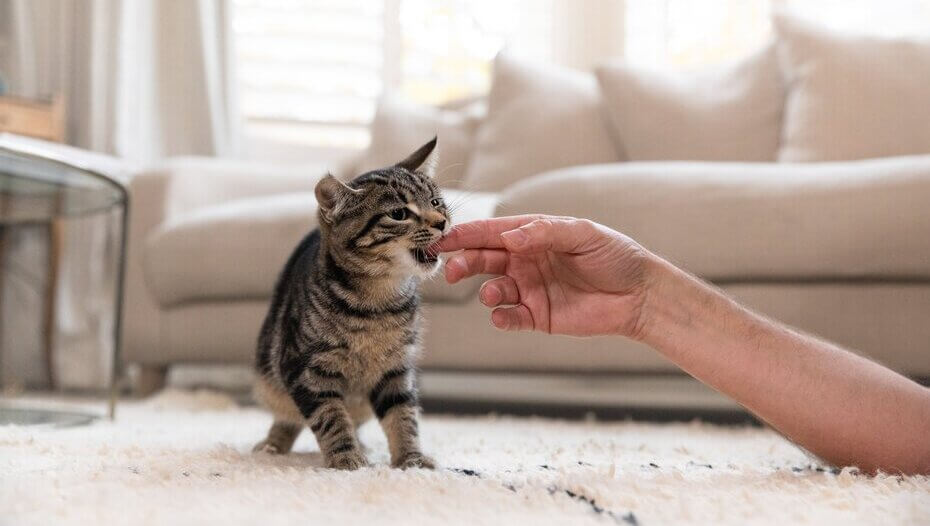
Usually, play aggression fades or significantly decreases by 1-2 years of age with proper correction. But there are situations when professional help is needed.
If a kitten’s aggressive behavior is accompanied by intense hissing, growling, flattened ears, dilated pupils (outside of playtime), and ambush attacks, it could be a sign of fear, pain, or a serious behavioral disorder.
Consult your veterinarian if:
- The aggression appeared suddenly and for no apparent reason.
- The kitten is aggressive when you touch a specific part of its body (it could be in pain).
- The aggression is directed not only at your hands but also at your face.
- Your correction methods show no results whatsoever after several weeks.
The vet must rule out medical causes (pain, neurological problems). If the kitten is healthy, you may need a consultation with an animal behaviorist (feline specialist), who can help develop an individual correction plan.
Conclusion: Patience and Consistency Are Your Greatest Allies
Training a kitten to stop biting and scratching is a marathon, not a sprint. It takes time, an understanding of cat psychology, and, most importantly, absolute consistency from all family members. Don’t scold the little one for its instincts – become its wise mentor instead.
Remember the formula for success: Stop-Play + Redirection + Active Play (with toys!). By following these rules, you won’t just save your hands; you’ll also build a strong, trusting relationship with your pet, who will grow into a well-balanced and affectionate adult cat.