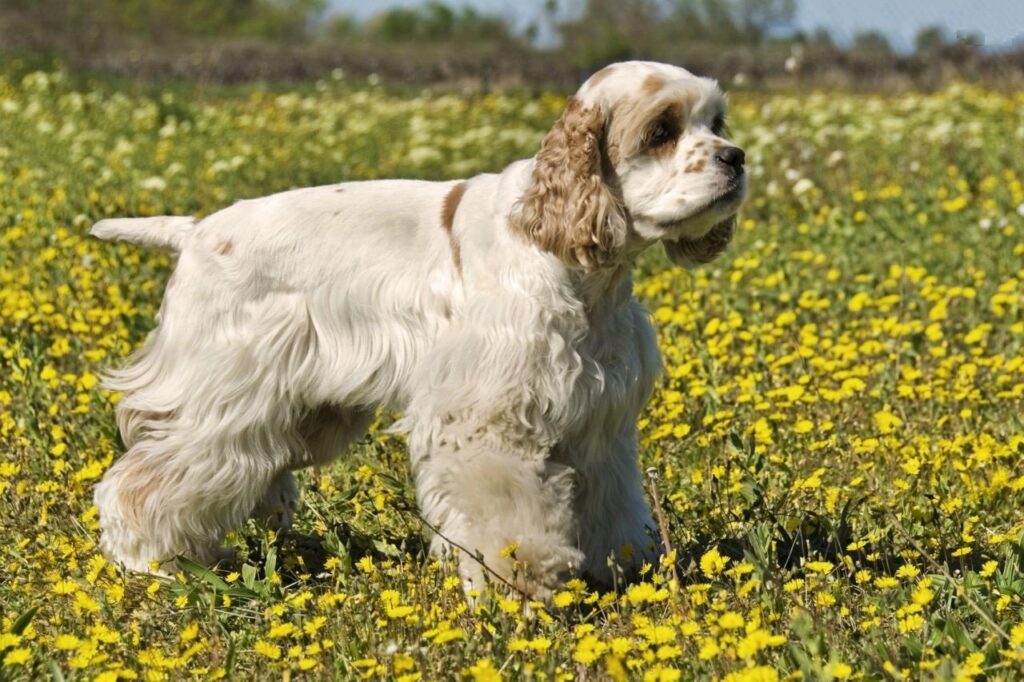
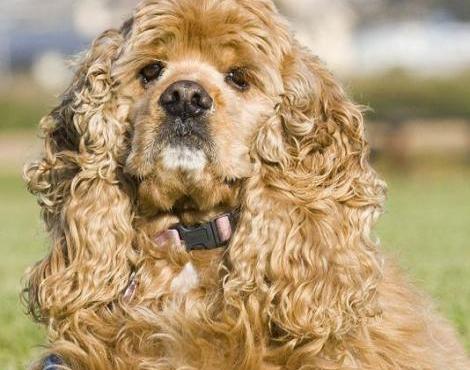
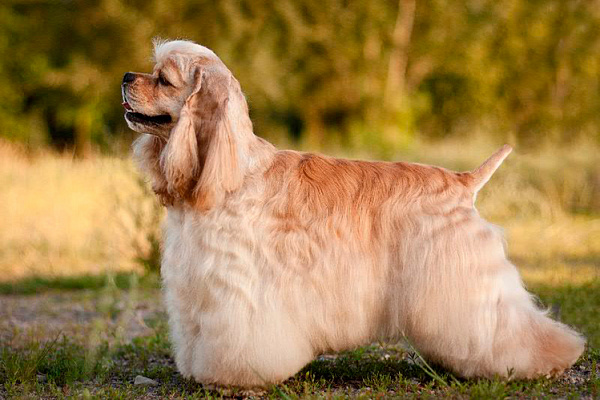
The smallest spaniel with an angelic face and a cheerful heart — gentle and joyful: friendly, devoted, affectionate and well-balanced. The American Cocker Spaniel is the smallest of the gun dogs, one that today wins hearts not with field talents but with its charming looks and gentle nature; an ideal family companion, it gets on well with everyone, including children and animals.
The American Cocker Spaniel is more than just a dog; it's a true companion, a family member, and a source of endless joy. As the smallest member of the gundog group, this breed now captures hearts not with its hunting prowess, but with its charming looks, gentle nature, and incredible devotion. Its cheerful disposition, friendliness, and desire for harmony with all family members, including other pets, make it an ideal choice for many. Find out more about this and many other breeds on Tvaryny.
Thanks to its sweet appearance, expressive eyes, and obedient nature, the American Cocker Spaniel often becomes a star of dog shows and various events. However, behind this glamorous exterior lies an intelligent, sensitive, and very active dog that requires attention, proper care, and training.
Colours of the American Cocker Spaniel: A Rich Variety
The colours of American Cocker Spaniels are officially divided into three groups, which is unique in breed classification:
Black Variety: This includes solid black and black with tan points. In solid black dogs, no white markings are permitted except for a small amount on the chest. In black and tan dogs, the tan markings should be clearly defined and located above the eyes, on the cheeks, on the inside of the ears, on the paws, and under the tail.
ASCOB (Any Solid Colour Other Than Black): This acronym stands for "Any Solid Colour Other Than Black". This group includes dogs ranging from light cream (fawn) to dark red, chocolate (brown), and chocolate with tan points. As with the black variety, only a small white marking on the chest is allowed.
Parti-Colour Variety: This group includes dogs that have two or more clearly defined colours, one of which must be white. This includes black and white, red and white, and chocolate and white combinations. Also included in this group are roans and tricolours (white, black, and tan).
The American Cocker Spaniel and Other Animals
Thanks to their friendly and non-confrontational nature, American Cocker Spaniels usually get along wonderfully with other animals. They will happily play with other dogs, especially if they have been socialised from a young age. Their size and playfulness make them good companions for many breeds. They do not have a tendency to dominate, unlike some working breeds such as the Romanian Carpathian Shepherd Dog.
Friendships with cats are also very common. A Cocker is likely to see a cat as just another member of the "pack." Of course, much depends on the cat's own character and a proper introduction. Caution is needed with smaller animals (rodents, birds). Although their hunting instinct is blunted, it is still present, and a small, fast-moving animal could trigger it.
Interesting Facts About the American Cocker Spaniel
The "Mayflower" Dog: It is believed that the first spaniels arrived in America as early as 1620 on the famous ship "Mayflower" with the first pilgrims.
A Presidential Pet: Several US presidents have owned Cocker Spaniels. The most famous was Checkers, Richard Nixon's dog, who played a key role in his famous 1952 speech.
A Disney Star: The character Lady from the 1955 animated film "Lady and the Tramp" was based on an American Cocker Spaniel, which led to an incredible surge in the breed's popularity.
A Shoe Mascot: The shoe brand "Hush Puppies" used an image of a Basset Hound, but their shoes were often called "Cockers" due to their softness and comfort, associated with the cute ears of a spaniel. However, the shoe brand "Sperry" chose the American Cocker Spaniel as its official mascot, inspired by the dog's ability to not slip on a boat deck.
Twice a Best in Show Winner: The American Cocker Spaniel won the most prestigious "Best in Show" award at the Westminster Kennel Club dog show twice before the breed was officially separated from the English Cocker.
History and Origin
The history of the American Cocker Spaniel is closely intertwined with its English cousin. Until the late 19th century, spaniels were not divided into separate breeds by origin, but rather by function. Cocker Spaniels first arrived in America from Great Britain in the 1870s. The first Cocker registered with the American Kennel Club (AKC) was in 1878, a white-and-red dog named Captain.
American breeders had their own vision of the ideal spaniel. They aimed to create a smaller, more elegant dog with a thicker coat and a more refined head, which would be perfect not only for hunting small game (particularly the woodcock, from which the name "Cocker" originates) but also as a pet and show dog. As a result of this selective breeding, the breed's appearance began to change significantly. A key figure in the breed's development is considered to be James Watson, and a dog named Obo II, born in the 1880s, is regarded as the ancestor of modern American Cockers.
The differences between the American and the English Cocker Spaniel became so apparent that by 1935, enthusiasts of both types had formed separate clubs. The American Kennel Club officially recognised them as two distinct breeds in 1946. The "American" quickly gained popularity in the USA, becoming the most popular breed according to the AKC from 1940 to 1952. This success was repeated in the 1980s, largely thanks to the character Lady from the Disney animated film "Lady and the Tramp".
What the American Cocker Spaniel Looks Like: Standard and Appearance
The American Cocker Spaniel is an elegant, well-proportioned dog, the smallest in the gundog group according to the AKC classification. Its appearance combines compactness, sturdiness, and refinement, with free, easy, and coordinated movements.
What the American Cocker Spaniel Looks Like: Standard and Appearance · 8
Characteristic
Description
Height at withers
Dogs: 37–39 cm (14.5–15.5 inches) Bitches: 34–37 cm (13.5–14.5 inches)
Weight
11–13 kg (24–28 pounds) on average
Head
Refined, with a rounded skull and a pronounced stop (the transition from forehead to muzzle). The muzzle is broad and deep.
Eyes
Large, round, and dark in colour, with a soft, pleading expression. They are the breed's "trademark".
Ears
Very long, low-set, and pendulous, covered in thick, silky fur. The tip of the ear should reach the tip of the nose.
Body
Compact, with a short, strong back that slopes slightly from the withers to the tail. The chest is deep.
Tail
Previously, it was traditionally docked. Today, in many countries, tails are left natural. The dog holds it at or slightly above the level of the back and wags it constantly.
Coat
Silky and long, with a dense undercoat. It is short on the head, but long on the ears, chest, belly, and legs, forming a "skirt" or "feathering".
A distinctive feature of the breed is its high-held head and a free, graceful gait. This manner of movement has not only an aesthetic but also a practical significance, a remnant from its hunting past: it allowed the dog to move easily through undergrowth and to catch the scent of game from a distance. The back should be level and strong, without sagging, which is particularly important for the dog's health.
Character and Temperament: A Merry Companion
The defining characteristic of the American Cocker Spaniel is its "merry disposition". These are exceptionally cheerful, energetic, and playful dogs that literally radiate optimism. They are very people-oriented and thrive on being the centre of attention, wanting to be involved in all family activities. This breed does not tolerate loneliness well. If an American Cocker Spaniel is left alone for long periods, it can develop separation anxiety, which manifests in destructive behaviour and incessant barking.
They are known for their kindness and excellent rapport with children. A Cocker Spaniel will be a patient and gentle companion for a child, ready to join in with games for hours on end. However, as with any dog, it's important to teach children how to behave correctly and respectfully around the animal. They also get along well with other pets, especially if they have grown up together. There are numerous examples of strong friendships between Cockers, cats, and other dogs. Their hunting instinct is not as strong as in more specialised breeds, such as the Chesapeake Bay Retriever, so they rarely view other pets as prey.
Despite their friendly nature, Cockers can be sensitive. They react poorly to shouting and harsh training methods, which can make them timid and insecure. Positive reinforcement, patience, and affection are the keys to successfully training this breed.
Pros and Cons
Like any breed, the American Cocker Spaniel has its advantages and disadvantages. It is important to assess them objectively before getting such a dog.
Pros and Cons · 6
Pros
Cons
Gentle and friendly nature. An ideal family dog.
Requires complex and regular grooming. The long coat mats easily.
High intelligence and trainability. Learns commands easily.
Prone to separation anxiety. Does not tolerate being alone well.
Gets on wonderfully with children and other animals.
Prone to several genetic health conditions (eyes, ears, skin).
Compact size. Suitable for living in a flat.
Can be prone to excessive barking.
Very loyal and people-oriented.
High energy level, requires active walks.
Incredibly beautiful and striking appearance.
Sensitivity. Reacts poorly to harsh training methods.
Training and Education
The American Cocker Spaniel is a very intelligent and quick-witted dog that is eager to please its owner. This makes the training process quite easy and enjoyable. They learn commands quickly and are happy to perform various tricks. However, their sensitivity requires a special approach. Shouting and physical punishment are strictly forbidden. The best method is positive reinforcement: praise, treats, and toys. Training should be consistent, yet short and engaging, to keep the dog from losing interest.
Early socialisation is critically important. From puppyhood, introduce your Cocker to different people, sounds, places, and other animals. This will help to raise a confident and well-balanced dog, rather than a timid and nervous one. Despite their decorative appearance, one shouldn't forget their hunting roots, similar to the English Springer Spaniel. They need not only physical but also mental stimulation. Games of fetch, scent work, and learning new commands will all help to channel their energy in the right direction. Teach your dog to bring you your slippers or the phone, and you will have the happiest and most devoted helper.
Caring for an American Cocker Spaniel: A Complete Guide
Caring for an American Cocker Spaniel is a serious commitment. Its luxurious coat and specific physical traits require constant attention. This is not a breed you can simply feed and walk.
Coat Care: Brushing, Clipping, and Bathing
Brushing: This is a daily task. The Cocker's long, silky coat, especially the "feathering" or "skirt," is prone to matting. You will need a set of tools: a comb with both wide and fine teeth, a slicker brush, and possibly a dematting tool. Pay special attention to the areas behind the ears, under the armpits, and on the inner thighs, where mats form most quickly.
Clipping (Grooming): Professional grooming is necessary every 6–8 weeks. The clip maintains the breed's characteristic silhouette: short fur on the back, with lavish "trousers" and a "skirt." If you are not planning a show career, you can opt for a shorter, "sporty" clip, which will make daily care much easier. You should not attempt to clip a Cocker yourself without the proper skills, as you could ruin the coat's texture or injure the dog.
Bathing: A Cocker should be bathed roughly every 2–4 weeks, or as needed, using special shampoos and conditioners for long-haired dogs. It is crucial to rinse the coat thoroughly to remove all cleaning products and to dry it well with a hairdryer while brushing to prevent mats from forming.
Ear Care: Preventing Otitis
The long, pendulous ears are the breed's "Achilles' heel." Poor ventilation in the ear canal creates an ideal environment for bacteria and fungi to thrive, leading to otitis (ear infections). The ears must be checked and cleaned weekly. Use special veterinary lotions for this purpose. After bathing or swimming, the ears must be dried thoroughly. It is also important to regularly trim the hair around the ear canal for better air circulation.
Eye and Tooth Care
The Cocker's large, expressive eyes also need attention. They should be wiped daily with a damp cloth or a cotton pad soaked in a special lotion to remove tear stains and dirt. Their teeth are prone to plaque and tartar build-up, so it is recommended to brush them 2–3 times a week with a special dog toothpaste.
Nutrition
Feeding: Key Recommendations
Health and risks
Health and Typical Breed Illnesses
Frequently Asked Questions (FAQ) · 5
Does the American Cocker Spaniel shed a lot? Yes, they do shed, but not as intensely as double-coated breeds. The main issue is not the amount of hair that falls out, but that the long coat gets tangled and requires daily brushing. Without proper care, the coat quickly turns into mats.
Is this breed suitable for a first-time owner? Yes and no. On the one hand, their intelligence and eagerness to please make training easier. On the other hand, the high grooming requirements and predisposition to health problems and separation anxiety can be challenging for a novice. If you are prepared to dedicate a lot of time to care and training, then yes.
How much activity does an American Cocker Spaniel need? They require a moderate level of activity. Daily walks of 30–40 minutes twice a day, supplemented with playtime, will be sufficient. They are not hyperactive, but without enough exercise, they can become destructive and noisy.
Can an American Cocker Spaniel be kept in a flat? Yes, their compact size makes them excellent dogs for flat life, provided they get enough daily walks and mental stimulation.
Is it true that they bark a lot? They can be prone to barking, especially if they are bored, lonely, or want attention. Proper training from a young age and a sufficient amount of physical and mental stimulation help to control this tendency.
Video about the American Cocker Spaniel
FAQ
How does the American Cocker differ from the English one?
The American is smaller, with a shorter muzzle, a more domed head and a more profuse coat; it is more of a show-and-family dog, while the English is closer to a working spaniel.
Is the American Cocker good for a family?
Very — it is a gentle, cheerful and well-balanced dog, good with children and other animals, ideal for a flat and a beginner; grooming, ear care and attention are key.
What are the main health problems?
Chiefly eye disease (cataracts, glaucoma, PRA) and ear infections due to the long, heavy ears; autoimmune and heart disease also occur, so regular check-ups matter.