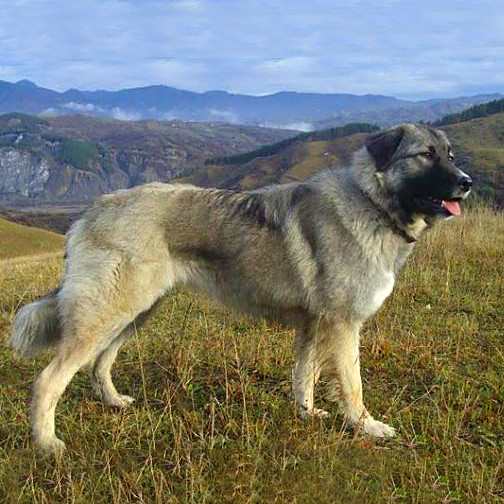
Group 1 · sheepdogs and cattle dogs · Romania, Carpathian Mountains
Romanian Carpathian Shepherd
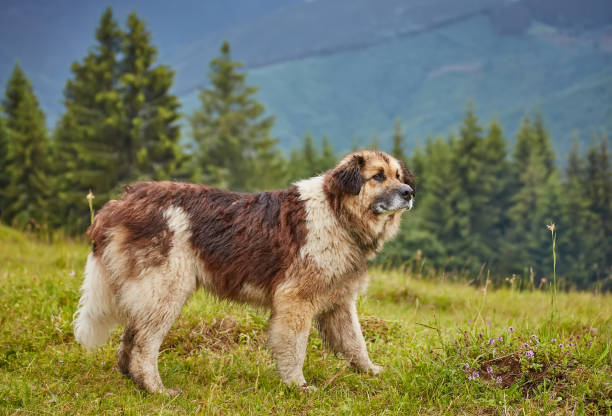
A wolf-grey guardian of the Carpathians that fears no bear — stately and devoted: level-headed, fearless, clever and reliable. The Romanian Carpathian Shepherd is a powerful mountain flock guardian, an indispensable helper of shepherds that protected herds from bears, wolves and lynx for centuries; a born protector with boundless devotion to its family, but distrustful of strangers and not for a flat.
Height
59–73 cm
Weight
Proportional to height, usually 35–50 kg, but can be more
Apartment · not suitableKidsCats · with caveatsOther dogs · with caveatsBeginners · not suitable
The Romanian Carpathian Shepherd(Ciobănesc Românesc Carpatin) is a majestic and devoted flock guardian whose history is inextricably linked to the rugged landscapes of the Carpathian Mountains. For centuries, these dogs were indispensable helpers to Romanian shepherds, guarding flocks from bears, wolves, and lynxes. This is not just a working dog, but a true member of the family, known for its innate protective instinct and boundless devotion. Read more on this on Tvaryny.
Although the Carpathian Shepherd is considered relatively rare outside its homeland, its popularity is gradually growing among enthusiasts of large working breeds. This is not a dog for everyone: it demands an experienced owner, plenty of space, and a clear understanding of its pastoral mentality. If you are prepared to be an authoritative leader for this dog, you will gain not just a guardian, but the most faithful friend and a reliable companion for the whole family.
Interesting Facts about the Romanian Carpathian Shepherd
Their "wolf-like" colouring served as excellent camouflage in the mountains, helping them to blend in with the terrain and appear unexpectedly before predators.
The Carpathian Shepherd is one of four officially recognised Romanian dog breeds. The other three are the Romanian Mioritic Shepherd Dog, the Bucovina Shepherd, and the Romanian Raven Shepherd Dog (Ciobănesc Românesc Corb).
Despite their strength and formidable appearance, Carpathian Shepherds are known for their ability to act very quietly. They can watch their territory motionlessly for hours before making a sound.
This breed is very attached to its "work". Even when living in a family without sheep, the dog will consider the territory, house, and family members as its flock to be guarded. Similar traits can be found in other mountain livestock guardians, for instance, the Karst Shepherd.
General Characteristics and Breed Standard
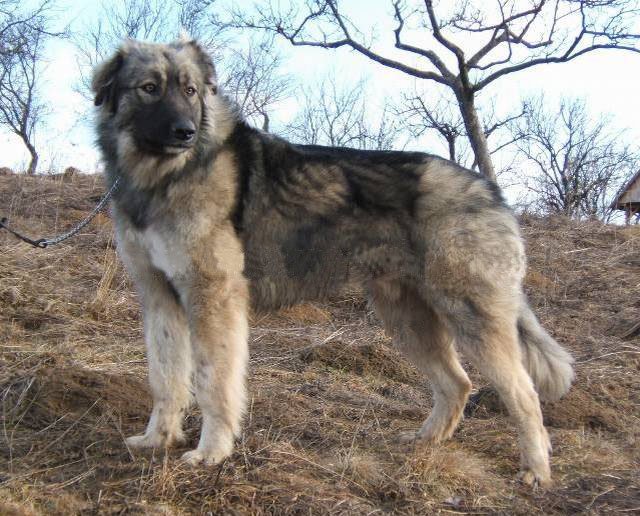
The Romanian Carpathian Shepherd is a large, yet agile and nimble dog of rectangular build, which gives an impression of strength and endurance, but never heaviness. Its appearance harmoniously combines the power and functionality necessary for survival and work in mountainous terrain.
General Characteristics and Breed Standard · 9
Parameter
Characteristic
Origin
Romania, Carpathian Mountains
FCI Classification
Group 1 (Sheepdogs and Cattle Dogs), Section 1 (Sheepdogs). Standard No. 350.
Height at withers
Dogs: 65–73 cm Bitches: 59–67 cm
Weight
Proportional to height, usually 35–50 kg, but can be more
Lifespan
12–14 years
Temperament
Calm, balanced, brave, devoted, an excellent guardian
Coat
Thick, straight, harsh, with a dense, soft undercoat
Colour
Predominantly pale fawn with a black overlay (wolf-grey), white markings are permissible
Purpose
Flock guardian, herd and territory guard, companion
History and Origin
The history of the Romanian Carpathian Shepherd dates back centuries. This breed is native to the Carpatho-Danubian region of Romania and was shaped by natural selection over many years. The main criterion for selection was always working ability: the capacity to make independent decisions, the courage to confront large predators, and the stamina for long treks with the flock. It is believed that its ancestors were local dogs, possibly crossed with breeds that came to the territory with migrating tribes.
The first breed standard was developed in 1934 by the National Institute of Zootechnics in Romania. However, the Second World War and the subsequent communist regime stalled the breed's development. Work on restoration and standardisation resumed only at the end of the 20th century. The Romanian Kennel Club updated the standard in 1999, and final recognition by the Fédération Cynologique Internationale (FCI) came in 2005. This was a significant step in preserving the unique gene pool of this national pride of Romania.
Detailed Description of Appearance and Standard
The head of the Carpathian Shepherd is of a typical lupoid (wolf-like) shape (mesocephalic); it is strong but not heavy. The forehead is broad and slightly convex. The stop (the transition from forehead to muzzle) is moderate. The muzzle is powerful, and its length is approximately equal to the length of the skull.
The eyes are almond-shaped, set obliquely, and are an amber colour of various shades. The gaze is intelligent, calm, and perceptive. The ears are not overly large, triangular in shape, set slightly above the eye line, and hang close to the cheeks.
The dog's body is powerful and rectangular, with a strong neck and well-developed withers. The back is straight and muscular. The chest is deep and broad, reaching the elbows. The tail is set high; when relaxed, it hangs down, reaching the hock or slightly below. When the dog is excited or in motion, the tail is raised in a saber-like curve but never curls over the back.
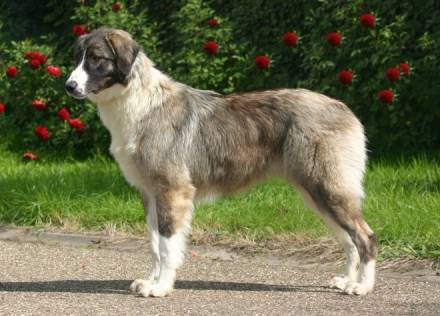
The coat is a key feature of the breed, allowing it to withstand extreme weather conditions. It is a double coat: the outer coat is harsh, dense, and straight, 7–10 cm long, while the undercoat is very dense, soft, and lighter in colour. This "fur coat" reliably protects the dog from cold, rain, and heat. The primary colour is pale fawn with a black overlay (wolf-grey) of various shades, often lighter on the sides and darker on the back. Small white markings on the chest and tips of the paws are permissible but should not be predominant.
Character and Temperament
Character is the essence of the Romanian Carpathian Shepherd. This is a natural guardian, courageous and instinctively ready to defend its "pack" (family) and territory. Its behaviour is marked by calmness and composure. It is never aggressive without cause but is always vigilant and wary of strangers. Its reaction is instantaneous, and it will not hesitate to defend if it senses a real threat.
The key trait of its character is devotion. The Carpathian Shepherd forms an incredibly strong bond with its family. It is patient and gentle with children, viewing them as part of its flock that needs protecting. However, due to its large size, all interactions with small children should be supervised.
These dogs have a strong, independent character, a result of their pastoral heritage where they had to make decisions on their own. This is why a confident and consistent leader is absolutely essential for them. The owner must establish clear rules and boundaries from puppyhood. If the dog does not see you as the "pack leader", it will assume the role itself, which can lead to manageability issues. Its mentality is similar to that of other large guardian breeds, such as the Caucasian Shepherd Dog, but Carpathian Shepherds are considered less prone to dominant aggression and more family-oriented.
Pros and Cons of the Breed
Before getting such a serious dog, it is important to soberly assess all its advantages and disadvantages.
Pros and Cons of the Breed · 6
Pros
Cons
Boundless devotion to the family. Becomes a full-fledged family member.
Requires an experienced owner. Not suitable for novices.
Outstanding guarding qualities. A natural protector without special training.
Needs a large amount of space. Absolutely not suitable for a flat.
High intelligence and trainability. Learns commands quickly with the right approach.
Strong need for early socialisation. Without it, can be overly suspicious.
Calm and balanced character. Not prone to hysterics or baseless barking.
Tendency towards dominance. Requires a firm but fair leader.
Low maintenance in grooming and feeding. Adapted to harsh conditions.
Sheds heavily twice a year.
Gets on well with children in its family.
Can be aggressive towards strange dogs, especially of the same sex.
Training and Socialisation
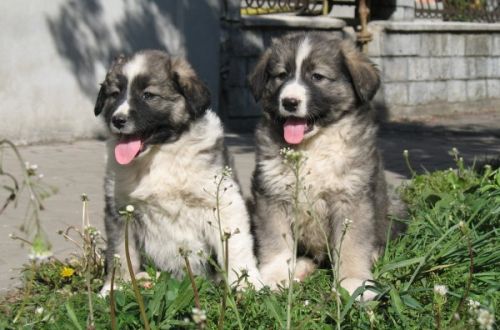
Early and consistent socialisation is the key to a well-adjusted adult dog. From puppyhood, introduce it to different people, sounds, places, and other animals (under supervision). This will help it grow into a confident and calm dog, rather than a fearful or overly aggressive one.
Training should be based on mutual respect, consistency, and positive reinforcement. Carpathian Shepherds are very intelligent but can be stubborn due to their independence. Harshness and physical punishment are absolutely unacceptable — this can undermine trust and provoke retaliatory aggression. The owner must be a patient, persistent, and fair leader. A basic obedience course is essential. It is important to teach the dog to control its strength and respond to the owner's command in any situation.
Care and Maintenance
Living Conditions and Physical Exercise
It is strongly advised not to keep a Romanian Carpathian Shepherd in a flat. This is a dog created for space and freedom. The ideal conditions for it are a house with a large, securely fenced garden that it can patrol. The fence should be at least 2 metres high. This dog should not be kept on a chain — this is detrimental to its mental health.
It does not need intensive training like some gun dogs, such as the Chesapeake Bay Retriever. However, it does require daily activity: long walks (preferably in a forest or field) and the opportunity to run freely in its own territory. The best activity for it is to perform its job — guarding. Boredom and a lack of physical activity can lead to destructive behaviour.
Grooming and Coat Care
The thick double coat of the Carpathian Shepherd does not require complex grooming, but it does need to be regular. The main procedures are:
Brushing: 1–2 times a week to remove dead hair and prevent mats from forming. During the seasonal moult (spring and autumn), you will need to brush daily, as the amount of hair will be enormous.
Bathing: Only when necessary, no more than 2–3 times a year. Frequent washing can damage the natural protective oily layer on the skin.
Claws: If they do not wear down naturally during walks, they need to be trimmed once a month.
Ears and eyes: Regularly inspect for dirt and signs of infection. The eyes can be wiped with a damp cloth, and the ears cleaned with a special lotion.
Nutrition
Feeding and Diet
Health and risks
Health and Typical Breed Diseases
Frequently Asked Questions · 4
Is the Romanian Carpathian Shepherd suitable for a family with children?
Yes, provided it has been properly raised and socialised. They are very patient and gentle with their family's children, becoming their devoted protectors. However, due to the dog's large size, all play with small children must be supervised by an adult.
Do these dogs bark a lot?
They are not prone to barking without reason. Their bark is loud, deep, and used to warn of an approaching stranger or a potential threat. It is a functional bark, not a sign of boredom or anxiety.
Can they live with other animals?
If a puppy grows up with other domestic animals (cats, other dogs), it will usually accept them as part of its pack. However, they can be territorial and dominant towards unfamiliar dogs, especially those of the same sex. Early socialisation is key.
How difficult is it to find a Romanian Carpathian Shepherd puppy?
Outside of Romania, this is a fairly rare breed. Finding a responsible breeder may take time. It is important to only approach reputable kennels that care about the health, temperament, and working qualities of their dogs.
Video of the Breed
FAQ
What does the Romanian Carpathian Shepherd protect against?
For centuries it guarded Romanian shepherds' flocks from the most dangerous predators of the Carpathians — bears, wolves and lynx; a born, fearless protector.
Is the Carpathian Shepherd good for a family?
Yes — a level-headed, devoted dog with boundless attachment to its family, good with children; but distrustful of strangers, so early socialisation matters.
Is the breed suited to a novice?
No — a self-reliant mountain guardian with a strong instinct; it needs space, an experienced owner and socialisation, not a flat.