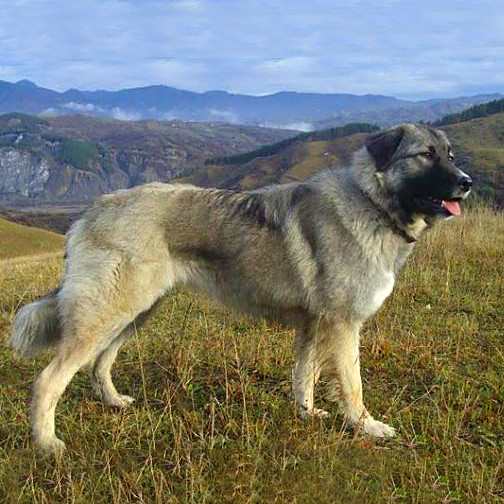
Group 1 · sheepdogs and cattle dogs · Romania, Carpathian Mountains
Romanian Carpathian Shepherd
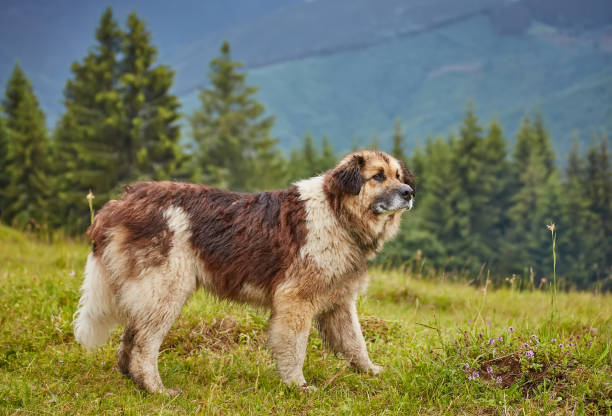
A wolf-gray guardian of the Carpathians that fears no bear — stately and devoted: level-headed, fearless, clever and reliable. The Romanian Carpathian Shepherd is a powerful mountain flock guardian, an indispensable helper of shepherds that protected herds from bears, wolves and lynx for centuries; a born protector with boundless devotion to its family, but distrustful of strangers and not for an apartment.
Height
59–73 cm
Weight
Proportional to height, typically 77–110 pounds, but can be more
Apartment · not suitableKidsCats · with caveatsOther dogs · with caveatsBeginners · not suitable
The Romanian Carpathian Shepherd (Ciobănesc Românesc Carpatin) is a majestic and loyal herding dog, with a history inextricably linked to the rugged landscapes of the Carpathian Mountains. For centuries, these dogs have been indispensable helpers for Romanian shepherds, protecting flocks from bears, wolves, and lynxes. More than just a working dog, they're a true family member, known for their innate protective instinct and boundless devotion. There's so much more to discover about them - find out more here at Tvaryny.
While the Carpathian Shepherd Dog remains relatively rare outside its homeland, its popularity is slowly growing among enthusiasts of large working breeds. This isn't a dog for everyone-it demands an experienced owner, ample living space, and a clear understanding of its herding mentality. If you're ready to be a firm, yet fair leader, you'll gain not just a guardian, but the most loyal friend and a reliable companion for the entire family.
Interesting Facts About the Romanian Carpathian Shepherd Dog
Their "wolf-like" coloring served as excellent camouflage in the mountains, helping them blend into the terrain and appear unexpectedly before predators.
The Carpathian Shepherd Dog is one of four officially recognized Romanian dog breeds. The other three are the Romanian Mioritic Shepherd Dog, the Bucovina Shepherd, and the Romanian Raven Shepherd (Ciobănesc Românesc Corb).
Despite their strength and formidable appearance, Carpathian Shepherds are known for their ability to act very quietly. They can observe their territory motionlessly for hours before making a sound.
This breed is deeply attached to its "job." Even living in a family without sheep, the dog will consider the territory, house, and family members as its flock to be guarded. Similar traits can be found in other mountain herding dogs, such as the Karst Shepherd.
General Characteristics and Breed Standard
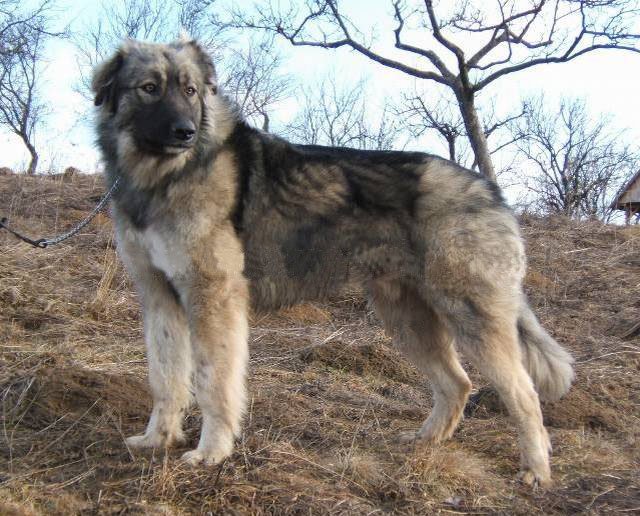
The Romanian Carpathian Shepherd Dog is a large, yet agile and nimble dog of a rectangular build, conveying an impression of strength and endurance without being heavy. Its appearance harmoniously combines the power and functionality necessary for survival and work in mountainous terrain.
General Characteristics and Breed Standard · 9
Parameter
Characteristic
Origin
Romania, Carpathian Mountains
FCI Classification
Group 1 (Sheepdogs and Cattle Dogs, except Swiss Cattle Dogs), Section 1 (Sheepdogs). Standard No. 350.
Height at Withers
Males: 25.5–28.5 inches Females: 23–26.5 inches
Weight
Proportional to height, typically 77–110 pounds, but can be more
Dense, straight, coarse, with a thick soft undercoat
Color
Predominantly pale fawn with black "dusting" (wolf-gray), white markings possible
Purpose
Herding dog, flock and territory guardian, companion
History of Origin
The history of the Romanian Carpathian Shepherd Dog stretches back through the ages. This breed is indigenous to Romania's Carpatho-Danubian region and developed through natural selection over centuries. The main criteria for selection always centered on working qualities-the ability to make independent decisions, courage to confront large predators, and stamina for long journeys with the flock. It is believed its ancestors were local dogs, possibly crossed with breeds that arrived in the territory with migrating tribes.
The first breed standard was developed back in 1934 by the National Zootechnical Institute of Romania. However, World War II and the subsequent communist regime slowed the breed's development. Work on its restoration and standardization resumed only at the end of the 20th century. The Romanian Kennel Club updated the standard in 1999, and final recognition by the Fédération Cynologique Internationale (FCI) occurred in 2005. This was a crucial step in preserving the unique gene pool of this national Romanian pride.
Detailed Description of Appearance and Standard
The Carpathian Shepherd's head has a typical wolf-like shape (mesocephalic)-strong, but not heavy. The forehead is broad and slightly domed. The stop is moderate. The muzzle is powerful, its length approximately equal to the skull's length.
Eyes are almond-shaped, obliquely set, and amber-colored in various shades. The gaze is intelligent, calm, and penetrating. Ears are not too large, triangular, set slightly above the eye line, and hang close to the cheeks.
The dog's body is powerful, rectangular, with a strong neck and well-developed withers. The back is straight and muscular. The chest is deep and wide, reaching the elbows. The tail is set high; when at rest, it hangs down, reaching the hock or slightly below. When the dog is excited or in motion, the tail rises in a saber shape, but never curls over the back.
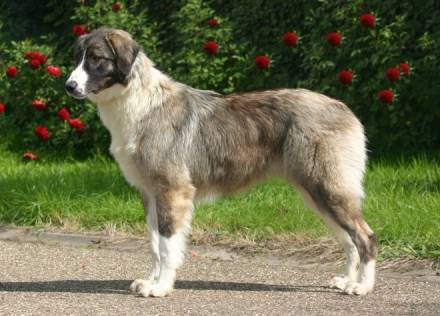
The coat is a key breed characteristic, allowing it to withstand extreme weather conditions. It's double: the outer coat is harsh, dense, and straight, 2.5–4 inches long, while the undercoat is very dense, soft, and lighter in color. This "fur coat" reliably protects the dog from cold, rain, and heat. The main color is pale fawn with black dusting (zonary-gray or "wolf-like") of various shades, often lighter on the sides and darker on the back. Small white markings are permissible on the chest and paw tips, but they should not dominate.
Character and Temperament
Character is the essence of the Romanian Carpathian Shepherd Dog. They are innate guardians, courageous and instinctively ready to protect their "pack" (family) and territory. Their behavior is marked by calmness and balance. They are never aggressive without cause, but always vigilant and wary of strangers. Their reaction is instantaneous, and they will not hesitate to defend if they sense a real threat.
A key trait of their character is loyalty. The Carpathian Shepherd forms an incredibly strong bond with its family. They are patient and gentle with children, perceiving them as part of their flock to be protected. However, due to their large size, any interaction with small children should be supervised.
These dogs possess a strong, independent character, a result of their herding past where they often had to make decisions on their own. This is why a confident and consistent leader is absolutely essential for them. The owner must establish clear rules and boundaries from puppyhood. If the dog doesn't perceive you as the "alpha," it will assume that role itself, which can lead to manageability issues. Their mentality is similar to other large guardian breeds, such as the Caucasian Shepherd Dog, but Carpathians are considered less prone to dominant aggression and more family-oriented.
Pros and Cons of the Breed
Before getting such a serious dog, it's crucial to realistically assess all its advantages and disadvantages.
Pros
Cons
Boundless loyalty to family. Becomes a full-fledged family member.
Requires an experienced owner. Not suitable for first-timers.
Outstanding guarding qualities. A natural protector without special training.
Needs ample space. Absolutely unsuitable for apartment living.
High intelligence and trainability. Learns commands quickly with the right approach.
Strong need for early socialization. Can be overly suspicious without it.
Calm and balanced temperament. Not prone to hysterics or causeless barking.
Sheds heavily and often twice a year.
Gets along well with children in its own family.
Can be aggressive towards strange dogs, especially of the same sex.
Training and Socialization
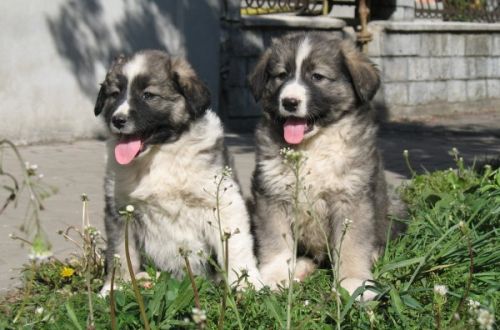
Early and consistent socialization is the key to an adult dog's appropriate behavior. From puppyhood, introduce them to different people, sounds, places, and other animals (under supervision). This will help them grow into confident and calm dogs, rather than fearful or overly aggressive ones.
Training should be based on mutual respect, consistency, and positive reinforcement. Carpathian Shepherds are very intelligent but can be stubborn due to their independence. Harshness and physical punishment are absolutely unacceptable-these can erode trust and provoke aggression in response. The owner must be a patient, persistent, and fair leader. Basic obedience training is mandatory. It's important to teach the dog to control its strength and respond to its owner's commands in any situation.
Care and Upkeep
Living Conditions and Physical Activity
It is emphatically not recommended to keep a Romanian Carpathian Shepherd Dog in an apartment. This is a dog bred for space and freedom. Ideal conditions include a private home with a large, securely fenced yard that it can patrol. The fence should be at least 6.5 feet high. This dog should not be chained-it destroys their psyche.
They don't require intense training like some hunting dogs, such as the Chesapeake Bay Retriever. However, daily activity is a must: long walks (preferably in a forest or field), and the opportunity to run freely within their territory. Their best occupation is doing their job - guarding. Boredom and lack of physical activity can lead to destructive behavior.
Grooming and Coat Care
The Carpathian Shepherd's dense double coat doesn't require complicated grooming, but it does demand regularity. Key procedures include:
Brushing: 1–2 times a week to remove dead hair and prevent matting. During seasonal shedding (spring and fall), daily brushing will be necessary, as the amount of hair will be enormous.
Bathing: Only when necessary, no more than 2–3 times a year. Frequent washing can damage the natural protective oily layer on the skin.
Nails: If they don't wear down naturally during walks, they need to be trimmed about once a month.
Ears and Eyes: Regularly inspect for dirt and signs of infection. Eyes can be wiped with a damp cloth, and ears cleaned with a special lotion.
Nutrition
Nutrition and Diet
Health and risks
Health and Typical Breed Diseases
Frequently Asked Questions About the Breed · 4
Is the Romanian Carpathian Shepherd Dog suitable for a family with children?
Yes, provided proper upbringing and socialization. They are very patient and gentle with children in their family, becoming devoted protectors. However, due to the dog's large size, all games with small children should be supervised by adults.
Do these dogs bark a lot?
They are not prone to causeless barking. Their bark is loud, deep, and used to warn of approaching strangers or potential threats. It's a functional bark, not a sign of boredom or anxiety.
Can they live with other animals?
If a puppy grows up with other household pets (cats, other dogs), it usually accepts them as part of its pack. However, they can be territorial and dominant towards unfamiliar dogs, especially of the same sex. Early socialization is key.
How difficult is it to find a Romanian Carpathian Shepherd Dog puppy?
Outside of Romania, this is a relatively rare breed. Finding a responsible breeder may take time. It's important to only contact reputable kennels that prioritize the health, temperament, and working qualities of their dogs.
Video About the Breed
FAQ
What does the Romanian Carpathian Shepherd protect against?
For centuries it guarded Romanian shepherds' flocks from the most dangerous predators of the Carpathians — bears, wolves and lynx; a born, fearless protector.
Is the Carpathian Shepherd good for a family?
Yes — a level-headed, devoted dog with boundless attachment to its family, good with children; but distrustful of strangers, so early socialization matters.
Is the breed suited to a novice?
No — a self-reliant mountain guardian with a strong instinct; it needs space, an experienced owner and socialization, not an apartment.