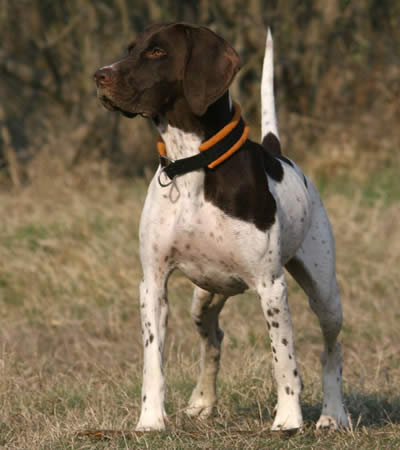
A Danish aristocrat of calm — a methodical pointer with iron composure: level-headed, brave, gentle and devoted. The Old Danish Pointer is a national treasure of Denmark, a pointing gundog for feathered game that works thoroughly and without haste; it learns easily, adapts well to the role of family favorite and watchdog, and at home is surprisingly calm.
Apartment · with caveatsKidsCats · with caveatsOther dogsBeginners · with caveats
The Old Danish Pointer (Gammel Dansk Hønsehund) embodies a calm, aristocratic confidence. This isn't just a hunting dog-it's a genuine companion with a gentle and even-tempered nature. Historically bred for tracking game, it has wonderfully adapted to roles as a beloved family pet, a watchful guard dog, and a loyal protector. This pointer doesn't require complex care and is easily trainable thanks to its intelligence and eagerness to please its owner. In the field, it works thoroughly and without undue haste, methodically sweeping the territory in search of game. Today, members of the breed remain a national treasure in Denmark and are rarely seen outside its borders, which makes them even more unique. Learn all the ins and outs of owning, the history, and the unique traits of this rare breed further on Tvaryny.
Interesting Facts About the Gammel Dansk Hønsehund
The breed name "Hønsehund" literally translates from Danish as "chicken dog" or "bird hunting dog," directly indicating its primary purpose.
Unlike many other pointers, such as the fast-paced German Shorthaired Pointer, the Old Danish Pointer is known for its slower and more methodical working style. It prioritizes thoroughness in searching rather than speed.
This is one of the few dog breeds whose history is precisely documented and traces back to a specific individual - Morten Bak.
Thanks to its Bloodhound ancestors, the Gammel Dansk Hønsehund possesses an excellent lower scenting ability and can work not only on air scent (upper scent) but also on blood trails on the ground.
Despite its ancient history, the breed was officially recognized by the Fédération Cynologique Internationale (FCI) only in 1960.
History of the Old Danish Pointer Breed
The history of the Old Danish Pointer is deeply intertwined with Morten Bak, a Danish enthusiast who lived in Glenstrup around 1710. He is widely considered the founder of the breed. His objective was to create the perfect hunting dog, one that combined the finest qualities of the pointing dogs of his time. To achieve this, he spent eight generations crossbreeding local farm dogs with dogs of Romani origin, which were likely descendants of Spanish Shorthaired Pointers (such as the Perdiguero de Burgos) and other European hunting breeds. Bloodhounds (St. Hubert Hounds), imported to Denmark from the Netherlands, also played a vital role in the breed's development. It was from them that the Gammel Dansk Hønsehund inherited its exceptional scenting ability, powerful build, and characteristic dewlap (fold of skin on the neck).
The result of this selective breeding was a dog with a unique white-and-brown coat that was not only a skilled hunter but also a devoted companion. The breed quickly gained popularity among Danish hunters, though its numbers remained modest. The two World Wars severely impacted the population, and by the mid-20th century, the Old Danish Pointer was on the brink of extinction. It was only through the dedicated efforts of a small group of Danish breeders and admirers that the breed was saved. They carefully selected the best remaining specimens and gradually restored the numbers. Today, the Old Danish Pointer is a source of Danish pride, cherished for its versatile hunting qualities, stable psyche, and family loyalty.
What an Old Danish Pointer Looks Like: Standard and Appearance Description
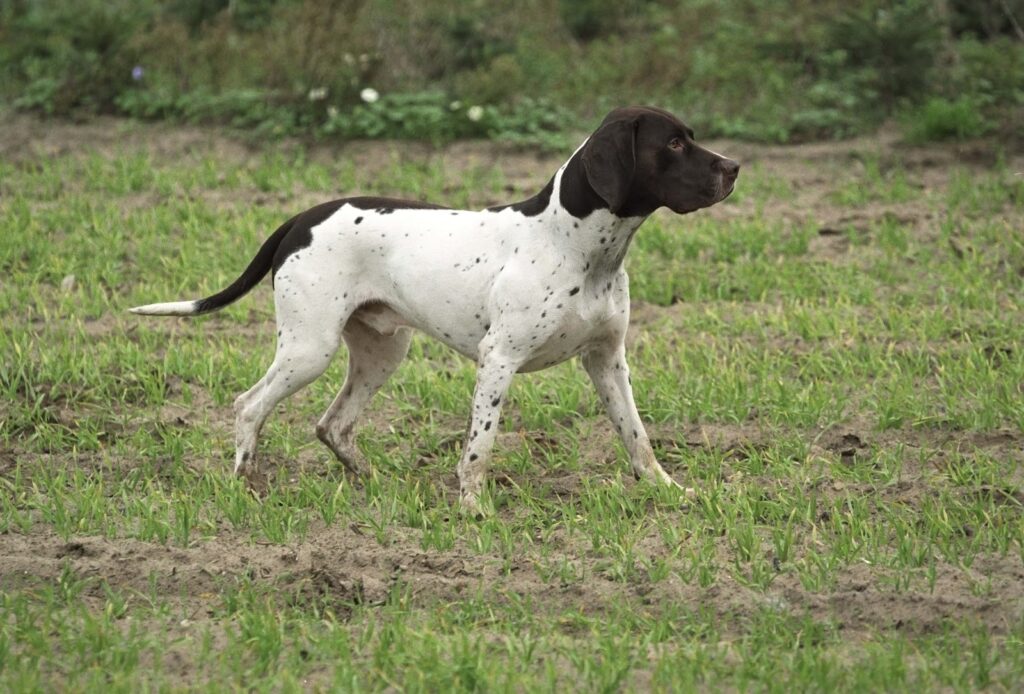
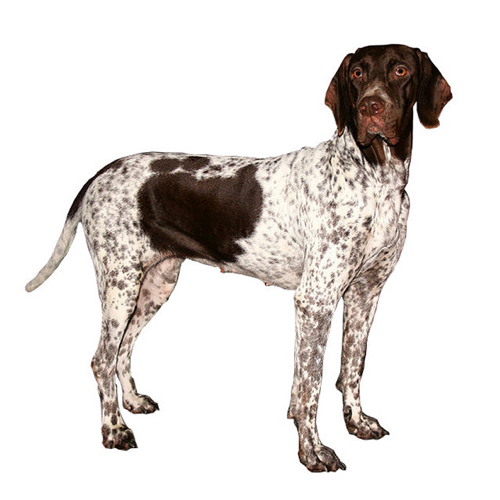
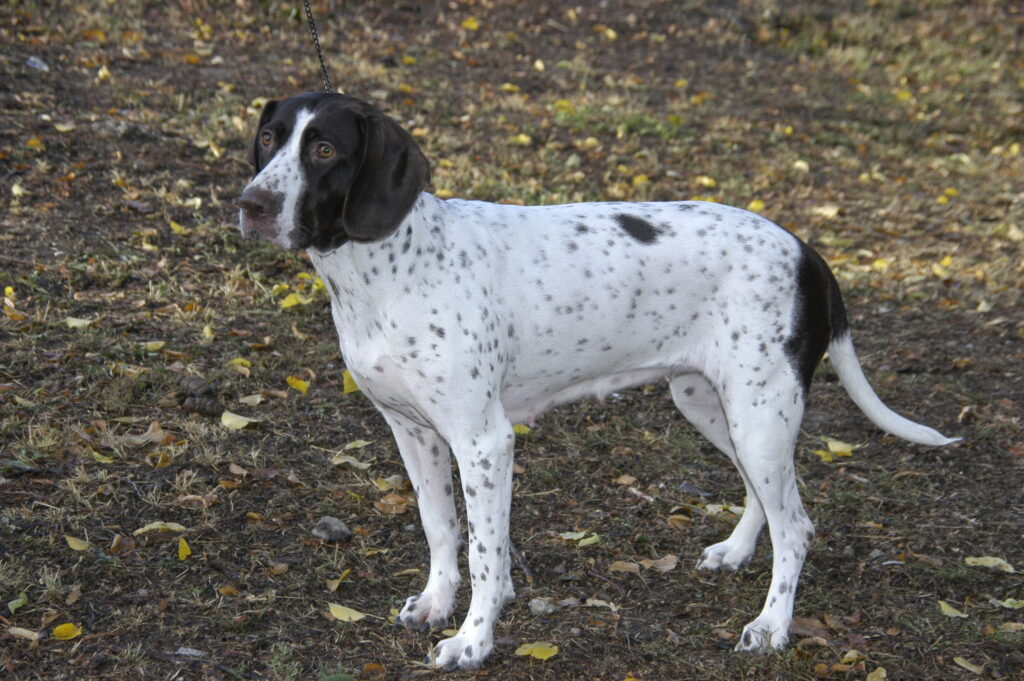
The Old Danish Pointer is a dog of robust, harmonious build, giving an impression of strength and endurance without being overly massive. It's built for long days of work in the field, and every feature of its appearance highlights this purpose.
Head: Heavy and broad, but not coarse. The skull and muzzle are approximately equal in length. The stop (transition from forehead to muzzle) is clearly defined.
Muzzle: Broad and deep. The lips are slightly pendulous, giving the dog a serious look. The nose is large, fleshy, and exclusively liver-colored.
Eyes: Medium-sized, neither bulging nor deep-set. They are dark brown, with a calm, confident, and intelligent gaze.
Ears: Medium length, set fairly low. They are broad, slightly rounded at the tips, and lie close to the cheeks.
Body: Rectangular in shape, slightly elongated. The neck is muscular, with a noticeable dewlap (fold of skin). The chest is deep and wide, providing ample room for the heart and lungs. The back is strong and straight, transitioning into a powerful loin.
Tail: Medium length, thick at the base and tapering towards the end. When at rest, the dog carries it low. When moving, the tail rises but not above the level of the back.
Limbs: Strong, straight, and muscular. Paws are compact, with tightly knit toes and sturdy pads, allowing the dog to move easily over varied terrain.
Coat and Color: The coat is short, dense, and lies close to the body. The coloring is a hallmark of the breed: white with brown patches or large markings. Dense brown speckling is scattered throughout the white background. The more speckles, the better. Large solid brown patches are also acceptable.
Character: Temperament and Behavior in the Family and in the Field
The Old Danish Pointer's character is a harmonious blend of hunting enthusiasm and domestic comfort. This is a two-speed dog: energetic and persistent in the field, yet calm and gentle at home. When hunting, it demonstrates stamina, determination, and courage. Its working style is unhurried but extremely thorough. It avoids unnecessary movements, methodically surveys the area, and maintains constant contact with the hunter. This makes it similar to other continental pointers, such as the Saint-Germain Pointer or the Slovakian Wirehaired Pointer, which are also valued for their thoughtful approach to work.
Within the family, the Gammel Dansk Hønsehund transforms into an affectionate and devoted companion. It forms strong bonds with all family members and behaves very gently with them. These dogs generally get along well with children, displaying remarkable patience. Their calm temperament makes them excellent nannies; however, as with any breed, interactions between dogs and young children should always be supervised. Towards strangers, the Old Danish Pointer usually behaves reservedly but without aggression. It will announce the arrival of guests with a loud bark, fulfilling its role as a reliable watchdog. With proper socialization, it coexists well with other dogs and household pets, although its hunting instinct may surface toward small animals and birds when out and about.
Training and Socialization of the Old Danish Pointer
Old Danish Pointers are intelligent and clever dogs, which generally makes their training a straightforward process. They are eager to please their owner, which is a big advantage. However, like many hunting breeds, they can be somewhat independent and stubborn. Training should be based on positive reinforcement - praise, treats, and play. Harsh methods and shouting will not yield results and can only undermine the dog's trust.
Early socialization is crucial. A puppy needs to be introduced to various people, sounds, places, and other animals from a young age. This will help it grow into a confident and well-adjusted dog. Obedience classes will be beneficial not only for teaching basic commands but also for strengthening the bond between dog and owner. As this is a hunting breed, it's important to focus on the "recall" command to control the dog on off-leash walks. Activities such as agility, obedience, or scent work (nosework) can help channel its energy and intelligence productively.
Pros and Cons of the Old Danish Pointer Breed
Pros and Cons of the Old Danish Pointer Breed · 6
Pros (+)
Cons (-)
Calm and balanced temperament at home.
Requires a lot of physical exercise.
High intelligence, easy to train.
Can be stubborn and independent.
Devoted and gentle family member, good with children.
Not suitable for small apartment living.
Good health and longevity.
Prone to ear infections and bloat.
Low-maintenance coat care.
Strong hunting instinct; may chase small animals.
Excellent watchdog, always warns of strangers.
Rare breed, can be difficult to find a puppy.
Care and Upkeep of the Breed
Caring for an Old Danish Pointer isn't overly complicated, but it does require consistency and attention to detail, especially regarding its physical needs.
Grooming and Coat Care
The Gammel Dansk Hønsehund's short, dense coat doesn't require professional grooming. Simply brushing it once a week with a rubber brush or grooming glove is enough to remove dead hairs and distribute skin oils. This helps keep the coat healthy and shiny. They shed moderately, with seasonal increases twice a year. Bathe the dog only when necessary, using a mild dog shampoo to avoid disturbing the skin's natural protective layer. It's important to regularly check and clean their ears, trim their nails (approximately once a month), and maintain good oral hygiene.
Exercise Requirements
This is a crucial aspect of owning an Old Danish Pointer. As a hunting breed, it has high energy levels and requires daily, intense exercise. A minimum of 1–2 hours of active engagement per day is not a luxury, but a necessity. This could include long walks, jogging alongside its owner, hikes in the woods, swimming, or playing fetch. The ideal scenario for them is the opportunity to run freely in a safe, fenced area. Insufficient physical activity can lead to behavioral problems such as destructiveness, excessive barking, and weight gain.
Living Conditions
Despite its calm home temperament, the Old Danish Pointer is not the best choice for living in a small city apartment. It needs space. The ideal home for it would be a house with a large, securely fenced yard where it can spend plenty of time outdoors. If you do decide to keep this dog in an apartment, be prepared to dedicate a significant amount of time to daily long and active walks in parks or outside the city.
Nutrition
Nutrition: Key Recommendations for the Breed
Health and risks
Old Danish Pointer Health: Typical Ailments and Prevention
Frequently Asked Questions About the Breed (FAQ) · 4
Is the Old Danish Pointer suitable for a family with children?
Yes, this breed is wonderfully suited for families with children. Their calm, patient, and gentle nature makes them reliable play companions. However, it's important to teach children how to interact properly with dogs and never leave them alone unsupervised.
Does the Old Danish Pointer shed a lot?
They shed moderately throughout the year, with increased seasonal shedding in spring and fall. Regular brushing once a week helps to control the amount of hair in the home. This is not a hypoallergenic breed.
Can this dog be kept in an apartment?
Technically possible, but strongly not recommended. Keeping one in an apartment would demand immense dedication from the owner and a readiness to provide 2–3 hours of active walks every day, regardless of the weather. Without sufficient physical and mental stimulation, the dog will become unhappy and may develop behavioral problems. The best place for it is a private house.
Do they get along well with other animals?
With early and proper socialization, Old Danish Pointers generally get along well with other dogs. Regarding cats and other small household pets, coexistence is possible if they are raised together. However, outdoors, their hunting instinct may take over, so it's important to keep the dog on a leash in areas where wild animals might be present.
Video About the Breed
FAQ
What was the Old Danish Pointer bred for?
It is a pointing gundog for feathered game (partridge, pheasant) — the Danish name Hønsehund means "hen/bird dog"; it methodically quarters the ground while keeping contact with the hunter.
Is the Old Danish Pointer calm at home?
Very — it is the embodiment of calm and composure: active and fast outdoors, at home it is quiet, level-headed and gentle, and gets on well with children.
Is the breed suitable for a novice?
Conditionally — it is clever, obedient and easy to train; the key is to provide enough exercise and scent work, for it is still a working pointer.