

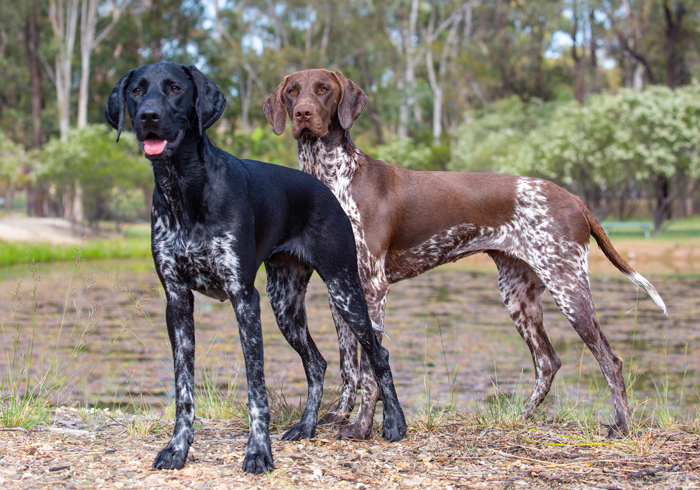
| Height | 53–64 cm |
| Weight | 20–32 kg |
| Lifespan | 12–14 years |
| FCI group | 7 · pointing dogs |
| Origin | Germany |
Exact ratings
Common health issues
Nutrition
The German Shorthaired Pointer (Deutsch Kurzhaar) is more than just a dog-it’s a true multi-purpose athlete and an all-around superstar in the world of hunting breeds. Its intelligence, energy, and devotion make it not only an unbeatable partner in the field but also a wonderful companion for an active family. This pointing breed strikes you with its grace, strength, and ability to work equally well on land and in water, making it one of the most popular sporting dogs worldwide. Their balanced temper, love for children, and eagerness to learn allow the German Shorthaired Pointer to become a fully integrated member of the family. This breed requires attention and high activity, but in return, it gives unlimited love and loyalty. You can read more on Tvaryny about what makes them such versatile workers.
German Shorthaired Pointer: Key Breed Information
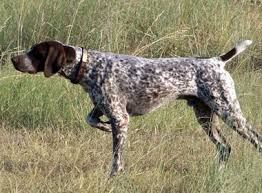
| Origin | Germany |
| FCI Classification | Group 7 (Pointing Dogs), Section 1.1 (Continental Pointing Dogs, ‘Brack’ Type) |
| Lifespan | 12-14 years |
| Height at Withers | Males: 62-66 cm; Females: 58-63 cm |
| Weight | Males: 25-32 kg; Females: 20-27 kg |
| Temperament | Intelligent, Brave, Energetic, Loyal, Friendly |
| Activity Level | Very High |
| Shedding | Moderate, Seasonal |
| Grooming Difficulty | Low |
History and Origin of the German Shorthaired Pointer
The history of the German Shorthaired Pointer is closely tied to the evolution of hunting in Europe. The need for a versatile dog that could work on diverse game-birds, small mammals, and large animals-was the driving force behind this breed’s creation. The first mentions of dogs similar to the modern German Shorthaired Pointer date back to the 17th and 18th centuries. The breed’s foundation came from the old Spanish Pointers (Bracks) and local German hunting dogs. These early dogs were heavier and slower than today’s representatives.
A key stage in the breed’s development began in the 19th century. German breeders aimed to create a dog with an elegant appearance, high speed, a sharp nose, and the staunch, steady point typical of Pointers. To achieve this, English Pointer blood was introduced to the local dogs, which added lightness, speed, and an aristocratic air to the breed. Prince Albrecht zu Solms-Braunfels made a huge contribution to the breed’s standardization, formulating its main characteristics and the rules for field trial judging. The first studbook, the Zuchtbuch Deutsch-Kurzhaar, was published in 1897, officially marking the start of the modern German Shorthaired Pointer history.
What the German Shorthaired Pointer Looks Like: Standard and Appearance

The German Shorthaired Pointer is a dog of noble, athletic, and harmonious build. Its appearance is the embodiment of strength, endurance, and speed, with no hint of bulkiness. Every movement is fluid and energetic.
The head is clean-cut, expressive, neither too light nor too heavy, and proportionate to the body. The skull is sufficiently broad, with a slight stop (the transition from forehead to muzzle). The muzzle is long, wide, and powerful, allowing the dog to easily retrieve game. The nose is brown, and the nostrils are well-opened.
The eyes are medium-sized and dark brown. The gaze is intelligent, lively, and energetic.
The ears are set high and wide, pendulous, medium length, rounded at the tips, and lie flat against the head.
The body shows a smooth topline that gently slopes from the withers to the rump. The back is strong and muscular. The chest is deep but not overly wide, ensuring plenty of room for the heart and lungs without restricting free movement.
The tail is set high, thick at the base, and tapers towards the end. It is typically docked to about half its length in working dogs (in countries where legally permitted). When moving, the dog carries the tail horizontally.
The coat is one of the breed’s defining traits. It is short, dense, harsh, and coarse to the touch. The hair on the head and ears is finer and shorter. This coat provides excellent protection from the elements and minor injuries during hunting. Main color variations include:
- Solid Liver: no markings.
- Liver and White: with small white or ticked markings, mostly on the chest and paws.
- Dark Liver Ticked (Roan): with a liver head, liver patches, or ticking. The main background is an even mix of liver and white hairs.
- Lighter Liver Ticked (Roan): with a predominance of white hair.
- White: with a liver head, liver patches, or ticking.
Temperament: The German Shorthaired Pointer’s Character and Behaviour
The German Shorthaired Pointer’s character is a perfect balance between hunting drive and family dedication. These are extremely smart, high-energy, and people-oriented dogs. They must be near their ‘pack’; they handle loneliness poorly and can suffer from separation anxiety, which often results in destructive behavior.
The German Shorthaired Pointer is a ‘Never-Ending Engine.’ It requires significant physical and mental exercise. A simple walk on a leash is just a warm-up for this dog. It needs running, swimming, games, and training. If you don’t provide an outlet for its energy, it will find its own job, and you probably won’t like it. On the other hand, a German Shorthaired Pointer becomes a calm and gentle house companion when its activity needs are met.
They do great with children, especially if raised together. However, due to their enthusiasm and size, they might accidentally knock over a small child, so their playtime should be supervised. They usually get along well with other dogs, especially with early socialization. Small animals (cats, rodents, birds), however, might be viewed as prey due to their strong hunting instinct. They treat strangers with some initial wariness but without aggression, which makes them good watchdogs who will always alert you to guests with a loud bark.
Grooming and Living with a German Shorthaired Pointer
Surprisingly, caring for this active dog is quite simple. Its short coat does not require complicated grooming. Simply go over it once a week with a rubber brush or grooming mitt to remove dead hair. During seasonal shedding (spring and fall), increase the frequency. Only bathe your German Shorthaired Pointer as needed, as frequent washing can damage the skin’s natural protective layer.
Special attention should be paid to the ears. Since they are pendulous, they create a favorable environment for bacteria and infections. Regularly inspect and clean the ear canals with a vet-approved cleanser. Also, remember to regularly trim their nails if they don’t wear down naturally, and maintain dental health.
The most important condition for keeping a German Shorthaired Pointer is space and activity. The ideal option is a house with a securely fenced yard where they can run freely. Apartment living is only possible if the owner is committed to daily, long (at least 2 hours), and intense exercise with opportunities for safe off-leash running. This dog is not the best choice for homebodies or people who lead a sedentary lifestyle.
Training and Socialization
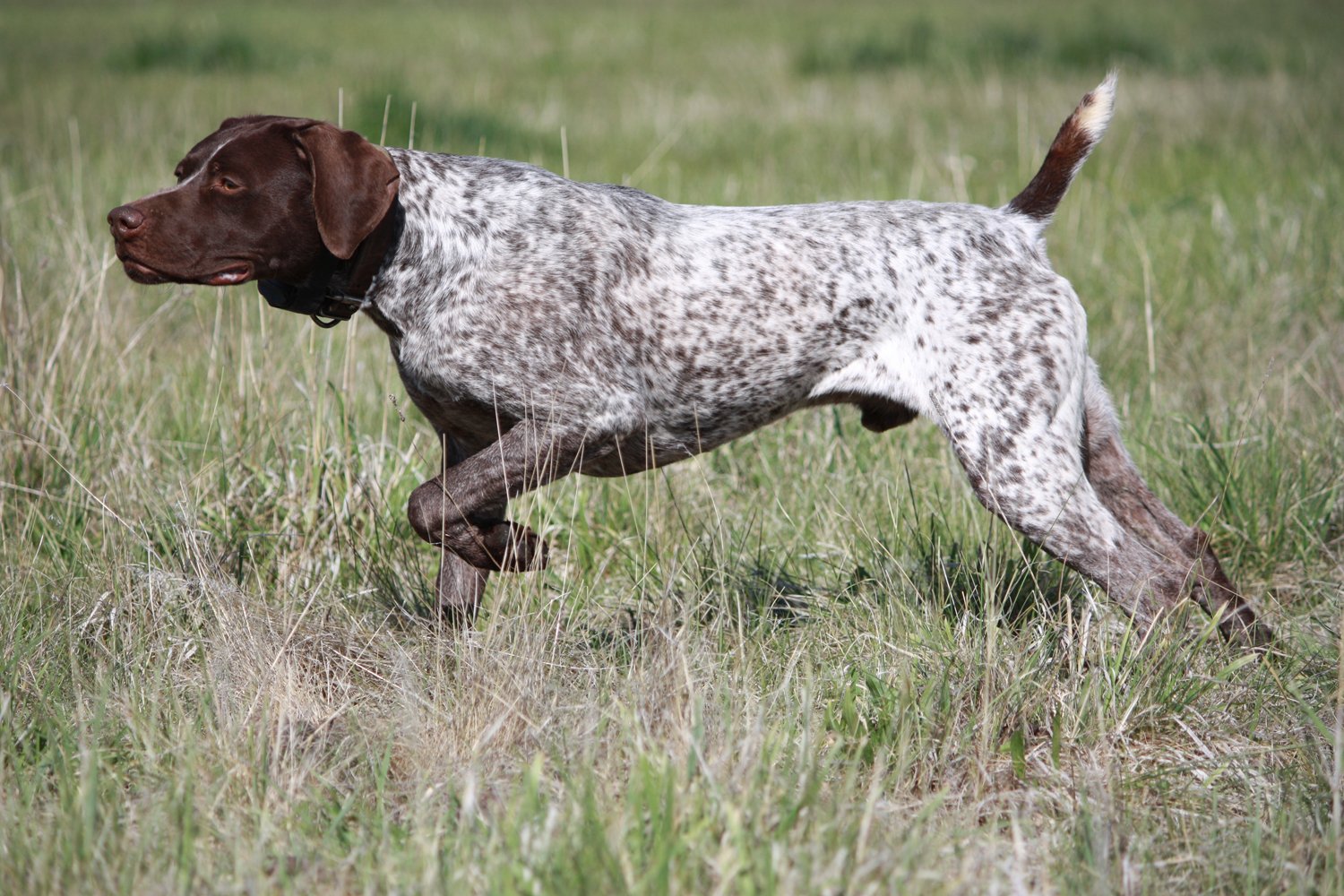
Training a German Shorthaired Pointer is an exciting, yet responsible, process. Thanks to their high intelligence, they pick up new commands very fast. However, their mental drive and hunting independence require consistency, patience, and leadership from the owner. German Shorthaired Pointers can be stubborn if lessons seem boring and monotonous. Therefore, training sessions should be short, varied, and interesting.
The positive reinforcement method works best: praise, treats, and toys. Harshness and physical punishment can lead to a loss of trust and an unwillingness to cooperate. Early socialization is critical. From puppyhood, introduce your German Shorthaired Pointer to different people, sounds, places, and other animals. This will help them grow into a confident and well-balanced dog.
The German Shorthaired Pointer is a versatile hunter, and its training can involve various disciplines: from the classic bird point to blood-trailing and water retrieving. Even if you don’t plan to hunt, activities like scent work (Nosework) or participation in dog sports such as agility, coursing, or dock diving will help satisfy its natural instincts.
Health: Typical Ailments and Prevention
Nutrition: Key Recommendations for the German Shorthaired Pointer
The German Shorthaired Pointer and Other Sporting Breeds
The German Shorthaired Pointer belongs to the Continental Pointers group, valued for their versatility. Unlike the English Pointer, for example, which specializes in working birds in the field, the German Shorthaired Pointer can work in the woods and water, retrieve game, and follow a blood trail. It is often compared to the German Wirehaired Pointer (Deutsch Drahthaar), the main difference being the coat type-the Drahthaar’s coat is hard and ‘wiry,’ offering better protection in dense thickets. Other breeds like the Weimaraner and the Bracco Italiano are also superb hunters, but the German Shorthaired Pointer is arguably the most balanced ‘all-purpose’ dog among them.
Pros and Cons of the German Shorthaired Pointer
- Advantages:
- High Intelligence and Trainability: Quickly picks up commands and tricks.
- Versatility: An excellent hunter, canine athlete, and family companion.
- Family Devotion: Highly attached to owners and excellent with children.
- Low Grooming Requirements: The coat is simple to care for.
- Robust Health: A hardy and resilient dog.
- Disadvantages:
- Very High Energy Needs: Unsuitable for inactive people or apartment living without proper exercise.
- Prone to Separation Anxiety: Does not cope well with being left alone.
- Strong Hunting Instinct: May relentlessly pursue small animals.
- Can be Stubborn: Requires consistent and patient training.
- Needs Space: Thrives best in a house with a large, secured yard.
Fascinating German Shorthaired Pointer Facts
- Webbed Paws. German Shorthaired Pointers have webbed feet, which makes them exceptional swimmers and brilliant at retrieving from water.
- ‘Velcro Dogs.’ Due to their intense focus on humans, German Shorthaired Pointers are often nicknamed “Velcro dogs” because they constantly seek to be as close to their owner as possible.
- Sporting Champions. Thanks to their athleticism and intelligence, German Shorthaired Pointers often excel in various canine sports, from field trials to agility.
- The Constant Nose. Even during a regular stroll, the German Shorthaired Pointer’s nose is constantly at work, analizing scents. This ability makes them ideal for search and rescue operations.
Frequently Asked Questions (FAQ)
Can a German Shorthaired Pointer live in an apartment? It is strongly discouraged. Theoretically, it is possible only if the owner is prepared to dedicate 2-3 hours a day to very intensive exercise and training. Otherwise, the dog will suffer and is likely to become destructive.
Do German Shorthaired Pointers shed much? Yes, they do shed, especially seasonally in the spring and fall. Their short, stiff hairs can embed themselves in furniture and clothing, so regular brushing is mandatory.
Is a German Shorthaired Pointer suitable as a first dog? For an experienced, active, and responsible beginner-yes. However, for a person unprepared for the daily training, high energy demands, and commitment to rearing, this breed will likely prove too complex a challenge.
How much does a German Shorthaired Pointer puppy cost? The price depends on the linegage, the breeder’s reputation, and the parents’ titles. There is no single number — the spread within one litter can be wide. What drives it is the registration paperwork and pedigree, health clearances on both parents, the age the puppy goes home, the class (pet, breeding, or show), and the reputation of the kennel.
Video About the Breed
- A versatile working dog
- Clever and trainable
- A hardy athlete
- Low coat care
- Needs enormous exercise
- Risk of gastric torsion
- Boredom → destruction
- Not for an apartment without activity
| German Wirehaired Pointer | Hungarian Vizsla | Weimaraner | |
|---|---|---|---|
| Height | 57–68 cm | 54–64 cm | 57–70 cm |
| Energy | 5 | 5 | 5 |
| Apartment | 2 | 2 | 2 |
| Beginners | 3 | 2.5 | 2.5 |
How much exercise does the GSP need?
Is the GSP suitable for an apartment?
Is the GSP good with children?
FCI Standard No. 119 · The Kennel Club
For apartments · For kids · For beginners · Active · Smartest · Hypoallergenic · All rankings →