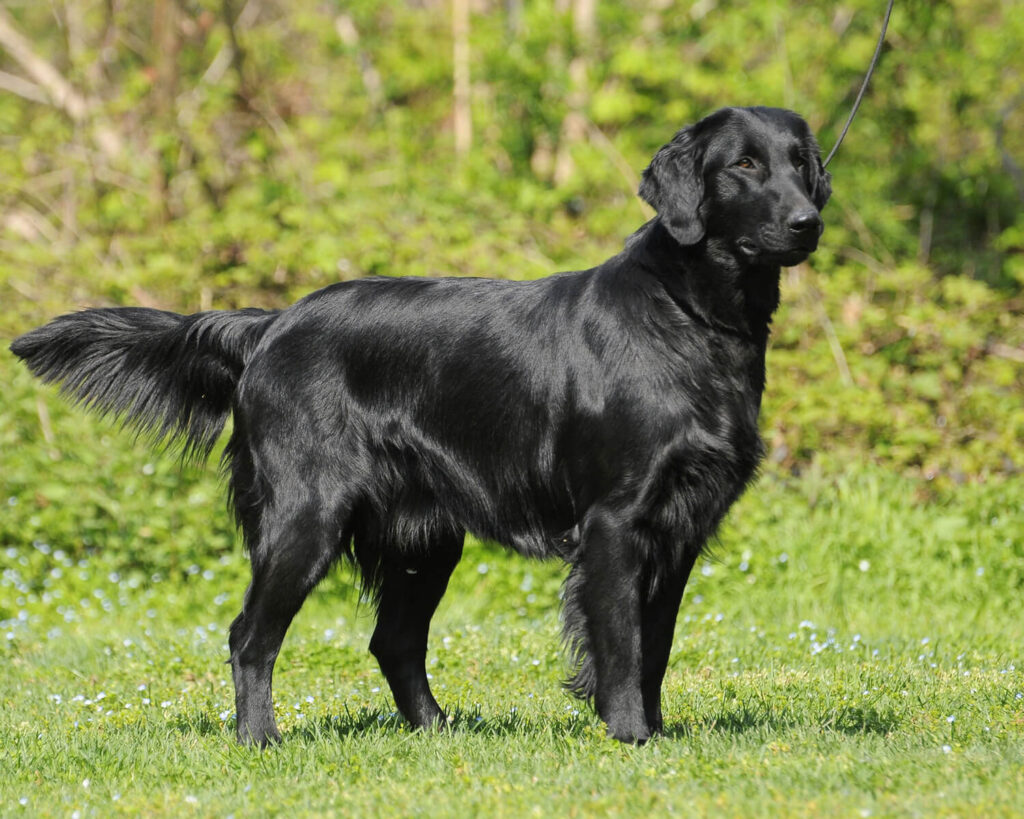
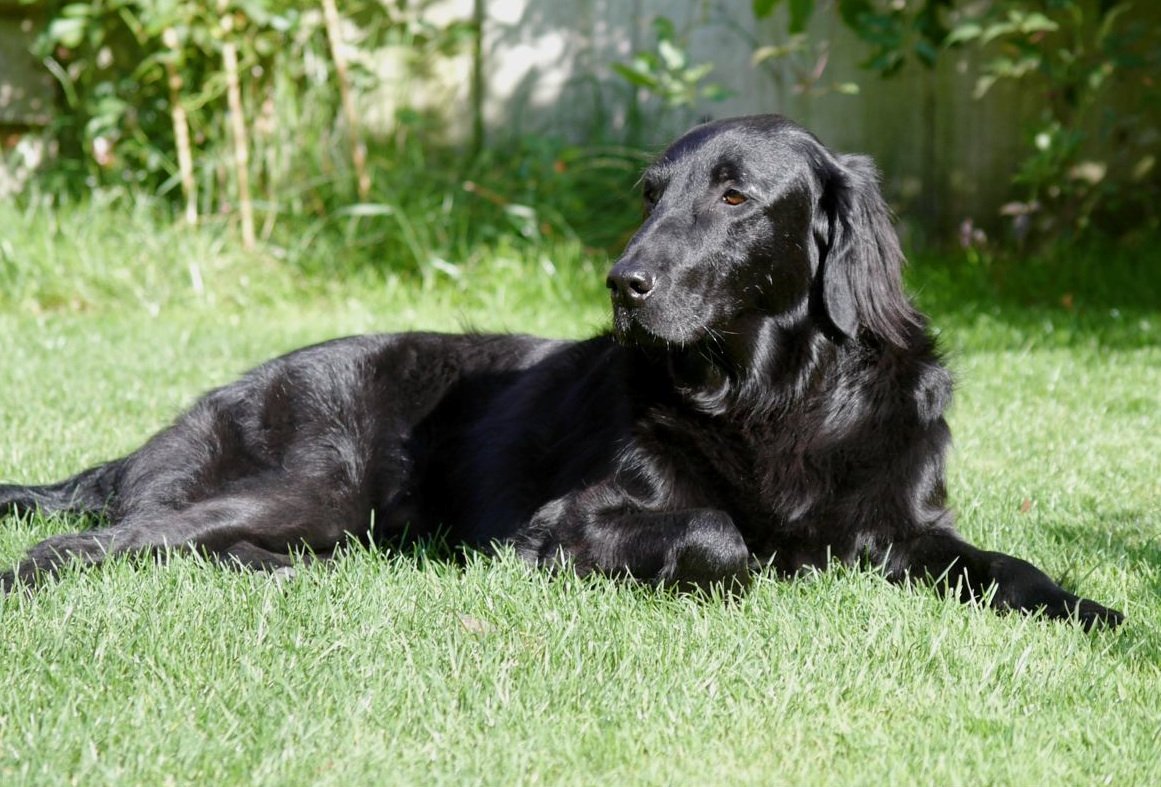
A forever puppy in a black tailcoat: cheerful, friendly, energetic and incurably playful. The Flat-Coated Retriever is the “Peter Pan” of dogs, keeping its youthful zest for life; a wonderful family companion and hunter, shadowed only by a high cancer risk.
Apartment · not suitableKidsCats · with caveatsOther dogsBeginners · with caveats
The Flat-Coated Retriever - often simply called a "Flat" - is a true aristocrat and an tireless enthusiast in the canine world. Its elegant silhouette, glistening black or liver-colored coat, and perpetually wagging tail consistently grab attention. But behind this refined appearance lies an incredibly joyful, energetic, and loyal companion whose zest for life doesn't fade, even in old age. This dog is an ideal choice for active individuals and families ready to invest time in their four-legged friend. Discover more about this breed and others on Tvaryny.
A Flat isn't just a beautiful dog; it's also an exceptionally intelligent and hardworking helper. Historically bred for waterfowling, it has retained its outstanding working abilities, but over time, it has earned a reputation as a "versatile dog," capable of excelling in many disciplines, from search and rescue to animal-assisted therapy. Its friendly nature and boundless love for people make it a wonderful family pet that gets along splendidly with children and other animals.
Interesting Facts About the Breed
The Perpetually Wagging Tail: A characteristic feature of the Flat is its tail, which is in constant motion. The strength and frequency of the tail wag can easily indicate the dog's mood.
"Dual-Purpose" Dog: Throughout their history, Flats have successfully combined careers in the show ring and work in the field, a rarity for many breeds.
Breed Rescuer: After World War II, the breed was on the brink of extinction. It was thanks to the efforts of a few dedicated enthusiasts that the population was restored.
The Flat's Smile: Many Flats have a funny habit of "smiling," raising their lips and showing their front teeth when they are happy or greeting their owner. This is not a sign of aggression, but an expression of joy.
History of the Breed
The history of the Flat-Coated Retriever is closely tied to the development of gundog breeding in Victorian England during the 19th century. Like most retrievers, its roots trace back to Newfoundland, where the "St. John's dogs" (small Newfoundlands) - ancestors of all modern retrievers - were brought from. These dogs were renowned for their love of water and their ability to retrieve downed game.
In Great Britain, these dogs were then crossbred with other breeds to enhance specific qualities. A key figure in the breed's creation was Mr. S.E. Shirley, the founder of the Kennel Club of Great Britain. It was he who, in the 1860s, began dedicated work on breeding a straight-coated retriever, which at the time was called the "Wavy-Coated Retriever." Irish Setters (to improve scenting ability and add elegance), Water Spaniels, and possibly Border Collies were used to create the Flat, aiming for increased intelligence and obedience.
The goal was not just to produce an effective gundog, but also an elegant companion. By the end of the 19th century, the Flat-Coated Retriever was the most popular retrieving dog at shows and field trials in Britain. However, in the early 20th century, its popularity began to wane, giving way to breeds like the Labrador Retriever and Golden Retriever. Despite this, dedicated enthusiasts preserved the breed, and today, Flats, though not the most numerous, enjoy a stable following worldwide. You can also explore other fantastic retrieving breeds like the Nova Scotia Duck Tolling Retriever.
What a Flat-Coated Retriever Looks Like: Standard and Appearance
The Flat-Coated Retriever is an embodiment of strength and elegance. It possesses a harmonious yet robust body structure, indicating its purpose - to be an enduring hunter capable of working both on land and in water. Its appearance combines functionality and beauty.
Head: Long, clean, with a smooth, barely perceptible stop from the forehead to the muzzle. The skull and muzzle are approximately equal in length. Jaws are strong, with a perfect scissor bite.
Eyes: Medium-sized, almond-shaped, dark brown or hazel. The expression is very intelligent and friendly.
Ears: Small, pendulous, set not too low, lying close to the head.
Body: Chest is deep and fairly wide, with well-sprung ribs. The back is short, strong, and straight. Loin is powerful.
Tail: Short, straight, well-feathered but without a "flag." The dog carries it gaily, but not over its back. It's a continuation of the topline and is constantly in motion.
Coat: Dense, fine to medium texture, with a good sheen. As the name implies, it should be as straight as possible, although a slight waviness is permissible. There are beautiful "featherings" on the legs and tail. The undercoat is dense and soft, protecting against bad weather and cold water.
Color: Only two colors are permitted - solid black or solid liver.
Characteristic
Description
Height at Withers (Males)
23–24 inches
Height at Withers (Females)
22–23 inches
Weight (Males)
60–80 pounds
Weight (Females)
55–70 pounds
Lifespan
8–12 years
Temperament and Character
A Flat's character is one of the breed's most distinguishing features. They are often dubbed "clown dogs" or the "Peter Pans" of the canine world, and they've earned these nicknames fair and square. Flats mature very slowly, retaining a puppy-like spontaneity, playfulness, and enthusiasm throughout their entire lives. Even in their golden years, a Flat will be happy to chase a ball or go for a swim.
Key Character Traits:
Joyfulness and Optimism: This is a dog that's always in a good mood. Its tail practically never stops wagging, expressing boundless joy from interacting with the world.
Sociability and People-Oriented: Flats adore their families and strive to be the center of attention. They don't handle loneliness well and can suffer from separation anxiety if left alone for long periods. This isn't a dog that will be happy in a kennel.
Friendliness: They are extraordinarily friendly towards people (including strangers), other dogs, and even other animals. Aggression is completely uncharacteristic of this breed. This makes them poor guard dogs, as they're more likely to "lick" a burglar to death.
Sensitivity: Despite their energy, Flats are very sensitive dogs. They react poorly to shouting and harsh training methods. They need to be handled delicately but consistently.
Intelligence and Desire to Please: These are very intelligent dogs who learn quickly and always aim to please their owner. This makes the training process enjoyable and effective if the right approach is found.
The Flat-Coated Retriever is an excellent fit for families with children, as it's patient and playful. However, due to its energy and size, it might accidentally knock over a small child, so their interactions should always be supervised.
Pros and Cons of the Breed
Like any breed, the Flat-Coated Retriever has its advantages and disadvantages. It's important to objectively assess them before getting such a dog.
Pros
Cons
✅ Incredibly Friendly Nature: Gets along wonderfully with all family members, children, other dogs, and even cats.
❌ High Energy Needs: Requires at least 1.5–2 hours of active exercise daily. Not suitable for homebodies.
✅ High Intelligence and Trainability: Quickly learns commands and aims to please its owner.
❌ "Eternal Puppy": Matures slowly, can be overly boisterous and clumsy for the first 3–4 years of its life.
✅ Optimism and Joyfulness: This dog literally radiates positivity and can lift anyone's spirits.
❌ Prone to Separation Anxiety: Suffers greatly from loneliness, not suitable for people who spend a lot of time away from home.
✅ Versatility: Successful in many dog sports (agility, obedience, flyball) and in working roles.
❌ Health Issues: Has a genetic predisposition to certain types of cancer, which shortens its average lifespan.
✅ Elegant Appearance: Beautiful shiny coat and graceful physique make it a highlight of any show.
❌ Requires a Lot of Attention: This isn't a dog that will quietly lie in a corner. It demands constant interaction.
Training and Socialization for Flats
Thanks to their high intelligence and desire to please, Flat-Coated Retrievers are eager students. However, their sensitivity and slow maturation require a special approach. Training should be based on positive reinforcement: praise, treats, and toys. Any harshness or shouting can scare the dog and undermine its trust.
Early socialization is critically important. From puppyhood, introduce your Flat to various people, sounds, places, and other animals. This will help raise a confident and well-adjusted dog. Due to their natural friendliness and energy, it's important to teach them not to jump on people when greeting from the very beginning.
Training sessions should be short, engaging, and varied to prevent the dog from getting bored. Flats excel in obedience, agility, and other sports, which are excellent ways to channel their energy and strengthen the bond with their owner. They are also among the best hunting retrievers, alongside the Curly-Coated Retriever and the Nova Scotia Duck Tolling Retriever.
Care and Maintenance
While the Flat is a gundog accustomed to space, it can adapt to apartment living under one important condition: sufficient physical and mental stimulation. Without it, its inexhaustible energy will find a destructive outlet.
Grooming and Coat Care
A Flat's coat doesn't require complex care, but it does demand regularity. It's recommended to brush the dog 1–2 times a week with a special brush or comb to prevent matting, especially on the "featherings" (long hair on the legs, tail, and under the chest). During seasonal shedding (spring and fall), the procedure should be done more frequently, perhaps daily. Bathe the dog as needed when it gets dirty, usually once every 2–3 months, using a mild dog shampoo. Too frequent washing can dry out the skin and coat. It's also important to regularly inspect and clean the ears, as their pendulous shape promotes dirt accumulation and the development of infections. Don't forget to trim nails every 3–4 weeks.
Physical Exercise and Activity
This is the most crucial aspect of owning a Flat. This dog needs daily long and intense walks. Simply walking on a leash around the block won't be enough. The ideal option is a combination of:
Active Games: Retrieving a ball or frisbee.
Swimming: Flats adore water, and swimming is an excellent workout for all muscle groups.
Running: An adult and healthy dog can be a great running companion.
Dog Sports: Agility, flyball, coursing, obedience - all these will help channel their energy in the right direction.
In addition to physical exercise, Flats also need mental stimulation. Learning new commands, scent games, and interactive toys will help keep their minds sharp and prevent boredom.
Nutrition
Nutrition: How to Feed a Flat-Coated Retriever?
Health and risks
Flat-Coated Retriever Health: Common Ailments
Frequently Asked Questions About the Breed (FAQ) · 5
Does the Flat-Coated Retriever shed a lot?
Yes, Flats do shed, especially intensely twice a year during seasonal shedding. Regular brushing will help control the amount of hair in the home, but you won't be able to completely avoid it. This breed is not suitable for people with allergies.
Is a Flat suitable for an inexperienced owner?
A Flat can be a first dog, but only for a very responsible, patient, and active person. Its high energy needs, sensitivity, and slow maturation can be a challenge for a novice. It's important to be prepared to dedicate a lot of time to training and walks.
Can a Flat-Coated Retriever live outdoors in a kennel?
Absolutely not. This is a very social, people-oriented dog. Keeping it in a kennel, isolated from the family, will lead to serious behavioral problems, depression, and destructive behavior.
How much does a Flat-Coated Retriever puppy cost?
The cost of a puppy from a responsible breeder can vary significantly depending on pedigree, parents' titles, and the kennel's reputation. It's important to understand that a low price often means skimping on the health and upkeep of the dogs. More importantly, the purchase is the smallest line item — food, veterinary care, grooming, and insurance over the dog's lifetime add up to far more.
Is a Flat a good guard dog?
No. A Flat might bark to alert you to guests' arrival, but its friendly nature makes it completely incapable of guarding. It will most likely greet any stranger with enthusiasm.
Video About the Flat-Coated Retriever
FAQ
Why is the Flat-Coated Retriever called “Peter Pan”?
Because it keeps its playful, youthful character well into adulthood — a cheerful, irrepressible breed in no hurry to “grow up”.
What does the Flat-Coated Retriever suffer from?
The main shadow is a high predisposition to cancer (especially histiocytic sarcoma); its risk in the breed is estimated at 20–25%.
Is the Flat-Coated Retriever good for a family?
Very — one of the friendliest and most playful retrievers, wonderful with children and animals; the key is enough exercise.